Brazilian Elections 2026 with Gladys Mitchell-Walthour and Kia Lilly Caldwell
52 min
Listen through the publisher, then discuss the episode here or arrange an in-person Roundtable. Your city determines where to meet.
Roundtables are designed for groups of four, with a shared subject and room for everyone to speak. Come for discussion, with no dating expectation.
On October 5, 2026, Brazil had elections for the president, governors, and congressmen. On October 25, 2026 Luiz Inácio Lula da Silva or Lula won the presidency of Brazil. He won during the run-off election after coming in second in the first election. Afro-Brazilians played a decisive role in Lula's electoral win as well as in securing their own wins during the election. This conversation examines the raced and gendered contours of the 2026 election and electoral politics in Brazil. Dr. Gladys Mitchell-Walthour is the Dan T. Blue Endowed Chair at North Carolina Central University. Dr. Mitchell-Walthour is a political scientist whose research examines race and politics in Brazil. She is the author of The Politics of Survival: The Political Opinions of Social Welfare Beneficiaries in Brazil and the USA (Columbia University Press) as well as numerous articles and books. Dr. Kia Lilly Caldwell is the Dean's Distinguished Professorial Scholar in Arts & Sciences in the Department of African American Studies at Washington University in St. Louis. Dr. Caldwell is an anthropologist whose research has examined race, gender, and health in Brazil. She is the author of Health Equity in Brazil: Intersections of Gender, Race, and Policy (University of Illinois Press) as well as numerous articles and books. Dr. Reighan Gillam is Associate Professor in the Department of Latin American, Latino, and Caribbean Studies at Dartmouth College. She is the author of Diasporic Connections: How Afro-Brazilians Use African American Culture to Challenge Racial Exceptionalism (Columbia University Press). Hosted by Simplecast, an AdsWizz company.
Episode information is provided by the publisher. Listening takes place on the publisher’s service.
Puzzle through the ethical dilemma where two ships are in distress but you can only save one, and decide: which do you choose? Uploaded 21-12-21 -- You are the captain of an interstellar cargo transport headed to port when you receive two distress calls. The first is from a labor ship, whose passengers are running out of oxygen. The other from a luxury space cruiser which has lost a thruster, sending them careening into danger. With only enough time to save one ship, which should you choose? Doug Mackay explores this classic ethical dilemma. Lesson by Doug Mackay, directed by Avi Ofer. This video was produced in collaboration with the Parr Center for Ethics, housed within the renowned Philosophy Department at the University of North Carolina at Chapel Hill. The Parr Center is committed to integrating abstract work in ethical theory with the informed discussion of practical ethical issues, and prides itself on the development of innovative and inclusive approaches to moral and civic edu
Explore how the Hubble Space Telescope reveals the Universe, from iconic images to major discoveries, and how it complements the James Webb Space Telescope. "ASTROMAN: the Dark Sky Guardian" is a podcast channel that aims to explore popular science in multiple disciplines and research on interdisciplinary approaches, such as sustainability, dark-sky protection, astrophotography, space exploration, astronomy innovation, inclusive science communication, and STEAM Education by integrating science and arts. Exodus Chun-Long Sit, also known as the ASTROMAN, is a transmedia astronomy educator, popular science author, STEAM educator, and science communicator in Hong Kong. He is recently the National Astronomy Education Coordinator (Chair of Hong Kong, China) of the International Astronomical Union and President of Starrix. He was also an International Committee Member of the Dark Sky International, regularly organizing public lectures at the Hong Kong Space Museum and the Hong Kong Science Mu
In today's brief: Lake Erie, 1957: a newly released Air Force report says two boys saw a humming, bell-shaped craft near the Enrico Fermi Atomic Plant. Skinwalker Ranch: owner Brandon Fugal calls the new files landmark and recalls a daylight saucer over the mesa. Warship footage: a 20-second 2020 infrared clip shows a light crossing a US Navy ship in the Middle East, with no Pentagon assessment. Martha's Vineyard, 1957: a spiked, nickel-coloured object that the Air Force put down to a radar-reflector balloon. Loch Ness: reported sightings jump to 15 this year, up from six in 2025. The Book of Miracles: a 16th-century manuscript of comets, blood rain and multiple suns heads to auction at Christie's. Quick hits: a 1952 file blames the saucer wave on temperature inversions; more Pentagon UFO files are on the way. Every story and source: https://believepod.com/ufo-paranormal-news-22-november-2026/ New episodes every morning. Keep your eyes on the sky. Sources: FOX 2 Detroit: https://www.fo
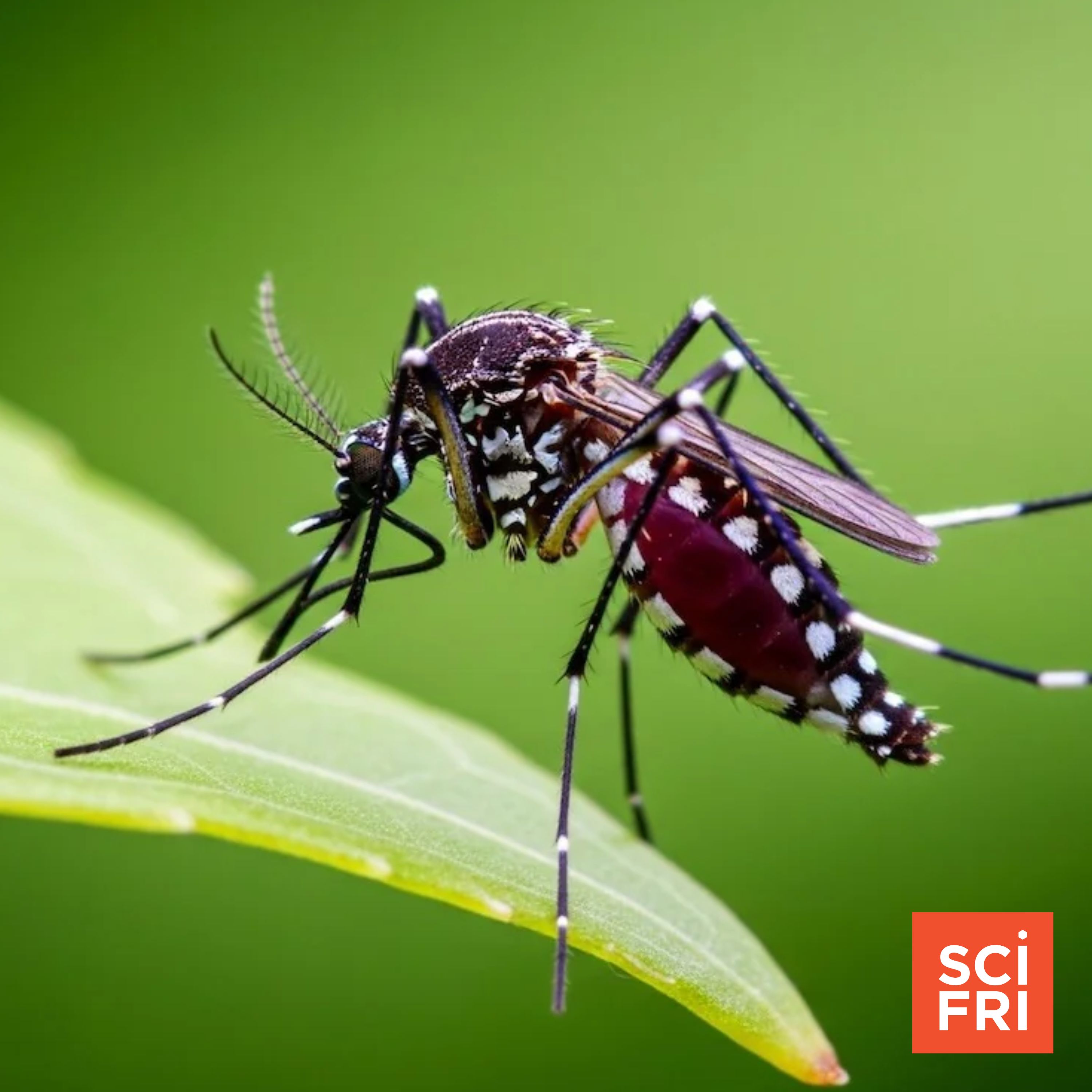
In Florida, three counties have declared states of emergency due to rising cases of dengue (https://www.sciencefriday.com/segments/floridas-dengue-outbreak/)—a viral infection spread by mosquitos carrying the dengue virus. There have been around 1,000 cases (https://www.cdc.gov/dengue/data-research/facts-stats/current-data.html) in the state this year, making it the largest outbreak (https://apnews.com/article/dengue-virus-outbreak-florida-7f0bda2b0a1e7895e834010f38cedb1e) in the continental U.S. in decades. But this is part of a larger story. Over the last couple of decades, the number of dengue cases has surged globally, and dengue is becoming more common in places it hasn’t historically been. So what’s behind these shifts? And what public health measures should we be thinking about? Flora chats about this with epidemiologist Gabriela Paz-Bailey, chief of CDC’s dengue branch in San Juan, Puerto Rico. Guest: Dr. Gabriela Paz-Bailey is an epidemiologist and chief of the dengue branch i
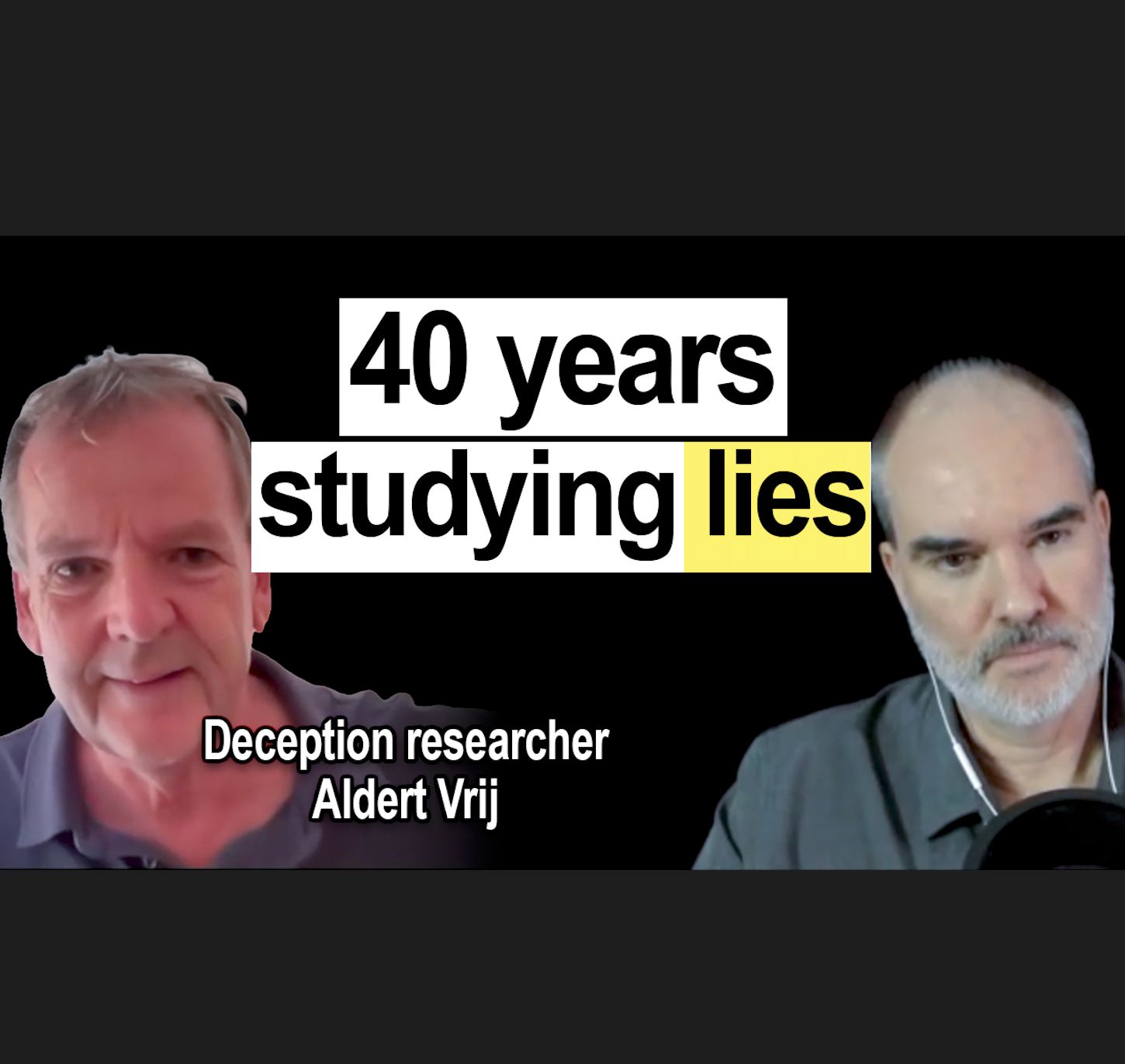
What actually works when it comes to detecting lies, and why are so many popular ideas about reading people and nonverbal behavior at odds with the scientific research? I talk with Aldert Vrij, one of the world's leading deception-detection researchers, who has spent almost four decades studying these topics. We discuss why what people say is far more revealing than their body language; why the perceived “sexiness” of reading nonverbal behavior has contributed to widespread myths and misconceptions; whether vocal behaviors like pitch, volume, and hesitation contain meaningful clues; and whether there's value in analyzing minor word choices and turns of phrase, as is done in so-called “statement analysis.” We discuss Paul Ekman's legacy as a source of faulty ideas about deception, micro-expression-based deception detection training, and the strategies that popular “body language experts” use to appear scientifically credible while simultaneously promoting ideas that conflict with the sc
We’re about to time travel into the future Sam Altman is building… I interviewed Sam Altman, the CEO of OpenAI, the company behind ChatGPT. They’re trying to build a “superintelligence” that could far exceed humans in almost every field – and they just released their most powerful tool yet, GPT-5. A few years ago, that would’ve sounded like science fiction! Not anymore. In fact, they’re not alone. We’re in the middle of the most high stakes global race any of us have ever seen. Hundreds of billions of dollars and an unbelievable amount of human work… It’s a profound moment. Most people never see a huge technological shift like this in their lives and it’s happening all around us right now. So in this conversation, I’m going to try to time travel into the future with Sam Altman, to see what he’s trying to build… so you and I can really understand what’s coming. Welcome to HUGE* Conversations. Chapters: 0:00 What future are we headed for? 2:06 What can GPT-5 do that GPT-4 can’t? 6:57 Wha
We live in a world oriented toward greatness, one in which we feel compelled to be among the wealthiest, most powerful, and most famous. The Good-Enough Life (https://bookshop.org/a/12343/9780691204352) (Princeton UP, 2022) explains why no one truly benefits from this competitive social order, and reveals how another way of life is possible—a good-enough life for all. Dr. Avram Alpert shows how our obsession with greatness results in stress and anxiety, damage to our relationships, widespread political and economic inequality, and destruction of the natural world. He describes how to move beyond greatness to create a society in which everyone flourishes. By competing less with each other, each of us can find renewed meaning and purpose, have our material and emotional needs met, and begin to lead more leisurely lives. Dr. Alpert makes no false utopian promises, however. Life can never be more than good enough because there will always be accidents and tragedies beyond our control, whic
What happens when European politics goes digital? Behind the scenes in European Union institutions, a quiet transformation is reshaping the way power works. Based on long-term ethnographic research, The Brussels Bubble: Inside the European Union in the Digital Age (https://bookshop.org/a/12343/9781009756808)(Cambridge University Press, 2026) by Dr. Rebecca Adler-Nissen & Dr. Kristin Anabel Eggeling follows diplomats, civil servants, spokespersons, and interpreters through the corridors, meeting rooms, cafés, and smartphone screens of Brussels' European Quarter. Against the backdrop of Brexit, the COVID-19 pandemic, and Russia's war on Ukraine, it reveals how digital technologies have become inseparable from the practice of international politics—reshaping trust, tact, and authority in unexpected ways. Far from a tale of technological revolution, The Brussels Bubble exposes digitalisation as a messy, human negotiation about what diplomacy and Europe itself mean today. Combining vivid na
Speech is unprecedented in the natural world. Yet human infants can learn the grammar of their native tongue so quickly, it is as if they knew the basics already. How did such a unique ability evolve, and what does it reveal about the nature of our species? The story of the social and sexual revolution responsible for the emergence of our most prized skill—the ability to speak. Drawing on evolutionary and social anthropology, behavioural ecology, archaeology, and linguistics, Professors Chris Knight and Jerome Lewis unearth the political and social origins of our capacity to speak. What they discover points to the revolutionary role played by women at every stage. It seems that formidable coalitions of women used laughter, song, and dance to restrain the male potential for violence. In so doing, women established extraordinary levels of community-wide trust—precisely what was needed for linguistic creativity to flourish. The Revolutionary Origins of Language (https://bookshop.org/a/123
Publicly supported activities should offer reduced prices to people who cannot afford admission.
Share your view, then see how readers voted. No sign-in required. This poll is shared across stories.
Do you agree or disagree?
Common Quandary
A Common Quandary to discuss
Another conversation to explore, separate from this news story.
Rich parents want to buy their public-school class an art teacher. Should the school say no?
Parents at a well-resourced public school raise enough money for art teachers and smaller classes. Nearby schools cannot raise comparable amounts, widening differences within the same district.
Can helping your own community become unfair to the larger one?