The Brussels Bubble: Inside the European Union in the Digital Age with Rebecca Adler-Nissen and Kristin Anabel Eggeling (Cambridge UP, 2026)
48 min
Listen through the publisher, then discuss the episode here or arrange an in-person Roundtable. Your city determines where to meet.
Roundtables are designed for groups of four, with a shared subject and room for everyone to speak. Come for discussion, with no dating expectation.
What happens when European politics goes digital? Behind the scenes in European Union institutions, a quiet transformation is reshaping the way power works. Based on long-term ethnographic research, The Brussels Bubble: Inside the European Union in the Digital Age (https://bookshop.org/a/12343/9781009756808)(Cambridge University Press, 2026) by Dr. Rebecca Adler-Nissen & Dr. Kristin Anabel Eggeling follows diplomats, civil servants, spokespersons, and interpreters through the corridors, meeting rooms, cafés, and smartphone screens of Brussels' European Quarter. Against the backdrop of Brexit, the COVID-19 pandemic, and Russia's war on Ukraine, it reveals how digital technologies have become inseparable from the practice of international politics—reshaping trust, tact, and authority in unexpected ways. Far from a tale of technological revolution, The Brussels Bubble exposes digitalisation as a messy, human negotiation about what diplomacy and Europe itself mean today. Combining vivid narrative with sharp theoretical insight, it offers a rare, inside view of how global governance, technology, and human interaction intertwine at the heart of European power. This book is available open-access. This interview was conducted by Dr. Miranda Melcher whosebook (https://www.bloomsbury.com/uk/securing-peace-in-angola-and-mozambique-9781350407930/) focuses on post-conflict military integration, understanding treaty negotiation and implementation in civil war contexts, with qualitative analysis of the Angolan and Mozambican civil wars. You can find Miranda’s interviews on New Books with Miranda Melcher (https://newbooksnetwork.com/category/special-series/new-books-with-miranda-melcher), wherever you get your podcasts. Hosted by Simplecast, an AdsWizz company.
Episode information is provided by the publisher. Listening takes place on the publisher’s service.
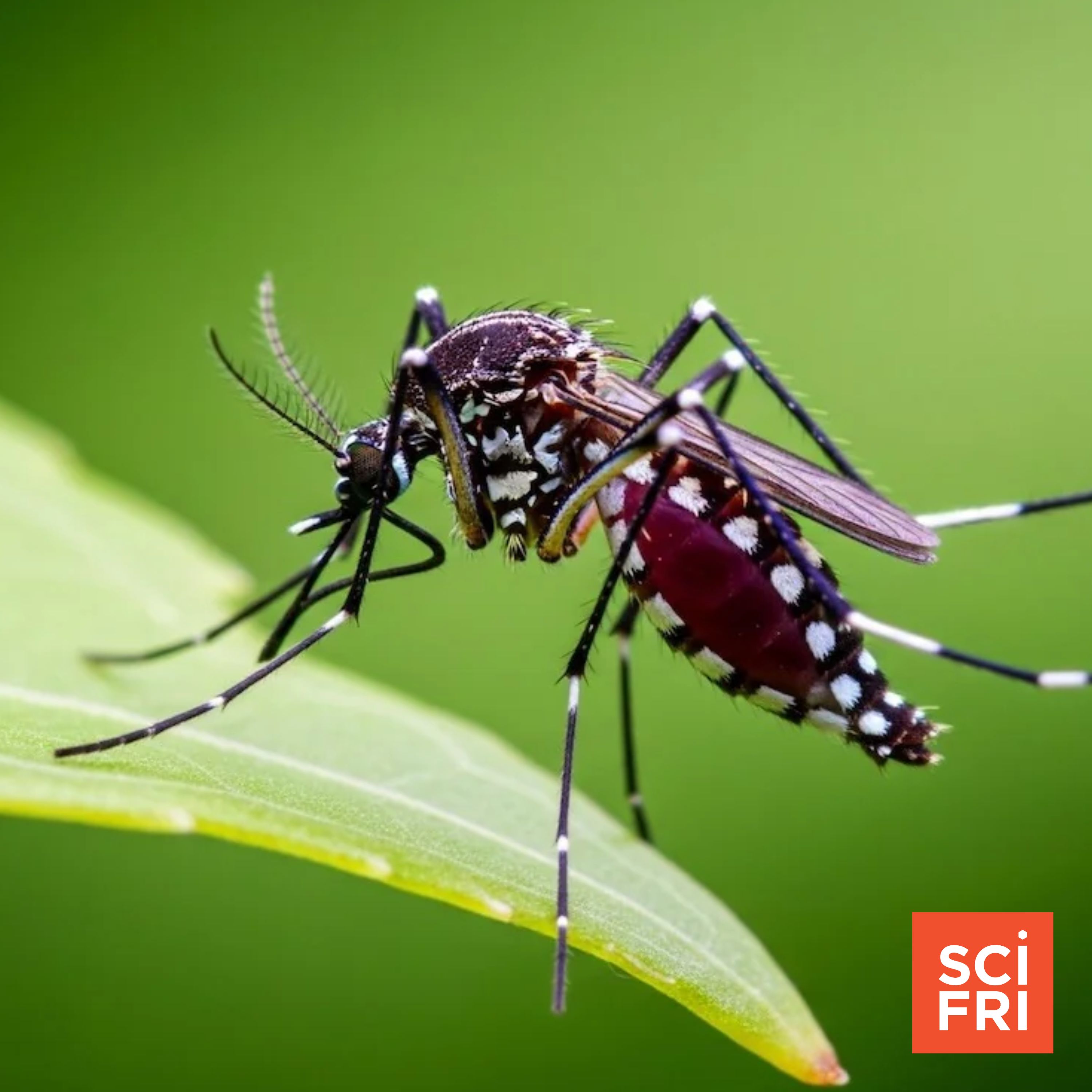
In Florida, three counties have declared states of emergency due to rising cases of dengue (https://www.sciencefriday.com/segments/floridas-dengue-outbreak/)—a viral infection spread by mosquitos carrying the dengue virus. There have been around 1,000 cases (https://www.cdc.gov/dengue/data-research/facts-stats/current-data.html) in the state this year, making it the largest outbreak (https://apnews.com/article/dengue-virus-outbreak-florida-7f0bda2b0a1e7895e834010f38cedb1e) in the continental U.S. in decades. But this is part of a larger story. Over the last couple of decades, the number of dengue cases has surged globally, and dengue is becoming more common in places it hasn’t historically been. So what’s behind these shifts? And what public health measures should we be thinking about? Flora chats about this with epidemiologist Gabriela Paz-Bailey, chief of CDC’s dengue branch in San Juan, Puerto Rico. Guest: Dr. Gabriela Paz-Bailey is an epidemiologist and chief of the dengue branch i
For extra nuances and all the references, please see the newsletter: https://staycuriousmetabolism.substack.com/p/can-we-become-like-captain-america?r=40ekz2 The StayCurious Human Enhancement Series We're launching a new series at StayCurious Metabolism called Peptides Plus, where we'll explore the most promising tools available today—and the innovations that may shape tomorrow. We have dozens of deep dives planned, covering everything from emerging therapeutics to cutting-edge performance and longevity interventions. GO HERE: https://staycuriousmetabolism.substack.com/p/peptides Chapters 0:00 — Superhuman Biology Is Already Starting 2:40 — Beyond GLP-1: Fat Loss Without Muscle Loss 7:28 — Gene Editing, CRISPR, and the Future of Disease Cure 14:57 — Cellular Reprogramming and Biological Age Reset 18:49 — MicroRNAs, Mitochondria, and What Comes Next Video Description What if the idea of “superhuman biology” isn’t science fiction anymore—but early-stage reality? From drugs that selective
In this week's Podcast: I’ve just pumped out a 300kg barrel of honey and at the bottom was a thick, granulated layer of sugary goodness. It got me thinking about why honey granulates, the science behind it all, why that’s a good thing and how, we beekeepers, can use it to our advantage. Hi, I’m Stewart Spinks, welcome to Episode 418 of my podcast, Beekeeping Short and Sweet. References: Manikis, I., & Thrasivoulou, A. (2001). The relation of physicochemical characteristics of honey and the crystallization rate. Apiacta, 36(2), 106–112. Escuredo, O., Míguez, M., Fernández-González, M., & Seijo, M. C. (2014). Nutritional value and antioxidant activity of honeys produced in a European Atlantic area. Food Chemistry, 154, 44–51. Venir, E., Spaziani, M., & Maltini, E. (2010). Crystallization in “Tarassaco” (Dandelion) Italian honey studied by DSC. Food Chemistry, 122(2), 410–415. Krishnan, R., Mohammed, T., Kumar, G. S., & Arunima, S. H. (2021). Honey crystallization: Mechanism, evaluation a
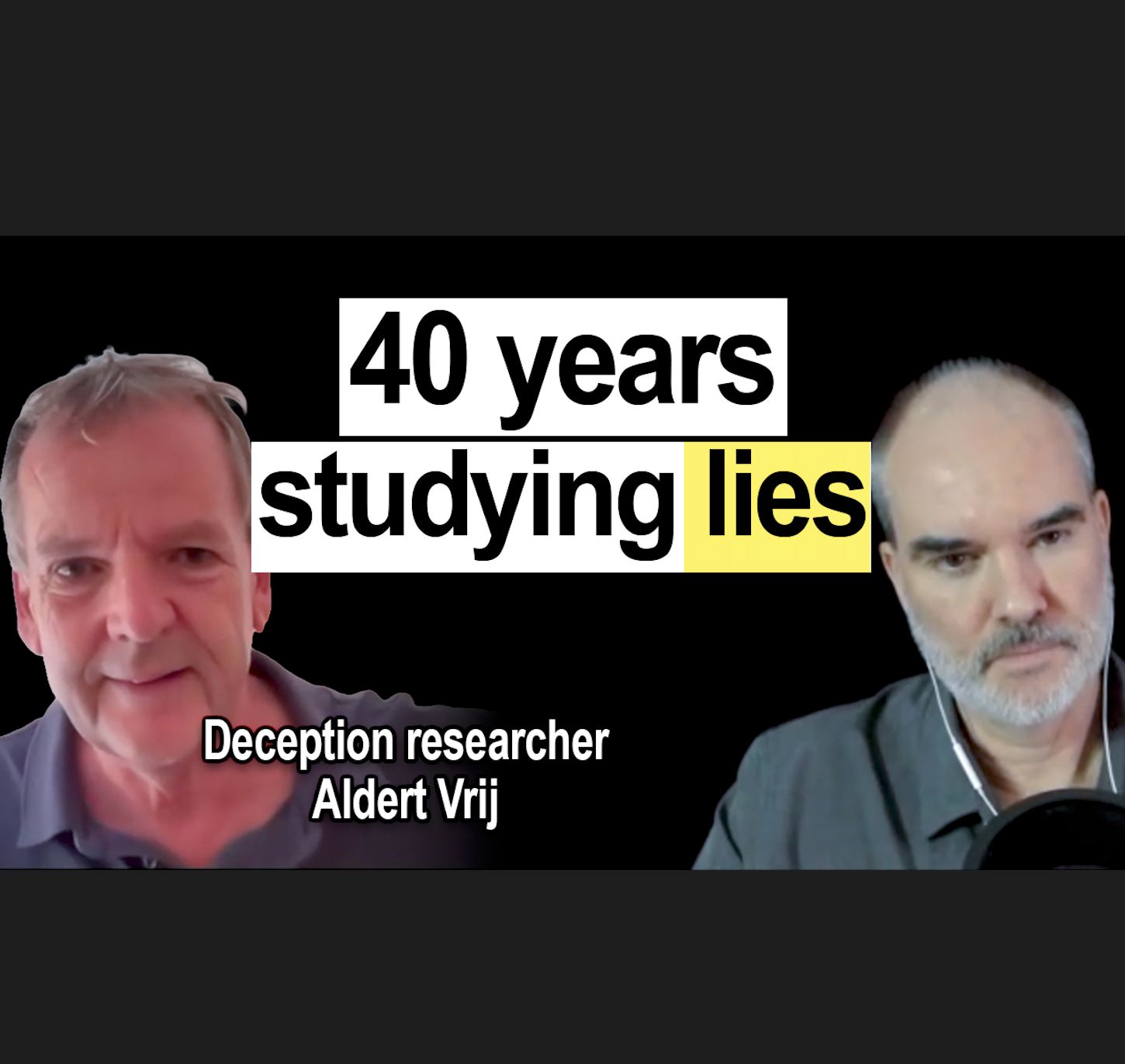
What actually works when it comes to detecting lies, and why are so many popular ideas about reading people and nonverbal behavior at odds with the scientific research? I talk with Aldert Vrij, one of the world's leading deception-detection researchers, who has spent almost four decades studying these topics. We discuss why what people say is far more revealing than their body language; why the perceived “sexiness” of reading nonverbal behavior has contributed to widespread myths and misconceptions; whether vocal behaviors like pitch, volume, and hesitation contain meaningful clues; and whether there's value in analyzing minor word choices and turns of phrase, as is done in so-called “statement analysis.” We discuss Paul Ekman's legacy as a source of faulty ideas about deception, micro-expression-based deception detection training, and the strategies that popular “body language experts” use to appear scientifically credible while simultaneously promoting ideas that conflict with the sc
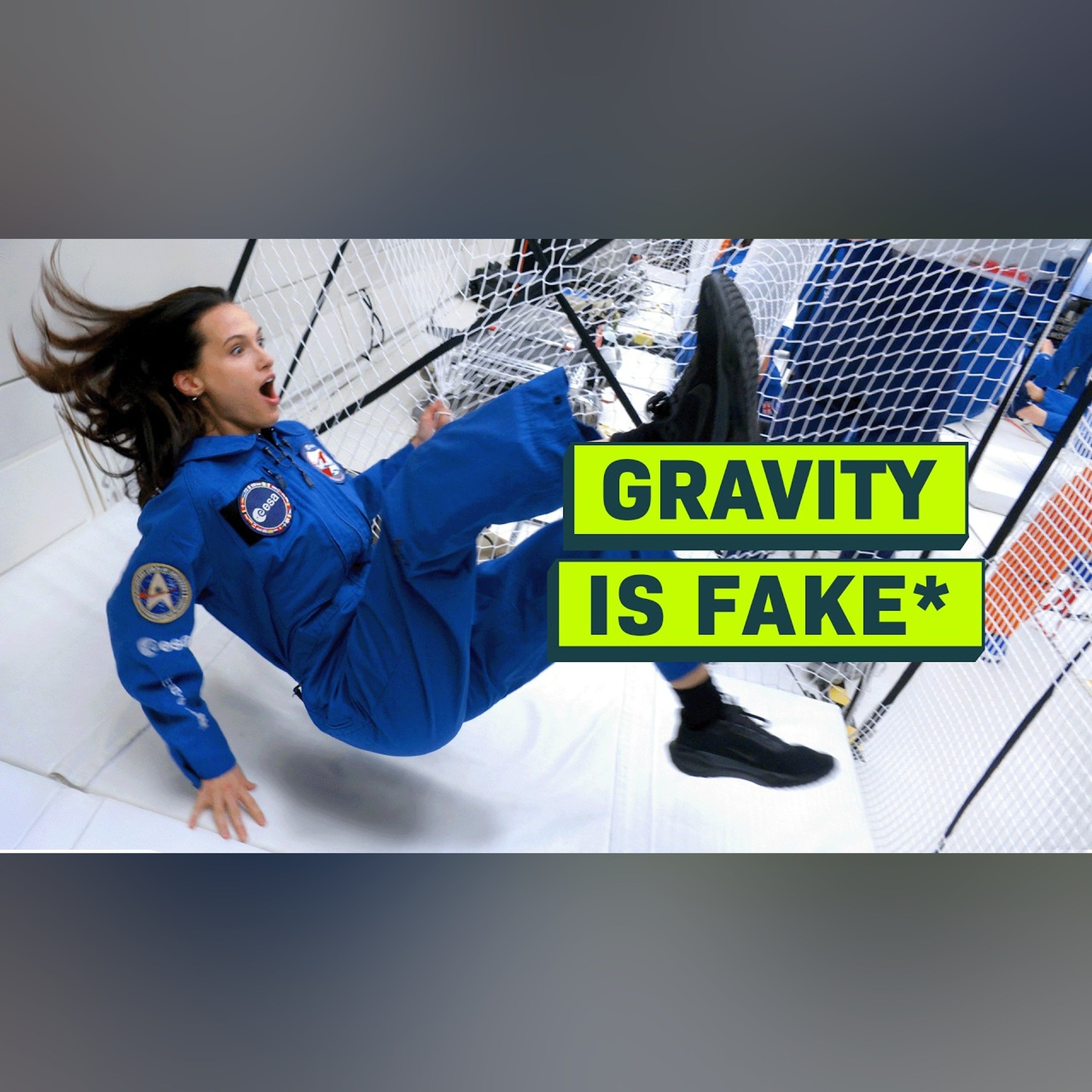
There’s a big problem with gravity… Build and learn with KiwiCo! Gravity is a lie. I went into zero gravity to explain why… But it won't be easy because gravity is actually one of the most controversial subjects in all of physics. This is not some philosophical debate. A huge amount of the tech you use every day depends on our current (limited) understanding of gravity. If we can understand gravity a little bit better, we can build more things that are huge if true! So in this video, I joined the European Space Agency on a real zero gravity flight and interviewed theoretical physicists to understand: What really IS gravity? And what are the real life sci-fi ways we might use it in the future? Chapters: 0:00 The big problem with gravity 0:58 What is a zero gravity flight? 1:40 What is gravity? 2:49 What’s Einstein’s equivalence principle? 3:40 What does zero gravity feel like? 5:52 Why is falling the same as floating? 6:58 How did gravity disappear? 9:28 Why is gravity not a force? 11:3
PBS Member Stations rely on viewers like you. To support your local station, go to:http://to.pbs.org/DonateSPACE Sign Up on Patreon to get access to the Space Time Discord! A fun nightmare sci-fi scenario is the sun being consumed by a black hole. Fortunately the chance of a black hole randomly wandering into our solar system is pretty tiny. That’s good news. But what if it’s already here, hiding in the core of the Sun and slowly eating it from the inside out? Hawking Stars Journal Papers: Search the Entire Space Time Library Here: https://search.pbsspacetime.com/ Hosted by Matt O'Dowd Written by Matt Caplan & Matt O'Dowd Post Production by Leonardo Scholzer, Yago Ballarini & Stephanie Faria Directed by Andrew Kornhaber Associate Producer: Bahar Gholipour Executive Producers: Eric Brown & Andrew Kornhaber Executive in Charge for PBS: Maribel Lopez Director of Programming for PBS: Gabrielle Ewing Assistant Director of Programming for PBS: John Campbell Spacetime is produced by Kornhaber
We live in a world oriented toward greatness, one in which we feel compelled to be among the wealthiest, most powerful, and most famous. The Good-Enough Life (https://bookshop.org/a/12343/9780691204352) (Princeton UP, 2022) explains why no one truly benefits from this competitive social order, and reveals how another way of life is possible—a good-enough life for all. Dr. Avram Alpert shows how our obsession with greatness results in stress and anxiety, damage to our relationships, widespread political and economic inequality, and destruction of the natural world. He describes how to move beyond greatness to create a society in which everyone flourishes. By competing less with each other, each of us can find renewed meaning and purpose, have our material and emotional needs met, and begin to lead more leisurely lives. Dr. Alpert makes no false utopian promises, however. Life can never be more than good enough because there will always be accidents and tragedies beyond our control, whic
Speech is unprecedented in the natural world. Yet human infants can learn the grammar of their native tongue so quickly, it is as if they knew the basics already. How did such a unique ability evolve, and what does it reveal about the nature of our species? The story of the social and sexual revolution responsible for the emergence of our most prized skill—the ability to speak. Drawing on evolutionary and social anthropology, behavioural ecology, archaeology, and linguistics, Professors Chris Knight and Jerome Lewis unearth the political and social origins of our capacity to speak. What they discover points to the revolutionary role played by women at every stage. It seems that formidable coalitions of women used laughter, song, and dance to restrain the male potential for violence. In so doing, women established extraordinary levels of community-wide trust—precisely what was needed for linguistic creativity to flourish. The Revolutionary Origins of Language (https://bookshop.org/a/123
Youth workers are essential to the fabric of society. Schools, families, and many of our social institutions rely heavily on their work, yet their contributions often go unrecognized. Laboring in the Shadows: Precarity and Promise in Black Youth Work (https://bookshop.org/a/12343/9781503644908) (Stanford UP, 2026) explores the critical role of Black youth workers, especially in the lives of vulnerable youth, and the challenges they face in their unstable, underappreciated position. Bianca J. Baldridge situates the experiences of Black youth workers within the broader context of anti-Blackness and historical inequities. Drawing on rich interview data from across the United States, Baldridge offers a nuanced analysis of how the precarity of this work—marked by high turnover rates, low wages, and housing insecurity—compounds the challenges these workers face. She highlights how Black youth workers resist these structural harms by adopting and implementing innovative pedagogical practices
Youth sport should prioritize lasting participation over early selection of elite performers.
Share your view, then see how readers voted. No sign-in required. This poll is shared across stories.
Do you agree or disagree?
Common Quandary
A Common Quandary to discuss
Another conversation to explore, separate from this news story.
Your anonymous review could cost a coworker a promotion. Do you sign your name?
A company requests anonymous feedback about a colleague being considered for promotion. You have serious concerns based on direct experience, but anonymity prevents them from asking questions or understanding the context of your criticism.
Does honest criticism require accepting personal accountability for it?