In which John Green teaches you about the United States Constitution. During and after the American Revolutionary War, the government of the new country operated under the Articles of Confederation. While these Articles got the young nation through its war with England, they weren't of much use when it came to running a country. So, the founding fathers decided to try their hand at nation-building, and they created the Constitution of the United States, which you may remember as the one that says We The People at the top. John will tell you how the convention came together, some of the compromises that had to be made to pass this thing, and why it's very lucky that the framers installed a somewhat reasonable process for making changes to the thing. You'll learn about Shays' Rebellion, the Federalist Papers, the elite vs rabble dynamic of the houses of congress, and start to find out just what an anti-federalist is. Hey teachers and students - Check out CommonLit's free collection of re
What makes a good meeting? Why do some people leave feeling heard, while others leave feeling silenced, confused or defeated? In this episode of Messy Social Work, Richard and Tim explore the hidden craft of facilitation. Starting with stories of addiction, organisational systems and Jung's warning about concepts becoming a substitute for real experience, they dive into what actually happens inside meetings. Drawing on practice wisdom, family experiences and A Facilitator's Guide to Participatory Decision-Making, they discuss power, silence, conflict, professional language, disagreement, and the small conversational skills that can make all the difference. From child protection conferences to team meetings, this is a conversation about creating spaces where people can think together, speak honestly and make decisions that matter.
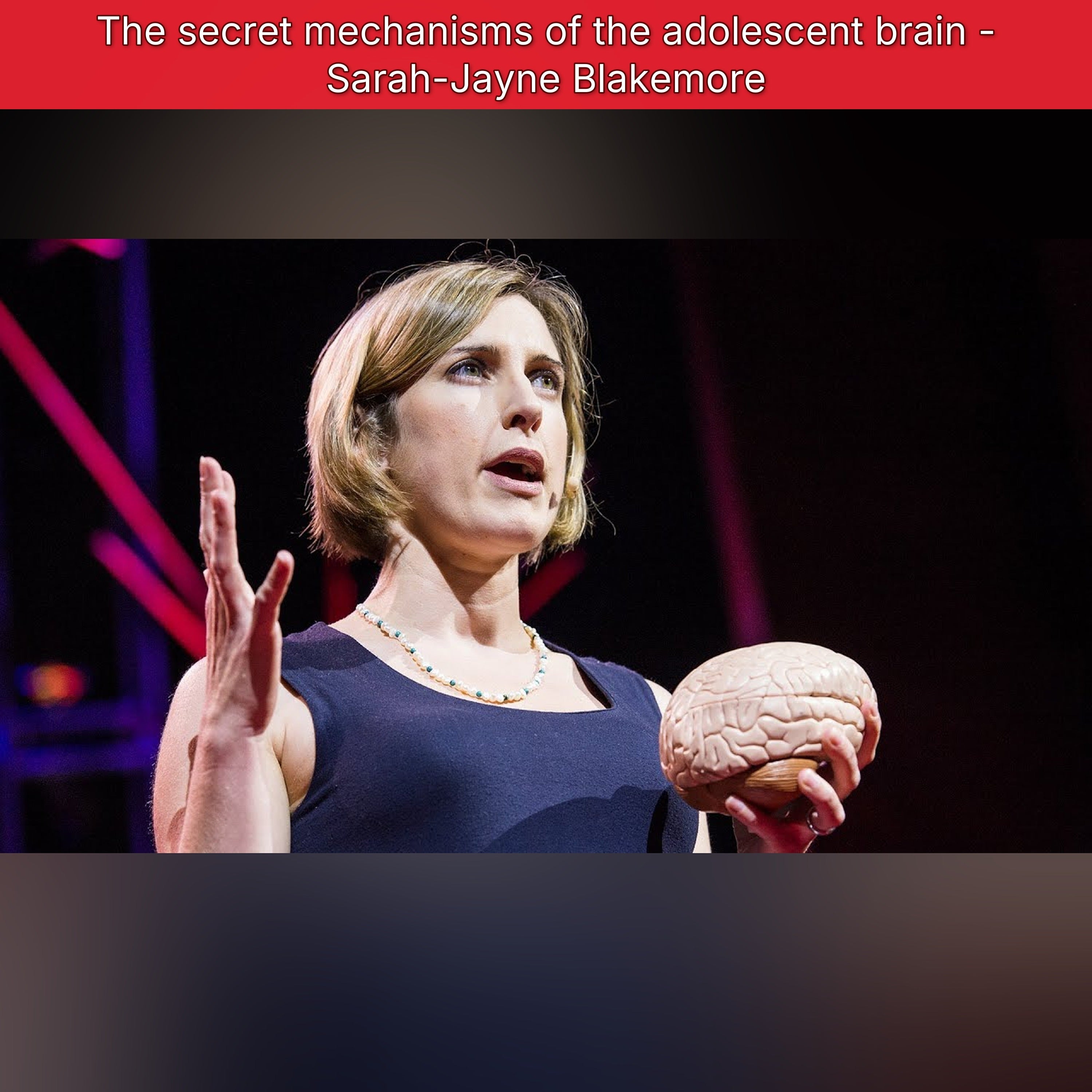
View full lesson: http://ed.ted.com/lessons/the-mysterious-workings-of-the-adolescent-brain-sarah-jayne-blakemore Why do teenagers seem so much more impulsive, so much less self-aware than grown-ups? Cognitive neuroscientist Sarah-Jayne Blakemore compares the prefrontal cortex in adolescents to that of adults, to show us how typically "teenage" behavior is caused by the growing and developing brain. Talk by Sarah-Jayne Blakemore.
The headline went viral again. Noah’s Ark, 100% confirmed. Archaeologist Aaron Judkins has studied the Durupınar site in eastern Turkey for years, stood on that hillside himself, and climbed Mount Ararat with a full scientific team for the documentary Finding Noah. And he is here to tell Luke and Nate, as a believer who would love it to be true, that it is almost certainly not the Ark. No credible archaeologist, he says, starts with the words 100% confirmed. That is the scientific method run backward. Point by point, Aaron walks through why the claim does not hold. The boat-shaped formation is a common geological fold found all over the region. The famous petrified timbers are ordinary basalt and limestone. The metal rivets are natural mineral concretions. The anchor stones are Armenian grave markers. The dimensions only match if you cherry-pick which cubit to measure with. It is a sharp, generous, myth-busting conversation about why Christians should want the truth more than the headl
The Harlem Renaissance produced many remarkable artists, writers, and thinkers. Today we'll talk about one of the most interesting minds of the time, Zora Neale Hurston. Hurston was an anthropologist by training and spent much of her career studying and documenting the lives of Black people in the southern US. She later went on to write several remarkable novels, including Their Eyes Were Watching God, which we discussed in Crash Course Literature. https://www.youtube.com/watch?v=4kF0U8kIMp4&t=1s (https://www.youtube.com/watch?t=1s&v=4kF0U8kIMp4) Clint's book, How the Word is Passed is available now! https://bookshop.org/a/3859/9780316492935 VIDEO SOURCES Susan Reverby, Examining Tuskegee: The Infamous Syphilis Study and Its Legacy (Chapel Hill, N.C.: University of North Carolina Press, 2009). Susan Reverby ed., Tuskegee’s Truth’s: Rethinking the Tuskegee Syphilis Study (Chapel Hill, N.C.: University of North Carolina Press, 2000). Harriet A. Washington, Medical Apartheid: The Dark His
It's time to start talking about some of the terrible things you can do to your own body, like blood doping. We'll start by explaining the structure and function of your erythrocytes, and of hemoglobin, which they use to carry oxygen. We'll follow the formation and life cycle of a red blood cell, including how its levels are regulated by EPO and its signaling molecules. We'll wrap up by looking at how blood doping works and how it is truly a recipe for disaster. Pssst... we made flashcards to help you review the content in this episode! Find them on the free Crash Course App! Download it here for Apple Devices: https://apple.co/3d4eyZo Download it here for Android Devices: https://bit.ly/2SrDulJ Chapters: Introduction: Blood is Powerful Stuff 00:00 Form and Function of Erythrocytes (Red Blood Cells) 1:34 Hemoglobin 2:30 Formation of a Red Blood Cell: Hematopoiesis 4:11 How Erythropoietin (EPO) Regulates Blood Oxygen Levels 5:43 How Red Blood Cells Die 6:54 Don't Dope Your Blood! 7:53 R
In which Craig Benzine teaches you about delegation and informal powers. What are all these federal agencies about? Well, the President has a lot of stuff to do as the chief executive, and as much as Americans like to talk about personal responsibility, the President can't really do all this stuff alone. Because it's a huge job! Same deal with Congress. So, they delegate authority. This is where all the government agencies and stuff come from. Congress creates them to actually get around to enforcing laws. You'll learn about stuff like OSHA, the FDA, and maybe even the FCC. Although you hear an occasional complaint about bureaucracies and such, the business of government wouldn't get done without agencies and delegation. Support is provided by Voqal: http://www.voqal.org (http://www.voqal.org/) This episode is sponsored by Squarespace: http://www.squarespace.com/crashcourse Chapters: Introduction: Delegation 00:00 What is delegation? 0:39 How Congress limits an agency's discretion 1:37
In this episode, we dive into the Miracle at Fatima and the real reason Tom DeLonge's advisors invoked Greek mythology when describing the UFO phenomenon. Listen to the extended version Our Patreon supporters receive ad-free extended versions of the show, exclusive bonus episodes, and have the option to join our Discord community. You can support our work and access this additional content by subscribing to our Patreon at https://patreon.com/patternstellstories. Follow the Show BlueSky: @patternstellstories.com Website: https://patternstellstories.com (https://patternstellstories.com/) Email: [email protected] All Links: https://linktr.ee/patternstellstories Follow KLAɄЅ BlueSky: @tinyklaus.com Substack: https://www.tinyklaus.com (https://www.tinyklaus.com/) Follow GΔRRΞTT Twitter/X: @libertybirb BlueSky: @libertybirb.bsky.social Substack: https://libertybirb.substack.com (https://libertybirb.substack.com/)
View full lesson: http://ed.ted.com/lessons/the-uncertain-location-of-electrons-george-zaidan-and-charles-morton Uploaded 14-10-13 The tiny atoms that make up our world are made up of even tinier protons, neutrons and electrons. Though the number of protons determine an atom's identity, it's the electrons -- specifically, their exact location outside the nucleus -- that particularly perplex scientists. George Zaidan and Charles Morton show how to make an educated guess of where those itty-bitty freewheeling electrons might be. Lesson by George Zaidan and Charles Morton, animation by Karrot Animation.
In this episode, we welcome back Mark Olly—author, television presenter, archaeologist, and familiar face from Ancient Aliens and Lost Treasures—for a journey through ancient sites, hidden history, and places few people get to see. Bringing a real-life Indiana Jones spirit to the conversation, Mark shares remarkable stories from his archaeological travels. In France, he encounters an astonishing historical time capsule. In Egypt, he explores secret temples that remain closed to the public, offering a rare glimpse into places steeped in ancient mystery. His journey also takes us to Italy, through Roman streets and traces of the civilisations that came before them, before sharing his firsthand experiences inside the Vatican and beyond. Join us for a conversation packed with archaeological adventure, extraordinary places, and the enduring mysteries of the ancient world. Welcome to Let’s Get Freaky Podcast! We want to hear it—and we want YOU on the show! You hear a song, and a memory opens
The word “magic” has dubious, demonic connotations. But is there really a difference between magic and religion? In this episode of Crash Course Religions, we’ll explore the history of magical practices and discover how modern-day witches, brujas, and Hoodoo practitioners are reclaiming the label. Introduction: Religion or Magic? 00:00 What is Magic? 00:49 Western Ideas of Magic 02:27 Hurston & Hoodoo 06:28 Magic & Rationality 08:38 Magic in Established Religions 09:27 Reclaiming Magic 10:33 Review & Credits 11:21 *** Support us for $5/month on Patreon to keep Crash Course free for everyone forever! https://www.patreon.com/crashcourse Or support us directly: https://complexly.com/support Join our Crash Course email list to get the latest news and highlights: https://mailchi.mp/crashcourse/email Get our special Crash Course Educators newsletter: http://eepurl.com/iBgMhY Thanks to the following patrons for their generous monthly contributions that help keep Crash Course free for everyone
View full lesson: http://ed.ted.com/lessons/earworms-those-songs-that-get-stuck-in-your-head-elizabeth-hellmuth-margulis Uploaded 26-03-15 -- Have you ever been waiting in line at the grocery store, innocently perusing the magazine rack, when a song pops into your head? Not the whole song, but a fragment of it that plays and replays until you find yourself unloading the vegetables in time to the beat? Elizabeth Hellmuth Margulis explores earworms — a cognitive phenomenon that plagues over 90% of people at least once a week. Lesson by Elizabeth Margulis, animation by Artrake Studio.
BONUS QUESTION STARTS AT 17:10 Watch the video here (with no ads) or on YouTube: https://youtu.be/lwi6J0h2EhI What if We Can't Detect Dark Matter? https://www.youtube.com/watch?v=QXXqSh5qAuA Dark Matter Is Not a Theory: https://www.youtube.com/watch?v=PbmJkMhmrVI Is it better to put a base on the Moon or under the ocean? What Astronomy can you do from a light polluted city? Can a martian base realistically evolve to a martian city? And in Q&A+, thought on the LIFE mission. 00:00 Intro 00:26 [@Borg_Terraformers] Moon, Mars or ocean floors? 03:33 [@David Fries] Doing amateur astronomy in a big bright city 08:12 [@CoinPatrol] How will Japan's Phobos rover work? 09:56 [@Roderick Beck] Can a Martian city evolve out of a research base? 17:10 [@aidenweatherbee9529] Thoughts on the LIFE mission 21:52 Final thoughts
Check out Animal IQ on PBS Terra! https://youtu.be/Ejhbr_t7Blc So what is an animal anyway? In our inaugural episode of Crash Course Zoology, we’ll endeavor to answer just that because as it turns out, it’s complicated! But before we get there we’ll need to introduce you to zoology more broadly, tell you about taxonomy (the branch of science dedicated to naming and describing organisms), and then we’ll get to phylogenetics (which looks at traits, evolutionary history, and relationships among living things). And it’s here that we’ll finally close in on an answer: Animals eat, move, sexually reproduce, and are multicellular. Well, most of the time. Let us explain! Learn more about Rae here! https://www.raewynngrant.com (https://www.raewynngrant.com/) Watch our videos and review your learning with the Crash Course App! Download here for Apple Devices: https://apple.co/3d4eyZo Download here for Android Devices: https://bit.ly/2SrDulJ Crash Course is on Patreon! Thanks to the following patr
Chemists need stoichiometry to make the scale of chemistry more understandable - Hank is here to explain why and to teach us how to use it. Watch this video in Spanish on our Crash Course en Español channel: https://youtu.be/dZoMgEhNKKg Pssst... we made flashcards to help you review the content in this episode! Find them on the free Crash Course App! Download it here for Apple Devices: https://apple.co/3d4eyZo Download it here for Android Devices: https://bit.ly/2SrDulJ Table of Contents Atomic Mass Units 2:24 Moles 5:12 Molar Mass 5:59 Equation Balancing 8:45 Molar Ratios 11:11 Resources: Crash Course is on Patreon! Want to find Crash Course elsewhere on the internet? Facebook - http://www.facebook.com/YouTubeCrashCourse Twitter - http://www.twitter.com/TheCrashCourse Instagram - https://www.instagram.com/thecrashcourse/ CC Kids: http://www.youtube.com/crashcoursekids
In this calm and sleepy facts episode, we journey across the largest structure in existence, the cosmic web, a vast glowing network of galaxies stretching across the entire universe. We begin close to home, drifting outward from Earth and the Milky Way into our Local Group, and then into Laniakea, the enormous supercluster we call home, whose name means immeasurable heaven. From there the full shape of the cosmos slowly appears: long silken filaments of galaxies, great walls stretching hundreds of millions of light years, bright crossings where clusters gather, and vast quiet voids in between. Along the way, we discover how tiny ripples from the newborn universe grew into this web over billions of years, how invisible dark matter forms its hidden scaffolding, and how supercomputers rebuilt the entire structure from scratch. We also learn how astronomers finally captured the faint glow of its threads, found missing matter hiding within them, noticed some filaments slowly spinning, and e
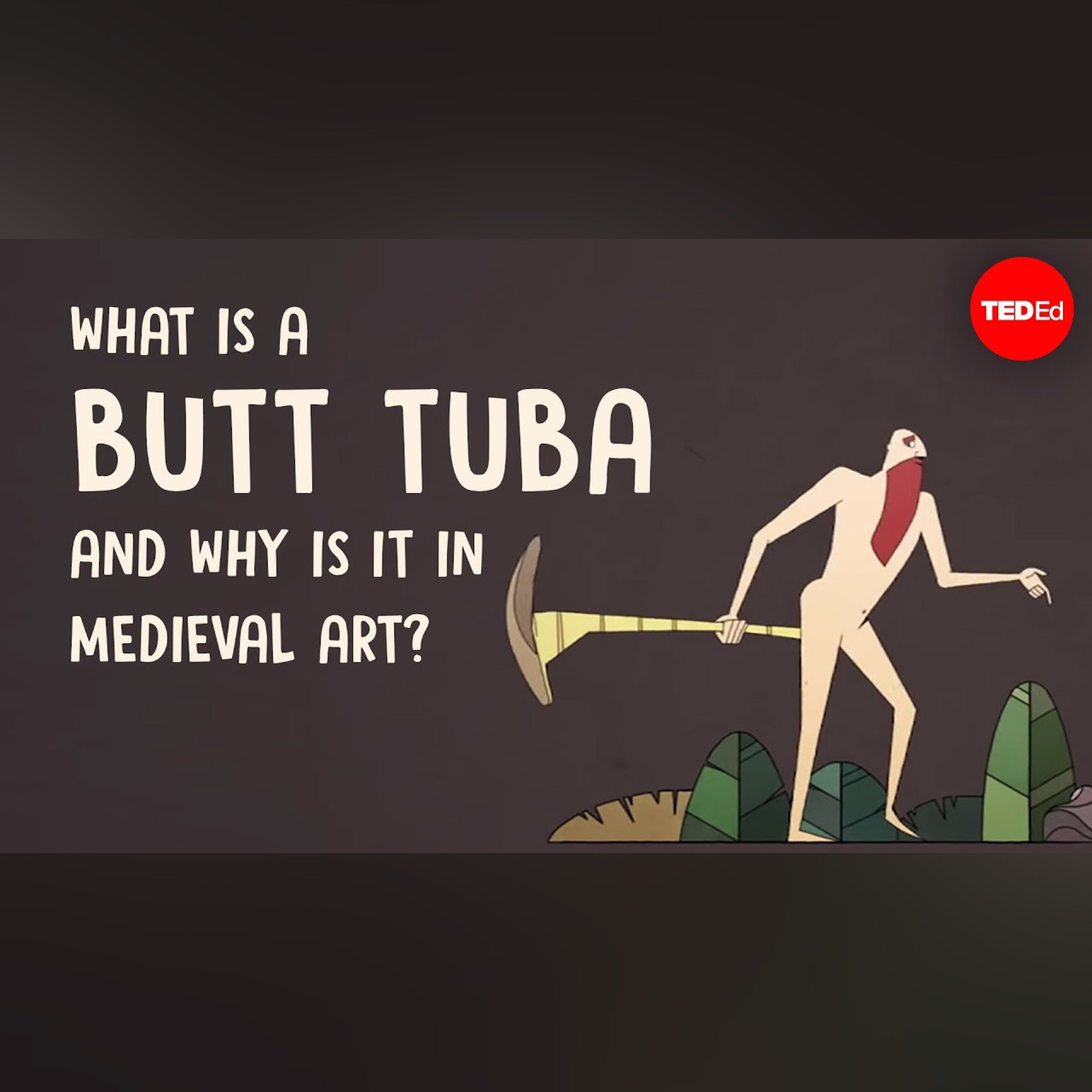
Uncover the rich history of illuminated manuscripts and the often bizarre images that filled the margins of medieval books. Uploaded 16-04-19 -- A rabbit attempts to play a church organ, while a knight fights a giant snail and a naked man blows a trumpet with his rear end. These bizarre images, painted with squirrel-hair brushes on vellum or parchment by monks, nuns and urban craftspeople, populate the margins of the most prized books from the Middle Ages. Michelle Brown explores the rich history and tradition of illuminated manuscripts. Lesson by Michelle Brown, directed by WOW-HOW Studio. Sign up for our newsletter: http://bit.ly/TEDEdNewsletter Support us on Patreon: http://bit.ly/TEDEdPatreon Find us on Twitter: http://bit.ly/TEDEdTwitter Peep us on Instagram: http://bit.ly/TEDEdInstagram View full lesson: https://ed.ted.com/lessons/what-is-a-butt-tuba-and-why-is-it-in-medieval-art-michelle-brown Thank you so much to our patrons for your support! Without you this video would not be
An old, abandoned building in West Texas had a reputation for being haunted, but one visitor wasn't convinced. While helping with some contracting work, he decided to explore the deteriorating structure, accompanied by his dog. It wasn't long before strange things began happening. Glass seemed to shatter in empty rooms, a child's cry echoed from somewhere inside, and a door repeatedly closed on its own. But the most unsettling experience came when they ventured into a dark basement that reportedly once housed an auditorium. There, a flashlight unexpectedly died, and the sound of children singing seemed to fill the empty space. Then another member of the group experienced something that convinced him they needed to leave immediately. Were they simply being unnerved by an unfamiliar building, or had they encountered something that didn't want them there? #RealGhostStoriesOnline #HauntedBuilding #AbandonedPlaces #GhostlyVoices #PhantomChildren #HauntedAuditorium #ParanormalEncounters #Une
In November of 1974, a small bungalow at 966 Lindley Street in Bridgeport, Connecticut, became the center of one of the strangest alleged poltergeist cases in New England. The Goodin family had reported unexplained pounding for years, but suddenly furniture began moving, objects fell from walls, and household items seemed to shift on their own. Then the police arrived. Several officers later put their observations in writing, including claims that they watched furniture move and saw a refrigerator lift several inches from the kitchen floor. Within days, however, the case took an unexpected turn when the family’s ten-year-old daughter admitted she had faked some of the activity. That should have solved the mystery. Instead, it created the question that has followed the Lindley Street case ever since: if some of it was a hoax, what exactly did all those witnesses see? #LindleyStreet #LindleyStreetPoltergeist #966LindleyStreet #BridgeportPoltergeist #Poltergeist #TrueHaunting #Paranormal
Can sound destroy a tumor without an incision? Dr. Zhen Xu joins Krishna Choudhary to explain histotripsy: focused ultrasound that creates tiny bubbles to mechanically break apart tissue, without relying on heat. From a noise complaint in a University of Michigan lab to the Edison system, Xu traces the unexpected discovery, the physics of cavitation, and the decades of research behind noninvasive liver-tumor treatment. We explore surprising immune effects in animal studies, the #HOPE4LIVER clinical trials, and what remains to be tested for other organs. Recorded in Washington, D.C., on September 28, 2026, before the Golden Goose Awards ceremony. Xu is a histotripsy co-inventor, HistoSonics co-founder, and U-M's Li Ka Shing Professor of Biomedical Engineering. This is the first interview in our Golden Goose series. CHAPTERS 00:00 The discovery that became histotripsy 00:50 A PhD student and a heart problem 03:42 Heat vs. sound: how histotripsy works 07:06 Gas pockets, and why not the lu
Who are you allowing to influence the way you see yourself, your decisions and your future? One of the biggest mistakes people make is seeking advice, validation and feedback from people who have absolutely no experience or understanding of what they are trying to achieve. They ask people who have never walked their path, faced […] The post EP 3887 Would you ask a blind person to critique your movie? (https://www.thestronglifeproject.com/the-strong-life-podcast/ep-3887-would-you-ask-a-blind-person-to-critique-your-movie/) appeared first on The Strong Life Project (https://www.thestronglifeproject.com/).
What does it mean to be Hindu? In this episode of Crash Course Religions, we’ll learn about the surprising history of the term “Hindu,” what the word “karma” really means, and how this vast, sprawling tradition contains more than one version of a story. Introduction: Hindu Celebrations 00:00 Hindu Creation Stories 00:37 Where Does "Hindu" Come From? 01:31 Hindu Storytelling 02:38 The Hindu Pantheon 04:53 Hindu Terminology 06:33 Hindu Practices 09:19 Hinduism Across the Globe 10:07 Review & Credits 10:45 *** Support us for $5/month on Patreon to keep Crash Course free for everyone forever! https://www.patreon.com/crashcourse Or support us directly: https://complexly.com/support Join our Crash Course email list to get the latest news and highlights: https://mailchi.mp/crashcourse/email Get our special Crash Course Educators newsletter: http://eepurl.com/iBgMhY Thanks to the following patrons for their generous monthly contributions that help keep Crash Course free for everyone forever: B
Today, Craig is going to finish up our discussion of the First Amendment with freedom of the press. Like an individual's right to free speech, the press has a right, and arguably responsibility, to tell the public what the government is doing. But of course there are some complications in doing so, like if that information will compromise national security or wrongfully discredit an individual. When considering Edward Snowden's NSA disclosures or Julian Assange's Wikileaks, it's just as important as ever to understand the role of the press in informing the public as well as our role as citizens in staying informed. Produced in collaboration with PBS Digital Studios: http://youtube.com/pbsdigitalstudios Support is provided by Voqal: http://www.voqal.org (http://www.voqal.org/) All attributed images are licensed under Creative Commons by Attribution 2.0 Want to find Crash Course elsewhere on the internet? Facebook - http://www.facebook.com/YouTubeCrashC... Twitter - http://www.twitter.co
In which John Green teaches you about the American Revolution. And the Revolutionary War. I know we've labored the point here, but they weren't the same thing. In any case, John will teach you about the major battles of the war, and discuss the strategies on both sides. Everyone is familiar with how this war played out for the Founding Fathers; they got to become the Founding Fathers. But what did the revolution mean to the common people in the United States? For white, property-owning males, it was pretty sweet. They gained rights that were a definite step up from being British Colonial citizens. For everyone else, the short-term gains were not clear. Women's rights were unaffected, and slaves remained in slavery. As for poor white folks, they remained poor and disenfranchised. The reality is it took a long time for this whole democracy thing to get underway, and the principles of life, liberty, and the pursuit of happiness weren't immediately available to all these newly minted Ameri