Michael Jaco is back with another explosive episode of Unleashing Intuition, challenging official narratives, examining political power, and sharing his predictions for America's future! THE MAR-A-LAGO JET CRASH — ANOTHER 9/11-STYLE DECEPTION? Michael questions the reported aircraft crash near Mar-a-Lago, examining footage, alleged inconsistencies in the debris field, and the possibility of a missile-related incident. He draws controversial parallels to September 11 and explores whether the public has been given the complete story. These are Michael's interpretations and allegations, not independently established findings. 🇺🇸 THE RED WAVE — A POLITICAL SHIFT THAT COULD SHAKE WASHINGTON! Michael predicts a Republican surge in Congress and examines the political forces he believes could reshape the balance of power. From election security to voter turnout and growing political divisions, he shares his perspective on what could be coming next. ⚠️ DANGEROUS EXTREMISM — IDEOLOGY, CONTROL
In this week's episode, Blood editor Dr. Natalie Rosen interviews Dr. Lindsey George, Director of Clinical In Vivo Gene Therapy and an attending physician in the Division of Hematology at Children's Hospital of Philadelphia, and also Dr. Miles Horton and Dr. Thomas Lew of the Royal Melbourne Hospital and Peter McCallum Cancer Center, and the Walter and Eliza Hall Institute of Medical Research on their latest articles published in Blood on the characterization of the prothrombotic mechanisms of recombinant FVIII Aurora and turning immunosuppressants into tools for bidirectional in vivo control. Dr. George discusses "Factor VIII Aurora: a naturally occurring gain-of-function FVIII variant with enhanced FIXa affinity (https://ashpublications.org/blood/article-lookup/DOI/10.1182/blood.2026034515)" and Drs. Horton and Lew discuss "Prime editing enables drug-controllable T-cell therapies with clinical immunosuppression (https://ashpublications.org/blood/article-lookup/DOI/10.1182/blood.20260
In this funny and blunt talk, Larry Smith pulls no punches when he calls out the absurd excuses people invent when they fail to pursue their passions. (Filmed at TEDxUW.) Uploaded 15-08-13 Talk by Larry Smith.
First up on the podcast, people are buying consumer-grade brain wave detectors ostensibly to help with sleep, concentration, and meditation. But as freelance investigative journalist Jonathan Moens (https://jonathan-moens.com/) describes, companies are getting more than the price of the devices in the exchange (https://www.science.org/doi/10.1126/science.zp18ht9)—including training data for artificial intelligence models—in many cases without the consent of the user. Next on the show, we delve into the many uses for glucagonlike peptide-1 (GLP-1) agonist drugs beyond reducing obesity. Host Sarah Crespi talks with one of the special issue editors, Yevgeniya Nusinovich, senior editor at Science, about their potential for everything from improving cognition to combating cancer. Then we hear from Nora Volkow (https://nida.nih.gov/about-nida/directors-page/biography-dr-nora-volkow), director of the National Institute on Drug Abuse at the National Institutes of Health, about hopes for using
Servier's sevasemten missed its pivotal Becker muscular dystrophy trial, while Karyopharm filed Chapter 11 and proposed an Ayrmid deal around XPOVIO. This delayed November 3, 2026 edition reports dated developments: 'today' means November 3 and 'Monday' November 2. Also covered: uniQure's AMT-130 application, Teva's TOPAS-MSA stop, FDA potency guidance, InventisBio's psoriasis results, Recursion's REC-4881 data, Dr. Reddy's tentative lenacapavir approval reported by CHAI, Rhythm's LG Chem amendment and Pfizer's forecast. Alex Mercer and Maya Patel host.
An Extraordinary Conversation with Hollywood Legend Jim Caviezel | GHOST SOLDIER Arrives Veterans Day — November 11, 2026 FROM PORTRAYING JESUS CHRIST TO BECOMING A GHOST SOLDIER — THE UNTOLD STORY OF JIM CAVIEZEL! Michael Jaco welcomes acclaimed actor Jim Caviezel for an extraordinary, deeply personal conversation about faith, courage, sacrifice, and the remarkable transformation required to bring some of cinema's most unforgettable characters to life. Best known for his portrayal of Jesus Christ in Mel Gibson's The Passion of the Christ and his powerful performance in Sound of Freedom, Jim takes us behind the scenes of his incredible career and reveals how he developed the physical, mental, and spiritual strength to embody these demanding roles. ⚔️ THE PASSION OF THE CHRIST — BEYOND HUMAN LIMITS Jim shares how his preparation for G.I. Jane, including intense Navy SEAL training and exposure to extreme cold, helped prepare him for the extraordinary physical challenges of portraying Jes
From gnocchi and salchipapas to potato chips and french fries, it seems like every cuisine around the world has embraced the potato! And this humble tuber did not originate in Ireland or France, but near Lake Titicaca near the border of what is now known as Bolivia and Peru 7000-9000 years ago! So today, we're going to trace this history of the potato as we teach you about climate, how we classify it using the Köppen system, and the ways humans have employed their geo-literacy to adapt to their surroundings. Watch our videos and review your learning with the Crash Course App! Download here for Apple Devices: https://apple.co/3d4eyZo Download here for Android Devices: https://bit.ly/2SrDulJ Crash Course is on Patreon! Thanks to the following patrons for their generous monthly contributions that help keep Crash Course free for everyone forever: Rene Duedam, Burt Humburg, Aziz, Nick, DAVID MORTON HUDSON, Perry Joyce, Scott Harrison, Mark & Susan Billian, Junrong Eric Zhu, Alan Bridgeman,
Getting stuck in a video game can be frustrating—especially when that game is the cycle of suffering. In this episode of Crash Course Religions, we’ll explore the ways Buddhists try to leave that suffering behind and reach enlightenment, using the teachings of the Buddha, the three jewels, the four noble truths, and the eightfold path. Introduction: Game Over 00:00 Buddhist Beliefs 00:38 The Buddha 02:01 The Dharma 04:43 The Sangha 08:16 Review & Credits 10:14 *** Support us for $5/month on Patreon to keep Crash Course free for everyone forever! https://www.patreon.com/crashcourse Or support us directly: https://complexly.com/support Join our Crash Course email list to get the latest news and highlights: https://mailchi.mp/crashcourse/email Get our special Crash Course Educators newsletter: http://eepurl.com/iBgMhY Thanks to the following patrons for their generous monthly contributions that help keep Crash Course free for everyone forever: Reed Spilmann, Brandon Thomas, Emily Beazley,
Download a free audiobook version of "Take a Nap: Change Your Life" by Sara Mednick or Matthew Walker's "Why We Sleep" and support TED-Ed's nonprofit mission: https://www.audible.com/ted-ed Uploaded 29-04-21 -- Your eyes get heavy and gradually close… But wait! It’s only lunch time and you still have so much to do. Would taking a nap help? Or would it derail your day? Well, that depends on a few things— especially what stages of sleep the nap includes. Sara C. Mednick details the cognitive benefits of napping, and explores the optimal length and time of day for a quick snooze. Lesson by Sara C. Mednick, directed by Qian Shi. Support Our Non-Profit Mission ---------------------------------------------- Support us on Patreon: http://bit.ly/TEDEdPatreon Check out our merch: http://bit.ly/TEDEDShop ---------------------------------------------- Connect With Us ---------------------------------------------- Sign up for our newsletter: http://bit.ly/TEDEdNewsletter Find us on Twitter: http:/
This is a Grave Talks CLASSIC EPISODE! PART TWO For John Olson, the paranormal was never something reserved for ghost stories or late-night television. It was woven into everyday life. Growing up in a home filled with strange noises, shadowy figures, and the constant feeling of being watched, John learned early on to accept the unexplained as part of reality. But over time, acceptance turned into curiosity. Why was this happening? And why did so many other people seem to share similar experiences? As John searched for answers, he discovered that stories like his were far more common than he ever imagined. His experiences led him to explore not only the hauntings within his own life, but the haunted lives of others who grew up surrounded by spirits and unexplained activity. On this episode of The Grave Talks, John shares what it’s like to spend a lifetime living alongside the paranormal. #TheGraveTalks #HauntedHouse #Paranormal #GhostStories #ShadowPeople #Haunting #ParanormalPodcast #S
This is a Grave Talks CLASSIC EPISODE! In Galion, Ohio, the Gill House stands as a striking example of Victorian architecture and social prominence. Built by Bloomer Gill as a grand family residence, the home once hosted lavish gatherings and welcomed notable visitors, including Thomas Edison, Henry Ford, and Andrew Firestone. But the elegance that once defined the house has long since given way to something far less celebratory. Today, visitors and investigators report a wide range of unexplained activity throughout the home. Children’s laughter has been heard coming from the attic, shadow figures have been seen moving through hallways, and tapping sounds echo through otherwise quiet rooms. The basement, however, is said to be the most unsettling area of all—where disembodied voices, screams, and encounters with a figure known as “Johnny Cake” have been reported. Brenda Treisch, Jane Baker, and Mary Butterfield explore the history and hauntings of the Gill House. From lingering former
Hank brings us the story of the electron and describes how reality is a kind of music, discussing electron shells and orbitals, electron configurations, ionization and electron affinities, and how all these things can be understood via the periodic table. Watch this video in Spanish on our Crash Course en Español channel! https://youtu.be/N5apS0tE67c Pssst... we made flashcards to help you review the content in this episode! Find them on the free Crash Course App! Download it here for Apple Devices: https://apple.co/3d4eyZo Download it here for Android Devices: https://bit.ly/2SrDulJ Table of Contents Snobby Scientists 00:43 Great Dane/Bohr Model 01:57 Electrons as Music 04:13 Electron Shells and Orbitals 04:44 Electron Configurations 05:54 Ionization and Electron Affinities 08:17 Periodic Table 10:18 Crash Course is on Patreon! Want to find Crash Course elsewhere on the internet? Facebook - http://www.facebook.com/YouTubeCrashCourse Twitter - http://www.twitter.com/TheCrashCourse Inst
Today Phil explains that YES, there are other planets out there and astronomers have a lot of methods for detecting them. Nearly 2000 have been found so far. The most successful method is using transits, where a planet physically passes in front of its parent star, producing a measurable dip in the star’s light. Another is measuring the Doppler shift in a star’s light due to reflexive motion as the planet orbits. Exoplanets appear to orbit nearly every kind of star, and we’ve even found planets that are the same size as Earth. We think there may be many billions of Earth-like planets in our galaxy. For more information on reflexive motion, you can check out Phil's blog: http://www.slate.com/blogs/bad_astronomy/2015/08/07/crash_course_astronomy_exoplanets.html Check out the Crash Course Astronomy solar system poster here: http://store.dftba.com/products/crashcourse-astronomy-poster -- Chapters: Introduction: Exoplanets 00:00 Reflexive Motion 1:29 Discovering the First Exoplanets 2:07 51
In which Craig Benzine introduces a brand new Crash Course about U.S. Government and Politics! This course will provide you with an overview of how the government of the United States is supposed to function, and we'll get into how it actually does function. The two aren't always the same thing. We'll be learning about the branches of government, politics, elections, political parties, pizza parties, and much, much more! Produced in collaboration with PBS Digital Studios: http://youtube.com/pbsdigitalstudios Support is provided by Voqal: http://www.voqal.org (http://www.voqal.org/) Chapters: Introduction: Craig asks the big questions 00:00 What are government & politics and why do we study them? 1:58 How to participate in the U.S. political process 3:28 Crash Course Government & Politics will cover... 4:54 Credits 6:17 Crash Course is on Patreon! Want to find Crash Course elsewhere on the internet? Facebook - http://www.facebook.com/YouTubeCrashCourse Twitter - http://www.twitter.com/T
Thanks to KiwiCo for Supporting PBS. For more information go to https://www.kiwico.com/CrashCourse Even though animals can look very different on their surface, there are surprising similarities in how they’ve evolved to solve major problems - like how to support and move their bodies. Today, we’ll take a look at the various ways animals can grow, learn how and why some animals evolved to have a head and others evolved to not have a head, and examine the different types of skeletons - from those inside bodies (like our own), to skeletons outside bodies (like in insects), and even those made of water (like in jellyfish). Evolution is a wild journey that brings us so many different animals with a huge array of bodies and sizes - that is, until everything turns into a crab! Learn more about Rae here! https://www.raewynngrant.com (https://www.raewynngrant.com/) #CrashCourse #Zoology #PBSNature Watch our videos and review your learning with the Crash Course App! Download here for Apple Devi
In her talk, Ali Carr-Chellman pinpoints three reasons boys are tuning out of school in droves, and lays out her bold plan to re-engage them: bringing their culture into the classroom, with new rules that let boys be boys, and video games that teach as well as entertain. (Filmed at TEDxPSU.) Uploaded 15-08-13 Talk by Ali Carr-Chellman.
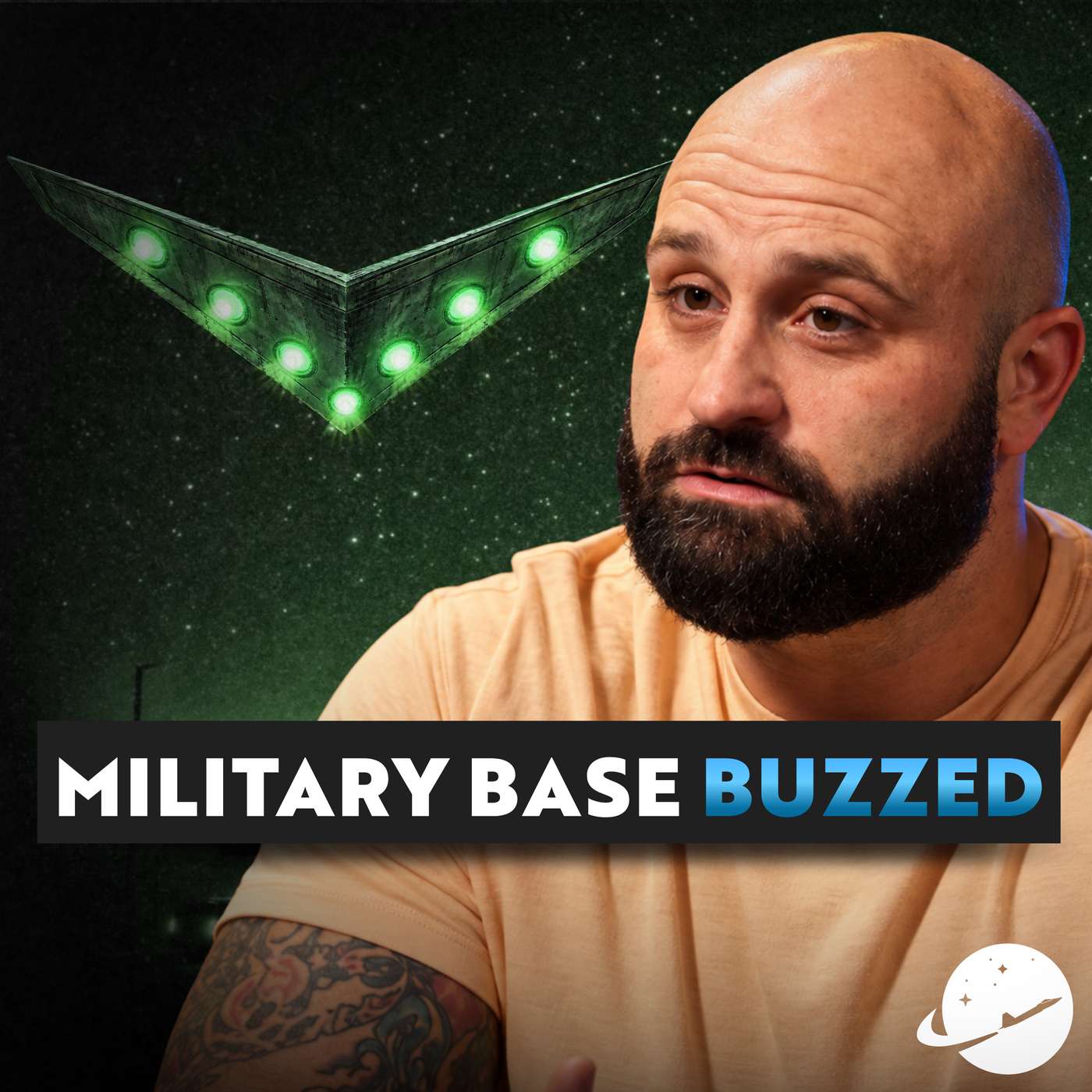
Through night-vision goggles, Logan Labby says he saw a large, silent V-shaped object over Schriever Air Force Base. When he lowered the goggles, he could no longer see it. In spring 2008, Logan was serving in Air Force Security Forces near Colorado Springs. He recalls that two fellow airmen also viewed the object through the goggles, yet none of them reported it that night. He says they feared what reporting a UFO might mean for their security clearances. Logan joins me to describe the sighting, explain why he stayed silent, and discuss what eventually led him to come forward to Americans for Safe Aerospace and speak with the FBI. He does not claim to know what the object was. Looking back, he considers the decision not to report it a security failure. His account raises a practical question: what would help service members report unusual observations without fearing for their careers? To report a sighting or learn about ASA’s work, visit SafeAerospace.org (https://safeaerospace.org/)
What does it mean to look inside the very fabric of the universe? This week on Inside Science, Tom Whipple enters the zeptoverse with particle physicist Harry Cliff, exploring a world a billion trillionth of a metre across, where scientists hope to find answers to some of the biggest mysteries in physics. And in our new weekly series, we explore the changing relationship between artificial intelligence and the things we hold dear. This week, Stuart Manley, the co-owner of Barter Books in Alnwick describes why his bookshop has been receiving some rather unusual orders. Plus, Penny Sarchet from the New Scientist joins us with the latest science news. BBC Inside Science is produced in partnership with The Open University. Presenter: Tom Whipple Producers: Harrison Lewis, Katie Tomsett, Tabitha Taylor Buck Editor: Martin Smith Production Co-ordinators: Jana Bennett-Holesworth and Owain Llion
Uploaded 15-05-18 View full lesson: https://ed.ted.com/lessons/why-do-we-sweat-john-murnan There are a number of scenarios that can make us sweat–including exercise, eating spicy foods, and nervousness. But how does this substance suddenly materialize, and what exactly is its purpose? John Murnan explores the science behind sweat. Lesson by John Murnan, directed by Dogzilla Studio. Thank you so much to our patrons for your support! Without you this video would not be possible. Exal Enrique Cisneros Tuch, Ana Maria, Vignan Velivela, Ibel Wong, Ahmad Hyari, A Hundred Years, eden sher, Travis Wehrman, Minh Tran, Louisa Lee, Kiara Taylor, Hoang Viet, Nathan A. Wright, Jast3r, Аркадий Скайуокер, Milad Mostafavi, Rob Johnson, Ashley Maldonado, Clarence E. Harper Jr., Bojana Golubovic, Mihail Radu Pantilimon, Benedict Chuah, Karthik Cherala, haventfiguredout, Violeta Cervantes, Elaine Fitzpatrick, Lyn-z Schulte, cnorahs, Henrique 'Sorín' Cassús, Tim Robinson, Kiarash Asar, Jun Cai, Paul Schne
Infectious disease has affected the human species for as long as we’ve existed, but in that time we’ve come a long way in understanding what they are and how they spread. In this episode of Crash Course Outbreak Science, we’ll introduce some of the core concepts that will help us throughout this series as we discover the effects of infectious disease, from the microscopic, to the societal level. Thanks for watching this episode of Crash Course Outbreak Science, which was produced by Complexly in partnership with Operation Outbreak and the Sabeti Lab at the Broad Institute of MIT and Harvard—with generous support from the Gordon and Betty Moore Foundation. If you want to help keep Crash Course free for everyone, forever, you can join our community on Patreon. Sources: https://www.ncbi.nlm.nih.gov/books/NBK27114/#:~:text=Pathogenic%20organisms%20are%20of%20five,as%20shown%20schematically%20in%20Fig. (https://www.ncbi.nlm.nih.gov/books/NBK27114/) *** Watch our videos and review your learn
If you were given a chemical and told to identify it, how would you go about doing that? You could look at different factors like color, boiling point, melting point, or smell, but the answer still might not be clear. Thankfully, today we have a more precise, higher-tech way of identifying chemicals called Nuclear Magnetic Resonance, or NMR. In this episode of Crash Course Organic Chemistry, we’ll look at how NMR allows us to visualize a molecule as a spectrum, and what the peaks on the spectrum tell us about the structure of the molecule. Episode Sources: Mahdi, J. G. (2010). Medicinal potential of willow: A chemical perspective of aspirin discovery. Journal of Saudi Chemical Society, 14(3), 317-322. Dempsey, D.A., Klessig, D.F. How does the multifaceted plant hormone salicylic acid combat disease in plants and are similar mechanisms utilized in humans?. BMC Biol 15, 23 (2017). https://doi.org/10.1186/s12915-017-0364-8 Still, W. C., Kahn, M., & Mitra, A. (1978). Rapid chromatographic
What does it mean for a river to be a person? An ancestor, even? In this episode of Crash Course Religions, we’ll learn how Indigenous religious traditions’ emphasis on place, kinship, and diverse spirits challenge the dominant assumptions of the Western worldview. Introduction: The Whanganui River 00:00 Indigenous Religion? 00:55 Indigenous Beliefs 03:27 Kinship 05:18 The Importance of Place 06:24 Law & Resistance 07:27 Review & Credits 10:37 *** Support us for $5/month on Patreon to keep Crash Course free for everyone forever! https://www.patreon.com/crashcourse Or support us directly: https://complexly.com/support Join our Crash Course email list to get the latest news and highlights: https://mailchi.mp/crashcourse/email Get our special Crash Course Educators newsletter: http://eepurl.com/iBgMhY Thanks to the following patrons for their generous monthly contributions that help keep Crash Course free for everyone forever: Reed Spilmann, Brandon Thomas, Emily Beazley, Forrest Langseth
Explore how synthetic biologists are programming bacteria to fight cancer by manipulating their DNA. Uploaded 10-12-19 -- In 1884, an unlucky patient who had a rapidly growing cancer in his neck came down with an unrelated bacterial skin infection. As he recovered from the infection, the cancer surprisingly began to recede. The infection had stimulated the patient’s immune system. Today, synthetic biologists program bacteria to safely deliver drugs directly to tumors. How is this possible? Tal Danino investigates. Lesson by Tal Danino, directed by Chris Bishop. Animator's website: https://www.chrisbishopartist.com (https://www.chrisbishopartist.com/) Sign up for our newsletter: http://bit.ly/TEDEdNewsletter Support us on Patreon: http://bit.ly/TEDEdPatreon Find us on Twitter: http://bit.ly/TEDEdTwitter Peep us on Instagram: http://bit.ly/TEDEdInstagram View full lesson: https://ed.ted.com/lessons/hacking-bacteria-to-fight-cancer-tal-danino Thank you so much to our patrons for your supp
UAP Files Podcast S4|42 Check out OpenVeils: http://openveils.com/UAPfiles What happens when a highly experienced British murder detective turns his investigative skills towards one of the most mysterious incidents in recent British military history? In this episode of the UAP Files Podcast, I'm joined by Mike Morgan, a former British murder investigator, senior investigating officer and intelligence officer with around 30 years of experience investigating some of the most serious and complex criminal cases. Mike has turned his attention to the extraordinary events of November 2024, when unidentified objects were reported operating over several US-operated military installations in the UK, including RAF Lakenheath. Rather than relying on speculation, Mike has applied the same investigative discipline he developed throughout his policing career, using extensive Freedom of Information Act (FOIA) requests, official correspondence and careful examination of the available evidence to scruti