Prothrombotic FVIII Mutation and Prime Editing T-Cells for Drug Resistance
31 min
Listen through the publisher, then discuss the episode here or arrange an in-person Roundtable. Your city determines where to meet.
Roundtables are designed for groups of four, with a shared subject and room for everyone to speak. Come for discussion, with no dating expectation.
In this week's episode, Blood editor Dr. Natalie Rosen interviews Dr. Lindsey George, Director of Clinical In Vivo Gene Therapy and an attending physician in the Division of Hematology at Children's Hospital of Philadelphia, and also Dr. Miles Horton and Dr. Thomas Lew of the Royal Melbourne Hospital and Peter McCallum Cancer Center, and the Walter and Eliza Hall Institute of Medical Research on their latest articles published in Blood on the characterization of the prothrombotic mechanisms of recombinant FVIII Aurora and turning immunosuppressants into tools for bidirectional in vivo control. Dr. George discusses "Factor VIII Aurora: a naturally occurring gain-of-function FVIII variant with enhanced FIXa affinity (https://ashpublications.org/blood/article-lookup/DOI/10.1182/blood.2026034515)" and Drs. Horton and Lew discuss "Prime editing enables drug-controllable T-cell therapies with clinical immunosuppression (https://ashpublications.org/blood/article-lookup/DOI/10.1182/blood.2026033156)".
Episode information is provided by the publisher. Listening takes place on the publisher’s service.
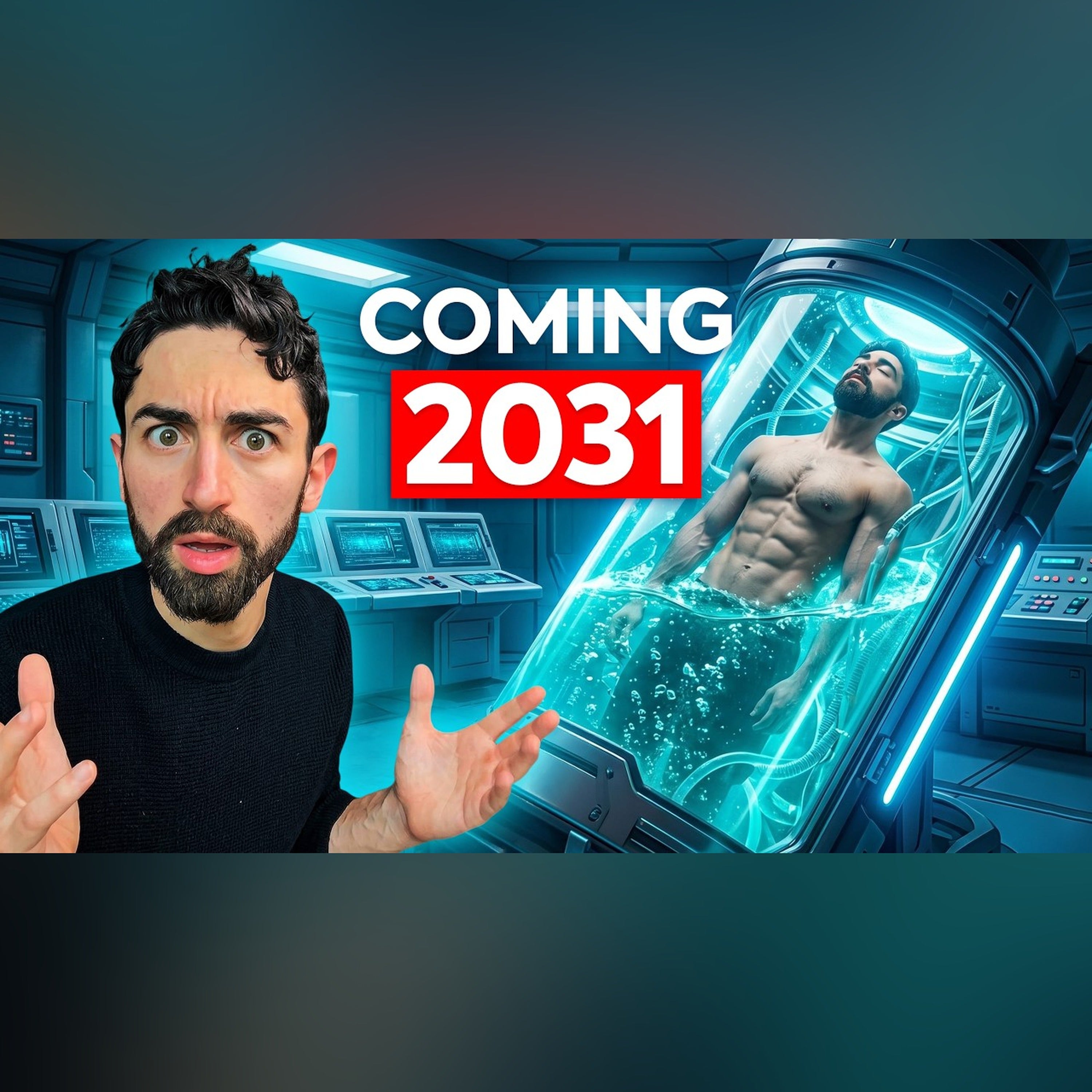
For extra nuances and all the references, please see the newsletter: https://staycuriousmetabolism.substack.com/p/can-we-become-like-captain-america?r=40ekz2 The StayCurious Human Enhancement Series We're launching a new series at StayCurious Metabolism called Peptides Plus, where we'll explore the most promising tools available today—and the innovations that may shape tomorrow. We have dozens of deep dives planned, covering everything from emerging therapeutics to cutting-edge performance and longevity interventions. GO HERE: https://staycuriousmetabolism.substack.com/p/peptides Chapters 0:00 — Superhuman Biology Is Already Starting 2:40 — Beyond GLP-1: Fat Loss Without Muscle Loss 7:28 — Gene Editing, CRISPR, and the Future of Disease Cure 14:57 — Cellular Reprogramming and Biological Age Reset 18:49 — MicroRNAs, Mitochondria, and What Comes Next Video Description What if the idea of “superhuman biology” isn’t science fiction anymore—but early-stage reality? From drugs that selective
FDA again declines to approve Capricor’s Duchenne drug deramiocel, and Capricor disputes the agency’s reading of HOPE-3. Merck reports better overall survival with Kelun’s sacituzumab tirumotecan in advanced gastroesophageal cancer, while progression-free survival missed and the survival gain remains undisclosed. The roundup covers AstraZeneca’s sonesitatug vedotin priority review, PMV’s rezatapopt ovarian cancer data, Erasca’s ERAS-0015 pancreatic cancer plans and Germany’s ruling on Merck’s Keytruda SC. Also covered are Savara’s molgramostim review delay, J&J’s Tremfya (guselkumab) findings in axial psoriatic arthritis, CMS’s Medicare Advantage Part B proposal and FDA’s new biologics safety council. Delayed edition for Friday, November 20, 2026. Alex Mercer and Maya Patel host. Get the daily rundown in your inbox — subscribe at thepharmacloseout.com (https://thepharmacloseout.com/).
Human DNA editing is finally here. Check out the new WHOOP here! https://join.whoop.com/cleo There is a microscopic technology that now gives us the power to edit our own genes while we’re alive. To cure certain diseases, possibly prevent others, or boost what our bodies can do… or maybe, one day give our kids abilities no one has ever had before… effectively putting evolution into our hands. This is not some sci-fi future! We’re already using this technology in real medical treatments in plants to grow new crops and in animals to create new species! Just yesterday, news broke that a baby’s life was saved using personalized gene editing that fixed one tiny error in its DNA. This is truly “huge if true.” Deciding how we use this new superpower may be the biggest challenge we have ever faced - and the biggest opportunity to reduce human suffering. This tool is called CRISPR. Dr. Jennifer Doudna won the Nobel Prize for discovering it. So, in this third episode of Huge Conversations, Dr. D
Viewers like you help make PBS (Thank you ) . Support your local PBS Member Station here: https://to.pbs.org/DonateSPACE Uploaded 10-10-18 Physics seems to be telling us that it’s possible to simulate the entire universe on a computer smaller than the universe. You can further support us on Patreon at https://www.patreon.com/pbsspacetime Space Time Challenge Winners Jin Du Loren Booker Kevin Selva Prasanna May Awbin John Reza Ian Grams Challenge Winners: Please [email protected] with your name, address, US t-shirt size – small, medium, large, extra large, or extra-extra-large and let us know which T you’d like. Get your own Space Time t-shirt at http://bit.ly/1QlzoBi Tweet at us! @pbsspacetime Facebook: facebook.com/pbsspacetime Email us! pbsspacetime [at] gmail [dot] com Comment on Reddit: http://www.reddit.com/r/pbsspacetime Help translate our videos! Previous Episode: How to Detect Extra Dimensions Hosted by Matt O'Dowd Written by Matt O'Dowd Graphics by Luke Maroldi Assistant
Keto Consult #12, This week Jennifer and I talk about my experience at the Metabolic Health Center 2019. I was able to hear some really interesting lectures about Keto for Cancer and Keto for Mental Health. The talk about Keto for Cancer and Keto for Mental Health has come such a long way in the past 2 years and continues to evolve. We also discuss the Effects of Marijuana on the Brain and Hyperbaric Oxygen Chambers and the benefits of Hyperbaric Oxygen Therapy. Finally we get an update from Jennifer and discuss her personal Keto Journey. Thanks for tuning into my channel. To learn more about Keto and Cancer, read my blog here: https://bozmd.com/m-d-anderson-on-the-keto-diet-and-cancer/ BOOK-LINK - ANYWAY YOU CAN. AUDIBLE: https://adbl.co/2SLLfS1 PAPERBACK= (Affilate link) https://amzn.to/2Cq1IVC The two most common questions I get ... 1) "Doc, what BLOOD METER do you recommend?" ANSWER: FORACARE: http://bit.ly/2QKGmKG For years my diabetics told me this system was great. I tried sever
Narcissistic abuse rewires your hormones. Cortisol, oxytocin, dopamine, thyroid, reproductive hormones and blood sugar all get thrown off, which is why so many survivors have symptoms doctors cannot explain. Chapters 00:00 Introduction 01:13 Dysregulated Cortisol Production 03:14 Disrupted Oxytocin and Dopamine Systems 05:26 Thyroid Dysfunction and Metabolic Disruption 07:23 Reproductive Hormone Chaos 09:22 Insulin Resistance and Blood Sugar Dysregulation 11:08 Why Doctors Miss These Patterns 12:03 Steps Towards Healing and Recovery 12:50 Join the Thrive After Narcissistic Abuse Program 13:17 Conclusion and Final Thoughts Is this narcissistic abuse? Watch this episode on YouTube: youtu.be/bwfVmEIk6rw (https://youtu.be/bwfVmEIk6rw)
In this week's episode, Blood editor Dr. Laura Michaelis interviews Dr. Sabine Eichinger of the Medical University of Vienna, and Dr. Jeanne Palmer of the Mayo Clinic on their latest articles published in Blood highlighting emerging research and treatment strategies in hematology. Dr. Eichinger discusses a prospective study examining the risk of recurrent venous thromboembolism (VTE) in patients with provoked thrombosis, revealing that recurrence rates were higher than previously estimated, particularly among patients with major transient risk factors. Her findings suggest that recurrence risk is not uniform and that anticoagulation duration should be individualized rather than based on a one-size-fits-all approach. Dr. Jeanne Palmer then reviews a Phase II clinical trial of sapablursin, a novel hepcidin mimetic for polycythemia vera, explaining how the agent regulates iron availability to reduce erythropoiesis, decrease phlebotomy requirements, and potentially improve patients' qualit
Workers should retain the right to strike even when a dispute inconveniences the public.
Share your view, then see how readers voted. No sign-in required. This poll is shared across stories.
Do you agree or disagree?
Common Quandary
A Common Quandary to discuss
Another conversation to explore, separate from this news story.
You find a family secret after a relative dies. Does the truth come out?
Sorting through a deceased relative's papers, you discover evidence of a serious betrayal that would change how the family remembers them. Revealing it could answer old questions—and cause fresh pain.