GLP-1 targets beyond obesity, and misusing brain data
47 min
Listen through the publisher, then discuss the episode here or arrange an in-person Roundtable. Your city determines where to meet.
Roundtables are designed for groups of four, with a shared subject and room for everyone to speak. Come for discussion, with no dating expectation.
First up on the podcast, people are buying consumer-grade brain wave detectors ostensibly to help with sleep, concentration, and meditation. But as freelance investigative journalist Jonathan Moens (https://jonathan-moens.com/) describes, companies are getting more than the price of the devices in the exchange (https://www.science.org/doi/10.1126/science.zp18ht9)—including training data for artificial intelligence models—in many cases without the consent of the user. Next on the show, we delve into the many uses for glucagonlike peptide-1 (GLP-1) agonist drugs beyond reducing obesity. Host Sarah Crespi talks with one of the special issue editors, Yevgeniya Nusinovich, senior editor at Science, about their potential for everything from improving cognition to combating cancer. Then we hear from Nora Volkow (https://nida.nih.gov/about-nida/directors-page/biography-dr-nora-volkow), director of the National Institute on Drug Abuse at the National Institutes of Health, about hopes for using GLP-1 therapies to address addiction (https://www.science.org/doi/10.1126/science.aej9836) to a range of substances. See the whole special issue here (https://www.science.org/doi/10.1126/science.aen0869). This week’s episode was produced with help from Podigy (https://podigy.co/). Image: Long Wei/VCG via Getty Images
Episode information is provided by the publisher. Listening takes place on the publisher’s service.
For all references and even deeper nuances, check out the StayCurious Metabolism letter: https://staycuriousmetabolism.substack.com/p/can-visceral-fat-cause-depression?r=40ekz2 Chapter *Call our service line at 815-STAY-CUR (815-782-9287) *Learn more about the data, here: https://staycuriousmetabolism.substack.com/p/life-or-death-in-the-fine-print-the?r=40ekz2 Visceral Fat Randomized Controlled Trial Video: https://youtu.be/lDeegZ1wtAI Description: Most people think of fat as extra weight—something cosmetic or something to “burn off.” But new science is showing something far more profound: visceral fat is an endocrine organ that sends biochemical messages across the entire body, including directly into the brain. And those messages can change mood, increase stress sensitivity, and even promote depression. In this video, we break down a brand-new study revealing how visceral fat releases tiny molecular packages called extracellular vesicles. Inside those vesicles is a specific microRNA—
Billions in taxpayer dollars allegedly lost to fraud, Chinese-backed efforts to undermine American energy production, and a growing wave of AI-powered cyber threats. Is America doing enough to protect itself? John Solomon and Amanda Head are joined by Minnesota Congressman Pete Stauber, who discusses the expanding welfare fraud scandal, efforts to hold those responsible accountable, and allegations that Chinese-funded organizations are working to obstruct American mining and energy projects. Stauber also addresses permitting reform and the battle over America's critical mineral independence. Then, American Energy Institute CEO and former Texas state representative Jason Isaac warns that proposed electricity price controls could discourage investment, threaten grid reliability, and ultimately drive energy costs even higher. He also examines China's influence over global oil markets, America's growing energy production, and how AI data centers could generate their own electricity rather
Brought to you by Raycon. Sign Up on Patreon to get access to the Space Time Discord! Scientists have been slowly extending the periodic table one element at a time, pushing to higher and higher masses, and have discovered some incredibly useful materials along the way. But the elements at the current end of the table are so unstable that they decay almost as soon as they’re created in our particle accelerators. Have we reached the end of the line of discoverable elements? There are new rows of the periodic table to unlock, and more stable versions of known heavy elements to synthesize—and while our accelerators are coming up short, astronomers have found a strange cosmic phenomenon that may populate the periodic table beyond our wildest dreams. Check out the Space Time Merch Store Sign up for the mailing list to get episode notifications and hear special announcements! Search the Entire Space Time Library Here: https://search.pbsspacetime.com/ Hosted by Matt O'Dowd Written by Matt Cap
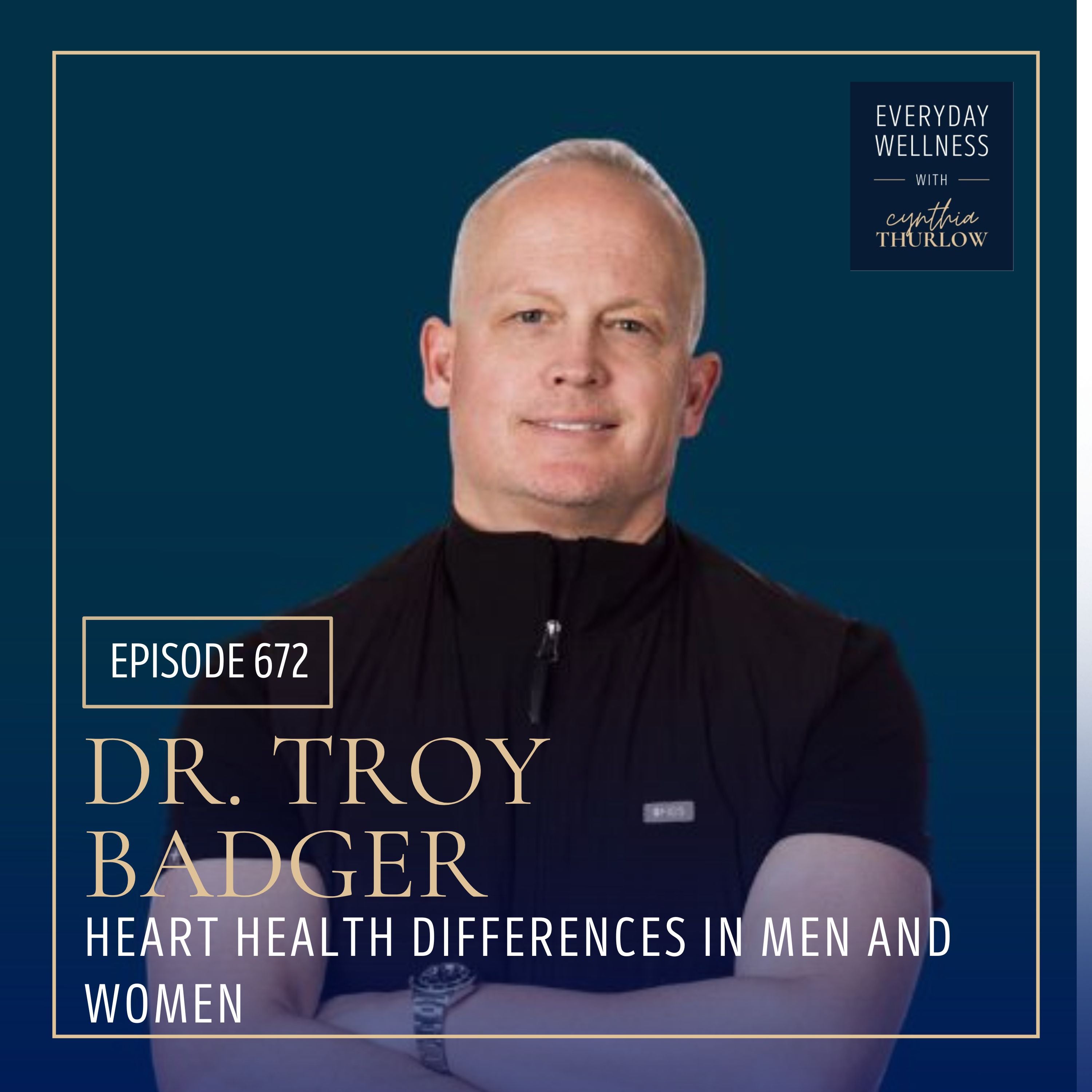
Today, I’m honored to connect with Dr. Troy Badger. He is a board-certified cardiologist and interventionalist and the founder of Cardiostrong, a concierge preventive cardiology clinic in Provo, Utah, focused on reducing cardiovascular risk, optimizing metabolic health, and improving strength and cardiorespiratory fitness for executives and athletes. In today’s conversation, we discuss Dr. Badger’s gender- and age-specific approach to heart health, including treatment differences for men and women, and diagnoses such as INOCA, SCAD, vasospastic disease, and Takotsubo. We examine emotions and their influence on heart health, coronary ischemia and cardiomyopathies, labs and diagnostics, how Dr. Badger assesses risk in his patients, and the differences between a CAC and a CCTA. Dr. Badger also shares the labs he finds essential for all patients and discusses the role of VO2 Max, cardiovascular training, and lifestyle—specifically nutrition, the use of GLP-1 drugs, and a multidisciplinary
When you’re feeling a little blue, eating to feel better can be an appealing proposition. But the reality is we often turn to junk food or sugary treats that are high in calories and packed with salt or saturated fats. Of course, our mood can be impacted by a number of factors and there’s no magic fix that will instantly make us feel better. But there are actually types of food out there that have been proven to improve brain health and thereby beat mood disorders. Which foods are proven to improve brain health? Avocados are rich in Omega 3, aren’t they? Don’t bananas also contain tryptophan? In under 3 minutes, we answer your questions! To listen to the last episodes, you can click here: Do tongue scrapers actually help with bad breath? (https://originals.bababam.com/do-you-really-know/202406140300-do-tongue-scrapers-actually-help-bad-breath) Do our brains really tell the whole story about us? (https://originals.bababam.com/do-you-really-know/202406130300-do-our-brains-really-tell-who
The Democrats swept the midterms. Donald Trump is still president. What will the next two years look like? And what can history teach us about what comes next? Martin Wolf speaks to historian Heather Cox Richardson about the cycles in the past 250 years of US politics — how renewal (and division) can both follow periods of oligarchy, and how the Democrats should react to a “constitutional crisis”. To enjoy future episodes, be sure to subscribe to ‘Martin Wolf on the World’ wherever you get your podcasts. You can also watch Martin’s podcast series on the FT’s YouTube channel here:https://www.youtube.com/@FinancialTimeshttps://www.youtube.com/@FinancialTimes Host: Martin Wolf Producer: Mischa Frankl-Duval Senior producer: Laurence Knight Video editor: Richard Topping Senior audio engineer: Breen Turner Broadcast engineer: Andrew Georgiades Podcast development: Laura Clarke FT Global Head of Audio: Flo Phillips Learn more at www.ft.com/martin-wolf-on-the-world (http://www.ft.com/martin-wo
First up on the podcast, producer Kevin McLean talks with staff writer Jennie Erin Smith about a new old idea for Alzheimer’s disease. They discuss how the cholinergic hypothesis originally came about, how it fell out of fashion, and why it’s making a comeback now (https://www.science.org/doi/10.1126/science.z91c7ic). Next on the show, the United States can make more power as demand goes up, but moving that increased amount of electricity around the country is proving problematic. Madeline Yozwiak (https://www.madyoz.com/), a postdoctoral scholar in the Engineering and Public Policy Department at Carnegie Mellon University, joins host Sarah Crespi to discuss her Policy Forum article on the barriers to scaling up the country’s electric grid (https://www.science.org/doi/10.1126/science.aeh4460) and some potential solutions. Finally, boosting precision medicine by looking at All of Us (https://www.science.org/doi/10.1126/scitranslmed.adt8040). The National Institutes of Health’s All of Us
Landscape restoration needs funding commitments that extend beyond normal political terms.
Share your view, then see how readers voted. No sign-in required. This poll is shared across stories.
Do you agree or disagree?
Common Quandary
A Common Quandary to discuss
Another conversation to explore, separate from this news story.
Your carry-on fits only if you sit on it. Do you try the airport sizer?
Your suitcase is slightly larger than the airline allows, although it has fit overhead on previous flights. Checking it costs extra and risks missing a connection. Other passengers have equally questionable bags and staff are checking inconsistently.
Does uneven enforcement weaken a traveler's duty to follow the rule?