Why an early Alzheimer’s theory is making a comeback, the U.S.’s electricity crisis, and improving precision medicine
51 min
Listen through the publisher, then discuss the episode here or arrange an in-person Roundtable. Your city determines where to meet.
Roundtables are designed for groups of four, with a shared subject and room for everyone to speak. Come for discussion, with no dating expectation.
First up on the podcast, producer Kevin McLean talks with staff writer Jennie Erin Smith about a new old idea for Alzheimer’s disease. They discuss how the cholinergic hypothesis originally came about, how it fell out of fashion, and why it’s making a comeback now (https://www.science.org/doi/10.1126/science.z91c7ic). Next on the show, the United States can make more power as demand goes up, but moving that increased amount of electricity around the country is proving problematic. Madeline Yozwiak (https://www.madyoz.com/), a postdoctoral scholar in the Engineering and Public Policy Department at Carnegie Mellon University, joins host Sarah Crespi to discuss her Policy Forum article on the barriers to scaling up the country’s electric grid (https://www.science.org/doi/10.1126/science.aeh4460) and some potential solutions. Finally, boosting precision medicine by looking at All of Us (https://www.science.org/doi/10.1126/scitranslmed.adt8040). The National Institutes of Health’s All of Us (https://www.nih.gov/allofus) project is a gigantic source of whole-genome sequences and electronic health records. Philip Empey (https://www.pharmacy.pitt.edu/people/philip-e-empey), associate professor in the School of Pharmacy and associate director of the Institute for Precision Medicine at the University of Pittsburgh, discusses how panning through this huge trove of data to find pharmacogenomic variants—genes important for prescription decisions—will improve precision medicine. This week’s episode was produced with help from Podigy (https://podigy.co/). Image: Helen H. Richardson/MediaNews Group/The Denver Post via Getty Images
Episode information is provided by the publisher. Listening takes place on the publisher’s service.
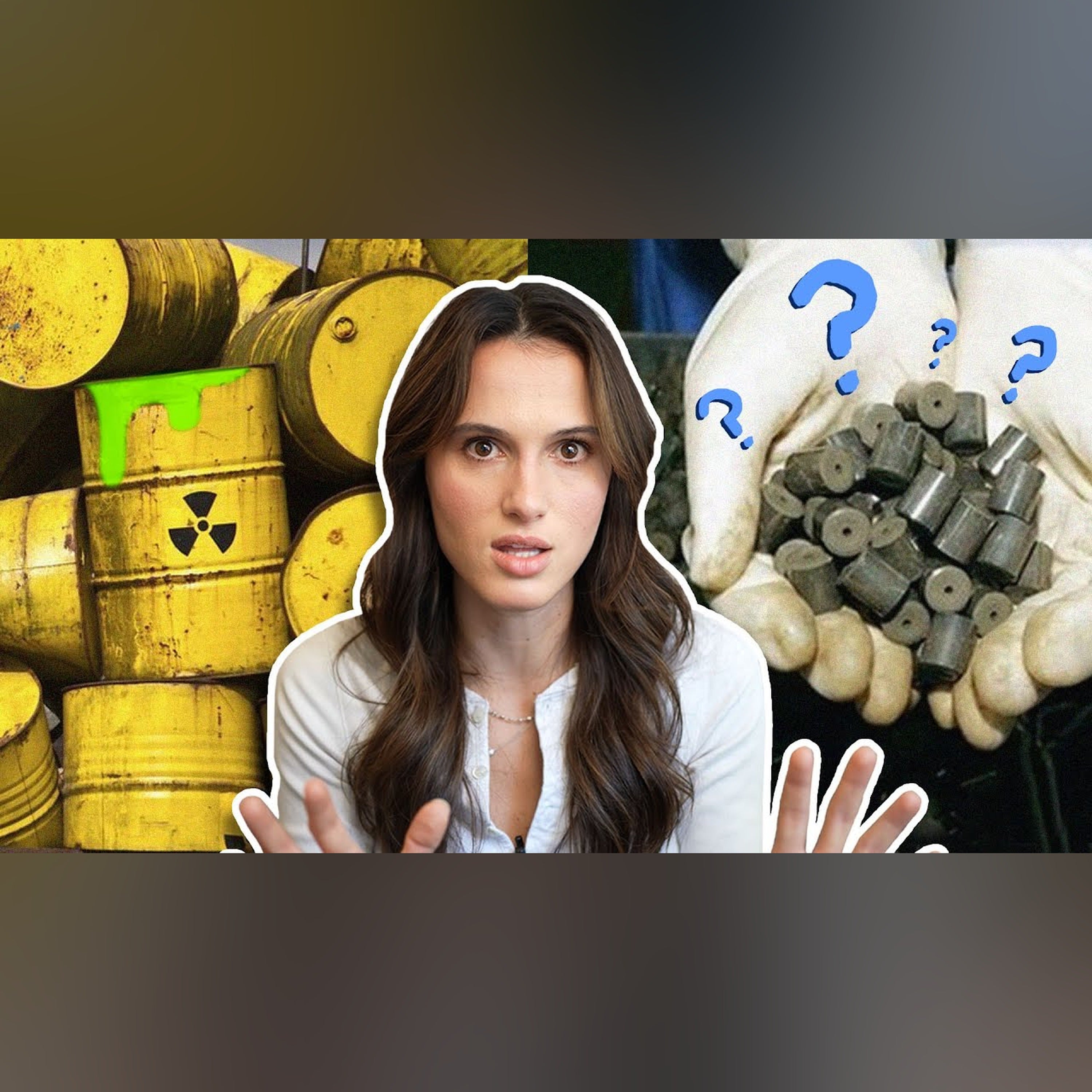
What if we could actually USE nuclear waste? Watch Johnny’s explainer on nuclear power here - and subscribe to his channel! https://youtu.be/QzTgZ6kOEM8 Nuclear waste is scary. Maybe you’ve seen it as glowing green goop in The Simpsons, or as a radioactive threat on the news. Either way, you likely know it has been a major block to the use and improvement of nuclear power. Over the last few decades, experts, politicians and the public have had heated debates over what to do with this radioactive material created by nuclear power plants. But what if there were a way to not just store nuclear waste, but actually USE it? This video is about the effort to make electricity out of nuclear waste. Really. It turns out, we developed the tools to do this decades ago. This story is about a technology we left behind and the people who want to bring it back. For this video, I had the privilege of visiting one of the largest and oldest research centers in the US, the Argonne National Laboratory. I’m
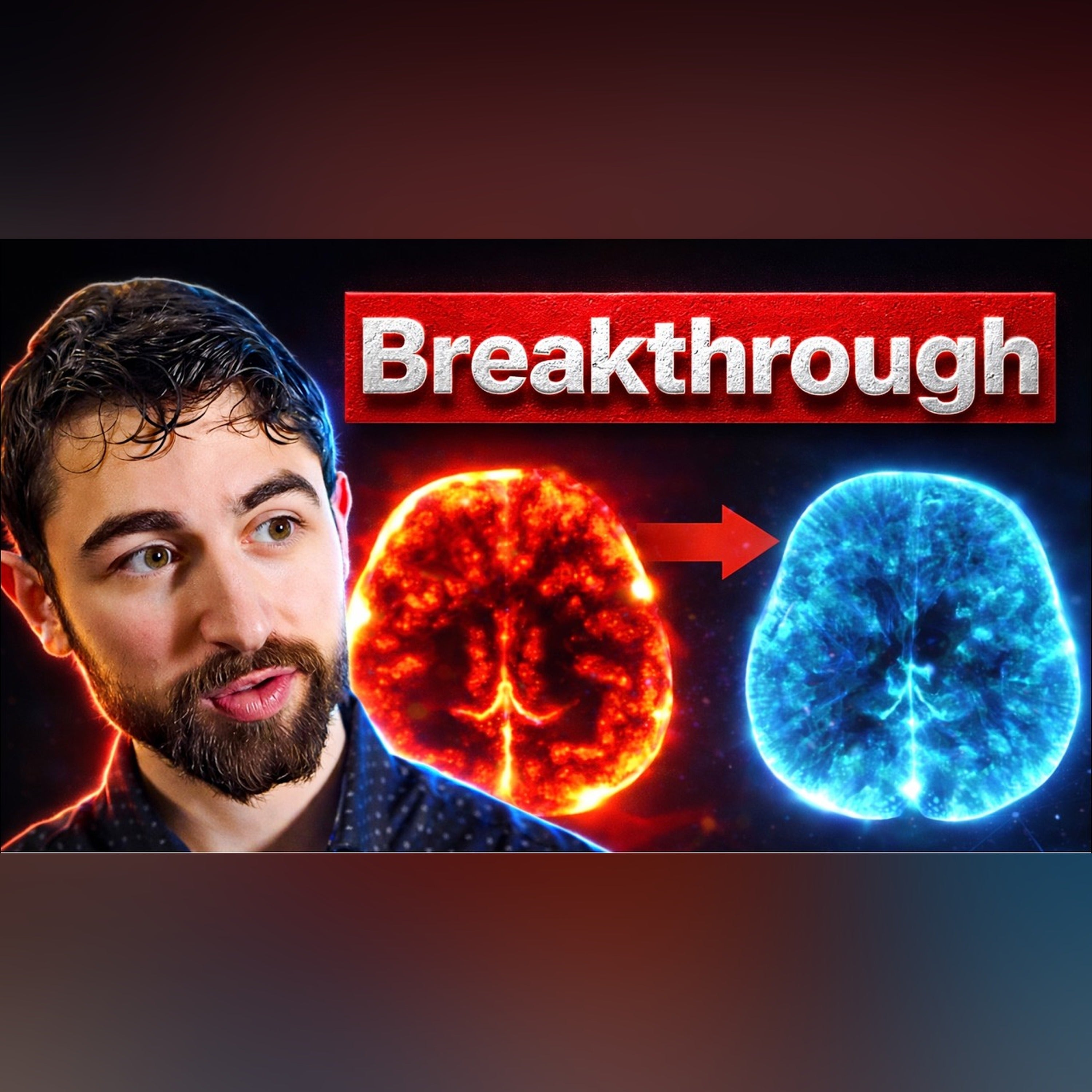
For all the references, added nuanced, and early access to breakdowns like these, see the StayCurious Metabolism Letter: https://staycuriousmetabolism.substack.com/p/never-get-alzheimers-disease-the?r=40ekz2 Other Referenced Content Omega-3 Video: https://youtu.be/B-kEn0FukXM If you want to try the Lyso-DHA omega supplement I use, Accentrate Omega Max, here’s the https://www.fenixhealthscience.com/staycurious Lithium Video: https://youtu.be/Hcz0Eyp1LE4 Alzheimer’s Unfolded Video (throw back!): https://youtu.be/oRaNzfHF_do Aging Spikes, Interview with Stanford’s Professor Michael Snyder: https://youtu.be/kMpGkg4zMOU Alzheimer’s disease is usually framed as a problem of amyloid plaques and tau tangles. But a growing body of research suggests a deeper, upstream issue: loss of brain energy metabolism—and declining NAD+ (nicotinamide adenine dinucleotide). In this video, we walk through new experimental and human data showing how reduced NAD+ impairs mitochondrial health and brain function—
PBS Member Stations rely on viewers like you. To support your local station, go to: http://to.pbs.org/DonateSPACE ↓ More info below ↓ Uploaded 10-08-20 The second in our two event series about Theories of Everything! Watch the first one: https://www.youtube.com/watch?v=_izocEgArtQ Please subscribe to Brian Keating's YouTube Channel to watch one-on-one interviews with the guest speakers and more: https://www.youtube.com/DrBrianKeating Existing Theories of Everything have not yet produced experimental evidence that solves the fundamental challenges facing physics. That lack of progress has opened up a sea of controversy, from disagreements about the very necessity of TOEs, to questioning the cost/benefit of mega-billion dollar particle accelerators in search of them, to the emergence of competing TOEs from physicists outside of the academic community. In this 90 minute chat we dive into the existential questions around TOEs. Special thanks to Brian Keating, Lee Smolin, Sabine Hossenfelde
A wave of major technology outages is raising troubling questions about America's cybersecurity, aging infrastructure, and readiness for a new era of artificial intelligence. Are these isolated technical failures, or warning signs of a much larger national security problem? John Solomon and Amanda Head welcome Ohio Congressman and former Army Ranger Warren Davidson, who discusses recent disruptions involving the FAA, Microsoft, and other critical systems. Davidson calls for greater transparency from government agencies and technology companies, questions whether America's infrastructure is adequately protected against emerging cyber threats, and examines how artificial intelligence could be used both to strengthen defenses and exploit vulnerabilities. The conversation also turns to immigration and national security, with Davidson raising concerns about individuals who entered the country illegally, potential gaps in government screening systems, and the surveillance powers used to moni
This week on The Necessary Conversation, it's Chad, Haley, and Mary Lou. Bob is still recovering but sent in a video message about Trump calling Putin his friend that we watch together. 🇷🇺 Trump held the first-ever three-way talks with Putin and Xi, called it a "12 out of 10," and produced nothing. Then at a press conference he called Putin his friend — and when asked if Putin is a friend to America, the president of the United States said, "I can't speak to America." That same day, Trump's friend Putin launched massive strikes into Ukraine, hit Poland with two missiles — an act of war against a NATO ally — then struck near a Ukrainian restaurant and drone-bombed the first responders, killing a 7-year-old child and a 20-year-old paramedic. We watch Bob's video and ask Mary Lou: is Russia our friend? 🇨🇳 The House Foreign Affairs Committee revealed Trump's Commerce Department approved nearly 880,000 advanced AI chips for Chinese military-linked companies including Alibaba, Tencent, a
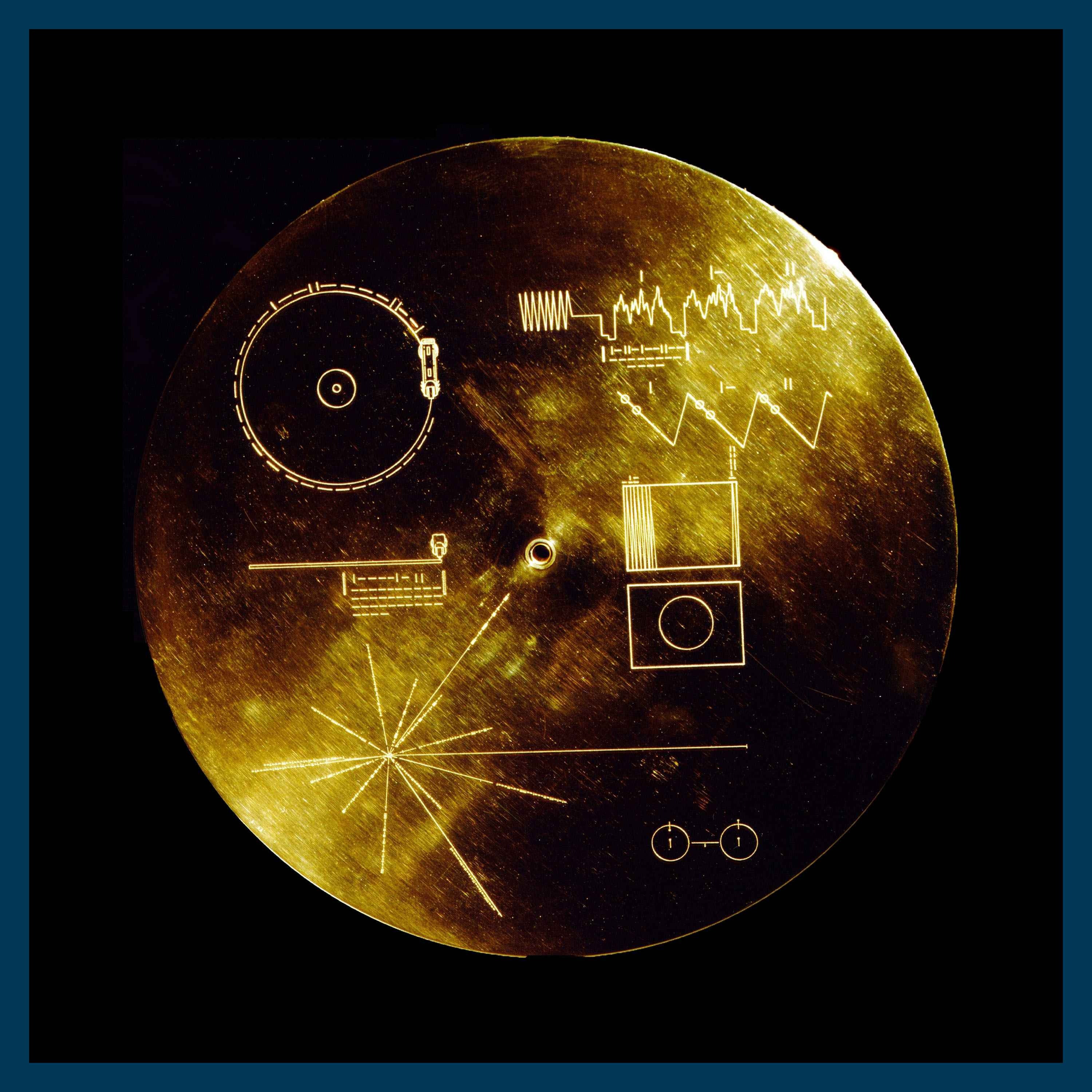
This week, Voyager 1 reached one light day away from earth - the farthest any man-made object has ever been. For fifty years, it as well as its sister probe Voyager 2, have been sending information back to earth. Now, they’re off to interstellar space, carrying two golden records designed to introduce humanity to whatever life form may be out there. So what’s on those discs? And what does the project tell us about what it means to be human? Guests: Rhys Blakely, science editor, The Times Tim Ferris, author and producer of the Voyager Golden Record Host: Manveen Rana Producer: Olivia Case We want to hear from you - email: [email protected] Read more: Voyager - humanity’s most distant message (https://www.thetimes.com/uk/science/article/nasa-golden-record-sounds-voyager-humanity-bksl2n0ck?eafs_enabled=false) Further listening: Has space become the final frontier for war? (https://pod.link/1501716010/episode/NmFhYzMzNzM4ZGUzYjQzYjZhOTk4ZGJj) Clips: NASA Voyager Golden Record / Carl Sa
First up on the podcast, people are buying consumer-grade brain wave detectors ostensibly to help with sleep, concentration, and meditation. But as freelance investigative journalist Jonathan Moens (https://jonathan-moens.com/) describes, companies are getting more than the price of the devices in the exchange (https://www.science.org/doi/10.1126/science.zp18ht9)—including training data for artificial intelligence models—in many cases without the consent of the user. Next on the show, we delve into the many uses for glucagonlike peptide-1 (GLP-1) agonist drugs beyond reducing obesity. Host Sarah Crespi talks with one of the special issue editors, Yevgeniya Nusinovich, senior editor at Science, about their potential for everything from improving cognition to combating cancer. Then we hear from Nora Volkow (https://nida.nih.gov/about-nida/directors-page/biography-dr-nora-volkow), director of the National Institute on Drug Abuse at the National Institutes of Health, about hopes for using
Commercially funded research should disclose sponsors' influence over its design and publication.
Share your view, then see how readers voted. No sign-in required. This poll is shared across stories.
Do you agree or disagree?
Common Quandary
A Common Quandary to discuss
Another conversation to explore, separate from this news story.
Your friend did the right thing for the wrong reason—and needs an alibi. Do you lie?
A friend skipped an important family obligation to help someone in crisis. They ask you to confirm a harmless false story because telling the truth would expose another person's private emergency and cause a lasting family rupture.
Can loyalty make participating in a lie the most caring choice?