English-language podcasts

Cleo Abram

The Big Lie About Nuclear Waste
17 min

Listen through the publisher, then discuss the episode here or arrange an in-person Roundtable. Your city determines where to meet.

Roundtables are designed for groups of four, with a shared subject and room for everyone to speak. Come for discussion, with no dating expectation.

What if we could actually USE nuclear waste? Watch Johnny’s explainer on nuclear power here - and subscribe to his channel! https://youtu.be/QzTgZ6kOEM8 Nuclear waste is scary. Maybe you’ve seen it as glowing green goop in The Simpsons, or as a radioactive threat on the news. Either way, you likely know it has been a major block to the use and improvement of nuclear power. Over the last few decades, experts, politicians and the public have had heated debates over what to do with this radioactive material created by nuclear power plants. But what if there were a way to not just store nuclear waste, but actually USE it? This video is about the effort to make electricity out of nuclear waste. Really. It turns out, we developed the tools to do this decades ago. This story is about a technology we left behind and the people who want to bring it back. For this video, I had the privilege of visiting one of the largest and oldest research centers in the US, the Argonne National Laboratory. I’m incredibly grateful to the researchers and staff I met there, and for their time in showing me their work. I also had the opportunity to speak with representatives from Oklo, a company working on new forms of nuclear power, including recycling nuclear waste as fuel. One of the best parts of making Huge If True is meeting and learning from people pushing what we can do in the hopes of improving the world for everyone else. Chapters: 00:00 Nuclear waste isn’t what I thought 02:21 How I got obsessed 03:27 How much energy is in nuclear waste? 06:20 How do you get electricity? 06:50 What is uranium? 07:28 How does a nuclear reaction work? 08:05 Why is nuclear waste dangerous? 08:40 What do we do with nuclear waste? 09:35 How do you make electricity from nuclear waste? 11:21 Why doesn’t the US reuse nuclear fuel? 12:20 Is recycling waste feasible? 13:41 What is Huge If True? Corrections: 07:09 The number refers to the total number of nucleons (either a proton or a neutron) in the atom, not the neutrons alone. A U-235 atom contains 92 protons and 143 neutrons (an atomic mass of 235). The U-238 atom also has 92 protons but has 146 neutrons (an atomic mass of 238). I should have said these *differ* by the number of neutrons in the atom. Thanks to the commenters who pointed this out! You can find me on TikTok here for short, fun tech explainers: https://www.tiktok.com/@cleoabram You can find me on Instagram here for more personal stories: https://www.instagram.com/cleoabram You can find me on Twitter here for thoughts, threads and curated news: https://twitter.com/cleoabram Bio: Before going independent, Cleo was a video producer for Vox. Additional reading and watching: - Johnny’s video on nuclear power: https://youtu.be/QzTgZ6kOEM8 - My previous video for Vox on nuclear reactors shutting down: https://youtu.be/KC7YD98HixM - “The Nuclear Waste Problem” by Wendover Productions: https://youtu.be/uU3kLBo_ruo - “Nuclear Waste: What Do We Do With It?” by Sabine Hossenfelder: https://youtu.be/aDUvCLAp0uU - “What Happens to Nuclear Waste?” by The Infographics Show: https://youtu.be/imsRLscqTW0 - “Nuclear Waste Is Manageable. We Just Have To Do It.” by Joe Scott https://youtu.be/96et8ZGsxJY - “Finland Might Have Solved Nuclear Power’s Biggest

Episode information is provided by the publisher. Listening takes place on the publisher’s service.

Listen at the source ↗

Featured places to meet in Palo Alto, CA

Explore these places and arrange a conversation through ThinkMatch.

City guide for Palo Alto, CA

More from Cleo Abram

Cleo Abram

How Do Sci-Fi Movies Look So Real? (feat. MKBHD)

20 min

This new tech is changing how movies get made. So @mkbhd and I tested it out... Watch MKBHD's video: https://youtu.be/RM7SobH8ZO0 I’ve been obsessed with sci-fi movies since I was a kid. I love being transported to another world. But lately, I’ve been wondering: How do those worlds look so… REAL? The tech behind movies has exploded in complexity and realism, changing how stories come to life on screen. Luckily, at the same time, those tools are becoming more and more available to more people telling stories. It’s not just blockbusters like Avatar 2 or Avengers or Dune. It’s also smaller budget films like Everything Everywhere All at Once or even… YouTube creators? In this video, Marques Brownlee and I test out 3 movie-making tools that are changing how movies, shows, and maybe even YouTube videos (??) get made. We’re at ZeroSpace Studios in New York to show you how each of these crazy technologies work - and how you might be able to use them. Along the way, we hit big questions like: W

Discuss this episode

Cleo Abram

How Disney Built A Realistic Lightsaber

20 min

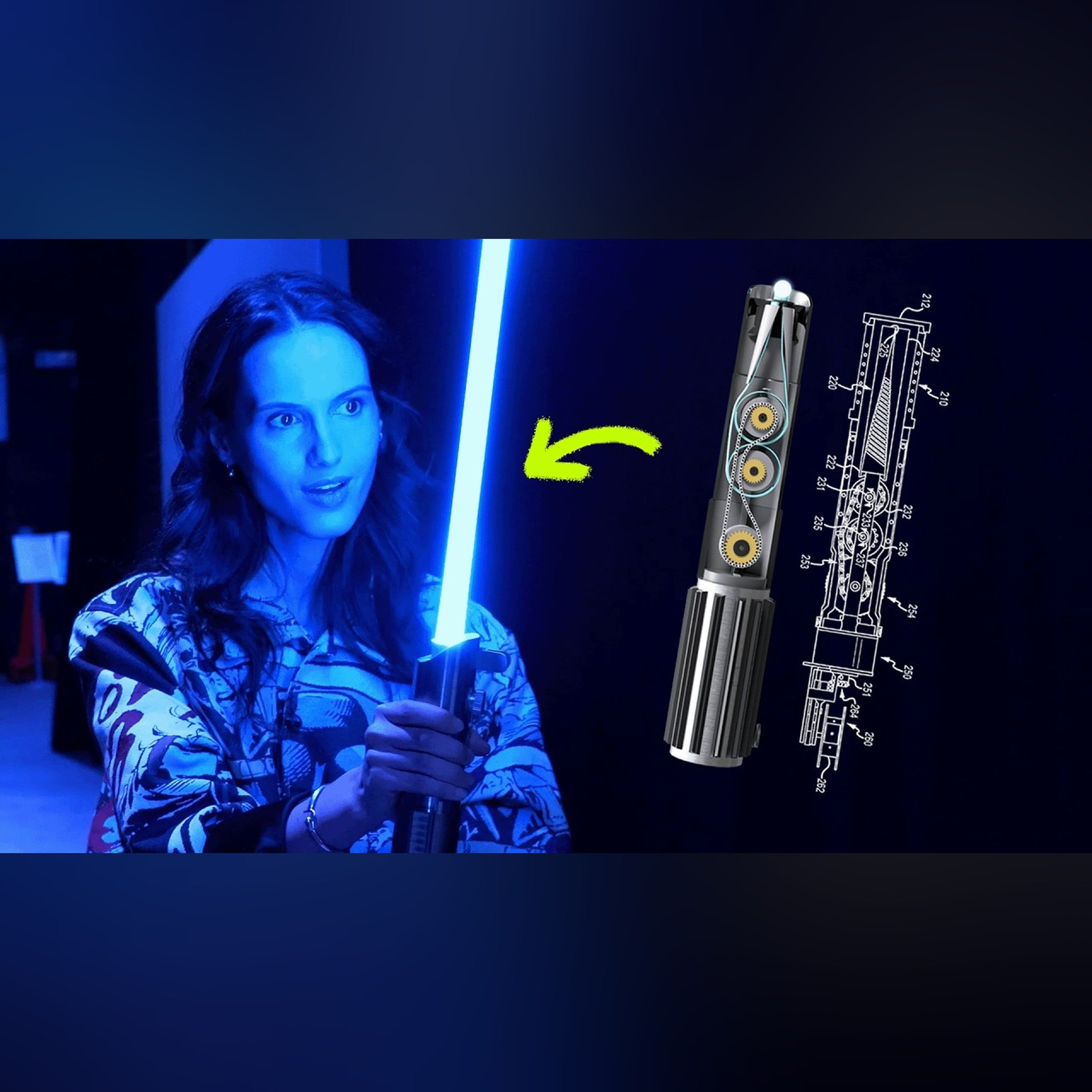
I tested Disney’s coolest new tech… Go to https://surfshark.com/cleo for 4 extra months of Surfshark Today I’ve been invited behind the scenes at Walt Disney Imagineering, the place where Disney brings their craziest ideas to life - from STUNT ROBOTS to a real life version of The Force, to adorable little droids! On this show Huge If True, we explore how tech can improve people’s lives - by living longer, going farther, doing more. But the reason I’ve loved Disney since I was a kid is they use tech to improve lives another way… by making people happy. And that means they end up pushing forward tech in some crazy, unexpected ways. So let me take you inside the magic, to show you the cutting edge tech they’re building… how it works… and what happens when we put it to the test! Chapters: 0:00 What is Disney building next? 1:11 What does Walt Disney Imagineering do? 1:52 What are Disney’s new droids really like? 2:47 How do Disney’s new droids work? 5:08 What’s the world’s most realistic l

Discuss this episode

Cleo Abram

What We Get Wrong About AI (feat. former Google CEO)

15 min

AI is here. Now what? Everyone’s talking about artificial intelligence and machine learning. There are lots of names thrown around - OpenAI’s ChatGPT and DALLE-2, Google’s Bard, Meta’s LLaMa 2, Midjourney, AlphaFold… Right now, we’re in this weird moment where lots of smart people agree we’re on the cusp of a truly world-changing technology. But some seem to be saying it's going to lead to human extinction while others are saying it’s “more profound than fire.” But it all feels so VAGUE. I want to know: How specifically would AI kill me? Or totally transform my life for the better? In this video, that’s what I’m going to try to learn. We dive into what the most extreme bad and good AI futures actually look like, so that you and I can get ready. And more importantly, so we can make sure that we get our real future RIGHT. Chapters: 00:00 Why is AI so confusing? 1:13 What is AI? 2:37 Why is everyone talking about AI now? 5:12 Why is AI dangerous? 6:22 How would AI kill me? 8:08 Should we

Discuss this episode

Community Poll

Public spaces should welcome people without requiring them to buy anything.

Share your view, then see how readers voted. No sign-in required. This poll is shared across stories.

Do you agree or disagree?

Choose one answer

Common Quandary

A Common Quandary to discuss

Another conversation to explore, separate from this news story.

A patient records every doctor visit for their followers. Can the doctor refuse to be filmed?

A patient with a large social-media following livestreams their health journey and wants to record every appointment. They say the videos help others and keep doctors accountable. Their physician finds the camera distracting and worries that casual remarks will be edited out of context.

Whose comfort should control a conversation about one person's body and another person's work?

Explore this quandary