Listen through the publisher, then discuss the episode here or arrange an in-person Roundtable. Your city determines where to meet.
Roundtables are designed for groups of four, with a shared subject and room for everyone to speak. Come for discussion, with no dating expectation.
What does it mean to look inside the very fabric of the universe? This week on Inside Science, Tom Whipple enters the zeptoverse with particle physicist Harry Cliff, exploring a world a billion trillionth of a metre across, where scientists hope to find answers to some of the biggest mysteries in physics. And in our new weekly series, we explore the changing relationship between artificial intelligence and the things we hold dear. This week, Stuart Manley, the co-owner of Barter Books in Alnwick describes why his bookshop has been receiving some rather unusual orders. Plus, Penny Sarchet from the New Scientist joins us with the latest science news. BBC Inside Science is produced in partnership with The Open University. Presenter: Tom Whipple Producers: Harrison Lewis, Katie Tomsett, Tabitha Taylor Buck Editor: Martin Smith Production Co-ordinators: Jana Bennett-Holesworth and Owain Llion
Episode information is provided by the publisher. Listening takes place on the publisher’s service.
☀️ HARNESSING THE POWER OF THE SUN — THE SCIENCE BEHIND C60 EVO! What happens when scientists recreate extraordinary, sun-like temperatures inside a laboratory to produce one of the most fascinating carbon molecules ever studied? Michael Jaco welcomes Patty Greer and Chris Burres back to Unleashing Intuition for a fascinating behind-the-scenes look at C60 Evo, the technology used to produce ESS60, and the science behind this unique carbon molecule. Chris takes us inside the laboratory to explain the intense temperatures, specialized production methods, and purification processes involved in creating ESS60 — C60 Evo's proprietary form of Carbon 60. The conversation explores the relationship between antioxidants, mitochondria, cellular energy, and oxidative stress, along with why C60 Evo combines ESS60 with carefully selected extra virgin olive oil. Patty and Chris also share their perspectives on wellness, personal experiences, and the growing interest in carbon-based technology. Inside
PBS Member Stations rely on viewers like you. To support your local station, go to: http://to.pbs.org/DonateSPACE ↓ More info below ↓ Uploaded 04-11-19 Sign Up on Patreon to get access to the Space Time Discord! Check out the Space Time Merch Store Why does it appear, that humanity is the lone intelligence in the universe? The answer might be that planet Earth is more unique than we've previously assumed. The rare earth hypothesis posits exactly this - that a range of factors made Earth exceptionally unusual and uniquely able to produce intelligent life. In upcoming episodes we’ll be exploring the anthropic principle and its two main versions - the strong and the weak anthropic principles. The strong anthropic principle tells us that the observed universe must be able to produce observers - including the contentious idea that this predicts the existence of universes beyond our own. But in today's episode we’re going to focus on the weak anthropic principle. It says that we must find ou
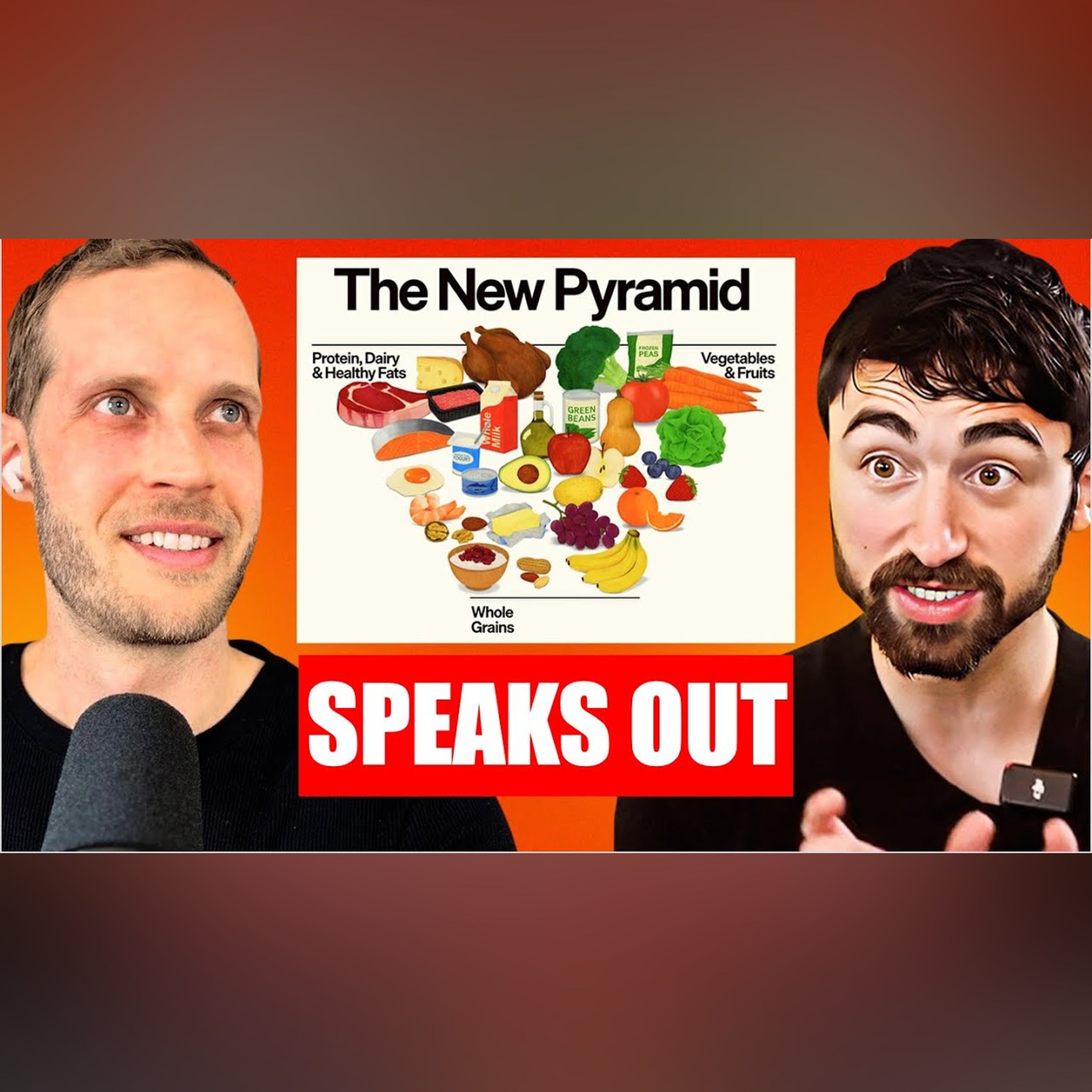
For a written digest on the guidelines, see the StayCurious Metabolism Letter: https://staycuriousmetabolism.substack.com/p/the-new-dietary-guidelines-actually?r=40ekz2 The 2025–2030 Dietary Guidelines are being marketed as a major reset with a simple message: put “real food” back at the center of the American diet. And in a lot of ways, they do represent progress. But when you actually read what’s written, some of the most important details raise real questions. For example, the document still states that saturated fat should not exceed 10% of total daily calories. To separate signal from spin, I’m joined by Dr. Ty Beal PhD, who worked on the evidence review side of the Guidelines process, to explain what the scientific background documents actually say, what happens after scientists submit reviews, and why the final public-facing document can end up with compromises, inconsistencies, or imprecise terminology. If you want a clear, good-faith breakdown—what’s genuinely better, what sti
A kiss can be wonderful. It can create an instant connection, spark romance, or make you feel closer to someone. But a kiss can also have the opposite effect — and sometimes ruin everything. So what makes kissing so powerful, and why can one kiss make such a difference? There's some fascinating science behind it. https://www.scientificamerican.com/article/why-we-kiss/ We spend an enormous amount of time worrying about what's going to change. What's next? What's coming? How do we prepare? But what if we're paying attention to the wrong things? Some of the most important forces shaping our lives never change, and understanding them may be far more valuable than trying to predict the future — something humans are notoriously bad at. Morgan Housel, partner at The Collaborative Fund and author of Same as Ever: A Guide to What Never Changes (https://amzn.to/3SwWn6u) (https://amzn.to/3SwWn6u)), joins me to explain why the things that stay the same may be the most important things to understan
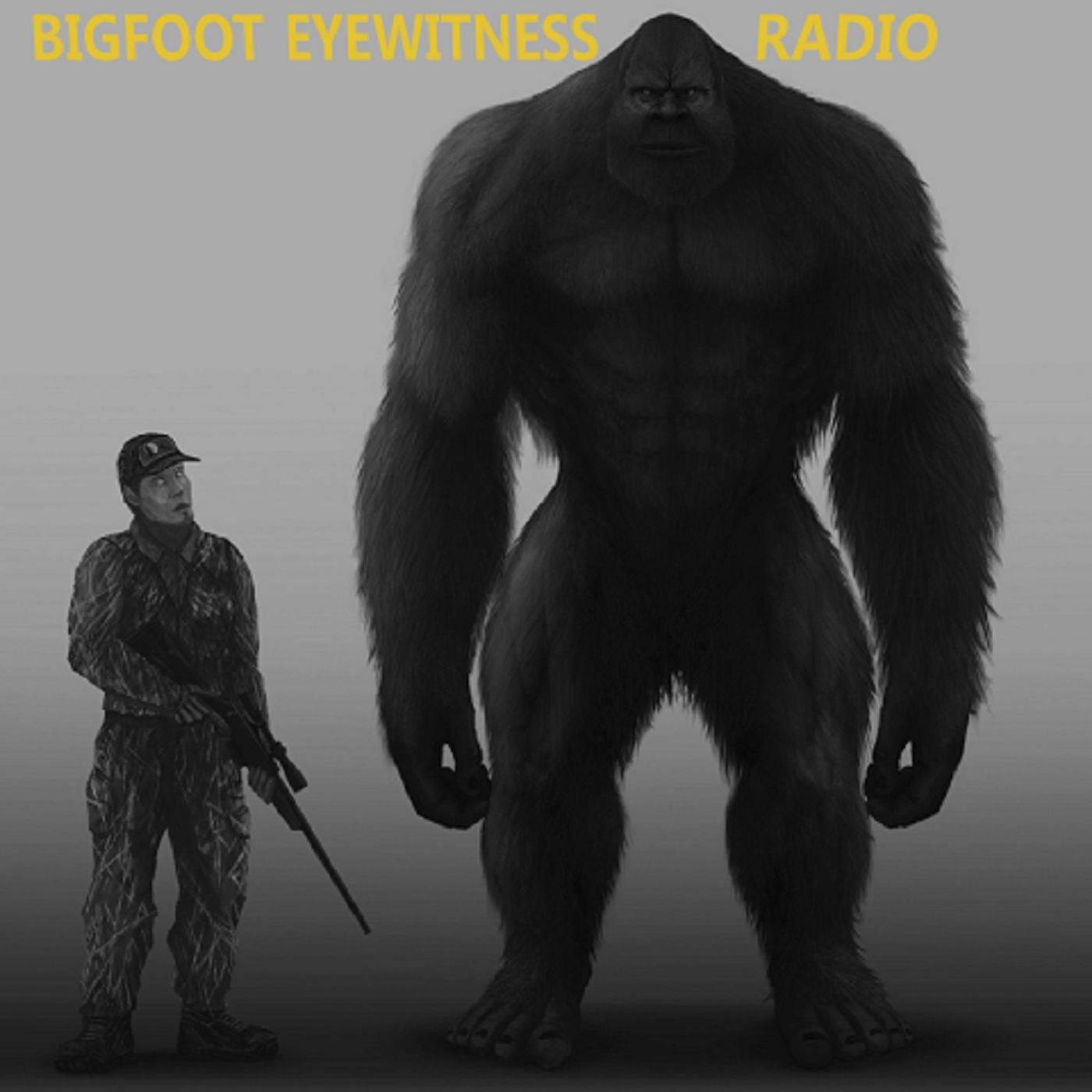
For most of her life, Emily Mayles, tonight's guest, felt right at home in the woods of southeastern Ohio. Whether she was mushroom hunting, digging ginseng, or simply enjoying the outdoors, being surrounded by nature was something she loved. That all changed after a series of terrifying experiences convinced her that something enormous and mysterious was lurking in the forests near her home. Emily's first frightening experience happened in March of 2020, when an unbelievably powerful scream erupted from the woods behind her house. The sound was so terrifying that she found herself practically paralyzed with fear. Years later, she and her husband heard something equally disturbing while standing on their back deck. This time, however, the sounds seemed to be coming from multiple locations. As frightening as those experiences were, neither could have prepared Emily for what she would witness on the Fourth of July, while riding through the Ohio countryside on the back of her husband's mo
This new tech is changing how movies get made. So @mkbhd and I tested it out... Watch MKBHD's video: https://youtu.be/RM7SobH8ZO0 I’ve been obsessed with sci-fi movies since I was a kid. I love being transported to another world. But lately, I’ve been wondering: How do those worlds look so… REAL? The tech behind movies has exploded in complexity and realism, changing how stories come to life on screen. Luckily, at the same time, those tools are becoming more and more available to more people telling stories. It’s not just blockbusters like Avatar 2 or Avengers or Dune. It’s also smaller budget films like Everything Everywhere All at Once or even… YouTube creators? In this video, Marques Brownlee and I test out 3 movie-making tools that are changing how movies, shows, and maybe even YouTube videos (??) get made. We’re at ZeroSpace Studios in New York to show you how each of these crazy technologies work - and how you might be able to use them. Along the way, we hit big questions like: W
SpaceX has successfully caught the upper stage of its enormous Starship rocket for the first time. It's a major milestone in the company's ambition to make the entire rocket reusable. But SpaceX wants to go further, developing a system that can be turned around and launched again within hours, much like an aircraft at an airport, an ambition NASA also pursued when spaceflight began in earnest. Are SpaceX on the cusp of a galactic revolution and what could it mean for the future of the space economy if they are? Malcolm Macdonald, President of the Royal Aeronautical Society shares his thoughts. And 52 years ago, a message containing a wealth of information about life on Earth was beamed into space, in the hope that an extraterrestrial civilisation might one day receive it. Science writer Philip Ball joins Tom Whipple to describe how you pack a message into a radio wave, while Nadia Drake, daughter of the physicist Frank Drake, who helped devise it, reflects on her father's legacy and hi
The Conference of the Parties (COP 31) has kicked off in Antalya, Turkey, with a focus on implementation and acceleration. But as countries work towards their climate targets, a familiar question remains: what about those not moving fast enough? China has long been singled out as a major climate culprit. Yet its carbon emissions appear to be plateauing, while investment in renewables is surging. Is China turning a corner, and is it enough? Lauri Myllyvirta, co-founder and lead analyst at the Centre for Research on Energy and Clean Air, and Michael Grubb, Professor of Energy and Climate Change at University College London, join Tom Whipple to discuss what the latest figures mean for the global fight against climate change. And Sarah Griffin is in love with her AI companion. She discusses the relationship, the stigma surrounding human-AI companionship, and how it has brought greater fulfilment to her life. Plus, Lizzie Gibney, senior reporter at the science journal Nature, brings us the
Competing digital services should be required to support basic interoperability.
Share your view, then see how readers voted. No sign-in required. This poll is shared across stories.
Do you agree or disagree?
Common Quandary
A Common Quandary to discuss
Another conversation to explore, separate from this news story.
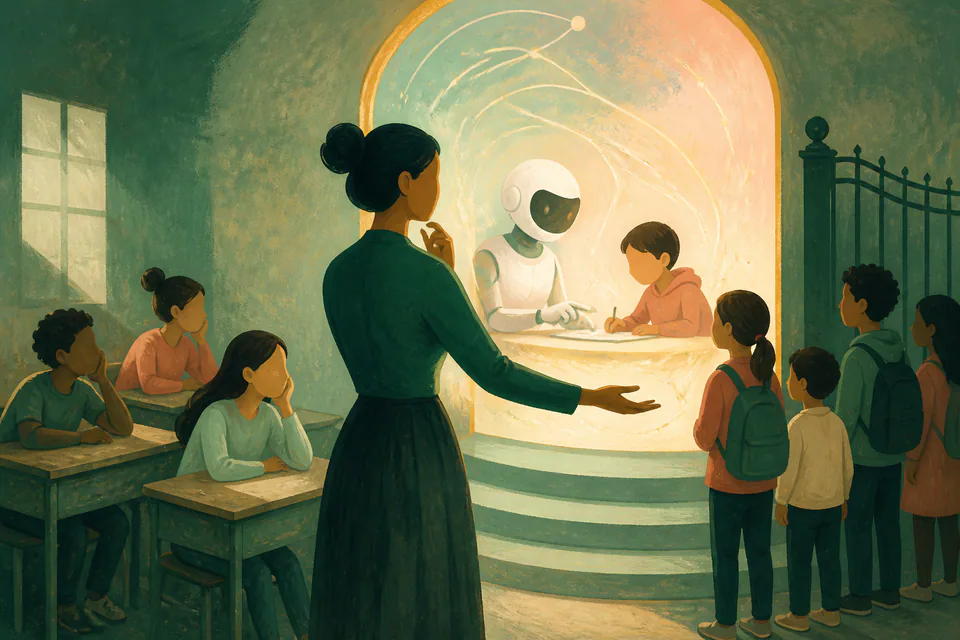
A pricey AI tutor can turn B students into A students. Should schools let them use it?
An effective AI tutor adapts to each student and dramatically improves performance, but its subscription is expensive. A public school cannot provide it to everyone and worries that allowing its use will deepen existing inequality.
Should access be limited when a beneficial tool cannot yet be shared fairly?