View full lesson: http://ed.ted.com/lessons/the-sweaty-teacher-s-lament-justin-lamb Uploaded 06-05-14 Justin Lamb would love to be the compassionate teacher. Or the tough but fair teacher. He'd even settle for the wacky teacher, if it meant he could shake his current, less flattering alias: the sweaty teacher. In "Sweaty Teacher," a lively spoken word performance, Lamb defends the "geysers he calls armpits," reminding us that sweat isn't just a product of humidity -- but of hard work, too. Talk by Justin Lamb.
In this episode, we sit down with Julie K. Wood to explore a remarkable journey from New York’s advertising industry to spiritual healing in the high desert of Taos, New Mexico—and extraordinary encounters beneath its mysterious skies. A Princeton graduate, Julie spent nearly two decades building a successful advertising career, ultimately becoming Managing Director of a major agency. In 2013, she walked away from corporate life and embarked on a five-year journey with her husband, travelling through 69 countries in a Jeep Wrangler with a rooftop tent. Today, Julie is a trauma-informed somatic coach, Family Constellations facilitator, and Reiki Master. Based at her off-grid home beneath Taos Mountain, she supports others in exploring personal healing, reconnecting with their inner authority, and living with greater freedom and authenticity. In this conversation, Julie opens up about her spiritual awakening and recent UFO encounters above Taos, including a striking sighting of a translu
Practice more problem-solving at https://brilliant.org/TedEd/ Sign up to be emailed the solution to the bonus riddle: https://brilliant.org/tededpoisonapples/ Uploaded 22-05-18 You’ve been chosen as a champion to represent your wizarding house in a deadly duel against two rival magic schools. Your opponents are a powerful sorcerer who wields a wand that can turn people into fish, and a powerful enchantress who wields a wand that turns people into statues. Can you choose a wand and devise a strategy that ensures you will win the duel? Dan Finkel shows how. Lesson by Dan Finkel, animation by Artrake Studio. Thank you so much to our patrons for supporting us on Patreon! Without you this video would not be possible! Chris Adriaensen, Lowell Fleming, Amir Ghandeharioon, Anuj Tomar, Sunny Patel, Vijayalakshmi , Devesh Kumar, Uday Kishore, Aidan Forero, Leen Mshasha, Allan Hayes, Thomas Bahrman, Alexander Baltadzhiev, Vaibhav Mirjolkar, Tony, Michelle, Katie and Josh Pedretti, Erik Biemans, G
Today we’re going to talk about glaciers. These behemoth globs of compressed ice and snow moving across the land created fertile soils and physical features while also serving as frozen time capsules. They recorded both Earth’s climatic history over several million years and contain clues to its climatic future. By now we hope it’s become clear that the Earth is ever-changing, and glaciers have often been a crucial part of that change from the erratic boulders found in New York City’s Central Park to the beautiful spire of the Matterhorn in the Alps on the border of the Italy and Switzerland. Watch our videos and review your learning with the Crash Course App! Download here for Apple Devices: https://apple.co/3d4eyZo Download here for Android Devices: https://bit.ly/2SrDulJ Crash Course is on Patreon! Thanks to the following patrons for their generous monthly contributions that help keep Crash Course free for everyone forever: Shannon McCone, Amelia Ryczek, Ken Davidian, Brian Zacharia
Hank describes the desperate need many organisms have for nutrients (specifically nitrogen and phosphorus) and how they go about getting them via the nitrogen and phosphorus cycles. Table of Contents: Nitrogen Cycle 1:46 Nitrogen Fixing Bacteria 2:32 Nitrifying Bacteria 3:24 Denitrifying Bacteria 4:34 Phosphorous Cycle 5:16 Lithosphere 5:27 Plants 5:56 Animals 5:56 Decomposers 5:56 Aquatic & Marine Ecosystems 6:24 Sedimentation & Weathering 6:55 Synthetic Fertilizers 7:23 Crash Course is on Patreon! Want to find Crash Course elsewhere on the internet? Facebook - http://www.facebook.com/YouTubeCrashCourse Twitter - http://www.twitter.com/TheCrashCourse Instagram - https://www.instagram.com/thecrashcourse/ CC Kids: http://www.youtube.com/crashcoursekids
Ancient genomes from thousands of individuals show how migrations helped shape Celtic and Germanic languages — plus, how the brain may regulate emotions differently than we thought. 00:49 How Celtic and Germanic languages spread across Europe Research Article: McColl et al. (https://www.nature.com/articles/s41586-026-11198-9) Research Article: McColl et al. (https://www.nature.com/articles/s41586-025-09064-1) 13:00 Research Highlights Nature: Barn owls’ ancestors made a transatlantic flight (https://www.nature.com/articles/d41586-026-03385-5) Nature: Even stupendous black holes can’t explain dark matter (https://www.nature.com/articles/d41586-026-03386-4) 15:34 Why part of the brain may not be controlling emotions in the way researchers thought Research Article: Sicorello et al. (https://www.nature.com/articles/s41586-026-11203-1) Correction: This article originally stated Simon Rodway’s name incorrectly. The podcast has now been updated to correct this. Hosted on Acast.
Enter the mind of a bored teenager to discover what happens in the brain when we daydream and find out what purpose it serves. -- On a daily basis, you spend between a third and half of your waking hours daydreaming. That may sound like a huge waste of time, but scientists think it must have some purpose, or humans wouldn’t have evolved to do so much of it. So, what exactly happens in the brain while you daydream? Elizabeth Cox takes a closer look at the science of daydreaming through the mind of a teenager. Lesson by Elizabeth Cox, directed by Biljana Labović. This video made possible in collaboration with Bezos Family Foundation Learn more about how TED-Ed partnerships work: https://bit.ly/TEDEdPartners Support Our Non-Profit Mission ---------------------------------------------- Support us on Patreon: http://bit.ly/TEDEdPatreon Check out our merch: http://bit.ly/TEDEDShop ---------------------------------------------- Connect With Us ---------------------------------------------- Si
Idiosyncratic drug-induced liver injury is damage caused by prescription or over-the-counter medications or herbal dietary supplements that is not dose-dependent. JAMA Associate Editor Beverly Forsyth, MD, speaks with author Naga Chalasani, MD, of Indiana University School of Medicine about risk factors, evaluation, and treatment of patients with idiosyncratic drug-induced liver injury. Related Content: Idiosyncratic Drug-Induced Liver Injury (https://jamanetwork.com/journals/jama/fullarticle/10.1001/jama.2026.16370) Severe Acute Liver Injury After Hepatotoxic Medication Initiation in Real-World Data (https://jamanetwork.com/journals/jamainternalmedicine/fullarticle/10.1001/jamainternmed.2024.1836)
What does it mean to be a feminist in the 21st century? How have the movements that brought us here shaped the ways we understand feminist political theory? And, perhaps most importantly, what comes next? Crash Course Political Theory #8 Being a Woman 00:00 Introduction to feminism 1:00 Early feminist movements 2:44 The patriarchy 4:48 Intersectionality 6:18 The future of feminism 9:52 Review and credits 11:08 Sources: https://docs.google.com/document/d/1u5zJCbVA0xCurLbQwWzcxXEdlqXAPpAyYVS1quwKIis/edit?usp=sharing *** Support us for $5/month on Patreon to keep Crash Course free for everyone forever! https://www.patreon.com/crashcourse Or support us directly: https://complexly.com/support Join our Crash Course email list to get the latest news and highlights: https://mailchi.mp/crashcourse/email Get our special Crash Course Educators newsletter: http://eepurl.com/iBgMhY Thanks to the following patrons for their generous monthly contributions that help keep Crash Course free for everyone
In which we see outtakes from the last third of the Crash Course World History series. Crash Course is on Patreon! Want to find Crash Course elsewhere on the internet? Facebook - http://www.facebook.com/YouTubeCrashCourse Twitter - http://www.twitter.com/TheCrashCourse Instagram - https://www.instagram.com/thecrashcourse/ CC Kids: http://www.youtube.com/crashcoursekids
Why do we sometimes find it easier to love our dogs than the people in our lives? And what can our canine companions teach us about overcoming loneliness, building trust, and creating meaningful relationships? In this fascinating episode of Destiny, host Cliff Dunning welcomes psychologist and author Dr. Chris Blazina to explore his groundbreaking book, Good Dogs and Difficult People. Drawing upon psychology, attachment theory, scientific research, and his own personal experiences, Dr. Blazina examines humanity's fundamental need for emotional connection and why so many people struggle to establish and maintain healthy relationships. For more than 20,000 years, humans and dogs have shared an extraordinary evolutionary journey. Today, as loneliness, social isolation, and emotional disconnection become increasingly common, millions of people are turning to their dogs for companionship, unconditional affection, and a sense of belonging. But is there something deeper happening in the human
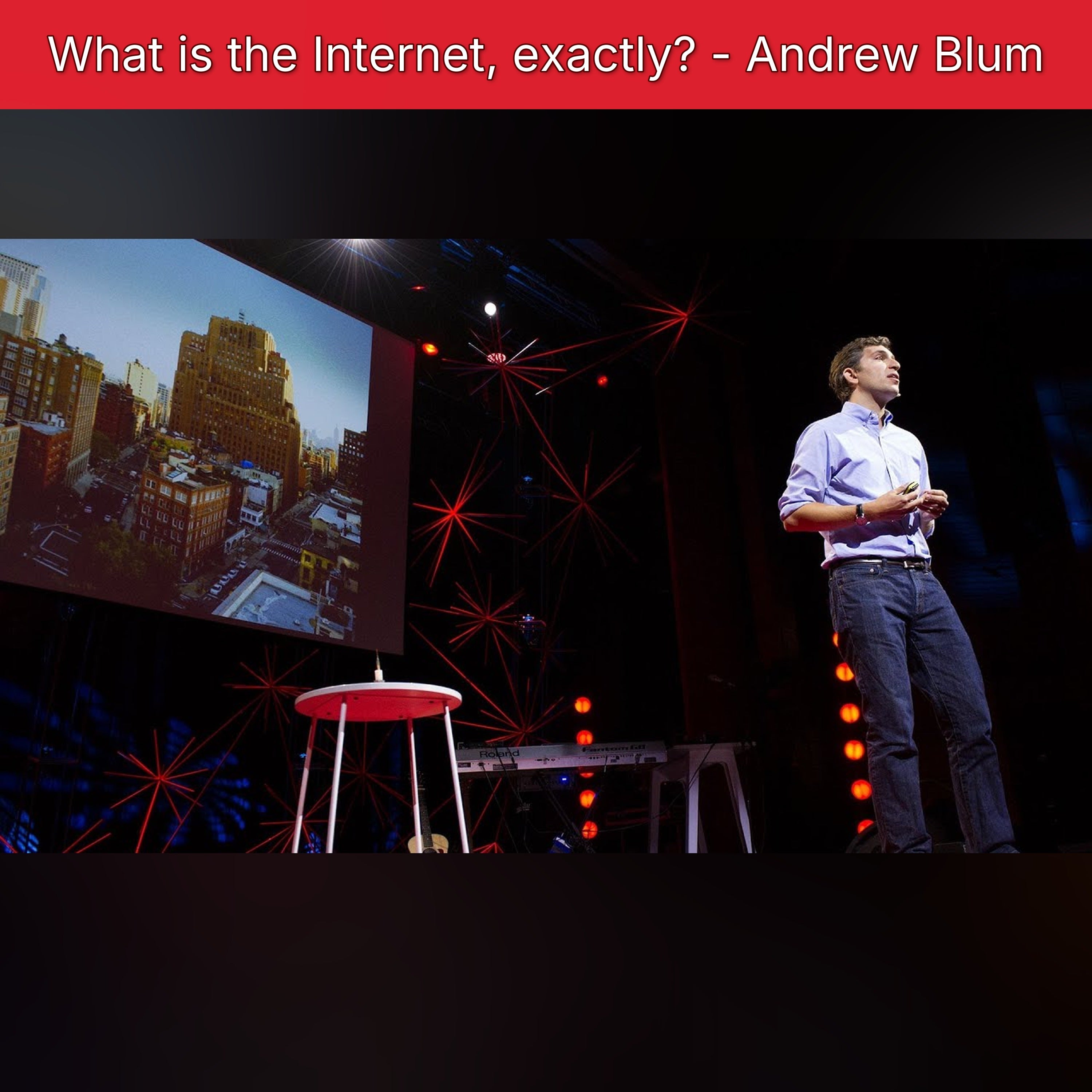
When a squirrel chewed through a cable and knocked him offline, journalist Andrew Blum started wondering what the Internet was really made of. So he set out to go see it -- the underwater cables, secret switches and other physical bits that make up the net. Talk by Andrew Blum.
In which John Green returns to William Shakespeare's Romeo and Juliet to explore the themes of true love, lust, and whether Romeo and Juliet were truly, deeply in love, or they were just a pair of impetuous teens. How exactly did Romeo manage to go from pining for Rosaline to marrying Juliet in 36 hours? Maybe they were impetuous teens who were ALSO deeply in love. John looks into how the structure and conventions of society in medieval Verona led to the star-crossed lovers' downfall. Along the way, you'll learn about courtly love, medieval responsibility to church, family, and society, Chipotle burritos as a metaphor for true love, and even learn about literary sex. We may even tie in trapeze artists and Queen's Bohemian Rhapsody. You'll have to watch to find out. Consider supporting local bookstores by purchasing your books through our Bookshop affiliate link https://bookshop.org/shop/complexly or at your local bookseller. Crash Course is on Patreon! Want to find Crash Course elsewhe
Organic chemistry is a great workout for your brain, and to keep its energy up, your brain needs glucose. To maintain blood glucose levels, our bodies go through a process called gluconeogenesis, which involves the important type of organic reaction we’re getting into today: aldol reactions! In this episode of Crash Course Organic Chemistry, we’ll learn what an aldol is, as well as how aldol reactions work and what they do. Plus we’ll learn about a similar reaction, Claisen condensation. Episode Sources: Claisen, L., 1887. Ueber die einführung von säureradicalen in ketone. Berichte der deutschen chemischen Gesellschaft, 20(1), pp.655-657. Series Penicillin References: Nicolaou, K. C., & Sorensen, E. J. (1996). Classics in total synthesis: targets, strategies, methods. John Wiley & Sons. Sheehan, J. C. (1982). The enchanted ring: the untold story of penicillin. Primary literature for Sheehan’s penicillin synthesis: Sheehan, J.C. & Izzo, P.T. J. Am. Chem. Soc. 1948, 70, 1985; Sheehan, J.
In this episode of Lung Cancer Considered, Drs. Jacob Sands, Ferdinandos Skoulidis, and Jarushka Naidoo discuss key research highlights from ESMO 2026, including results from the DeLLphi-305 trial evaluating tarlatamab in extensive-stage small cell lung cancer and the KRAScendo-1 trial investigating divarasib in KRAS G12C-mutated NSCLC. The discussion also explores emerging immunotherapy strategies, including findings from the MOIO and OptiTROP-Lung06 studies, advances in predicting immune-related toxicities, and the potential implications of these developments for clinical practice. Jaruska Naidoo, MD Professor of Medical Oncology Royal College of Surgeons Consultant, Medical Oncologist at Beaumont Hospital X: @DrJNaidoo Instagram: jarushkanaidoo LinkedIn: https://www.linkedin.com/in/jarushka-naidoo-127a3b97/ Jacob Sands, MD Assistant Professor of Medicine, Harvard Medical School Associate Chief, Lowe Center for Thoracic Oncology Dana-Farber Cancer Institute X: @sands_jacob Instagram:
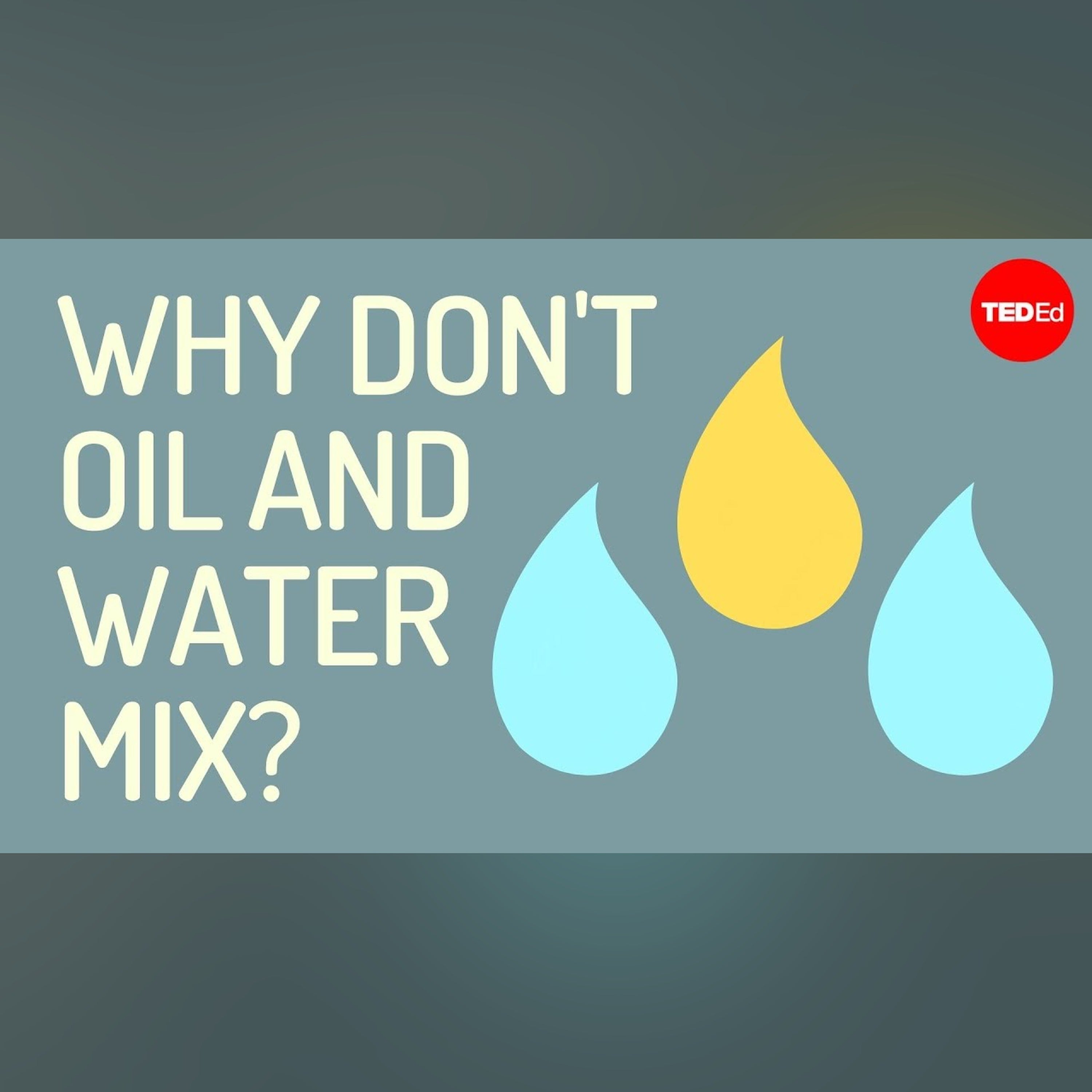
View full lesson: http://ed.ted.com/lessons/why-don-t-oil-and-water-mix-john-pollard Uploaded 10-10-13 Salt dissolves in water; oil does not. But why? You can think of that glass of water as a big, bumpin' dance party where the water molecules are always switching dance partners -- and they'd much rather dance with a salt ion. John Pollard explains how two chemistry principles, energetics and entropy, rule the dance floor. Lesson by John Pollard, animation by Andrew Foerster.
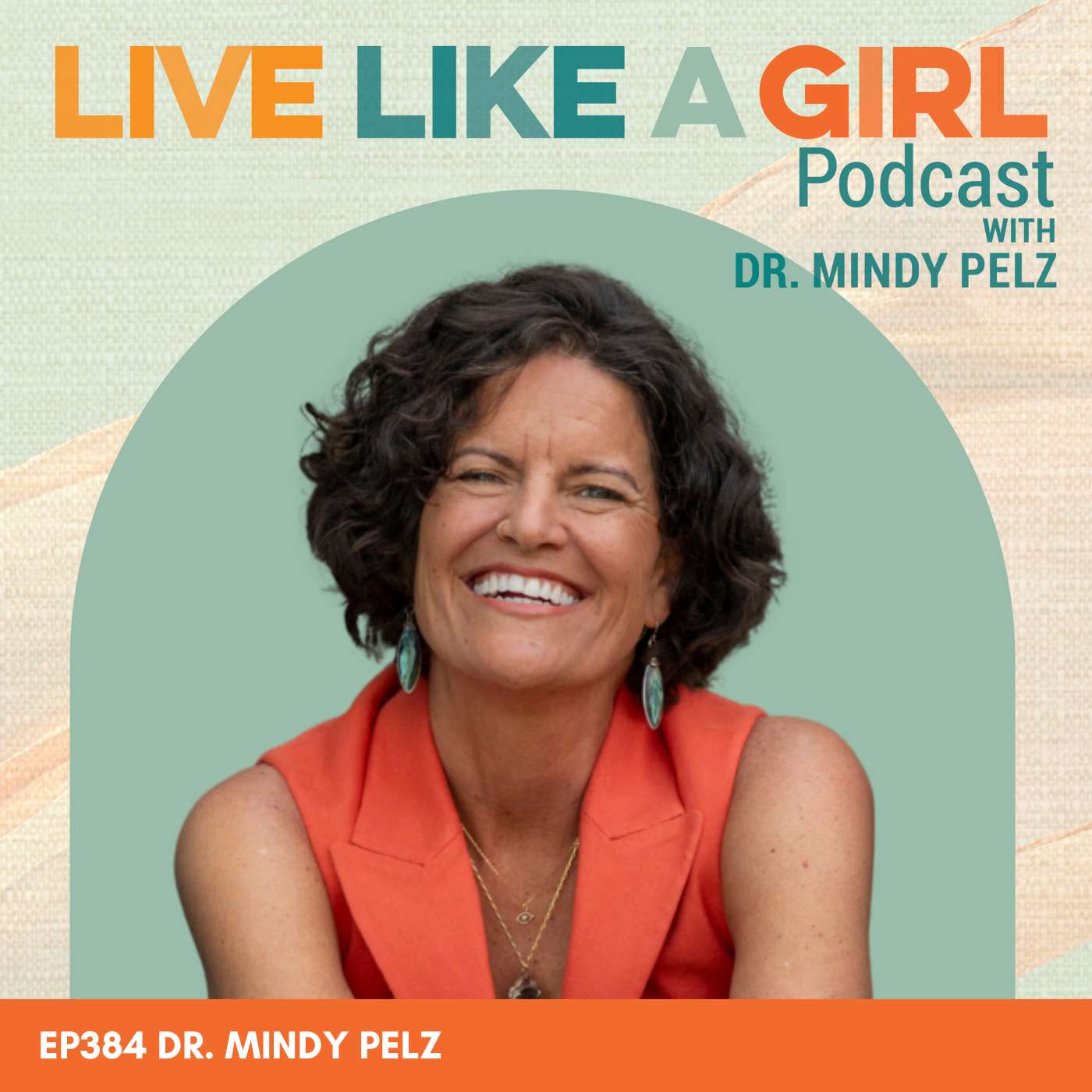
Sleep changed for me during perimenopause. I used to fall asleep the minute my head hit the pillow. Then I started struggling to fall asleep and waking up in the middle of the night, even when I was exhausted. If you're experiencing this after 40, I want to share what helped me. In this solo episode of Live Like a Girl, I'm walking you through five steps to create a nighttime routine that supports better sleep. We're talking about estrogen, cortisol, blood sugar, and why your evening habits matter more than you might realize. I'll show you how I think about evening lighting, dinner, magnesium-rich foods, caffeine, scrolling, and calming your nervous system before bed. At the end, I'll give you three simple things to try tonight and a two-week plan to help you see what works for your body. IN THIS EPISODE Why women start waking up at 2 or 3 a.m. during perimenopause and menopause The connection between estrogen, cortisol, insulin, and sleep How to set up the three hours before bedtime F
Everybody dies—and then what? In this episode of Crash Crash Religions, we’ll explore how religions around the world have formed answers to a question nobody knows the answer to. We’ll also discover how concepts of Heaven and Hell have changed over time. Introduction: Welcome to Hell 00:00 Imagining the Afterlife 1:12 Early Jewish Beliefs 2:38 The Evolution of Hell 6:14 The Evolution of Heaven 8:46 Review & Credits 11:08 *** Support us for $5/month on Patreon to keep Crash Course free for everyone forever! https://www.patreon.com/crashcourse Or support us directly: https://complexly.com/support Join our Crash Course email list to get the latest news and highlights: https://mailchi.mp/crashcourse/email Get our special Crash Course Educators newsletter: http://eepurl.com/iBgMhY Thanks to the following patrons for their generous monthly contributions that help keep Crash Course free for everyone forever: Shruti S, Quinn Harden, Ryan Lueckenotte, Spilmann Reed, Brandon Thomas, Emily Beazle
Hank introduces us to biogeochemical cycles by describing his two favorites: carbon and water. The hydrologic cycle describes how water moves on, above, and below the surface of the Earth, driven by energy supplied by the sun and wind. The carbon cycle does the same... for carbon! Table of Contents 1) Hydrologic Cycle - 1:15 A) Clouds - 2:13 B) Runoff - 3:06 C) Oceans - 3:41 D) Evapotranspiration - 4:25 2) Carbon Cycle - 5:12 A) Plants - 5:48 B) Fossil Fuels - 6:40 C) Oceans - 7:12 D) Global Warming - 7:35 References Crash Course is on Patreon! Want to find Crash Course elsewhere on the internet? Facebook - http://www.facebook.com/YouTubeCrashCourse Twitter - http://www.twitter.com/TheCrashCourse Instagram - https://www.instagram.com/thecrashcourse/ CC Kids: http://www.youtube.com/crashcoursekids
In all of space, nothing is more mind-meltingly strange than a black hole. These cosmic monsters are places where space becomes time, time becomes space, and the fundamental laws of physics simply cease to exist. But what if the event horizon isn't the final boundary?Way past the point of no return, deep inside spinning Kerr black holes, lies a theoretical boundary even stranger than the first: the Cauchy Horizon. Beyond this threshold, spacetime breaks down entirely, cause and effect collapse, and physics yields to pure, unpredictable madness.From the lethal trap of spaghettification to time-looping curves and infinite mass inflation, discover what happens when you attempt the ultimate one-way trip into the abyss....▀▀▀▀▀▀ ▀▀▀▀▀▀ The Astrum book is still available in the US!
Featuring Dr. Paul "Paulie" Gavoni and Matt Cicoria What happens when staying home from school becomes more reinforcing than attending? And how can educators, behavior analysts, and school leaders help students return without inadvertently making the problem worse? In this special episode of the Behavioral Observations Podcast, I'm sharing a conversation I recently had with my good friend and colleague, Dr. Paul "Paulie" Gavoni, on his podcast, The Heart & Science of Leadership (https://thoughtsrantsofabehaviorscientist.buzzsprout.com/). We tackled a topic that's increasingly challenging schools across the country: chronic absenteeism and school refusal. While attendance problems are often discussed in terms of percentages, policies, and accountability, those numbers don't necessarily tell us why an individual student isn't coming to school. From a behavior-analytic perspective, we need to understand the conditions influencing attendance—and how our responses might be helping or inadve
Take a look inside the conehead termite colony as a queen begins her reign as one of the longest living insects in the animal kingdom. -- A single determined termite braves countless threats to participate in the only flight of her lifetime. She evades the onslaught of predators as she lands, flips off her wings, secretes pheromones, and attracts a mate. But she's not alone. Unlike most termite species, conehead termite colonies can have multiple queens and kings. Barbara L. Thorne details the reign and duties of termite royalty. Lesson by Barbara L. Thorne, directed by Thomas Johnson Volda. Support Our Non-Profit Mission ---------------------------------------------- Support us on Patreon: http://bit.ly/TEDEdPatreon Check out our merch: http://bit.ly/TEDEDShop ---------------------------------------------- Connect With Us ---------------------------------------------- Sign up for our newsletter: http://bit.ly/TEDEdNewsletter Find us on Twitter: http://bit.ly/TEDEdTwitter Peep us on In
(Conversation recorded on September 24th, 2026) One in five mammal species on Earth is a bat, yet they remain some of the most overlooked and misunderstood creatures in conservation. Bats pollinate crops, control pests, and spread seeds over large areas. But as climate change pushes temperatures and rainfall to new extremes, many forests are increasingly at risk of catching fire, threatening both the wildlife and communities that depend on them. What happens when the land-management knowledge communities have relied on for generations no longer matches reality, and how can species like bats become the catalysts to realign them? In this episode, Nate is joined by Nigerian bat biologist Iroro Tanshi to explore how the rediscovery of a bat species unseen in Nigeria for 45 years – and a wildfire that destroyed half its habitat just days later – launched a community-led fire prevention program. Iroro explains how listening to farmers, who no longer knew when it was safe to burn their fields
The Healthspan Advantage: Muscle, Metabolism & Mind in Modern Plant-Based Living Julieanna Risse, MS, RD, CPT, explores how modern plant-based living can support healthspan through muscle, metabolism, and mind. Learn how smart nutrition, strength, movement, and lifestyle habits can help preserve vitality, independence, and long-term wellness. #Healthspan #PlantBased #Metabolism