Robot dogs are here. But why? You might think you already know Spot, the robot dog from Boston Dynamics. Maybe you saw a viral video of it opening a door, or dragging a truck, or dancing. But now, this robot has hit a HUGE milestone... Spot got a job! These robots are now out in the real world doing real work, for fire departments, factories, defunct nuclear power plants like Fukushima, ancient ruins like Pompeii, deep mines, and, more controversially, police departments. You might already be starting to see robot dogs walking around, and even if you’re not, they’re starting to affect your life. That’s why we went to visit Boston Dynamics. In this video, we put Spot to the test, to show you what it’s really capable of, and how our future could be even better with robot dogs. Chapters: 00:00 What is Boston Dynamics robot dog? 1:33 What does Boston Dynamics robot dog do? 2:50 Why robot dogs? 3:32 Taking Spot on an obstacle course 4:33 When Spot falls down 5:34 How Spot protects itself an
Black holes are not just the strangest objects in the universe, they're the sharpest test we have of how reality actually works. This episode explores how these extreme cosmic laboratories force general relativity and quantum physics into direct confrontation. We look back through a decade of content to understand their formation and the theoretical diagrams that describe them, offering a journey through the profound implications of these celestial objects for our understanding of space time and astrophysics. Sign Up on Patreon to get access to the Space Time Discord! Check out the Space Time Merch Store Hosted by Matt O'Dowd Written by Matt O'Dowd Post Production by Leonardo Scholzer Directed by Andrew Kornhaber Associate Producer: Bahar Gholipour Executive Producer: Andrew Kornhaber Executive in Charge for PBS: Maribel Lopez Director of Programming for PBS: Gabrielle Ewing Assistant Director of Programming for PBS: John Campbell Spacetime is a production of Kornhaber Brown for PBS Di
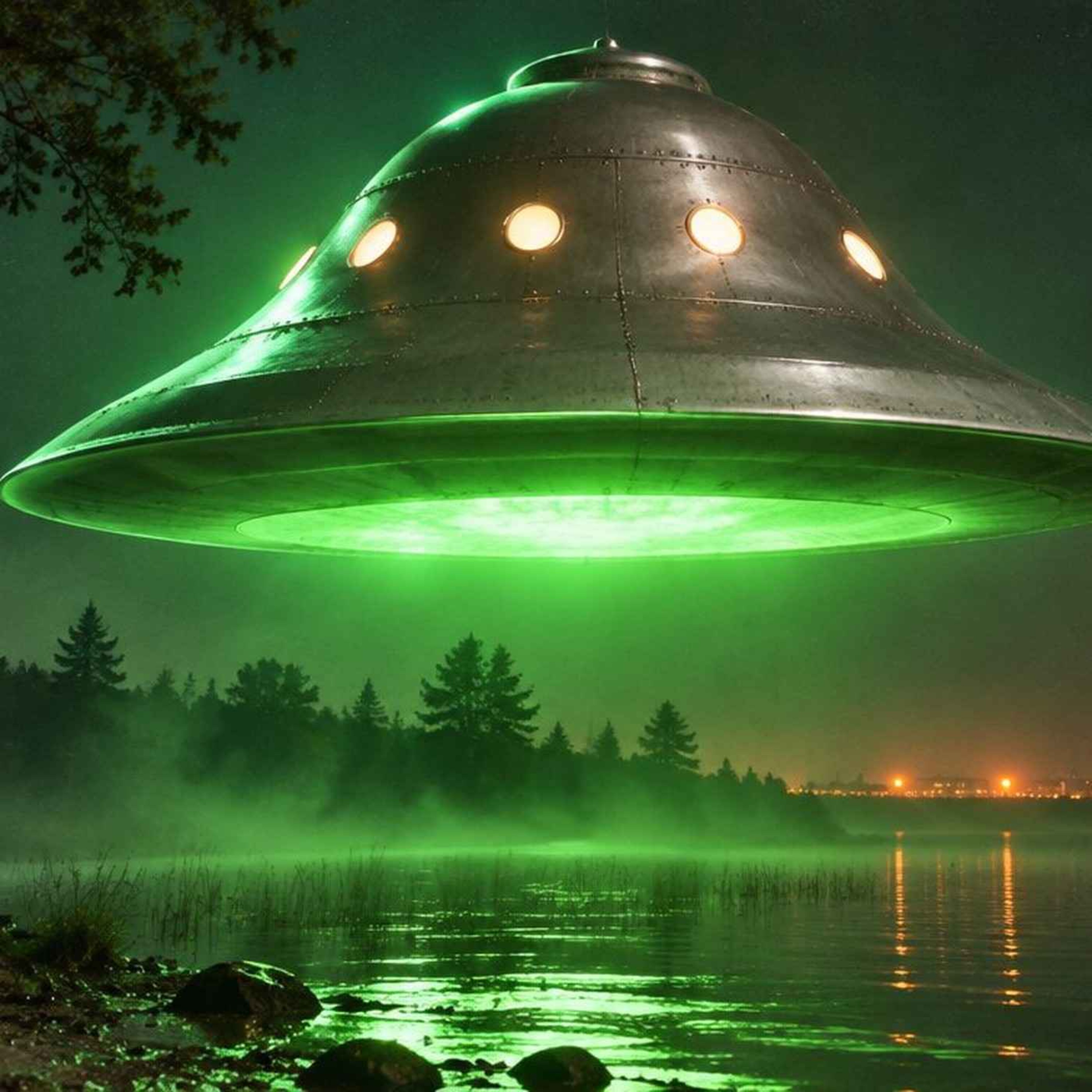
In today's brief: Lake Erie, 1957: a newly released Air Force report says two boys saw a humming, bell-shaped craft near the Enrico Fermi Atomic Plant. Skinwalker Ranch: owner Brandon Fugal calls the new files landmark and recalls a daylight saucer over the mesa. Warship footage: a 20-second 2020 infrared clip shows a light crossing a US Navy ship in the Middle East, with no Pentagon assessment. Martha's Vineyard, 1957: a spiked, nickel-coloured object that the Air Force put down to a radar-reflector balloon. Loch Ness: reported sightings jump to 15 this year, up from six in 2025. The Book of Miracles: a 16th-century manuscript of comets, blood rain and multiple suns heads to auction at Christie's. Quick hits: a 1952 file blames the saucer wave on temperature inversions; more Pentagon UFO files are on the way. Every story and source: https://believepod.com/ufo-paranormal-news-22-november-2026/ New episodes every morning. Keep your eyes on the sky. Sources: FOX 2 Detroit: https://www.fo
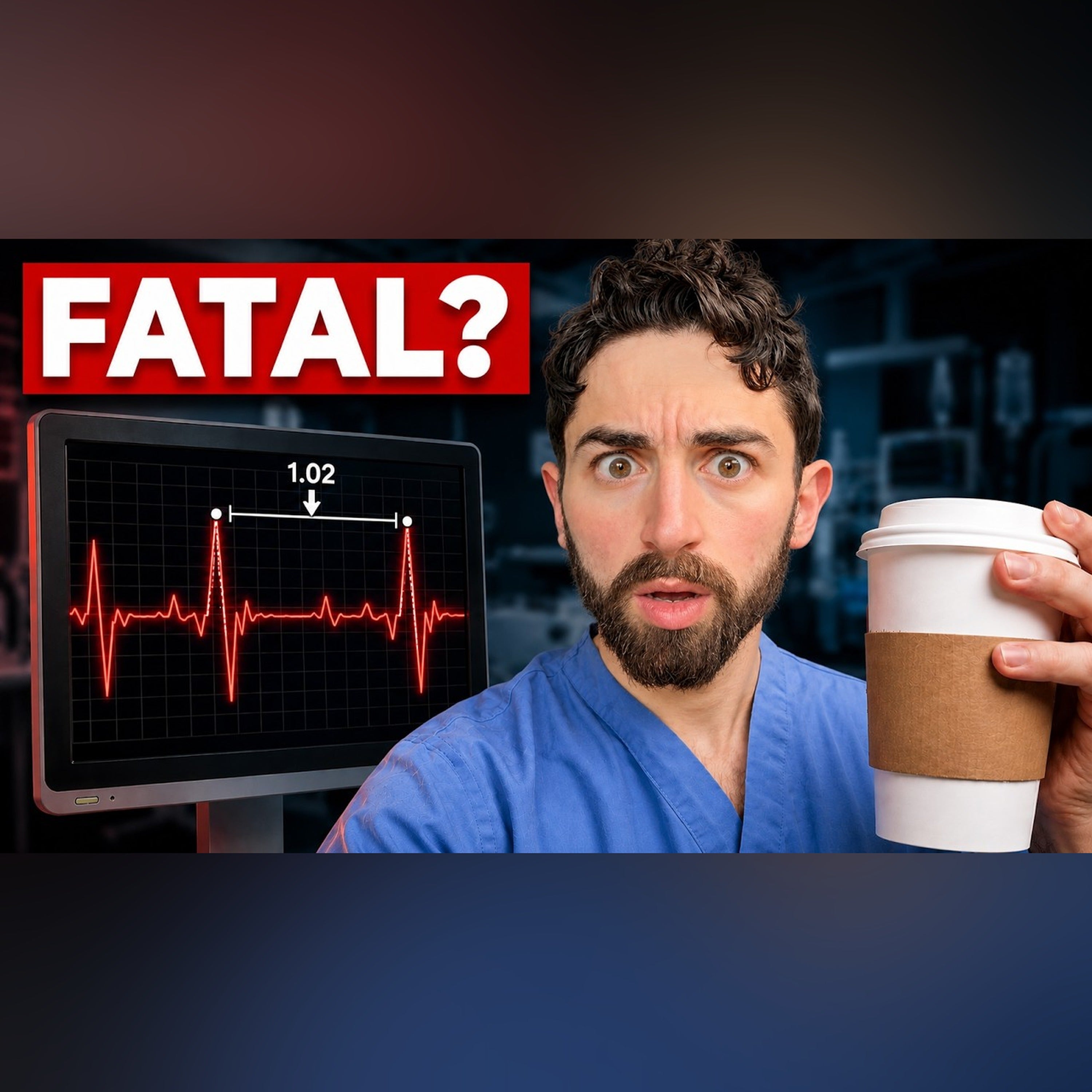
For a written breakdown, early access to content like this, and extra nuances, see the associated StayCurious Metabolism newsletter: https://staycuriousmetabolism.substack.com/p/why-you-need-to-track-your-heart?r=40ekz2 If you want to try the omega supplement I use, Accentrate Omega Max, here’s the link: https://www.fenixhealthscience.com/staycurious Heart rate variability (HRV) is more than just a number, it’s a real-time window into how well your brain, heart, and nervous system are working together. In this video, we break down what HRV actually measures, why it’s such a powerful predictor of mortality and heart attack risk, and how it reflects something deeper: your body’s ability to adapt, recover, and respond to stress. We walk through landmark studies showing that low HRV is associated with significantly higher risk of death and first cardiac events—even after controlling for traditional risk factors. But this isn’t just about risk. HRV is something you can measure today and act
Is the property downturn shifting from city to city, or are national headlines hiding what is happening on the ground? On this week's Australian Property Podcast, Pete Wargent and Chris Bates look at changing listings, buyer demand and price movements across Australia's housing markets. If you're considering a first home, an upgrade or an investment property, this episode offers questions to ask before acting. Check current lending and tax rules, and seek qualified personal advice rather than treating a podcast discussion as a recommendation. Episode resources Show partner resources Rask resources – Pete's Buyers Agency (https://www.allenwargent.com.au/) – All services (https://bit.ly/R-services) – Financial Planning (https://bit.ly/R-plan) – Invest with us (https://bit.ly/R-invest) – Access Show Notes (https://bit.ly/R-notes) – Ask a question (https://bit.ly/R-quest) – We love feedback! (https://raskau.typeform.com/to/ZbfHy6IP) – Instagram: @rask.invest (https://www.instagram.com/rask
After her father died suddenly, she inherited more than the family farm. She inherited the responsibility of keeping it running without the man who had spent nearly his entire life there. Then the longtime farmhands began quietly sharing strange experiences. One heard her father whistling outside the machine shed. Another heard his familiar footsteps in an empty barn. Someone else saw a man wearing his old brown work jacket standing beside a gate—only to look again and find no one there. She told them grief and memory could make familiar sounds feel more meaningful than they were. Then one evening, while working alone after everyone else had gone home, she heard three notes outside the barn. It was a whistle she had known since childhood. And nobody else on the farm would have understood what it meant. #GhostStories #FamilyGhost #SpiritVisit #HauntedFarm #Afterlife #SignsFromBeyond #Paranormal #FatherAndDaughter #Unexplained #Signs Love real ghost stories? Want even more? Want even mor
In this episode: 00:25 Voyager 1 goes farther than any human-made object has gone before Nature: Voyager 1 achieves a cosmic first: one ‘light day’ from Earth (https://www.nature.com/articles/d41586-026-03672-1) 04:37 Genomic analysis reveals how vampire bats stomach their gory diet Nature: Secrets of the vampires: genomes reveal how these bats live off blood alone (https://www.nature.com/articles/d41586-026-03706-8) Hosted on Acast.
Finding provides new insights into what happens within stellar mergers — plus, using quantum physics to securely pinpoint someone’s location. 00:46 What happens when a star engulfs its neighbour Research Article: Karambelkar et al. (https://www.nature.com/articles/s41586-026-11221-z) 10:15 Research Highlights Nature: Microplastics change the colour of the sea near the Great Pacific Garbage Patch (https://www.nature.com/articles/d41586-026-03637-4) Nature: Rattlesnakes have personalities too — to venomous effect (https://www.nature.com/articles/d41586-026-03536-8) 12:56 How quantum technology could help defeat fraud Research Article: Kavuri et al. (https://www.nature.com/articles/s41586-026-11247-3) Hosted on Acast.
More needs to be done to combat climate change, but what? We discuss some big ideas to rein in emissions. Projections of future climate change show a relatively cooler world thanks to the growth of renewable energy. And yet the world is still on track to reach around 2.6˚C of warming by the end of the century — far beyond what many climate scientists say we need to avoid the worst impacts of climate change. So, what are we going to do about it? In the second episode of Cooked? I talk to experts around the world about their big ideas of what we can do to tackle climate change. We talk about energy, food, economics and how the world needs to adapt to a warmer world. 00:00 How can we save the world? 04:27 The synergistic solutions to climate change and other big challenges 12:03 Can we end humanity’s addiction to meat? 21:49 How to make economics work to fight climate change 33:30 Why the world needs to adapt 43:40 Preview of next time Further reading: Not the End of the World (https://ww
Urgent public needs can justify simplifying normal approval procedures.
Share your view, then see how readers voted. No sign-in required. This poll is shared across stories.
Do you agree or disagree?
Common Quandary
A Common Quandary to discuss
Another conversation to explore, separate from this news story.
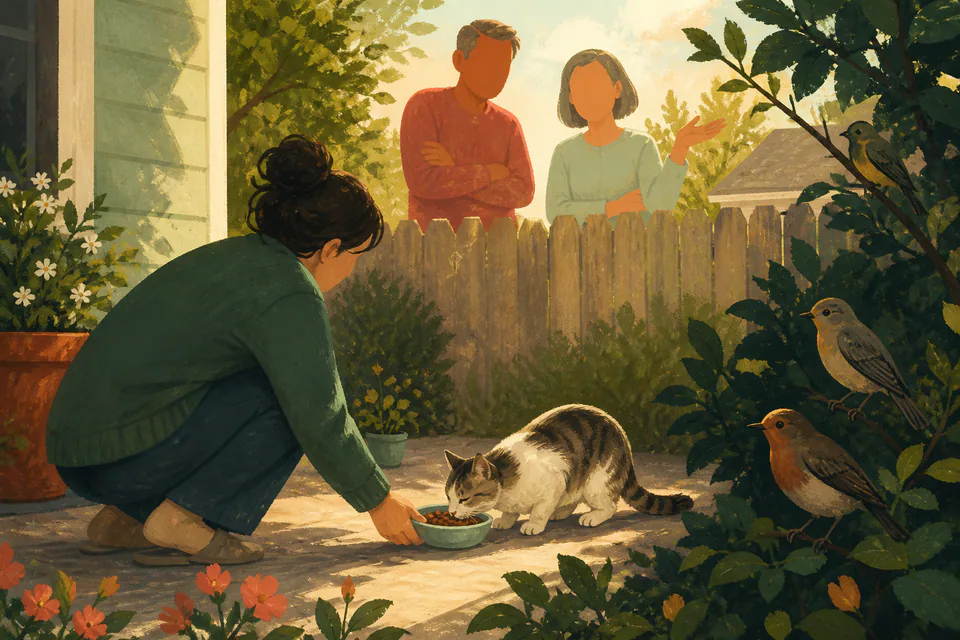
A stray cat adopts you—and starts killing birds. Do you keep feeding it?
A stray cat visits your yard daily and appears to depend on the food you leave out. Neighbors complain that outdoor cats kill birds and say feeding it encourages the problem without taking responsibility for the animal.
Does caring for one visible animal excuse harm to less visible ones?