In which John Green teaches you about how Islam has interacted with politics during its history, and how it continues to do so today. Islamist movements are in the news a lot lately, but how did that happen. John will point out that Islam has always been tied to political movements. Mohammed was not only a religious leader, he led an empire. So how did this lead to modern movements like ISIS? Islam has traditionally been a pretty egalitarian religion, and its scriptures value peace, so it is surprising in a lot of ways that such a violent fundamentalist movement would come out of it. What is a caliphate? What is a Caliph? John will teach you all about it. Take it easy in the comments, y'all. Be kind and respectful to each other. Crash Course is on Patreon! Want to find Crash Course elsewhere on the internet? Facebook - http://www.facebook.com/YouTubeCrashCourse Twitter - http://www.twitter.com/TheCrashCourse Instagram - https://www.instagram.com/thecrashcourse/ CC Kids: http://www.yout
AI isn't a bubbleSpreading awareness about the works of some of the leading educators in the AI revolution."Helping humanity shepherd through this transition as we embrace the final invention of mankind: advanced artificial intelligence." David Shapiro aims to provide a pragmatic and optimistic view of the future.Core Ideas:Metamodernism: Narratives and emergence view of realityPostnihilism: The demand for meaning is false, there is only the Great MysteryHeuristic Imperatives: An ethical, moral, and decision framework.- Reduce suffering- Increase prosperity- Increase understandingPost-Labor Economics: Replace humans with machines (better, faster, cheaper, safer)mantra:EXPLORE: Delve into the unknown, driven by curiosity and a quest for discovery. Seek knowledge.ELUCIDATE: Make complex ideas clear, communicating them in an accessible and comprehensible manner.ENUMERATE: Ground insights in concrete data, providing measurable and quantitative evidence.ELABORATE: Add depth and detail to un
So, we haven't talked much about Italy and Germany so far in Crash Course Euro, and that's because prior to the mid-19th century, those two nation-states weren't really a thing. Today we'll look at how Italy and Germany pulled it together in the second half of the 1800s. You'll learn about Guisseppe Garibaldi, Victor Emmanuelle, Otto von Bismarck, Wilhelm I, and a whole heck of a lot about the development of modern politics. Sources -Hunt, Lynn. The Making of the West: Peoples and Cultures. 6th ed. Boston: Bedford St. Martins, 2019. -Lerman, Katharine Anne. Bismarck. London: Routledge, 2004. Crash Course is on Patreon! Thanks to the following patrons for their generous monthly contributions that help keep Crash Course free for everyone forever: Eric Prestemon, Sam Buck, Mark Brouwer, Indika Siriwardena, Avi Yashchin, Timothy J Kwist, Brian Thomas Gossett, Haixiang N/A Liu, Jonathan Zbikowski, Siobhan Sabino, Zach Van Stanley, Jennifer Killen, Nathan Catchings, Brandon Westmoreland, dor
4IR Podcast - 002 - Early Career Skills in the Age of AI + Spread of Misinformation Episode release date: 17 Apr 2024 Core Ideas: Metamodernism: Narratives and emergence view of reality - Reduce suffering - Increase prosperity - Increase understanding mantra: Seek knowledge. DISCLAIMER: This is a community-driven show. ---------- Keywords: post labor economics, heuristic imperatives, tech singularity, cognitive ai, ai podcast, david shapiro, agi, artificial intelligence
Today we're going to take a closer look at brains, how animals use them, and how some animals have even evolved to lose them! It turns out a brain (and intelligence more broadly) isn't easy to define, but what we do know for sure is that brains have evolved over time in response to the challenges in an animals' environment. And what we'll find is that sometimes it's much smarter to have a tiny, simple brain than a big, complicated one! Learn more about Rae here! https://www.raewynngrant.com (https://www.raewynngrant.com/) Watch our videos and review your learning with the Crash Course App! Download here for Apple Devices: https://apple.co/3d4eyZo Download here for Android Devices: https://bit.ly/2SrDulJ Crash Course is on Patreon! Thanks to the following patrons for their generous monthly contributions that help keep Crash Course free for everyone forever: Alexis B, Rene Duedam, Burt Humburg, Aziz, Nick, DAVID MORTON HUDSON, Perry Joyce, Scott Harrison, Mark & Susan Billian, Junrong Er
Discover the tale of the lovestruck boy sent into Hell to steal 3 hairs from the Devil to appease his true love's father, the king. Uploaded 07-07-20 -- In a small town, a proud mother showed off her newborn son. Upon noticing his lucky birthmark, townsfolk predicted he would marry a princess. But soon, these rumors reached the wicked king. Enraged, the king stole the child away, and sent him hurtling down the river. But the infant’s luck proved greater than the king’s plan. Iseult Gillespie tells the tale of the boy’s journey to meet the Devil. Lesson by Iseult Gillespie, directed by Lucija Bužančić. Animator's website: https://www.behance.net/lucebuzanca503 Sign up for our newsletter: http://bit.ly/TEDEdNewsletter Support us on Patreon: http://bit.ly/TEDEdPatreon Find us on Twitter: http://bit.ly/TEDEdTwitter Peep us on Instagram: http://bit.ly/TEDEdInstagram View full lesson: https://ed.ted.com/lessons/the-tale-of-the-boy-who-tricked-the-devil-iseult-gillespie Thank you so much to o
Did you know that November 19th is the UN's World Toilet Day?! Neither did we! To honour the occasion, we're replaying this colourful conversation from 2016 with Clare Collins, Professor of Nutrition and Dietetics at the University of Newcastle. Green poo, "cappuccino" wee, purple pee: what's normal, what's weird, and what's worth a trip to the GP? Clare explains what the colours in your toilet bowl could mean, and what to show and tell your doctor when something looks off.
Microsoft: Enhance Bing with ChatGPT!! ...wait seriously? Please no... (I have a better idea) Episode release date: 4 Jan 2023 Core Ideas: Metamodernism: Narratives and emergence view of reality - Reduce suffering - Increase prosperity - Increase understanding mantra: Seek knowledge. DISCLAIMER: This is a community-driven show. -------- Keywords: ai safety, ai research, ai consciousness, openai
Check out our new-and-improved Crash Course Biology series here! https://youtube.com/playlist?list=PL8dPuuaLjXtPW_ofbxdHNciuLoTRLPMgB And thus begins the most revolutionary biology course in history. Come and learn about covalent, ionic, and hydrogen bonds. What about electron orbitals, the octet rule, and what does it all have to do with a madman named Gilbert Lewis? It's all contained within. Chapter Timecode: 1. Intro = 00:00 2. Carbon = 01:51 3. Electron Shells = 04:23 4. The Octet Rule = 06:52 5. Gilbert Lewis = 05:09 6. Covalent Bonds = 04:41 7. Polar & Non-Polar Covalent Bonds = 07:58 8. Ionic Bonds = 08:29 9. Hydrogen Bonds = 10:11 Crash Course is on Patreon! Want to find Crash Course elsewhere on the internet? Facebook - http://www.facebook.com/YouTubeCrashCourse Twitter - http://www.twitter.com/TheCrashCourse Instagram - https://www.instagram.com/thecrashcourse/ CC Kids: http://www.youtube.com/crashcoursekids
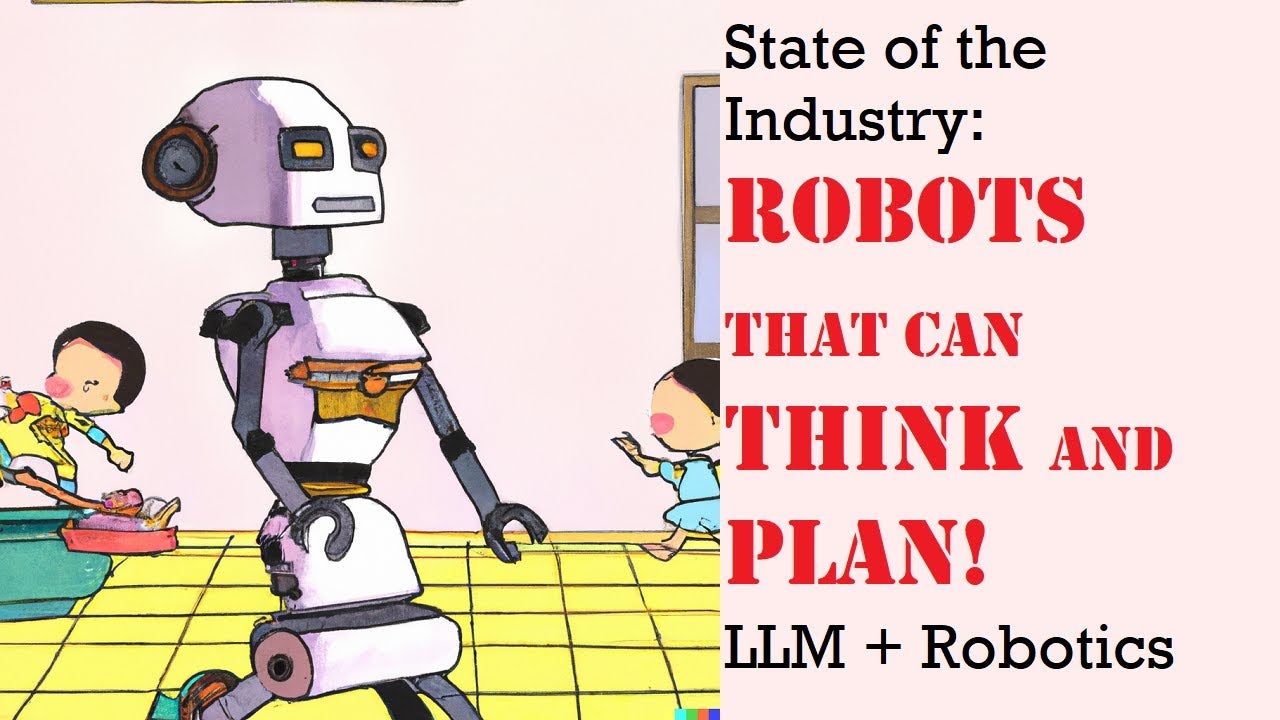
State of the Industry: Integrating GPT-3 and LLMs into Robotics! SayCan and Ameca Episode release date: 16 Sep 2022 Core Ideas: Metamodernism: Narratives and emergence view of reality - Reduce suffering - Increase prosperity - Increase understanding mantra: Seek knowledge. DISCLAIMER: This is a community-driven show. ------ Keywords: ai agents, david shapiro, ai consciousness, post labor economics, ai innovation, future technology, agi, tech singularity
Today, Craig is going to dive into the controversy of monetary and fiscal policy. Monetary and fiscal policy are ways the government, and most notably the Federal Reserve, influences the economy - for better or for worse. So we’re going to start by looking at monetary policy, and specifically how the Federal Reserve uses interests rates as a means of controlling (or at least attempting to control) inflation. We’ll then move onto fiscal policy - that is the government’s use of taxation to raise and spend money. It’s all, well, pretty controversial, but as it seems Americans hate taxes the most, monetary policy is most often used - meaning that the Federal Reserve plays a hugely significant role in steering the U.S. economy. Produced in collaboration with PBS Digital Studios: http://youtube.com/pbsdigitalstudios Support is provided by Voqal: http://www.voqal.org (http://www.voqal.org/) All attributed images are licensed under Creative Commons by Attribution 4.0 Want to find Crash Course
OpenAI's Q* is the BIGGEST thing since Word2Vec... And possibly MUCH bigger - AGI is definitely near Episode release date: 24 Nov 2023 Core Ideas: Metamodernism: Narratives and emergence view of reality - Reduce suffering - Increase prosperity - Increase understanding mantra: Seek knowledge. DISCLAIMER: This is a community-driven show. --------- Keywords: superintelligence, ai innovation, ai ethics, prompt engineering
How do astronomers make sense of the vastness of space? How do they study things so far away? Today Phil talks about distances, going back to early astronomy. Ancient Greeks were able to find the size of the Earth and from that the distance to and the sizes of the Moon and Sun. Once the Earth/Sun distance was found, parallax was used to find the distance to nearby stars, and that was bootstrapped using brightness to determine the distances to much farther stars. Check out the Crash Course Astronomy solar system poster here: http://store.dftba.com/products/crashcourse-astronomy-poster -- Chapters: Introduction 00:00 How did we calculate the Earth's Size? 1:07 THE Astronomical Unit (AU) = 149,597,870.7 km 3:12 Depth Perception & Parallax 5:39 Light Years & Parsecs 7:31 Brightness Indicates Distance 9:07 Review 10:30 -- PBS Digital Studios: http://youtube.com/pbsdigitalstudios Follow Phil on Twitter: https://twitter.com/badastronomer Want to find Crash Course elsewhere on the internet? Fa
Time Travel - Woo in the Sky - Kevin Arnett 00:00:00 Introduction Richard Saunders 00:04:54 Back in Time? Do you wish you could turn back time? If you could, what would you do? A chance to fix your mistakes or maybe just become a time tourist to watch history unfold. This week we look at a so-called time traveller named 'Noah' who made waves online in 2018, claiming he was from the year 2030. Included is a segment from radio 2UE in Sydney when Richard Saunders had a regular segment as the resident skeptic. 00:20:22 You Can Count on Adrienne. With Adrienne Hill Adrienne is up in the air... really... she is in a plane, zooming across the sky to give a preview of her upcoming reports from her trip to Europe and woo she encounterd. 00:25:04 The TROVE Archives A wander through the decades of digitised newspapers to look for references to the late TV commentator on the supernatural, Kenin Arnett who was well known from his appearances on the Don Lane Show and the Bert Newton Show in the 1970
View full lesson: http://ed.ted.com/lessons/the-contributions-of-female-explorers-courtney-stephens During the Victorian Age, women were unlikely to become great explorers, but a few intelligent, gritty and brave women made major contributions to the study of previously little-understood territory. Courtney Stephens examines three women -- Marianne North, Mary Kingsley and Alexandra David-Néel -- who wouldn't take no for an answer (and shows why we should be grateful that they didn't). Lesson by Courtney Stephens, animation by Lizzi Akana.
I used the ChatGPT to destroy the ChatGPT - Ep. 1 - Planning the Architecture & Requirements Episode release date: 28 Dec 2022 Core Ideas: Metamodernism: Narratives and emergence view of reality - Reduce suffering - Increase prosperity - Increase understanding mantra: Seek knowledge. DISCLAIMER: This is a community-driven show. -------------- Keywords: artificial general intelligence, chatbots, gpt
Watch this interview on my website (https://odysee.com/@davidahughes:6/20261112-Christian-White:0) Many thanks to Christian White for reaching out to interview me, and to his subscriber Melanie for recommending me! It’s great that Christian has entered this space — you will see that he is a very lively interviewer with a lot of passion and curiosity! We discussed: * the changing nature of war and how geopolitical conflicts fit into the wider war for technocracy; * Alex Karp; * the genocide in Gaza and the support of Western governments for it; * “climate change”; * 2030 and the building of global technocracy; * the transnational ruling class; * New Age philosophy and global power; * occult symbolism and religion; * continuities between “9/11” and “Covid-19”; * the black cube and the 9/11 Memorial Museum; * the transnational deep state and hidden power; * naked displays of power and evil: from the murder of 3,000 people on September 11, 2001, to genocide in Gaza; * Zionism and Israel; *
How exactly does a caterpillar become a butterfly? Follow the bug’s incredible metamorphosis from larvae to nimble adult. Uploaded 01-03-18 -- In order to become a butterfly, a caterpillar’s body dissolves almost completely and is rebuilt from its own juices. Butterflies are just a few of the 800,000 insect species that transition from larvae to adults through complete metamorphosis. But how exactly does this process work? Franziska Bauer explains how these squishy larvae emerge as armored, aerodynamic, and nimble adults. Lesson by Franziska Bauer, animation by Avi Ofer. Support Our Non-Profit Mission ---------------------------------------------- Support us on Patreon: http://bit.ly/TEDEdPatreon Check out our merch: http://bit.ly/TEDEDShop ---------------------------------------------- Connect With Us ---------------------------------------------- Sign up for our newsletter: http://bit.ly/TEDEdNewsletter Find us on Twitter: http://bit.ly/TEDEdTwitter Peep us on Instagram: http://bit.l
Understanding the Latest Q* Leak: The "Blanket Topology" Analogy for Energy-Based ModelsEpisode release date: 22 Mar 2024Spreading awareness about the works of some of the leading educators in the AI revolution. Core Ideas: Metamodernism: Narratives and emergence view of reality - Reduce suffering - Increase prosperity - Increase understanding mantra: Seek knowledge. ELABORATE: Add depth and detail to understanding, weaving comprehensive and nuanced explanations.DISCLAIMER: This is a community-driven show. ------------------------Understanding the Latest Q* Leak: The "Blanket Topology" Analogy for Energy-Based ModelsEpisode release date: 22 Mar 2024Spreading awareness about the works of some of the leading educators in the AI revolution. Core Ideas: Metamodernism: Narratives and emergence view of reality - Reduce suffering - Increase prosperity - Increase understanding mantra: Seek knowledge. ELABORATE: Add depth and detail to understanding, weaving comprehensive and nuanced explanatio
Honestly, “spreadsheets” are kind of the vegetables of the business world -- the very idea of them makes some people queasy. But that’s ok! They can be intimidating, but they’re not impossible to understand. Today we’re going to learn to love ‘em, because basic accounting can make or break a business. If we lose track of expenses or overestimate a revenue stream, we might end up questioning where all the money has gone. Software Advice: https://blog.hubspot.com/sales/small-business-accounting-software *** Crash Course is on Patreon! Thanks to the following patrons for their generous monthly contributions that help keep Crash Course free for everyone forever: Eric Prestemon, Sam Buck, Mark Brouwer, Indika Siriwardena, Avi Yashchin, Timothy J Kwist, Brian Thomas Gossett, Haixiang N/A Liu, Jonathan Zbikowski, Siobhan Sabino, Zach Van Stanley, Jennifer Killen, Nathan Catchings, Brandon Westmoreland, dorsey, Kenneth F Penttinen, Trevin Beattie, Erika & Alexa Saur, Justin Zingsheim, Jessica
In the 17th century, as the British colonies in the Americas were getting established in places like Jamestown, VA, the system of chattel slavery was also developing. Today, we'll learn about the role that slavery played in early American economy and how slavery became a legally accepted practice in the first place, and how it contributed to the colony’s early economic success. We'll look at the experiences of Anthony Johnson and John Punch to see how legal precedents that greatly influenced the development of slavery were set. Watch our videos and review your learning with the Crash Course App! Download here for Apple Devices: https://apple.co/3d4eyZo Download here for Android Devices: https://bit.ly/2SrDulJ Clint's book, How the Word is Passed: https://bookshop.org/a/3859/9780316492935 Crash Course is on Patreon! Thanks to the following patrons for their generous monthly contributions that help keep Crash Course free for everyone forever: Alexis B, Rene Duedam, Burt Humburg, Aziz, Ni
In this calm and sleepy facts episode, we travel back through the long and peaceful age of the dinosaurs, a time when these remarkable creatures walked the Earth for more than 160 million years. We begin in the warm, dry world of the Triassic, where the very first small dinosaurs appeared, and then wander into the lush green forests of the Jurassic, where giant long necked sauropods moved slowly beneath towering conifers and ferns. From there we reach the Cretaceous, when the first flowers bloomed and familiar giants like Triceratops and Tyrannosaurus rex appeared, a time so long that T. rex actually lived closer to us than to Stegosaurus. Along the way, we discover feathered dinosaurs whose colors scientists have pieced together from tiny traces in fossils, gentle parents tending their nests, and a small dinosaur fossil found curled up asleep, just like a resting bird. We also meet the curious fossil hunters who first uncovered these lost worlds, from Mary Anning on the cliffs of Engl
What if the most difficult experiences in your life are also the ones that have the greatest potential to make you stronger? It is easy to be grateful when life is going well. When relationships are healthy, work is rewarding, your health is good and everything seems to be falling into place, gratitude comes naturally. But what happens when life gets difficult? When people disappoint you, relationships fall apart, opportunities disappear or circumstances force you to confront parts of yourself you would rather avoid? The truth is that some of life’s most valuable lessons come wrapped in experiences we would never have chosen. In this episode of The Strong Life Project, Shaun O’Gorman explores the importance of developing gratitude for the difficult things in life. Not because suffering is enjoyable, or because every negative experience needs to be celebrated, but because the way we respond to adversity has an enormous influence on the people we become. Difficult experiences can expose
View full lesson: http://ed.ted.com/lessons/the-chemical-reaction-that-feeds-the-world-daniel-d-dulek Uploaded 18-11-13 How do we grow crops quickly enough to feed the Earth's billions? It's called the Haber process, which turns the nitrogen in the air into ammonia, easily converted in soil to the nitrate plants need to survive. Though it has increased food supply worldwide, the Haber process has also taken an unforeseen toll on the environment. Daniel D. Dulek delves into the chemistry and consequences. Lesson by Daniel D. Dulek, animation by Uphill Downhill.