The chemical reaction that feeds the world - Daniel D. Dulek
9 min
Listen through the publisher, then discuss the episode here or arrange an in-person Roundtable. Your city determines where to meet.
Roundtables are designed for groups of four, with a shared subject and room for everyone to speak. Come for discussion, with no dating expectation.
View full lesson: http://ed.ted.com/lessons/the-chemical-reaction-that-feeds-the-world-daniel-d-dulek Uploaded 18-11-13 How do we grow crops quickly enough to feed the Earth's billions? It's called the Haber process, which turns the nitrogen in the air into ammonia, easily converted in soil to the nitrate plants need to survive. Though it has increased food supply worldwide, the Haber process has also taken an unforeseen toll on the environment. Daniel D. Dulek delves into the chemistry and consequences. Lesson by Daniel D. Dulek, animation by Uphill Downhill.
Episode information is provided by the publisher. Listening takes place on the publisher’s service.
Master the skills that change lives — enroll in your free human behavior course today: https://nci.university/learn Uploaded 09-01-26 You were never reacting to chaos — you were responding to structure. Outcomes don’t appear suddenly; they’re assembled long before you notice them. Understanding how pressure is built changes how the world feels immediately. All influence follows patterns once you know where to look. Reality doesn’t break — it gets reshaped in layers. Every system depends on predictable human responses. Given the right conditions, behavior becomes almost automatic. Once you see the architecture, panic loses its leverage. Detection beats reaction — every time. Please note that the content provided in this broadcast is for informational and educational purposes only and should not be construed as legal, medical, financial, or professional advice. No material in this communication establishes any form of professional relationship that is privileged or confidential. The insi
Did you know your mouth is a nonstop biological water park?! Every single day, your body makes enough saliva to fill up to four whole water bottles! But spit isn't just warm water—it's a magical biological potion packed with incredible superpowers. Join Mira and Finn as they explore the wild world of saliva! Discover how a microscopic machine called amylase starts digesting your favorite foods the exact millisecond you take a bite. Find out how spit turns sharp, crunchy chips into soft, squishy balls to protect your throat! Plus, did you know saliva actually builds invisible armor for your teeth by filling in holes with special minerals like calcium and phosphate? It even works as a magical liquid key to unlock flavors—without saliva, chocolate and pizza would taste like absolute cardboard! From amazing spit factories hiding inside your cheeks to real-life birds that build entire nests out of spit, get ready for a mind-blowing biological adventure! Tune in to find out why your mouth is
In this Jim Rohn Motivation video, we unpack the real meaning of resilience—not as something you're born with, but something you build. It’s not about pretending life is easy. It’s about developing the mindset, discipline, and strength to keep going when everything in you says stop. Key Topics From This Motivational Video: Resilience as a skill, not a trait Taking full ownership of your life and mindset Reframing adversity into growth opportunities Emotional regulation and grounded self-talk Endurance, grit, and the decision to grow daily This Jim Rohn Motivational video reminds us that resilience doesn’t come from waiting for life to calm down—it comes from training your mind to rise in the middle of the chaos. It’s a mindset built on consistent ownership, reframed challenges, and the ability to lead yourself under pressure. Strength isn’t given. It’s earned—through the unseen decisions you make when no one is watching. This Jim Rohn Motivational Video Is Perfect For: Anyone feeling o
Thank you to Wren for supporting PBS. To learn more, go to https://wren.co/start/spacetime Uploaded 16-02-22 Take the Space Time Fan Survey Here: https://forms.gle/wS4bj9o3rvyhfKzUA PBS Member Stations rely on viewers like you. To support your local station, go to:http://to.pbs.org/DonateSPACE Sign Up on Patreon to get access to the Space Time Discord! Objective Collapse Theories offer a explanation of quantum mechanics that is at once brand new and based in classical mechanics. In the world of quantum mechanics, it’s no big deal for particles to be in multiple different states at the same time, or to teleport between locations, or to influence each other faster than light. But somehow, none of this strangeness makes its way to the familiar scale of human beings - even though our world is made entirely of quantum-weird building blocks. The explanations of this transition range from the mystical influence of the conscious mind to the grandiose proposition of multiple realities. But Obje
When you set a goal, what do you focus on? Odds are, you put most of your energy towards how you will achieve the results you’re after. But what if you shifted that focus from the how to the when. What if timing was that important? What if good timing could not only enhance your performance – it could actually give you the edge that you need to achieve your goal? Uploaded 30-07-19 In this episode of the Tony Robbins podcast, we have a very special guest – New York Times bestselling author and one of the most influential business minds of our time, Daniel Pink. Dan is widely regarded as one of the foremost thinkers in behavioral sciences. He’s upended conventional wisdom about what gives people drive and motivation. He’s challenged the value that society places on left brain over right brain skills. And he’s dispelled preconceived notions about what really makes a great salesman. His latest work is no exception. In When: The Scientific Secrets of Perfect Timing – Dan offers profound ins
What actually works when it comes to detecting lies, and why are so many popular ideas about reading people and nonverbal behavior at odds with the scientific research? I talk with Aldert Vrij, one of the world's leading deception-detection researchers, who has spent almost four decades studying these topics. We discuss why what people say is far more revealing than their body language; why the perceived “sexiness” of reading nonverbal behavior has contributed to widespread myths and misconceptions; whether vocal behaviors like pitch, volume, and hesitation contain meaningful clues; and whether there's value in analyzing minor word choices and turns of phrase, as is done in so-called “statement analysis.” We discuss Paul Ekman's legacy as a source of faulty ideas about deception, micro-expression-based deception detection training, and the strategies that popular “body language experts” use to appear scientifically credible while simultaneously promoting ideas that conflict with the sc
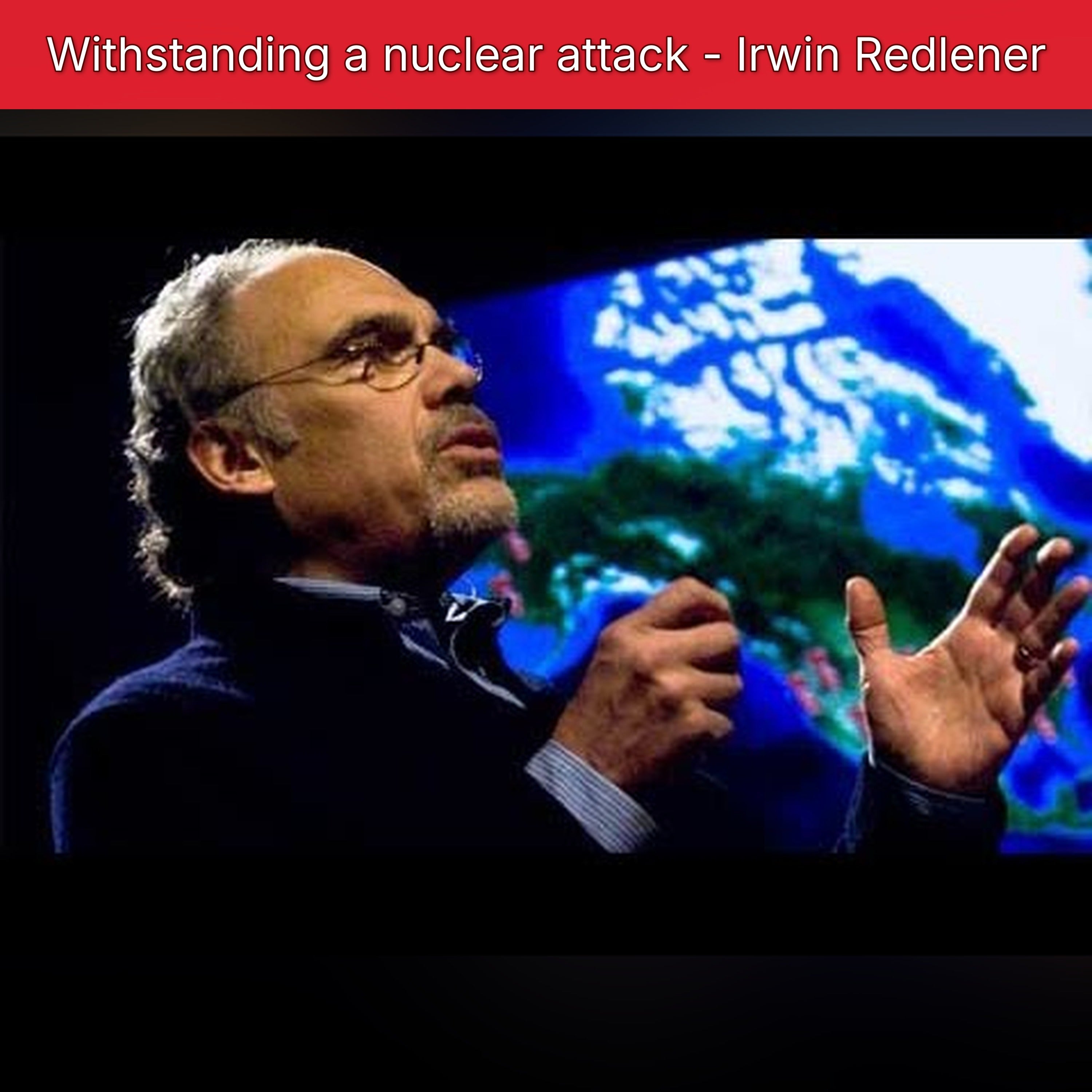
View full lesson: http://ed.ted.com/lessons/surviving-a-nuclear-attack-irwin-redlener The face of nuclear terror has changed since the Cold War, but disaster-medicine expert Irwin Redlener reminds us the threat is still real. He looks at some of history's farcical countermeasures and offers practical advice on how to survive an attack. Talk by Irwin Redlener.
Explore what makes polio so dangerous, what is causing the 21st century resurgence of cases, and how we can eradicate the disease. -- In 1952, polio was everywhere: killing or paralyzing roughly half a million people annually. Yet just 10 years later, paralytic polio cases in the US dropped by 96% and we were on track to get rid of polio for good. But in recent years, the virus started striking back. So, what’s behind these recent spikes? Explore the dangers of poliovirus and the possibility of eradicating this deadly disease. Directed by Anton Bogaty. This video made possible in collaboration with Gates Ventures Learn more about how TED-Ed partnerships work: https://bit.ly/TEDEdPartner A special thanks to Ananda Bandyopadhyay, Amber Zeddies, and Kathleen O'Reilly who provided information and insights for the development of this video. Support Our Non-Profit Mission ---------------------------------------------- Support us on Patreon: http://bit.ly/TEDEdPatreon Check out our merch: htt
Todd Humphreys forecasts the near-future of geolocation when millimeter-accurate GPS "dots" will enable you to find pin-point locations, index-search your physical possessions ... or to track people without their knowledge. And the response to the sinister side of this technology may have unintended consequences of its own. (Filmed at TEDxAustin.) Uploaded 26-06-13 Talk by Todd Humphreys.
People selling health products should provide evidence for their claimed benefits.
Share your view, then see how readers voted. No sign-in required. This poll is shared across stories.
Do you agree or disagree?
Common Quandary
A Common Quandary to discuss
Another conversation to explore, separate from this news story.
Your dinner guest arrives with their dog. Do you let both of them in?
A friend appears at your carefully planned dinner with a large dog they never mentioned. They say the dog becomes anxious when left alone and will sit quietly. Another guest is uneasy around animals, and your lease forbids pets.
Whose needs should an unexpected accommodation displace?