You’ve promised to get your son the cutest creature in creation: the cuddly. Can you outsmart the cuddly incubator and go home a hero? Uploaded 25-04-19 -- You’ve promised to get your son the cutest creature in creation: the cuddly. It’s part of the Wuddly species, cousin to the terrifying duddly and the hideous fuddly. To make one, 100 eggs are placed in an incubator to undergo egg fusion, and the resulting combination will produce either a cuddly, a duddly or a fuddly. Can you make the right combination to get a cuddly? Dan Finkel shows how. Lesson by Daniel Finkel, directed by Artrake Studio. Sign up for our newsletter: http://bit.ly/TEDEdNewsletter Support us on Patreon: http://bit.ly/TEDEdPatreon Find us on Twitter: http://bit.ly/TEDEdTwitter Peep us on Instagram: http://bit.ly/TEDEdInstagram View full lesson: https://ed.ted.com/lessons/can-you-solve-the-cuddly-duddly-fuddly-wuddly-riddle-dan-finkel Thank you so much to our patrons for your support! Without you this video would no
She'd been sleepwalking since childhood, and her husband was accustomed to finding her wandering around the house in the middle of the night. But after they moved into their first home, her nighttime behavior took an unsettling turn. She began having conversations with a woman her husband couldn't see, sometimes spending hours searching through kitchen drawers as though she were helping someone find something. She remembered none of it. Then her husband began hearing those same drawers opening when his wife wasn't anywhere near the kitchen. One night, they both heard something moving downstairs while they were wide awake. Was her sleepwalking somehow connecting her to an unseen presence? And what was this mysterious woman so desperately trying to find? #RealGhostStoriesOnline #Sleepwalking #HauntedHouse #ParanormalEncounters #UnseenPresence #SleepParanormalActivity #GhostlyCommunication #UnexplainedPhenomena #HauntedKitchen #TrueGhostStories Love real ghost stories? Want even more? Wan
After more than forty years of marriage, losing her husband left her surrounded by reminders of a life that had suddenly stopped. Then their daughter began dreaming about him. In three separate dreams, he appeared healthy and peaceful, but each time he repeated the same strange sentence: “It’s in the book of poetry.” Neither woman knew what he meant. There were shelves full of books in his study, and grief had already made the idea of searching for hidden messages feel like more than either of them wanted to take on. Eventually, the dreams faded into the background. Months later, his widow finally entered the study she had been avoiding. And sitting among the books was an old collection of poetry her husband had once loved. What she found inside made those dreams much harder to dismiss. #GhostStories #Afterlife #DreamVisitation #SpiritMessage #Paranormal #LifeAfterDeath #SignsFromBeyond #LoveAfterLoss #Unexplained #MessagesFromLovedOnes Love real ghost stories? Want even more? Want eve
Astronomy Cast Ep. 807: Mission Tech Series: Ion Drives Hosted by: Fraser Cain (@frasercain) and Dr. Pamela L. Gay (@CosmoQuest) Streamed live on Oct 27, 2026. The majority of rockets use a chemical propulsion system, but there are other ideas, fancy ideas that sound like they came from science fiction. But they're real and they work! Today we'll talk about ion engines, used by tie fighters everywhere!
There will be moments in life when doing the right thing comes at a cost. It might cost you a friendship, a relationship, an opportunity, your reputation or your comfort. The question is, when that moment arrives, will you stand up for what you believe in, or will you remain silent because speaking up is […] The post EP 3884 Will you stand up when it’s not convenient? (https://www.thestronglifeproject.com/the-strong-life-podcast/ep-3884-will-you-stand-up-when-its-not-convenient/) appeared first on The Strong Life Project (https://www.thestronglifeproject.com/).
Introduction to the new show, and a discussion of our AI moment with host, Lee Vinsel, co-host Paula Bialski, correspondents, Gretchen Von Koenig, and Javaid Sofi, as well as special guests danah boyd and Adam Wynne. Hosted by Simplecast, an AdsWizz company.
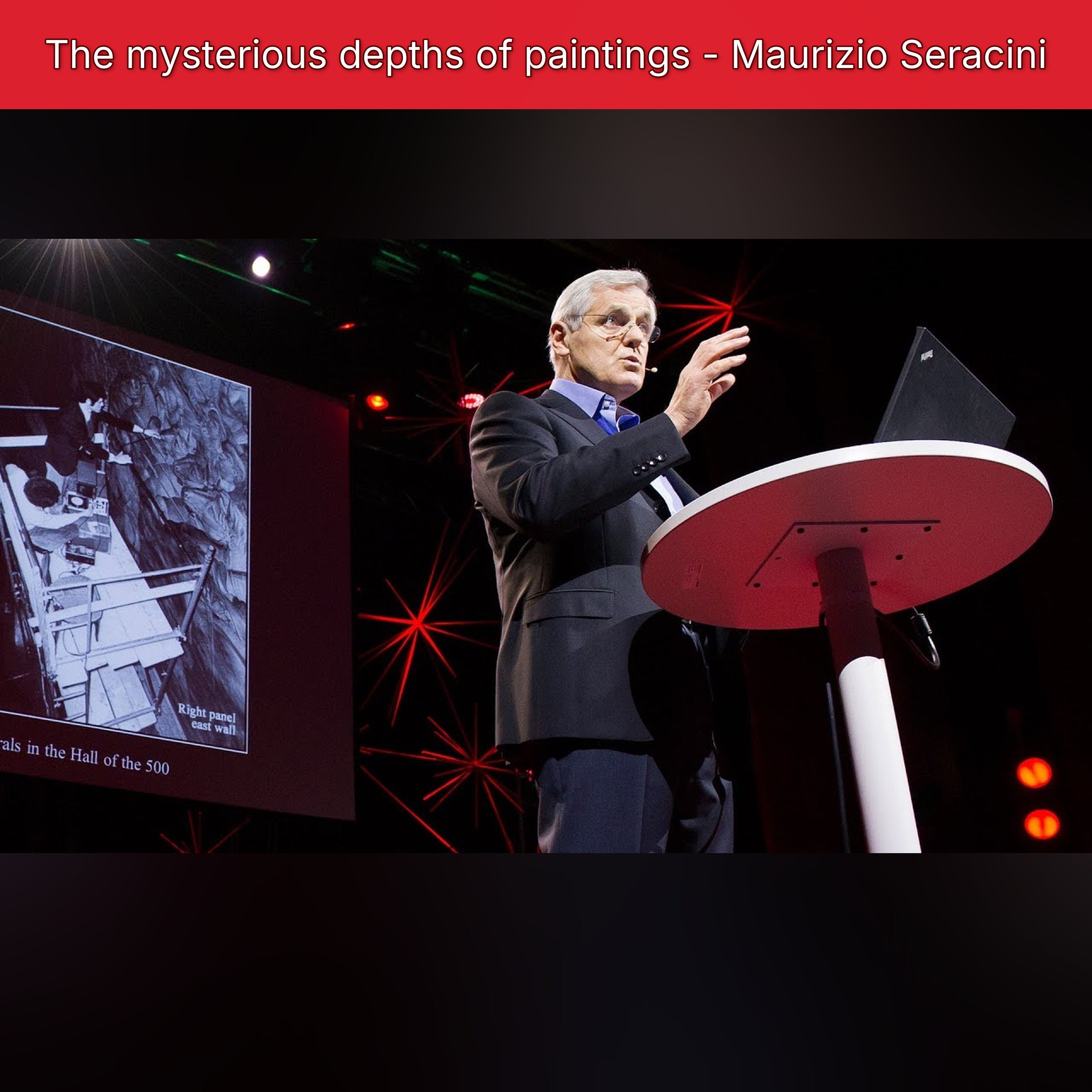
Art history is far from set in stone. Engineer Maurizio Seracini spent 30 years searching for Leonardo da Vinci's lost fresco "The Battle of Anghiari," and in the process discovered that many paintings have layers of history hidden underneath. Should they be part of the viewing experience too? Talk by Maurizio Seracini.
When you're getting medical treatment, or taking part in medical testing, privacy is important; strict laws limit what researchers can see and know about you. But what if your medical data could be used -- anonymously -- by anyone seeking to test a hypothesis? John Wilbanks wonders if the desire to protect our privacy is slowing research, and if opening up medical data could lead to a wave of health care innovation. Talk by John Wilbanks.
Most paranormal investigations focus on unexplained activity—footsteps, mysterious voices, or shadowy figures. But what happens when investigators go beyond the evidence and begin uncovering the personalities, histories, and secrets of those they believe are still haunting a location? Paranormal investigator, medium, and author Rob Gutro returns to discuss his Haunting Of series, co-written with Monique Toosoon, a drag queen and paranormal investigator whose talents complement Rob's abilities as a medium. Their latest investigations take them inside Vermont's historic Wilson Castle and New Hampshire's Hunt Memorial Library, two very different locations where the stories of the dead may be more complicated than anyone imagined. Some of the ghosts seem desperate to communicate. Others may have secrets they'd rather keep buried. And not everyone is particularly welcoming. Can the dead reveal details about their lives that history has forgotten? And what happens when an investigation uncov
This is a Grave Talks CLASSIC EPISODE! From an early age, Andi Roe sensed a comforting, protective presence that shaped her lifelong connection to the paranormal. As an empath, she experiences the world differently—picking up on emotions, energies, and spirits that often go unnoticed by others. In 2018, Andi joined Road Trip Paranormal, where she balances private investigations with public events focused on education and understanding. Rather than chasing evidence alone, her approach centers on listening—learning who these spirits are, what they carry with them, and why they may still be present. Andi shares her personal journey into the paranormal, the responsibility that comes with empathic sensitivity, and the stories of spirits she believes simply want to be acknowledged. It’s a conversation about connection, compassion, and what can happen when someone is willing to hear voices from the other side. To learn more about Road Trip Paranormal, the team Andi is on, visit rtpkansas.com
The Pharma Closeout's ESMO 2026 Debrief brings you the readouts from the European Society for Medical Oncology congress in Madrid that matter, what they change, and what to watch next, with one thread running through them: how much checkpoint therapy is enough. MOIO, a French trial that spaced checkpoint-inhibitor doses to every 12 weeks in patients already responding, was stopped early on its monitoring committee's recommendation. Around bladder surgery, Merck's KEYNOTE-866 and Bristol Myers Squibb's ENERGIZE both missed event-free survival in cisplatin-eligible patients, while VOLGA won in patients ineligible for or declining cisplatin, and final PEARLS survival for adjuvant Keytruda in lung cancer missed significance. Then mismatch repair-deficient tumors, with a correction on GSK's AZUR-1 numbers; Akeso and Summit's ivonescimab beating AstraZeneca's Imfinzi on survival in biliary tract cancer at an interim analysis; Tagrisso plus Orpathys in two lines of lung cancer; Amgen's Imdell
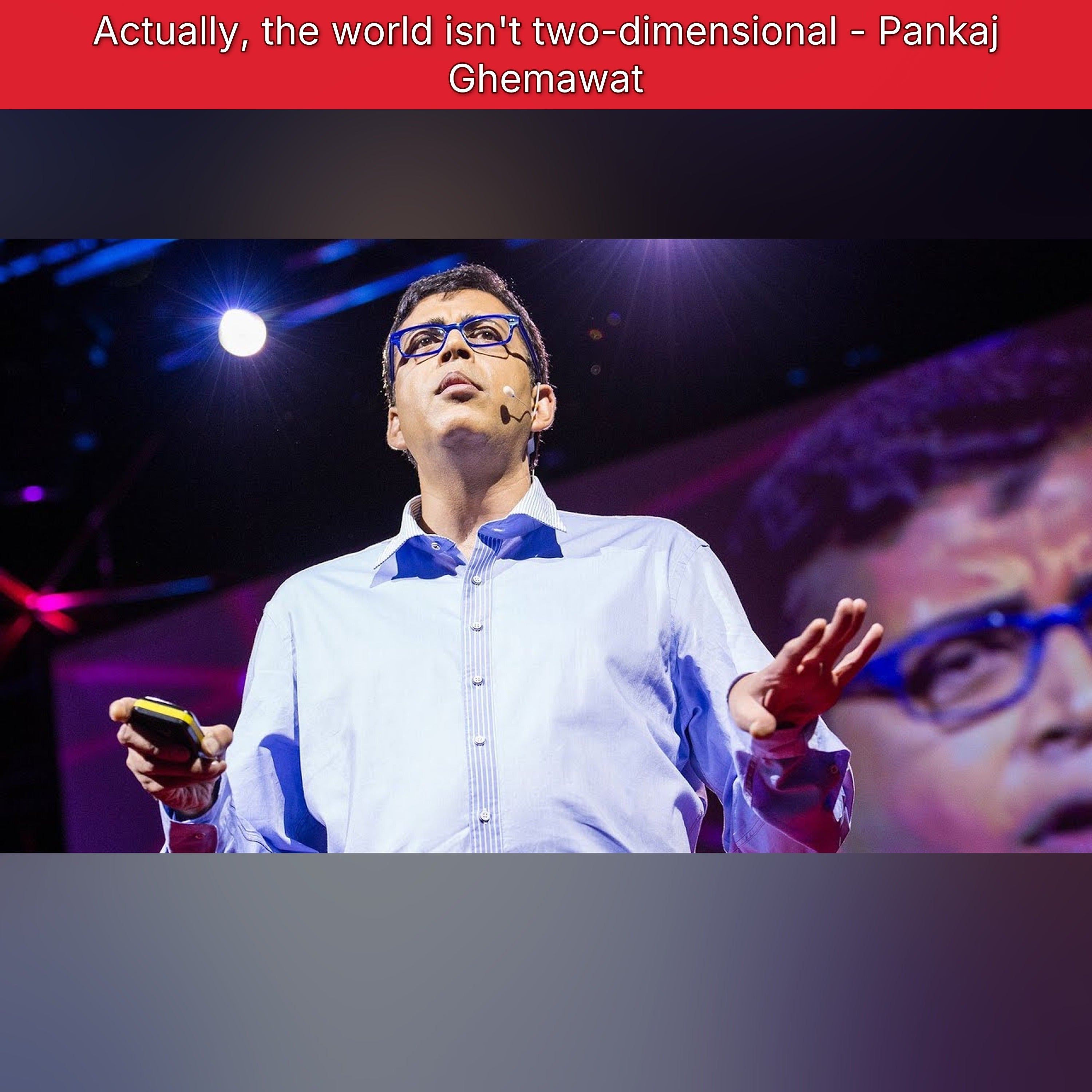
View full lesson: http://ed.ted.com/lessons/actually-the-world-isn-t-flat-pankaj-ghemawat It may seem that we're living in a borderless world where ideas, goods and people flow freely from nation to nation. We're not even close, says Pankaj Ghemawat. With great data (and an eye-opening survey), he argues that there's a delta between perception and reality in a world that's maybe not so hyperconnected after all. Talk by Pankaj Ghemawat.
View full lesson: http://ed.ted.com/lessons/rhythm-in-a-box-the-story-of-the-cajon-drum-paul-jennings Uploaded 03-03-15 Many modern musical instruments are complicated pieces of machinery with many moving parts. But the cajon is simply a drum and a stand and a seat all in one box. Paul Jennings explains the history behind the cajon and how it has become one of the most versatile and popular percussion instruments in the world today. Lesson by Paul Jennings, animation by Avi Ofer.
What does it take to build robots that can actually work in factories and warehouses? Tutor Intelligence CEO Josh Gruenstein argues robotics is a systems problem spanning AI, hardware, manufacturing, and the work itself. Josh joins a16z General Partners Martin Casado and Raghu Raghuram to explain Tutor’s approach: deploy robots into real businesses, use human “tutors” when needed, and turn that work into training data that makes the robots more capable. They discuss Tutor’s 100-robot data factory, robots starting at roughly $16 an hour, advances in spatial reasoning, and what flexible robotic labor could mean for American manufacturing and the physical economy. Resources: Follow Josh Gruenstein on X: https://x.com/joshgruenstein Follow Martin Casado on X:https://x.com/martin_casado Follow Raghu Raghuram on X:https://x.com/RaghuRaghuram Learn more about Tutor Intelligence:https://tutorintelligence.com/ Stay Updated: Find a16z on YouTube: YouTube (https://www.youtube.com/@a16z) Find a16z
Many of the same questions that provoke our imagination about our universe today were asked by the ancients. How did the universe begin? What is it made of? etc. What is particularly interesting is how the ancients addressed the question of how to get something from nothingness, and ultimately how the notion of the aether evolved. In this lecture I discuss the ancient greek philosophers’ ideas of the stuff of matter and the origin of the universe, and contrast that with our modern understanding. While our modern picture of the universe is vastly different than that of the ancients and we dispensed with the idea of an aether in the early 20th century, we have now replaced it with something even stranger, in which the dominant energy of the universe is contained in empty space. In some ways, the more things change, the more they stay the same. And the most beautiful thing of all is that the mysteries continue... As always, an ad-free video version of this podcast is also available to pai
Simon's X handle: @simonmontefiore His latest book, The Cauldron: https://www.amazon.com/Cauldron-Making-Modern-Middle-East/dp/0593805054 _______________________________________ To order Suicidal Empathy: https://lnk.to/SuicidalEmpathy _______________________________________ If you appreciate my work and would like to support it: _______________________________________ This clip was posted on November 2, 2026 on my YouTube channel as THE SAAD TRUTH_2114: https://youtu.be/daYUPayyypY _______________________________________ I count on my fans to support my efforts. You can donate via Patreon, PayPal, and/or SubscribeStar. _______________________________________ Dr. In addition to his scientific work, Dr. _______________________________________
Daniel Litt is an Assistant Professor of Mathematics at the University of Toronto. Visit his webpage here - https://www.daniellitt.com/ And check out his blogposts here - https://www.daniellitt.com/blog/ Numberphile videos and event podcasts about AI - https://www.youtube.com/playlist?list=PLVsSL1XVSphg Numberphile is supported by Jane Street - https://www.numberphile.com/jane-street With thanks to the Ben Delo Foundation - https://delo.org/ You can support Numberphile on Patreon - https://www.patreon.com/numberphile Here are our Patrons - https://www.numberphile.com/patrons Numberphile is created by Brady Haran
- Don’t sleep on [@ultrapouches]. This episode is about where consciousness begins. Mark Solms, neuropsychologist and psychoanalyst at the University of Cape Town, joins to explain why he thinks it begins not in the cortex but in raw feeling from the upper brainstem. We discuss patients who lost REM sleep but kept dreaming, what that means for Freud’s wish theory, and children born without a cortex who still giggle and startle. He argues the hard problem was tackled from the wrong end, starting with visual perception instead of feeling. The conversation also covers dual-aspect monism, Markov blankets and the free energy principle, his attempt to engineer an artificial agent that feels, and why he thinks that at death the second law wins. FOLLOW: - Spotify: https://open.spotify.com/show/4gL14b92xAErofYQA7bU4e - Substack: https://curtjaimungal.com - Twitter: https://x.com/TOEwithCurt - Discord: https://discord.gg/kBcnfNVwqs - Crypto: https://nowpayments.io/donation/TOE TIMESTAMPS: - 00:0
Most of us have ideas about what we’re looking for in a romantic partner. But psychologist Paul Eastwick (https://psychology.ucdavis.edu/people/paul-eastwick) says these preferences are surprisingly poor guides for finding love. He explains why attraction is so difficult to predict, and what the research suggests is the best way to meet someone with whom you'll connect. Then, in a new installment of “Your Questions Answered,” psychologist Ed Lemay (https://psyc.umd.edu/facultyprofile/lemay/edward) responds to your questions about how we project our own thoughts and feelings onto other people, and how these projections shape our relationships. In our companion conversation for Hidden Brain+ subscribers, we talk with Paul Eastwick about online dating apps. He says apps can powerfully shape our experience of meeting potential romantic partners — often not for the better. If you're a subscriber, that episode is called “The Online Dating Trap.” If you're not yet a subscriber, you can listen
Featuring an interview with Dr Matthew Lunning, including the following topics: A woman in her late 70s with non-GCB diffuse large B-cell lymphoma receives pola-R-CHP — Ann LaCasce, MD, MMSc (0:00) CNS prophylaxis in non-Hodgkin lymphoma (7:58) CME information and select publications (https://researchtopractice.com/ASCO2026/NHL/Micro/1/Video)
In this episode, Dr Cathy Harbury from Shine Dietetics shares insights on bariatric - metabolic surgery, including patient considerations, nutritional impacts, and long-term management strategies. Tailored for anyone considering or undergoing weight loss surgery, this conversation highlights the importance of personalized care and ongoing nutrition support. Key topics Patient decision-making process for surgery Types of bariatric and metabolic surgeries Nutrition risks and management post-surgery Impact of medications like GLP-1 on treatment options The role of dietitians in patient care and education The importance of long-term follow-up and support No Money No Time Resources Want a more Personalised Food, Nutrient Assessment Report? Cathy's High Protein Dahl https://nomoneynotime.com.au/healthy-easy-recipes/cathys-high-protein-dahl Shine Dietetics https://shinedietetics.com.au/ Keywords: #bariatricsurgery, #metabolicsurgery, #nutrition, #weightloss #dietetics, #health, #patientsuppor
Bloating is one of the most common complaints I hear from women, especially during perimenopause and menopause. And what's frustrating is that so many women are eating healthy, doing everything they think they should be doing, and still struggling with digestive issues. In this episode of Live Like a Girl, I'm joined by integrative medicine physician and gut health expert Dr. Rajsree Nambudripad to talk about what's going on in your gut and some of the everyday habits that might be contributing to bloating. We talk about why giving your gut a break between meals is so important, how your gut bacteria influence hunger hormones like GLP-1, and why stress and even the way you eat your meals affect digestion. We also get into the changes that happen during menopause, the difference between bloating and belly fat, and why some of the foods we consider healthy aren't always easy on our digestive systems. _ IN THIS EPISODE: Why constant snacking might be contributing to bloating How spacing o
The only Finals Revision Course will take place on 15th November in London (Mile End). The Finals Revision Course is a one-day, face-to-face course presented by Dr Thomas Watchman. It covers the highest-yield content you need to know for your medical school finals, particularly the AKT exam. By the end of the day, you will have covered content across the full curriculum, have a clear idea of your strengths and weaknesses, and know exactly where to focus your revision so that your exams. The course includes a copy of the Finals Revision Book and Finals Revision Flashcards. Find out more here: https://zerotofinals.com/courses/medicalschoolfinals/ New regular episodes of the podcast are coming soon.
This week, Wu Tsai Neuro launched the Stanford Digital Brain Project, an ambitious effort to build predictive models of the human brain. So today on the show, we’re bringing you two conversations to get you up to speed on what this new initiative is and why it matters. First we’re going to revisit a conversation from last year with Wu Tsai Neuro Faculty Scholar Dan Yamins about the vision for building digital models of the brain. We talked about how such models would let neuroscientists test hypotheses about brain function or develop personalized interventions for brain diseases in a virtual environment far faster than can be done in the lab. Then, in the second half of the episode, we'll bring you a conversation with cognitive neuroscientist Russ Poldrack, one of the leaders of the new initiative, about what it's actually going to take to build this thing. We talk about the experiments now getting underway to capture the brain data that'll be needed to train these models, and why coll