Listen through the publisher, then discuss the episode here or arrange an in-person Roundtable. Your city determines where to meet.
Roundtables are designed for groups of four, with a shared subject and room for everyone to speak. Come for discussion, with no dating expectation.
Most of us have ideas about what we’re looking for in a romantic partner. But psychologist Paul Eastwick (https://psychology.ucdavis.edu/people/paul-eastwick) says these preferences are surprisingly poor guides for finding love. He explains why attraction is so difficult to predict, and what the research suggests is the best way to meet someone with whom you'll connect. Then, in a new installment of “Your Questions Answered,” psychologist Ed Lemay (https://psyc.umd.edu/facultyprofile/lemay/edward) responds to your questions about how we project our own thoughts and feelings onto other people, and how these projections shape our relationships. In our companion conversation for Hidden Brain+ subscribers, we talk with Paul Eastwick about online dating apps. He says apps can powerfully shape our experience of meeting potential romantic partners — often not for the better. If you're a subscriber, that episode is called “The Online Dating Trap.” If you're not yet a subscriber, you can listen to that conversation with a free seven-day trial to Hidden Brain+ by going to support.hiddenbrain.org (https://www.patreon.com/c/HiddenBrain). If you use an Apple device, you can subscribe via Apple Podcasts at apple.co/hidden brain (https://apple.co/hiddenbrain). Hosted by Simplecast, an AdsWizz company.
Episode information is provided by the publisher. Listening takes place on the publisher’s service.
Merriam-Webster's Word of the Day for November 21, 2026 is: meet-cute • \MEET-kyoot\ • noun Meet-cute refers to a cute, charming, or amusing first encounter between romantic partners. A meet-cute can be such an encounter as shown in a movie or television show, or one that happens in real life. // Their meet-cute felt as if it came straight out of a romantic comedy. See the entry > (https://www.merriam-webster.com/dictionary/meet-cute) Examples: “Two women, Dylan and Melanie, cross paths on an artificial beach in a near-apocalyptic meet-cute: one has emerged from the underwater pod in which she was raised, the other works at a luxury resort as a bartender… and may also be a robot.” — Natalie Zutter, Literary Hub, 2 Jan. 2026 Did you know? Isn’t it cute how two words can be introduced to each other and become an inseparable pair soon after? Well, that’s exactly what happened when meet and cute got together in the early 1950s. The duo was spotted in The New York Times Book Review in 1952
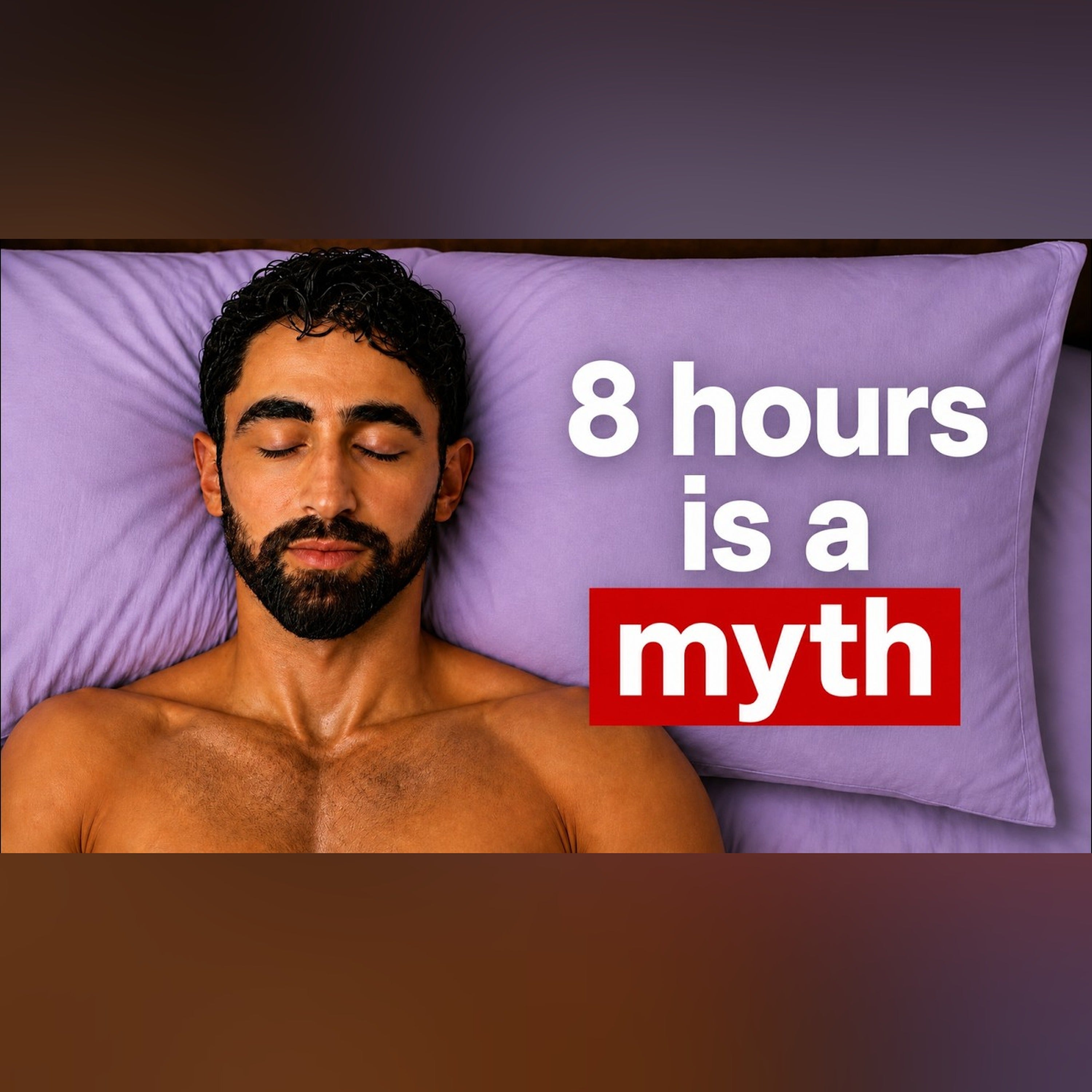
For a written breakdown, early access to content like this, and extra nuances, see the associated StayCurious Metabolism newsletter: https://open.substack.com/pub/staycuriousmetabolism/p/stop-chasing-8-hours-of-sleep?r=40ekz2&utm_campaign=post&utm_medium=web&showWelcomeOnShare=true (https://open.substack.com/pub/staycuriousmetabolism/p/stop-chasing-8-hours-of-sleep?r=40ekz2&showWelcomeOnShare=true) Pinealon Letter: https://staycuriousmetabolism.substack.com/p/why-im-trying-this-peptide-for-sleep?r=40ekz2 No Sleep Letter: https://staycuriousmetabolism.substack.com/p/what-if-you-didnt-need-to-sleep-this?r=40ekz2 Deep Sleep Masterclass: https://staycuriousmetabolism.substack.com/p/how-to-help-your-brain-clean-itself?r=40ekz2 I review several gamma entrainment devices in the Deep Sleep letter, along with the evidence supporting this tool. The only device I have personal experience with is Gamma Light Therapy, which was developed based on some of the early Nature research and is also one of
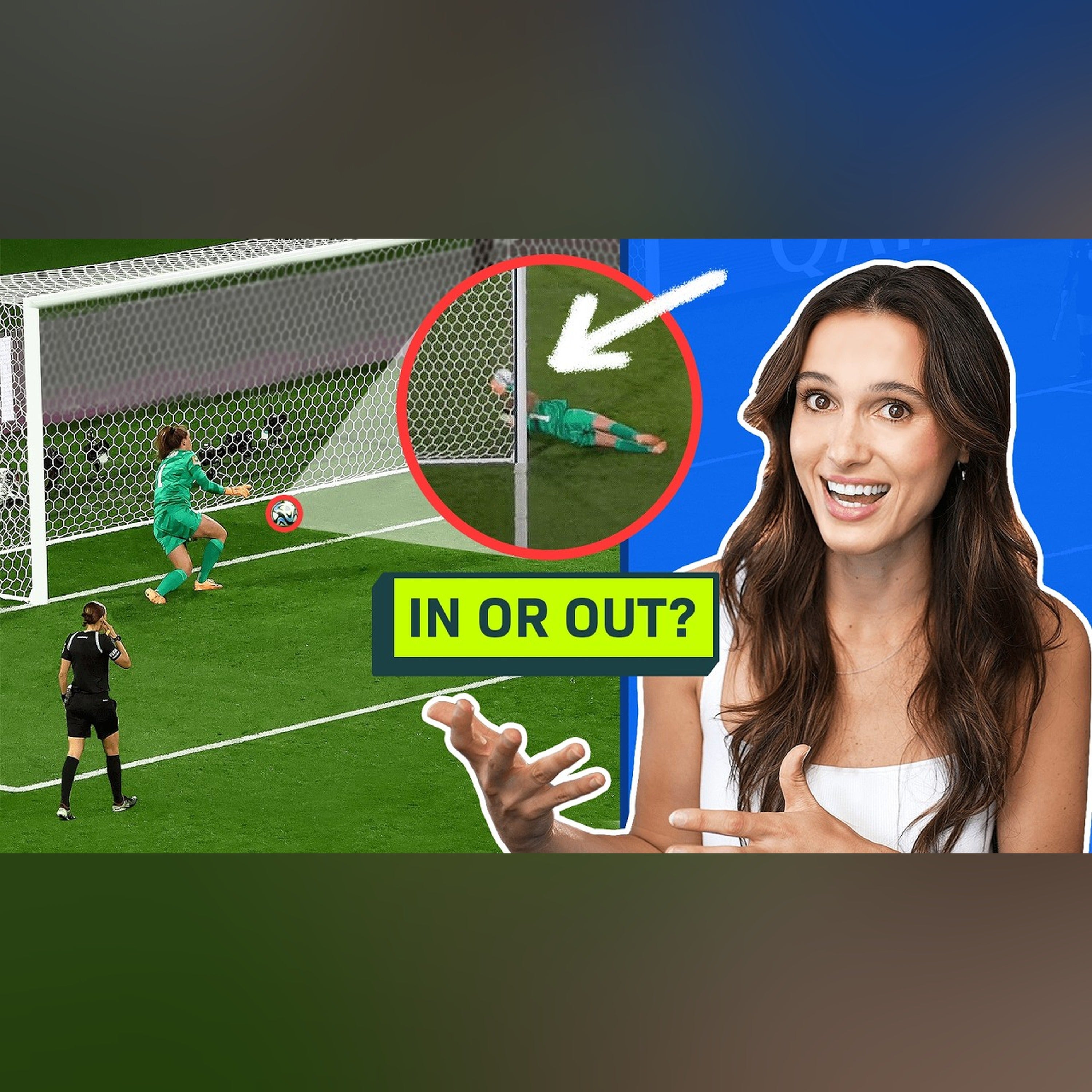
Are AI referees ruining sports? Or making them better? If you’re watching the 2023 US Open, you’re seeing automated referee calls. After years of controversy about human accuracy, tennis has used a system called Hawkeye to not only check human calls… but now to replace human referees. And this robot ref revolution isn’t just happening in tennis. It’s taking over the sports world. Soccer, basketball, baseball, they are all using machines to improve the calls being made on the field. The World Cup in particular has invested in these tools, from VAR (video assistant referee) to semi-automated offside and goal-line technology. The stakes are high. The difference between a right or wrong call can be a championship, or millions of dollars in prizes, endorsements, ticket sales. For the most part, fans like tech that makes calls more objective. HOWEVER… there is a big chunk of sports fans who would strongly disagree, who think that robot refs are ruining the game. Thing is, this tech isn’t goi
When the son of the president of a desperately poor country starts buying mansions and sportscars on an official monthly salary of $7,000, Charmian Gooch suggests, corruption is probably somewhere in the picture. In a blistering, eye-opening talk (and through several specific examples), she details how global corruption trackers follow the money -- to some surprisingly familiar faces. Uploaded 23-08-13 Talk by Charmian Gooch.
When he was ten years old, a boy made an unusual new friend. She was about his age, had a name, a personality, and stories about her family. For nearly a year, she would appear at his house to play, and during a particularly difficult time in his childhood, she seemed determined to protect him. But there was something different about this little girl. Nobody else appeared to see her, and there were strange limitations on where she could go. Eventually, she told him she had to leave, but promised she would always try to look out for him. As he grew older, he began questioning whether she'd ever existed outside his imagination. Then, more than a decade later, something extraordinary happened that made him reconsider everything he thought he knew about his childhood friend. Could a friendship continue beyond death? And if spirits really exist, do they remain forever the age they were when they died? #RealGhostStoriesOnline #TrueGhostStories #GhostlyFriend #ChildhoodGhosts #ImaginaryFriend
A kiss can be wonderful. It can create an instant connection, spark romance, or make you feel closer to someone. But a kiss can also have the opposite effect — and sometimes ruin everything. So what makes kissing so powerful, and why can one kiss make such a difference? There's some fascinating science behind it. https://www.scientificamerican.com/article/why-we-kiss/ We spend an enormous amount of time worrying about what's going to change. What's next? What's coming? How do we prepare? But what if we're paying attention to the wrong things? Some of the most important forces shaping our lives never change, and understanding them may be far more valuable than trying to predict the future — something humans are notoriously bad at. Morgan Housel, partner at The Collaborative Fund and author of Same as Ever: A Guide to What Never Changes (https://amzn.to/3SwWn6u) (https://amzn.to/3SwWn6u)), joins me to explain why the things that stay the same may be the most important things to understan
When someone doubts our abilities, it can shake our confidence and make us question ourselves. But sometimes, being underestimated can motivate us to work harder and accomplish things others thought were impossible. Organizational scientist Samir Nurmohamed (https://mgmt.wharton.upenn.edu/profile/nurmo/) studies what he calls the "underdog effect." He explains why criticism and rejection can sometimes become powerful sources of motivation, and how we can harness this effect in our own lives. Then, on Your Questions Answered, social scientist Ben Rogers (https://www.bc.edu/bc-web/schools/carroll-school/faculty-research/faculty-directory/benjamin-rogers.html) returns to respond to listeners' comments about the stories we tell about our lives, and how these narratives shape our sense of meaning. How should we handle criticism that comes not from strangers and bosses, but from our own friends and family? And how can we offer feedback to friends and family in a way that motivates rather tha
Have you ever downplayed some aspect of your identity? Maybe you don’t hide it, but you don’t bring it up with certain people, either. It turns out that these subtle disguises can have powerful effects on how we view ourselves. This week, we bring you a favorite conversation with legal scholar Kenji Yoshino (https://its.law.nyu.edu/facultyprofiles/index.cfm?fuseaction=profile.overview&personid=22547). He introduces us to the concept of "covering," and talks about what happens when we soften or edit our true selves. Then, we revisit our "Your Questions Answered" segment in which Kenji answers listener questions and comments about his work. Another way that we hide who we are is by expressing views that we don't actually believe. In our latest YouTube video (https://www.youtube.com/watch?t=1s&v=iI3sfdYhGqY), we look at this phenomenon — known as preference falsification — and how it can affect our relationships. Check it out, and make sure to subscribe so you don't miss any of our future
People should be able to challenge automated decisions that affect their opportunities.
Share your view, then see how readers voted. No sign-in required. This poll is shared across stories.
Do you agree or disagree?
Common Quandary
A Common Quandary to discuss
Another conversation to explore, separate from this news story.
You match with a friend's ex from ten years ago. Do you need permission to go out?
A dating app matches you with someone your close friend dated seriously a decade ago. Both are now single and rarely speak, but the breakup was painful at the time. The match asks you to keep the first date private.
Do old relationships create lasting claims over a friend's future choices?