If you have had an encounter, and would like your story told on the podcast, send me an email - [email protected] Bigfoot Horror Stories - https://sl1nk.com/81kwxy6 Something enormous is moving through the forest. Listen to these chilling Sasquatch encounters reported by people who claim to have come face to face with the unknown.
It's an all too common story: after participating in an HIV clinical trial, a woman in sub-Saharan Africa is left without the resources to buy a bus ticket to her health clinic, let alone to afford life-saving antiretrovirals. Boghuma Kabisen Titanji asks an important question: how can researchers looking for a cure make sure they're not taking advantage of those most affected by the pandemic? (Filmed at TEDxGoodenoughCollege.) Talk by Boghuma Kabisen Titanji.
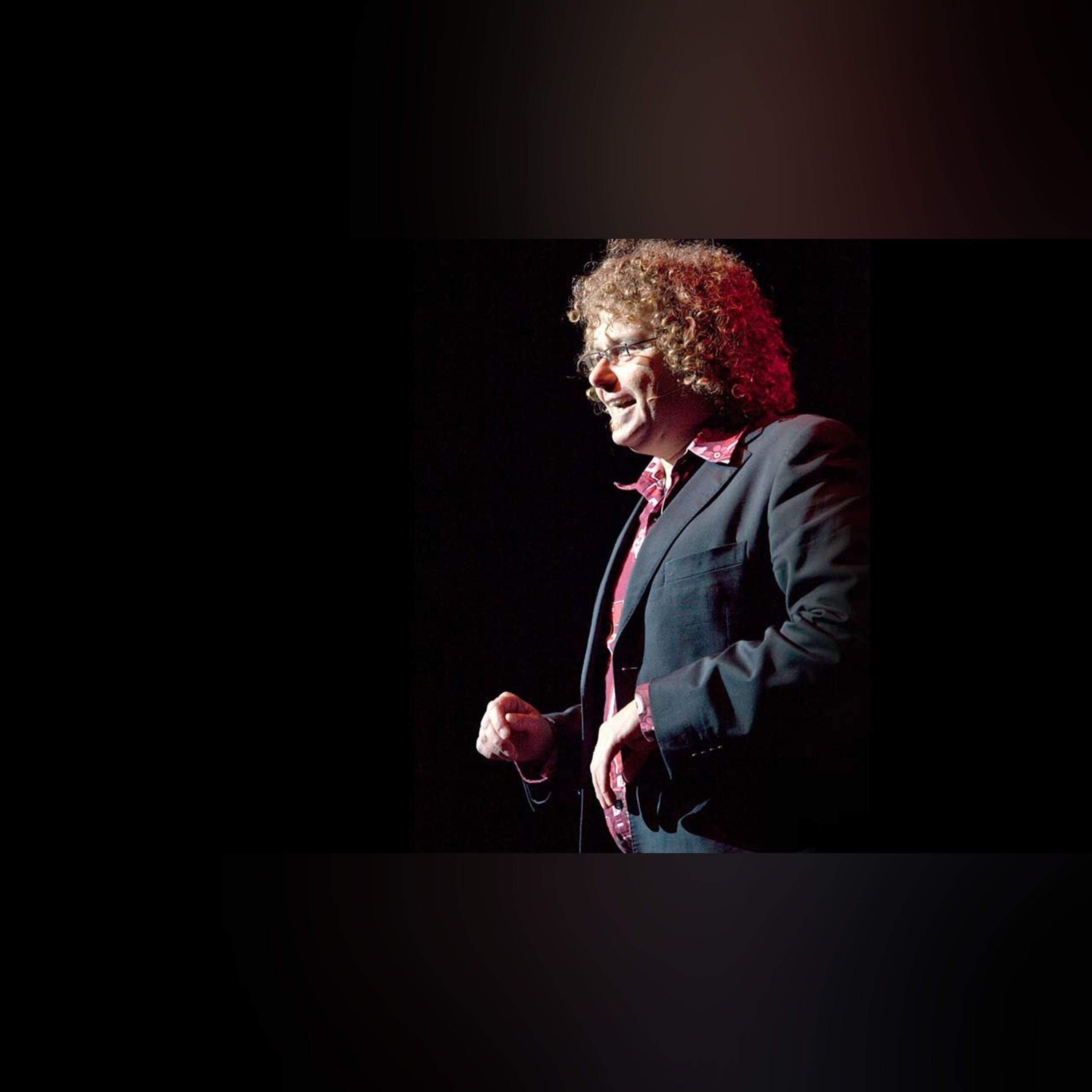
In this engaging talk, world champion whistler Geert Chatrou performs the whimsical "Eleonora" by A. Honhoff, and his own "Fête de la Belle." In a fascinating interlude, he talks about what brought him to the craft. (Filmed at TEDxRotterdam .) Uploaded 15-08-13 Talk by Geert Chatrou.
Imagine a frozen wilderness where a single discovery could make you rich. In 1896, gold was discovered in Canada's Klondike region, sparking a frenzy that drew thousands of prospectors, adventurers, and dreamers into the unforgiving northern frontier. Follow the gold seekers across dangerous mountain passes and icy trails, where survival required enormous supplies, determination, and luck. Explore Dawson City, a booming settlement filled with muddy streets, crowded cabins, trading posts, and saloons. Discover the harsh realities behind the promise of instant wealth, from exhausting labor and bitter winters to the uncertain chances of finding gold. Beyond the excitement and adventure, uncover the human stories of those who risked everything for a better future. Learn how the Klondike Gold Rush transformed the Yukon and why its legacy still captures our imagination. Boring History for Sleep - Soft stories about forgotten lives and the hidden realities of history.
Kites have crossed borders, centuries, and cultures with little more than wind and a very long piece of string. This episode explores the history of kite flying, how kites stay in the air, and the many ways cultures around the world have turned them into tools, traditions, art, entertainment, and even instruments of war. Along the way, you’ll hear about their early origins, colorful festivals, different designs, scientific uses, and humanity’s remarkably persistent desire to send things into the sky while keeping them attached to the ground. Happy sleeping! Read with permission from Kite, Wikipedia, licensed under CC BY-SA 4.0: https://en.wikipedia.org/wiki/Kite
Fall asleep to this quiet science story. A Boring Science For Sleep episode about Why Voyager 1's Signals Take Hours to Reach Earth. Why Voyager 1's Signals Take Hours to Reach Earth Settle in for a quiet exploration of Why Voyager 1's Signals Take Hours to Reach Earth. This episode follows A Dish Pointed Home; Builders, Spools and a Launch; How a Faint Signal Travels; Repairs From a Day Away; Into the Interstellar Quiet. Listen closely or let the details drift past. If you enjoy this quiet science bedtime pace, you might also like Psalms for Sleep on Spotify — same quiet rhythm, different night. Search Spotify for Psalms for Sleep.
In this video, we'll learn about the US Supreme Court decision in Scott vs Sanford, handed down in 1857. The case ultimately rejected the idea that Black people could be citizens of the United States, and this helped entrench the institution of slavery, denied a host of rights to a huge number of people (both enslaved and free), and increased the tensions between abolitionists and enslavers. Clint's book, How the Word is Passed is available now! https://bookshop.org/a/3859/9780316492935 VIDEO SOURCES Don E. Fehrenbacher, The Dred Scott Case: Its Significance in American Law and Politics (Oxford University Press, 1978). The Historical Construction of Race and Citizenship in the United States - https://www.unrisd.org/80256B3C005BCCF9/(httpAuxPages)/8A0AE7EACD11F278C1256DD6004860EA/$file/Fredrick.pdf THIND V. UNITED STATES (1923) Watch our videos and review your learning with the Crash Course App! Download here for Apple Devices: https://apple.co/3d4eyZo Download here for Android Devices:
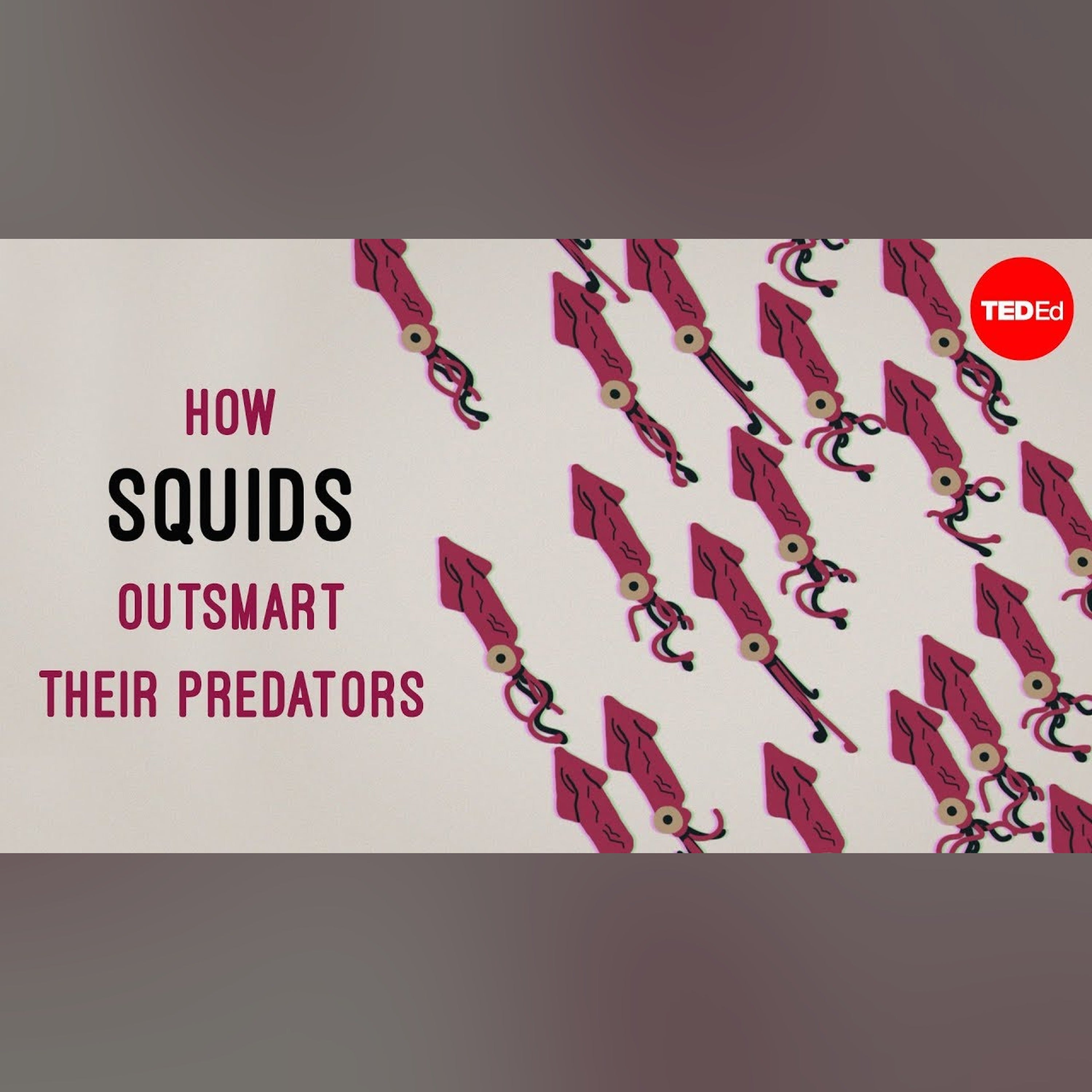
Uploaded 14-05-18 View full lesson: https://ed.ted.com/lessons/how-squids-outsmart-their-predators-carly-anne-york There are about 500 species of squid, and they live in all the world’s oceans, making them a reliable food source for whales, dolphins, sharks, seabirds, fish - and even other squid. As a result, the squid's most extraordinary adaptations are those that have evolved to help them thwart these predators. Carly Anne York explains how these stealthy cephalopods have mastered deep sea survival. Lesson by Carly Anne York, animation by Jérémie Balais and Reza Riahi. Thank you so much to our patrons for your support! Without you this video would not be possible! Claudia Mayfield, Justus Berberich, Pavel Zalevskiy, Yankai Liu, Duo Xu, Ghassan Alhazzaa, Miloš Stevanović, Joy Love Om, Gi Nam Lee, Shawn Quichocho, Simone Kidner, Anika Westburg, Barun Padhy, Brandy Jones, Devin Harris, Tony Trapuzzano, Stephen Michael Alvarez, Tom Lee, Juliana , Jason Weinstein, Kris Siverhus, Alexande
Just their own hands. In this compilation, five people came face to face with a bear and fought back with nothing but their bare hands. Gene Moe punched a bear, an 81-year-old grandmother fought one in her own front yard, a shepherd squared off with a brown bear, two wrestlers took on a grizzly, and Indian Jim went hand to hand with a bear of his own.Five true bear attack stories, told start to finish, about the people who fought back empty handed. Great for background listening or falling asleep to. The narration is calm and steady from start to finish. Get new stories early and ad-free on Patreon: https://www.patreon.com/8650258/join ▶️ Watch on YouTube: https://www.youtube.com/@scarybearattacks
On the occasion of Ashwina Purnima, Sadhguru explores the profound significance of Devi –the Divine Feminine – in Yogic culture and spiritual traditions across the world. From ancient goddess-centered civilizations to the vibrant Devi traditions of Bharat, Sadhguru traces humanity’s evolving relationship with the feminine dimension of existence. He explains how Kali, Durga, Lakshmi, and Saraswati are not merely mythological figures but powerful expressions of creation, transformation, wisdom, and transcendence. He decodes the science of Navratri and the three gunas – tamas, rajas, and sattva – and reveals how the feminine represents receptivity, perception, inclusiveness, and the possibility of transcending compulsive ways of being. Sadhguru App (Download): https://onelink.to/sadhguru__app Inner Engineering Link: isha.co/ieo-podcast
Today we’re going to talk about two types of cyclones: mid-latitude cyclones and tropical cyclones. Mid-latitude cyclones are huge weather systems that bring day-to-day weather in the mid-latitudes. They're the reason the weather is often unpredictable. We'll focus on the Northern Hemisphere and how these cyclones form along the polar front. Then, we'll shift to tropical cyclones also called hurricanes or typhoons - those smaller spinning vortices of air usually originating in the tropics that can cause widespread damage to coastal communities. We'll talk about the Bhola cyclone, which as of 2021 is the deadliest tropical cyclone in history, and we'll take a closer look at the Sundarbans in the low-lying coastal areas of Bangladesh and India to see how mangroves play a crucial role as a natural ecological barrier to these storms. Watch our videos and review your learning with the Crash Course App! Download here for Apple Devices: https://apple.co/3d4eyZo Download here for Android Devic
How do smartphones and 3-D models change how we experience art? And even history itself? In this episode of Crash Course Art History, we’ll learn how technology is shifting the ways we think about art’s past, present, and future. Crash Course Art History: Episode #22 Introduction: Trendy "Museums" 00:00 The Mosul Lion & Digital Karnak 00:55 "Migration Series" 03:42 Social Media & Art 05:43 The Future of Art 07:22 Review & Credits 09:28 Image Descriptions: https://docs.google.com/document/d/1ETiCxe4GrVzFii7dBhF42oHx1EUCCh5y12wbtUjsH8A/edit Sources: https://docs.google.com/document/d/1GW2NKzhpMNMmRyAFJVhFJG9cSfUOMRL-QrcWuHcWcIA/edit?usp=sharing *** Support us for $5/month on Patreon to keep Crash Course free for everyone forever! https://www.patreon.com/crashcourse Or support us directly: https://complexly.com/support Join our Crash Course email list to get the latest news and highlights: https://mailchi.mp/crashcourse/email Get our special Crash Course Educators newsletter: http://eepur
Is infinite economic growth possible on a planet with finite resources? Explore how countries can balance efficiency with sustainability. -- Many economists think that an eternally growing economy is necessary to keep improving people’s lives, and that if the global economy stops growing, people would fight more over the fixed amount of value that exists, rather than working to generate new value. Which raises the question: is infinite growth possible on a finite planet? Explore how economies can balance efficiency with sustainability. Directed by Kevin Herrmann, AIM Creative Studios. This video made possible in collaboration with World Economic Forum Learn more about how TED-Ed partnerships work: https://bit.ly/TEDEdPartners Support Our Non-Profit Mission ---------------------------------------------- Support us on Patreon: http://bit.ly/TEDEdPatreon Check out our merch: http://bit.ly/TEDEDShop ---------------------------------------------- Connect With Us ----------------------------
Coming home from work one summer afternoon, a woman noticed a small child in a bright red hoodie sitting on the steps outside her apartment. Nothing about the situation seemed particularly threatening, yet she was immediately overwhelmed by an inexplicable sense of dread. Even before speaking to the child, something told her not to get too close. The child claimed to be looking for its mother and insisted she was inside the apartment. When the woman offered to help, the child became increasingly determined to get through her front door. But something about its voice and behavior made her refuse. Then, when she finally got a clear look beneath the hood, she understood why she'd been so frightened. Was this a lost child behaving strangely, or had something deliberately been waiting for her to come home? And what might have happened if she'd let it inside? #RealGhostStoriesOnline #TrueGhostStories #BlackEyedChildren #BlackEyedKids #ParanormalEncounters #MysteriousVisitors #UnexplainedEnco
Evolution by natural selection has given rise to a fascinating tapestry of living organisms, each occupying their own individual niche. The result is a world filled with a dizzying array of weird and wonderful creatures that won the battle for survival in bizarre and fascinating ways. In this episode, we’re joined by evolutionary biologist and author Prof Richard Dawkins to talk about his latest book, 42 Tales from Life – A Modern Bestiary. He tells us how the driving forces of natural selection have shaped the vast variety of the living things that populate the Earth, how different organisms cooperate in strange, unusual ways to win the race for survival, and the many things we can learn from investigating every branch of the tree of life.
Episode 207: November 4, 2026 - What Is Hidden Deep Beneath Egypt’s Khafre Pyramid? *Rebroadcast.* HEADLINES: UK Daily Mail - March 1, 2025 - “Scientists say they’ve discovered ‘vast city’ UNDERNEATH Egypt’s Giza pyramids…but expert raise concerns.” - https://www.dailymail.co.uk/sciencetech/article-14516659/Scientists-discovered-vast-city-underneath-Egypts-Giza-pyramids.html The Jerusalem Post - March 23, 2025 - “Researchers say they used SAR to find vast city beneath the pyramid” - 8 shafts extending 2100 feet beneath the pyramids - “HUGE structures discovered 2KM BELOW Pyramids of Khafre? - Italian Scientists DefenseScoop - UAP disclosure advocates call for transparency on drone incursions - closed-door discussions - “some sort of adversarial technology” - “drones are a subset of a bigger problem” Feedback on last week’s show: After Body Death, Does Human Consciousness Live On in Other Dimensions? #LindaMoultonHowe #Earthfiles — For more incredible science stories, Real X-Files, envi
This is a Grave Talks CLASSIC EPISODE! PART TWO In Galion, Ohio, the Gill House stands as a striking example of Victorian architecture and social prominence. Built by Bloomer Gill as a grand family residence, the home once hosted lavish gatherings and welcomed notable visitors, including Thomas Edison, Henry Ford, and Andrew Firestone. But the elegance that once defined the house has long since given way to something far less celebratory. Today, visitors and investigators report a wide range of unexplained activity throughout the home. Children’s laughter has been heard coming from the attic, shadow figures have been seen moving through hallways, and tapping sounds echo through otherwise quiet rooms. The basement, however, is said to be the most unsettling area of all—where disembodied voices, screams, and encounters with a figure known as “Johnny Cake” have been reported. Brenda Treisch, Jane Baker, and Mary Butterfield explore the history and hauntings of the Gill House. From lingeri
From his home in the remote Great Bear Rainforest, First Nations hereditary chief Mike Willie runs wildlife tours that go much further than showing visitors what animals live in British Columbia. Through his Indigenous-owned and operated wildlife travel businesses, Mike uses tourism as a vehicle to share the stories of the lands that he and his ancestors have looked after, and that have looked after them, for more than 14,000 years. Canada is still undergoing a process of truth and reconciliation relating to the country’s treatment of its Indigenous people, and Mike talks about the raw issues related to this history, as well as celebrating the cultures that have seen First Nations people live in harmony with nature for countless generations. You can find out more about Mike's work by visiting seawolfadventures.ca (https://seawolfadventures.ca/) Photo: Mike Willie This episode was hosted by Paul McGuinness and produced by Lewis Dobbs.
*This video was published in 2015 and therefore does not reflect recent historical events, nor context about the ongoing conflict between Israel and Palestine.* In which John Green teaches you about the conflict in Israel and Palestine. This conflict is often cast as a long-term beef going back thousands of years, rooted in a clash between religions. Well, that's not quite true. What is true is that the conflict is immensely complicated, and just about everyone in the world has an opinion about it. John is going to try to get the facts across in under 13 minutes. Note: We mispronounced the Arabic word "nakba" at 6:06. Sorry about that! Citation 1: Arthur James Balfour, Balfour Declaration (letter to Baron Rothschild, leader of British Jewish community). 1917. Crash Course is on Patreon! Want to find Crash Course elsewhere on the internet? Facebook - http://www.facebook.com/YouTubeCrashCourse Twitter - http://www.twitter.com/TheCrashCourse Instagram - https://www.instagram.com/thecrashc
While Jupiter is nowhere near massive enough to initiate fusion in its core, there are even more massive objects out there that fall just short of that achievement called brown dwarfs. Brown dwarfs have a mass between giant planets and small stars. They were only recently discovered in the 1990s, but thousands are now known. More massive ones can fuse deuterium, and even lithium, but not hydrogen, distinguishing them from “normal” stars. Sort of. Correction: In the illustration at 9:30, the numbers listed after the star names are the year of discovery, not distance. Check out the Crash Course Astronomy solar system poster here: http://store.dftba.com/products/crashcourse-astronomy-poster -- Chapters: Introduction: Brown Dwarfs 00:00 L Stars & The Lithium Test 2:50 Discovering the First Brown Dwarfs 4:14 What Color Are Brown Dwarfs? 6:24 Physical Characteristics of Brown Dwarfs 7:30 Small Stars vs. Big Planets 8:11 Review 10:17 -- PBS Digital Studios: http://youtube.com/pbsdigitalstudio
From 1932 to 1972, the United States Public Health Service and the Centers for Disease Control and Prevention operated an extremely unethical medical experiment on the effects of outcomes of untreated syphilis. Hundreds of poor Black men from Macon County, Alabama were enrolled in the study, and treatment for syphilis was withheld from them. Even after antibiotics became available that could cure syphilis, these men were left to suffer from the disease and expose their families to syphilis as well. Today we're learning about the Tuskegee Syphilis Experiment, a shameful example of racism in American medicine, and a tragedy that still impacts how many Black Americans think about healthcare today. Clint's book, How the Word is Passed is available now! https://bookshop.org/a/3859/9780316492935 VIDEO SOURCES ● Susan Reverby, Examining Tuskegee: The Infamous Syphilis Study and Its Legacy (Chapel Hill, N.C.: University of North Carolina Press, 2009). ● Susan Reverby ed., Tuskegee’s Truth’s: R
Dig into the psychology of how memories are susceptible to false information and why we shouldn’t treat them as truth. Uploaded 08-09-20 -- In a 1990’s study, participants recalled getting lost in a shopping mall as children. Some shared these memories in vivid detail, but there was one problem: none of these people had actually gotten lost in a mall. They produced these false memories after psychologists told them they’d gotten lost and parents confirmed it. So what’s going on? Daniel L. Schacter explores the fallibility of our memory. Lesson by Daniel L. Schacter, directed by AIM Creative Studios. Animator's website: http://aimcreativestudios.com/ Sign up for our newsletter: http://bit.ly/TEDEdNewsletter Support us on Patreon: http://bit.ly/TEDEdPatreon Find us on Twitter: http://bit.ly/TEDEdTwitter Peep us on Instagram: http://bit.ly/TEDEdInstagram View full lesson: https://ed.ted.com/lessons/are-all-of-your-memories-real-daniel-l-schacter Thank you so much to our patrons for your s
On today's episode of Crash Course Anatomy & Physiology, Hank continues our exploration of tissues, with an introduction to your connective tissues. Pssst... we made flashcards to help you review the content in this episode! Find them on the free Crash Course App! Download it here for Apple Devices: https://apple.co/3d4eyZo Download it here for Android Devices: https://bit.ly/2SrDulJ Chapters: Introduction 00:00 What is Connective Tissue? 2:14 Four Classes of Connective Tissue 2:34 What Makes Connective Tissues Different From Other Tissue Types? 3:25 The Extracellular Matrix 4:07 Types of Fibers 5:34 Connective Tissue Cells 6:34 How Marfan Syndrome Affects Connective Tissue 8:31 Review 9:37 Credits 10:08 Crash Course is on Patreon! Want to find Crash Course elsewhere on the internet? Facebook - http://www.facebook.com/YouTubeCrashCourse Twitter - http://www.twitter.com/TheCrashCourse Instagram - https://www.instagram.com/thecrashcourse/ CC Kids: http://www.youtube.com/crashcoursekids
Welcome to Crash Course Zoology! In this fourteen-episode series made in partnership with PBS and Nature, Crash Course Zoology will take a rapid deep dive into the weird and wonderful biology of animals. Host, wildlife ecologist, and conservation scientist, Dr. Rae Wynn-Grant will guide us across the tree of life as we endeavor to answer what makes an animal an animal anyway? We’ll explore the current state of the world and how it's evolving with in-depth looks at particular animals, show how the science is applied, and even take you along for the journey with day-in-the-lives of some astonishing creatures. Learn more about Rae here! https://www.raewynngrant.com (https://www.raewynngrant.com/) Watch our videos and review your learning with the Crash Course App! Download here for Apple Devices: https://apple.co/3d4eyZo Download here for Android Devices: https://bit.ly/2SrDulJ Crash Course is on Patreon! Thanks to the following patrons for their generous monthly contributions that help k