Episode 207: November 4, 2026 - What Is Hidden Deep Beneath Egypt’s Khafre Pyramid? *Rebroadcast.* HEADLINES: UK Daily Mail - March 1, 2025 - “Scientists say they’ve discovered ‘vast city’ UNDERNEATH Egypt’s Giza pyramids…but expert raise concerns.” - https://www.dailymail.co.uk/sciencetech/article-14516659/Scientists-discovered-vast-city-underneath-Egypts-Giza-pyramids.html The Jerusalem Post - March 23, 2025 - “Researchers say they used SAR to find vast city beneath the pyramid” - 8 shafts extending 2100 feet beneath the pyramids - “HUGE structures discovered 2KM BELOW Pyramids of Khafre? - Italian Scientists DefenseScoop - UAP disclosure advocates call for transparency on drone incursions - closed-door discussions - “some sort of adversarial technology” - “drones are a subset of a bigger problem” Feedback on last week’s show: After Body Death, Does Human Consciousness Live On in Other Dimensions? #LindaMoultonHowe #Earthfiles — For more incredible science stories, Real X-Files, envi
This is a Grave Talks CLASSIC EPISODE! PART TWO In Galion, Ohio, the Gill House stands as a striking example of Victorian architecture and social prominence. Built by Bloomer Gill as a grand family residence, the home once hosted lavish gatherings and welcomed notable visitors, including Thomas Edison, Henry Ford, and Andrew Firestone. But the elegance that once defined the house has long since given way to something far less celebratory. Today, visitors and investigators report a wide range of unexplained activity throughout the home. Children’s laughter has been heard coming from the attic, shadow figures have been seen moving through hallways, and tapping sounds echo through otherwise quiet rooms. The basement, however, is said to be the most unsettling area of all—where disembodied voices, screams, and encounters with a figure known as “Johnny Cake” have been reported. Brenda Treisch, Jane Baker, and Mary Butterfield explore the history and hauntings of the Gill House. From lingeri
From his home in the remote Great Bear Rainforest, First Nations hereditary chief Mike Willie runs wildlife tours that go much further than showing visitors what animals live in British Columbia. Through his Indigenous-owned and operated wildlife travel businesses, Mike uses tourism as a vehicle to share the stories of the lands that he and his ancestors have looked after, and that have looked after them, for more than 14,000 years. Canada is still undergoing a process of truth and reconciliation relating to the country’s treatment of its Indigenous people, and Mike talks about the raw issues related to this history, as well as celebrating the cultures that have seen First Nations people live in harmony with nature for countless generations. You can find out more about Mike's work by visiting seawolfadventures.ca (https://seawolfadventures.ca/) Photo: Mike Willie This episode was hosted by Paul McGuinness and produced by Lewis Dobbs.
*This video was published in 2015 and therefore does not reflect recent historical events, nor context about the ongoing conflict between Israel and Palestine.* In which John Green teaches you about the conflict in Israel and Palestine. This conflict is often cast as a long-term beef going back thousands of years, rooted in a clash between religions. Well, that's not quite true. What is true is that the conflict is immensely complicated, and just about everyone in the world has an opinion about it. John is going to try to get the facts across in under 13 minutes. Note: We mispronounced the Arabic word "nakba" at 6:06. Sorry about that! Citation 1: Arthur James Balfour, Balfour Declaration (letter to Baron Rothschild, leader of British Jewish community). 1917. Crash Course is on Patreon! Want to find Crash Course elsewhere on the internet? Facebook - http://www.facebook.com/YouTubeCrashCourse Twitter - http://www.twitter.com/TheCrashCourse Instagram - https://www.instagram.com/thecrashc
While Jupiter is nowhere near massive enough to initiate fusion in its core, there are even more massive objects out there that fall just short of that achievement called brown dwarfs. Brown dwarfs have a mass between giant planets and small stars. They were only recently discovered in the 1990s, but thousands are now known. More massive ones can fuse deuterium, and even lithium, but not hydrogen, distinguishing them from “normal” stars. Sort of. Correction: In the illustration at 9:30, the numbers listed after the star names are the year of discovery, not distance. Check out the Crash Course Astronomy solar system poster here: http://store.dftba.com/products/crashcourse-astronomy-poster -- Chapters: Introduction: Brown Dwarfs 00:00 L Stars & The Lithium Test 2:50 Discovering the First Brown Dwarfs 4:14 What Color Are Brown Dwarfs? 6:24 Physical Characteristics of Brown Dwarfs 7:30 Small Stars vs. Big Planets 8:11 Review 10:17 -- PBS Digital Studios: http://youtube.com/pbsdigitalstudio
From 1932 to 1972, the United States Public Health Service and the Centers for Disease Control and Prevention operated an extremely unethical medical experiment on the effects of outcomes of untreated syphilis. Hundreds of poor Black men from Macon County, Alabama were enrolled in the study, and treatment for syphilis was withheld from them. Even after antibiotics became available that could cure syphilis, these men were left to suffer from the disease and expose their families to syphilis as well. Today we're learning about the Tuskegee Syphilis Experiment, a shameful example of racism in American medicine, and a tragedy that still impacts how many Black Americans think about healthcare today. Clint's book, How the Word is Passed is available now! https://bookshop.org/a/3859/9780316492935 VIDEO SOURCES ● Susan Reverby, Examining Tuskegee: The Infamous Syphilis Study and Its Legacy (Chapel Hill, N.C.: University of North Carolina Press, 2009). ● Susan Reverby ed., Tuskegee’s Truth’s: R
Dig into the psychology of how memories are susceptible to false information and why we shouldn’t treat them as truth. Uploaded 08-09-20 -- In a 1990’s study, participants recalled getting lost in a shopping mall as children. Some shared these memories in vivid detail, but there was one problem: none of these people had actually gotten lost in a mall. They produced these false memories after psychologists told them they’d gotten lost and parents confirmed it. So what’s going on? Daniel L. Schacter explores the fallibility of our memory. Lesson by Daniel L. Schacter, directed by AIM Creative Studios. Animator's website: http://aimcreativestudios.com/ Sign up for our newsletter: http://bit.ly/TEDEdNewsletter Support us on Patreon: http://bit.ly/TEDEdPatreon Find us on Twitter: http://bit.ly/TEDEdTwitter Peep us on Instagram: http://bit.ly/TEDEdInstagram View full lesson: https://ed.ted.com/lessons/are-all-of-your-memories-real-daniel-l-schacter Thank you so much to our patrons for your s
On today's episode of Crash Course Anatomy & Physiology, Hank continues our exploration of tissues, with an introduction to your connective tissues. Pssst... we made flashcards to help you review the content in this episode! Find them on the free Crash Course App! Download it here for Apple Devices: https://apple.co/3d4eyZo Download it here for Android Devices: https://bit.ly/2SrDulJ Chapters: Introduction 00:00 What is Connective Tissue? 2:14 Four Classes of Connective Tissue 2:34 What Makes Connective Tissues Different From Other Tissue Types? 3:25 The Extracellular Matrix 4:07 Types of Fibers 5:34 Connective Tissue Cells 6:34 How Marfan Syndrome Affects Connective Tissue 8:31 Review 9:37 Credits 10:08 Crash Course is on Patreon! Want to find Crash Course elsewhere on the internet? Facebook - http://www.facebook.com/YouTubeCrashCourse Twitter - http://www.twitter.com/TheCrashCourse Instagram - https://www.instagram.com/thecrashcourse/ CC Kids: http://www.youtube.com/crashcoursekids
Welcome to Crash Course Zoology! In this fourteen-episode series made in partnership with PBS and Nature, Crash Course Zoology will take a rapid deep dive into the weird and wonderful biology of animals. Host, wildlife ecologist, and conservation scientist, Dr. Rae Wynn-Grant will guide us across the tree of life as we endeavor to answer what makes an animal an animal anyway? We’ll explore the current state of the world and how it's evolving with in-depth looks at particular animals, show how the science is applied, and even take you along for the journey with day-in-the-lives of some astonishing creatures. Learn more about Rae here! https://www.raewynngrant.com (https://www.raewynngrant.com/) Watch our videos and review your learning with the Crash Course App! Download here for Apple Devices: https://apple.co/3d4eyZo Download here for Android Devices: https://bit.ly/2SrDulJ Crash Course is on Patreon! Thanks to the following patrons for their generous monthly contributions that help k
In which John Green teaches you about the United States Constitution. During and after the American Revolutionary War, the government of the new country operated under the Articles of Confederation. While these Articles got the young nation through its war with England, they weren't of much use when it came to running a country. So, the founding fathers decided to try their hand at nation-building, and they created the Constitution of the United States, which you may remember as the one that says We The People at the top. John will tell you how the convention came together, some of the compromises that had to be made to pass this thing, and why it's very lucky that the framers installed a somewhat reasonable process for making changes to the thing. You'll learn about Shays' Rebellion, the Federalist Papers, the elite vs rabble dynamic of the houses of congress, and start to find out just what an anti-federalist is. Hey teachers and students - Check out CommonLit's free collection of re
What makes a good meeting? Why do some people leave feeling heard, while others leave feeling silenced, confused or defeated? In this episode of Messy Social Work, Richard and Tim explore the hidden craft of facilitation. Starting with stories of addiction, organisational systems and Jung's warning about concepts becoming a substitute for real experience, they dive into what actually happens inside meetings. Drawing on practice wisdom, family experiences and A Facilitator's Guide to Participatory Decision-Making, they discuss power, silence, conflict, professional language, disagreement, and the small conversational skills that can make all the difference. From child protection conferences to team meetings, this is a conversation about creating spaces where people can think together, speak honestly and make decisions that matter.
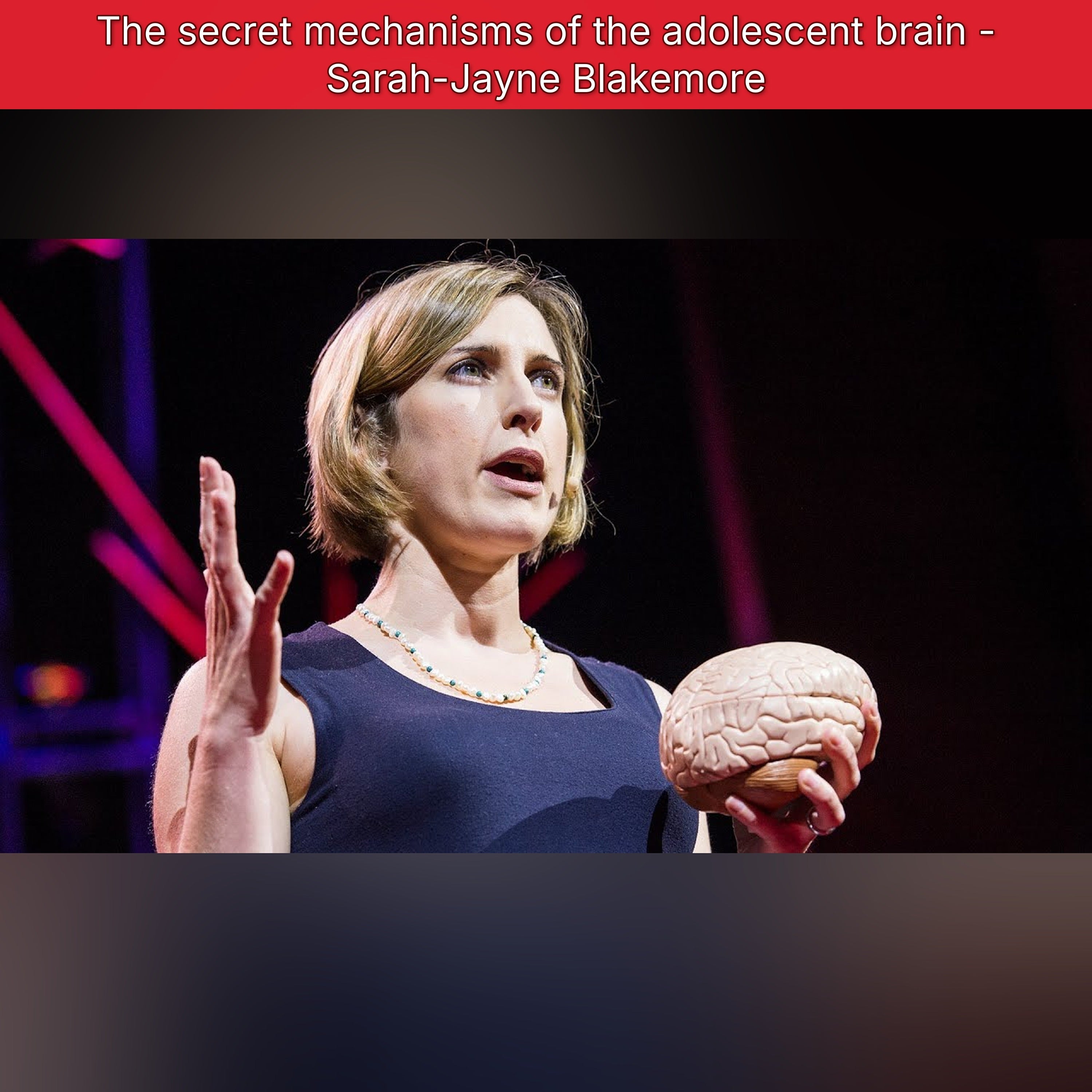
View full lesson: http://ed.ted.com/lessons/the-mysterious-workings-of-the-adolescent-brain-sarah-jayne-blakemore Why do teenagers seem so much more impulsive, so much less self-aware than grown-ups? Cognitive neuroscientist Sarah-Jayne Blakemore compares the prefrontal cortex in adolescents to that of adults, to show us how typically "teenage" behavior is caused by the growing and developing brain. Talk by Sarah-Jayne Blakemore.
The headline went viral again. Noah’s Ark, 100% confirmed. Archaeologist Aaron Judkins has studied the Durupınar site in eastern Turkey for years, stood on that hillside himself, and climbed Mount Ararat with a full scientific team for the documentary Finding Noah. And he is here to tell Luke and Nate, as a believer who would love it to be true, that it is almost certainly not the Ark. No credible archaeologist, he says, starts with the words 100% confirmed. That is the scientific method run backward. Point by point, Aaron walks through why the claim does not hold. The boat-shaped formation is a common geological fold found all over the region. The famous petrified timbers are ordinary basalt and limestone. The metal rivets are natural mineral concretions. The anchor stones are Armenian grave markers. The dimensions only match if you cherry-pick which cubit to measure with. It is a sharp, generous, myth-busting conversation about why Christians should want the truth more than the headl
The Harlem Renaissance produced many remarkable artists, writers, and thinkers. Today we'll talk about one of the most interesting minds of the time, Zora Neale Hurston. Hurston was an anthropologist by training and spent much of her career studying and documenting the lives of Black people in the southern US. She later went on to write several remarkable novels, including Their Eyes Were Watching God, which we discussed in Crash Course Literature. https://www.youtube.com/watch?v=4kF0U8kIMp4&t=1s (https://www.youtube.com/watch?t=1s&v=4kF0U8kIMp4) Clint's book, How the Word is Passed is available now! https://bookshop.org/a/3859/9780316492935 VIDEO SOURCES Susan Reverby, Examining Tuskegee: The Infamous Syphilis Study and Its Legacy (Chapel Hill, N.C.: University of North Carolina Press, 2009). Susan Reverby ed., Tuskegee’s Truth’s: Rethinking the Tuskegee Syphilis Study (Chapel Hill, N.C.: University of North Carolina Press, 2000). Harriet A. Washington, Medical Apartheid: The Dark His
It's time to start talking about some of the terrible things you can do to your own body, like blood doping. We'll start by explaining the structure and function of your erythrocytes, and of hemoglobin, which they use to carry oxygen. We'll follow the formation and life cycle of a red blood cell, including how its levels are regulated by EPO and its signaling molecules. We'll wrap up by looking at how blood doping works and how it is truly a recipe for disaster. Pssst... we made flashcards to help you review the content in this episode! Find them on the free Crash Course App! Download it here for Apple Devices: https://apple.co/3d4eyZo Download it here for Android Devices: https://bit.ly/2SrDulJ Chapters: Introduction: Blood is Powerful Stuff 00:00 Form and Function of Erythrocytes (Red Blood Cells) 1:34 Hemoglobin 2:30 Formation of a Red Blood Cell: Hematopoiesis 4:11 How Erythropoietin (EPO) Regulates Blood Oxygen Levels 5:43 How Red Blood Cells Die 6:54 Don't Dope Your Blood! 7:53 R
In which Craig Benzine teaches you about delegation and informal powers. What are all these federal agencies about? Well, the President has a lot of stuff to do as the chief executive, and as much as Americans like to talk about personal responsibility, the President can't really do all this stuff alone. Because it's a huge job! Same deal with Congress. So, they delegate authority. This is where all the government agencies and stuff come from. Congress creates them to actually get around to enforcing laws. You'll learn about stuff like OSHA, the FDA, and maybe even the FCC. Although you hear an occasional complaint about bureaucracies and such, the business of government wouldn't get done without agencies and delegation. Support is provided by Voqal: http://www.voqal.org (http://www.voqal.org/) This episode is sponsored by Squarespace: http://www.squarespace.com/crashcourse Chapters: Introduction: Delegation 00:00 What is delegation? 0:39 How Congress limits an agency's discretion 1:37
In this episode, we dive into the Miracle at Fatima and the real reason Tom DeLonge's advisors invoked Greek mythology when describing the UFO phenomenon. Listen to the extended version Our Patreon supporters receive ad-free extended versions of the show, exclusive bonus episodes, and have the option to join our Discord community. You can support our work and access this additional content by subscribing to our Patreon at https://patreon.com/patternstellstories. Follow the Show BlueSky: @patternstellstories.com Website: https://patternstellstories.com (https://patternstellstories.com/) Email: [email protected] All Links: https://linktr.ee/patternstellstories Follow KLAɄЅ BlueSky: @tinyklaus.com Substack: https://www.tinyklaus.com (https://www.tinyklaus.com/) Follow GΔRRΞTT Twitter/X: @libertybirb BlueSky: @libertybirb.bsky.social Substack: https://libertybirb.substack.com (https://libertybirb.substack.com/)
View full lesson: http://ed.ted.com/lessons/the-uncertain-location-of-electrons-george-zaidan-and-charles-morton Uploaded 14-10-13 The tiny atoms that make up our world are made up of even tinier protons, neutrons and electrons. Though the number of protons determine an atom's identity, it's the electrons -- specifically, their exact location outside the nucleus -- that particularly perplex scientists. George Zaidan and Charles Morton show how to make an educated guess of where those itty-bitty freewheeling electrons might be. Lesson by George Zaidan and Charles Morton, animation by Karrot Animation.
In this episode, we welcome back Mark Olly—author, television presenter, archaeologist, and familiar face from Ancient Aliens and Lost Treasures—for a journey through ancient sites, hidden history, and places few people get to see. Bringing a real-life Indiana Jones spirit to the conversation, Mark shares remarkable stories from his archaeological travels. In France, he encounters an astonishing historical time capsule. In Egypt, he explores secret temples that remain closed to the public, offering a rare glimpse into places steeped in ancient mystery. His journey also takes us to Italy, through Roman streets and traces of the civilisations that came before them, before sharing his firsthand experiences inside the Vatican and beyond. Join us for a conversation packed with archaeological adventure, extraordinary places, and the enduring mysteries of the ancient world. Welcome to Let’s Get Freaky Podcast! We want to hear it—and we want YOU on the show! You hear a song, and a memory opens
The word “magic” has dubious, demonic connotations. But is there really a difference between magic and religion? In this episode of Crash Course Religions, we’ll explore the history of magical practices and discover how modern-day witches, brujas, and Hoodoo practitioners are reclaiming the label. Introduction: Religion or Magic? 00:00 What is Magic? 00:49 Western Ideas of Magic 02:27 Hurston & Hoodoo 06:28 Magic & Rationality 08:38 Magic in Established Religions 09:27 Reclaiming Magic 10:33 Review & Credits 11:21 *** Support us for $5/month on Patreon to keep Crash Course free for everyone forever! https://www.patreon.com/crashcourse Or support us directly: https://complexly.com/support Join our Crash Course email list to get the latest news and highlights: https://mailchi.mp/crashcourse/email Get our special Crash Course Educators newsletter: http://eepurl.com/iBgMhY Thanks to the following patrons for their generous monthly contributions that help keep Crash Course free for everyone
View full lesson: http://ed.ted.com/lessons/earworms-those-songs-that-get-stuck-in-your-head-elizabeth-hellmuth-margulis Uploaded 26-03-15 -- Have you ever been waiting in line at the grocery store, innocently perusing the magazine rack, when a song pops into your head? Not the whole song, but a fragment of it that plays and replays until you find yourself unloading the vegetables in time to the beat? Elizabeth Hellmuth Margulis explores earworms — a cognitive phenomenon that plagues over 90% of people at least once a week. Lesson by Elizabeth Margulis, animation by Artrake Studio.
BONUS QUESTION STARTS AT 17:10 Watch the video here (with no ads) or on YouTube: https://youtu.be/lwi6J0h2EhI What if We Can't Detect Dark Matter? https://www.youtube.com/watch?v=QXXqSh5qAuA Dark Matter Is Not a Theory: https://www.youtube.com/watch?v=PbmJkMhmrVI Is it better to put a base on the Moon or under the ocean? What Astronomy can you do from a light polluted city? Can a martian base realistically evolve to a martian city? And in Q&A+, thought on the LIFE mission. 00:00 Intro 00:26 [@Borg_Terraformers] Moon, Mars or ocean floors? 03:33 [@David Fries] Doing amateur astronomy in a big bright city 08:12 [@CoinPatrol] How will Japan's Phobos rover work? 09:56 [@Roderick Beck] Can a Martian city evolve out of a research base? 17:10 [@aidenweatherbee9529] Thoughts on the LIFE mission 21:52 Final thoughts
Check out Animal IQ on PBS Terra! https://youtu.be/Ejhbr_t7Blc So what is an animal anyway? In our inaugural episode of Crash Course Zoology, we’ll endeavor to answer just that because as it turns out, it’s complicated! But before we get there we’ll need to introduce you to zoology more broadly, tell you about taxonomy (the branch of science dedicated to naming and describing organisms), and then we’ll get to phylogenetics (which looks at traits, evolutionary history, and relationships among living things). And it’s here that we’ll finally close in on an answer: Animals eat, move, sexually reproduce, and are multicellular. Well, most of the time. Let us explain! Learn more about Rae here! https://www.raewynngrant.com (https://www.raewynngrant.com/) Watch our videos and review your learning with the Crash Course App! Download here for Apple Devices: https://apple.co/3d4eyZo Download here for Android Devices: https://bit.ly/2SrDulJ Crash Course is on Patreon! Thanks to the following patr
Chemists need stoichiometry to make the scale of chemistry more understandable - Hank is here to explain why and to teach us how to use it. Watch this video in Spanish on our Crash Course en Español channel: https://youtu.be/dZoMgEhNKKg Pssst... we made flashcards to help you review the content in this episode! Find them on the free Crash Course App! Download it here for Apple Devices: https://apple.co/3d4eyZo Download it here for Android Devices: https://bit.ly/2SrDulJ Table of Contents Atomic Mass Units 2:24 Moles 5:12 Molar Mass 5:59 Equation Balancing 8:45 Molar Ratios 11:11 Resources: Crash Course is on Patreon! Want to find Crash Course elsewhere on the internet? Facebook - http://www.facebook.com/YouTubeCrashCourse Twitter - http://www.twitter.com/TheCrashCourse Instagram - https://www.instagram.com/thecrashcourse/ CC Kids: http://www.youtube.com/crashcoursekids