In this calm and sleepy facts episode, we journey across the largest structure in existence, the cosmic web, a vast glowing network of galaxies stretching across the entire universe. We begin close to home, drifting outward from Earth and the Milky Way into our Local Group, and then into Laniakea, the enormous supercluster we call home, whose name means immeasurable heaven. From there the full shape of the cosmos slowly appears: long silken filaments of galaxies, great walls stretching hundreds of millions of light years, bright crossings where clusters gather, and vast quiet voids in between. Along the way, we discover how tiny ripples from the newborn universe grew into this web over billions of years, how invisible dark matter forms its hidden scaffolding, and how supercomputers rebuilt the entire structure from scratch. We also learn how astronomers finally captured the faint glow of its threads, found missing matter hiding within them, noticed some filaments slowly spinning, and e
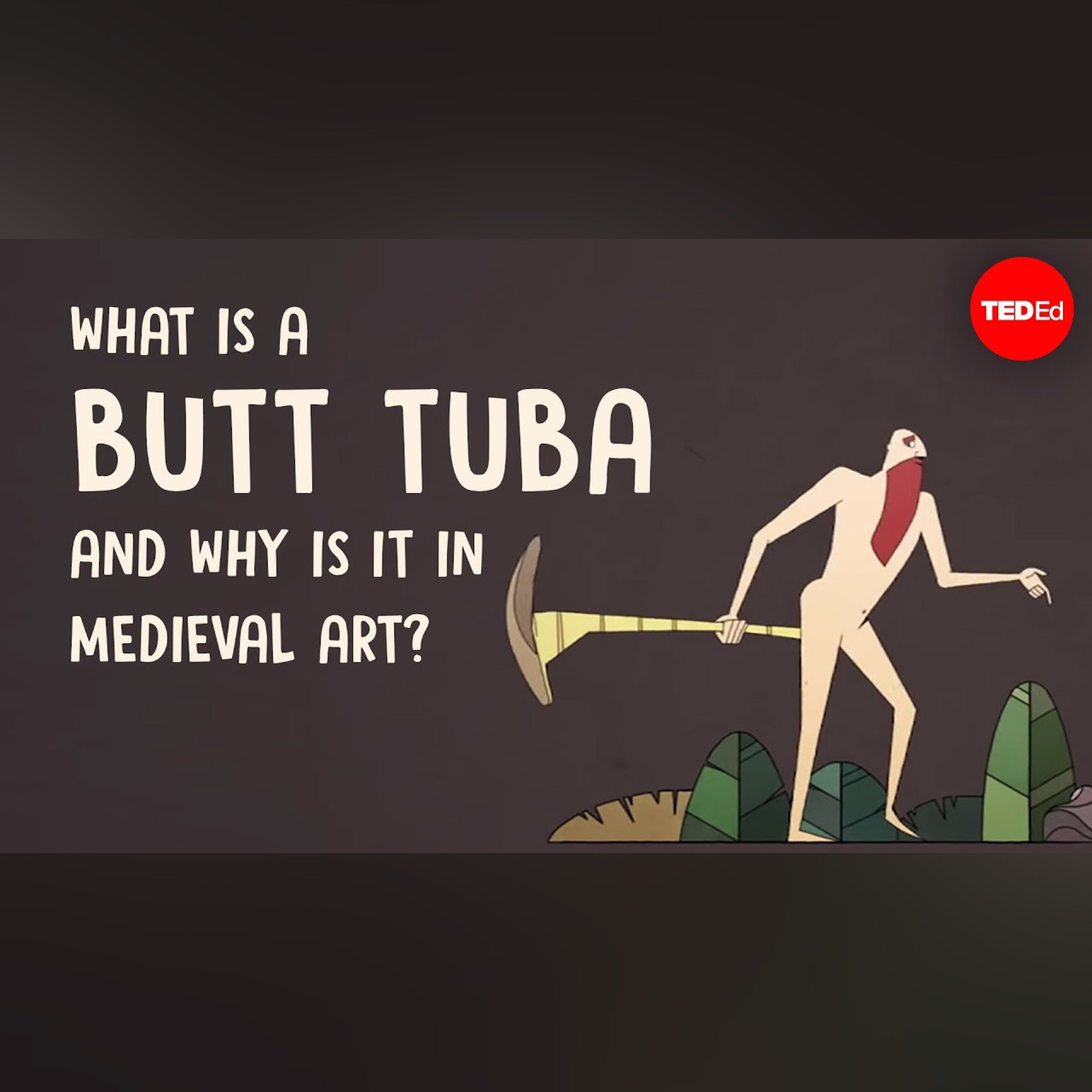
Uncover the rich history of illuminated manuscripts and the often bizarre images that filled the margins of medieval books. Uploaded 16-04-19 -- A rabbit attempts to play a church organ, while a knight fights a giant snail and a naked man blows a trumpet with his rear end. These bizarre images, painted with squirrel-hair brushes on vellum or parchment by monks, nuns and urban craftspeople, populate the margins of the most prized books from the Middle Ages. Michelle Brown explores the rich history and tradition of illuminated manuscripts. Lesson by Michelle Brown, directed by WOW-HOW Studio. Sign up for our newsletter: http://bit.ly/TEDEdNewsletter Support us on Patreon: http://bit.ly/TEDEdPatreon Find us on Twitter: http://bit.ly/TEDEdTwitter Peep us on Instagram: http://bit.ly/TEDEdInstagram View full lesson: https://ed.ted.com/lessons/what-is-a-butt-tuba-and-why-is-it-in-medieval-art-michelle-brown Thank you so much to our patrons for your support! Without you this video would not be
An old, abandoned building in West Texas had a reputation for being haunted, but one visitor wasn't convinced. While helping with some contracting work, he decided to explore the deteriorating structure, accompanied by his dog. It wasn't long before strange things began happening. Glass seemed to shatter in empty rooms, a child's cry echoed from somewhere inside, and a door repeatedly closed on its own. But the most unsettling experience came when they ventured into a dark basement that reportedly once housed an auditorium. There, a flashlight unexpectedly died, and the sound of children singing seemed to fill the empty space. Then another member of the group experienced something that convinced him they needed to leave immediately. Were they simply being unnerved by an unfamiliar building, or had they encountered something that didn't want them there? #RealGhostStoriesOnline #HauntedBuilding #AbandonedPlaces #GhostlyVoices #PhantomChildren #HauntedAuditorium #ParanormalEncounters #Une
In November of 1974, a small bungalow at 966 Lindley Street in Bridgeport, Connecticut, became the center of one of the strangest alleged poltergeist cases in New England. The Goodin family had reported unexplained pounding for years, but suddenly furniture began moving, objects fell from walls, and household items seemed to shift on their own. Then the police arrived. Several officers later put their observations in writing, including claims that they watched furniture move and saw a refrigerator lift several inches from the kitchen floor. Within days, however, the case took an unexpected turn when the family’s ten-year-old daughter admitted she had faked some of the activity. That should have solved the mystery. Instead, it created the question that has followed the Lindley Street case ever since: if some of it was a hoax, what exactly did all those witnesses see? #LindleyStreet #LindleyStreetPoltergeist #966LindleyStreet #BridgeportPoltergeist #Poltergeist #TrueHaunting #Paranormal
Can sound destroy a tumor without an incision? Dr. Zhen Xu joins Krishna Choudhary to explain histotripsy: focused ultrasound that creates tiny bubbles to mechanically break apart tissue, without relying on heat. From a noise complaint in a University of Michigan lab to the Edison system, Xu traces the unexpected discovery, the physics of cavitation, and the decades of research behind noninvasive liver-tumor treatment. We explore surprising immune effects in animal studies, the #HOPE4LIVER clinical trials, and what remains to be tested for other organs. Recorded in Washington, D.C., on September 28, 2026, before the Golden Goose Awards ceremony. Xu is a histotripsy co-inventor, HistoSonics co-founder, and U-M's Li Ka Shing Professor of Biomedical Engineering. This is the first interview in our Golden Goose series. CHAPTERS 00:00 The discovery that became histotripsy 00:50 A PhD student and a heart problem 03:42 Heat vs. sound: how histotripsy works 07:06 Gas pockets, and why not the lu
Who are you allowing to influence the way you see yourself, your decisions and your future? One of the biggest mistakes people make is seeking advice, validation and feedback from people who have absolutely no experience or understanding of what they are trying to achieve. They ask people who have never walked their path, faced […] The post EP 3887 Would you ask a blind person to critique your movie? (https://www.thestronglifeproject.com/the-strong-life-podcast/ep-3887-would-you-ask-a-blind-person-to-critique-your-movie/) appeared first on The Strong Life Project (https://www.thestronglifeproject.com/).
What does it mean to be Hindu? In this episode of Crash Course Religions, we’ll learn about the surprising history of the term “Hindu,” what the word “karma” really means, and how this vast, sprawling tradition contains more than one version of a story. Introduction: Hindu Celebrations 00:00 Hindu Creation Stories 00:37 Where Does "Hindu" Come From? 01:31 Hindu Storytelling 02:38 The Hindu Pantheon 04:53 Hindu Terminology 06:33 Hindu Practices 09:19 Hinduism Across the Globe 10:07 Review & Credits 10:45 *** Support us for $5/month on Patreon to keep Crash Course free for everyone forever! https://www.patreon.com/crashcourse Or support us directly: https://complexly.com/support Join our Crash Course email list to get the latest news and highlights: https://mailchi.mp/crashcourse/email Get our special Crash Course Educators newsletter: http://eepurl.com/iBgMhY Thanks to the following patrons for their generous monthly contributions that help keep Crash Course free for everyone forever: B
Today, Craig is going to finish up our discussion of the First Amendment with freedom of the press. Like an individual's right to free speech, the press has a right, and arguably responsibility, to tell the public what the government is doing. But of course there are some complications in doing so, like if that information will compromise national security or wrongfully discredit an individual. When considering Edward Snowden's NSA disclosures or Julian Assange's Wikileaks, it's just as important as ever to understand the role of the press in informing the public as well as our role as citizens in staying informed. Produced in collaboration with PBS Digital Studios: http://youtube.com/pbsdigitalstudios Support is provided by Voqal: http://www.voqal.org (http://www.voqal.org/) All attributed images are licensed under Creative Commons by Attribution 2.0 Want to find Crash Course elsewhere on the internet? Facebook - http://www.facebook.com/YouTubeCrashC... Twitter - http://www.twitter.co
In which John Green teaches you about the American Revolution. And the Revolutionary War. I know we've labored the point here, but they weren't the same thing. In any case, John will teach you about the major battles of the war, and discuss the strategies on both sides. Everyone is familiar with how this war played out for the Founding Fathers; they got to become the Founding Fathers. But what did the revolution mean to the common people in the United States? For white, property-owning males, it was pretty sweet. They gained rights that were a definite step up from being British Colonial citizens. For everyone else, the short-term gains were not clear. Women's rights were unaffected, and slaves remained in slavery. As for poor white folks, they remained poor and disenfranchised. The reality is it took a long time for this whole democracy thing to get underway, and the principles of life, liberty, and the pursuit of happiness weren't immediately available to all these newly minted Ameri
Michael Jaco is back with another explosive episode of Unleashing Intuition, challenging official narratives, examining political power, and sharing his predictions for America's future! THE MAR-A-LAGO JET CRASH — ANOTHER 9/11-STYLE DECEPTION? Michael questions the reported aircraft crash near Mar-a-Lago, examining footage, alleged inconsistencies in the debris field, and the possibility of a missile-related incident. He draws controversial parallels to September 11 and explores whether the public has been given the complete story. These are Michael's interpretations and allegations, not independently established findings. 🇺🇸 THE RED WAVE — A POLITICAL SHIFT THAT COULD SHAKE WASHINGTON! Michael predicts a Republican surge in Congress and examines the political forces he believes could reshape the balance of power. From election security to voter turnout and growing political divisions, he shares his perspective on what could be coming next. ⚠️ DANGEROUS EXTREMISM — IDEOLOGY, CONTROL
In this week's episode, Blood editor Dr. Natalie Rosen interviews Dr. Lindsey George, Director of Clinical In Vivo Gene Therapy and an attending physician in the Division of Hematology at Children's Hospital of Philadelphia, and also Dr. Miles Horton and Dr. Thomas Lew of the Royal Melbourne Hospital and Peter McCallum Cancer Center, and the Walter and Eliza Hall Institute of Medical Research on their latest articles published in Blood on the characterization of the prothrombotic mechanisms of recombinant FVIII Aurora and turning immunosuppressants into tools for bidirectional in vivo control. Dr. George discusses "Factor VIII Aurora: a naturally occurring gain-of-function FVIII variant with enhanced FIXa affinity (https://ashpublications.org/blood/article-lookup/DOI/10.1182/blood.2026034515)" and Drs. Horton and Lew discuss "Prime editing enables drug-controllable T-cell therapies with clinical immunosuppression (https://ashpublications.org/blood/article-lookup/DOI/10.1182/blood.20260
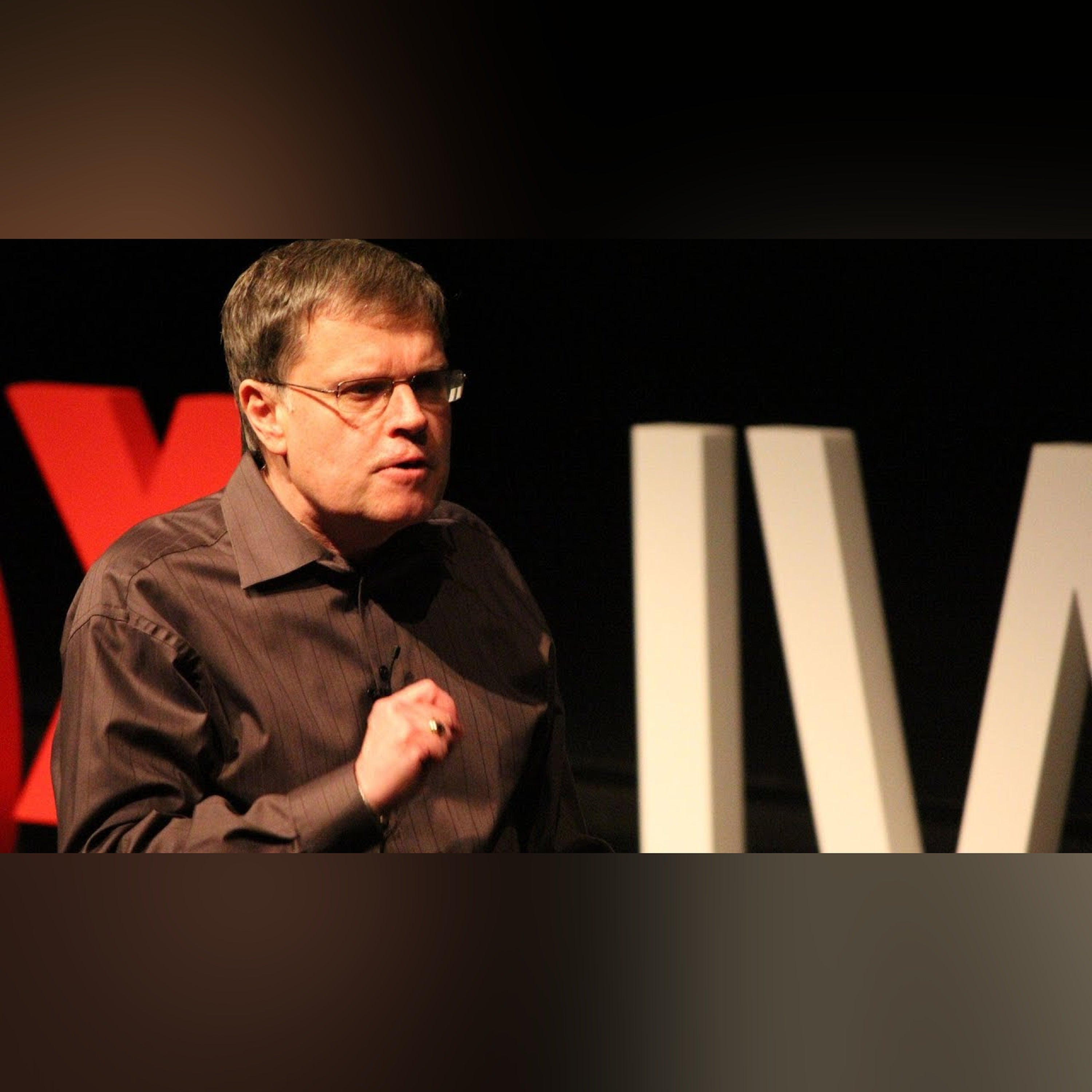
In this funny and blunt talk, Larry Smith pulls no punches when he calls out the absurd excuses people invent when they fail to pursue their passions. (Filmed at TEDxUW.) Uploaded 15-08-13 Talk by Larry Smith.
First up on the podcast, people are buying consumer-grade brain wave detectors ostensibly to help with sleep, concentration, and meditation. But as freelance investigative journalist Jonathan Moens (https://jonathan-moens.com/) describes, companies are getting more than the price of the devices in the exchange (https://www.science.org/doi/10.1126/science.zp18ht9)—including training data for artificial intelligence models—in many cases without the consent of the user. Next on the show, we delve into the many uses for glucagonlike peptide-1 (GLP-1) agonist drugs beyond reducing obesity. Host Sarah Crespi talks with one of the special issue editors, Yevgeniya Nusinovich, senior editor at Science, about their potential for everything from improving cognition to combating cancer. Then we hear from Nora Volkow (https://nida.nih.gov/about-nida/directors-page/biography-dr-nora-volkow), director of the National Institute on Drug Abuse at the National Institutes of Health, about hopes for using
Servier's sevasemten missed its pivotal Becker muscular dystrophy trial, while Karyopharm filed Chapter 11 and proposed an Ayrmid deal around XPOVIO. This delayed November 3, 2026 edition reports dated developments: 'today' means November 3 and 'Monday' November 2. Also covered: uniQure's AMT-130 application, Teva's TOPAS-MSA stop, FDA potency guidance, InventisBio's psoriasis results, Recursion's REC-4881 data, Dr. Reddy's tentative lenacapavir approval reported by CHAI, Rhythm's LG Chem amendment and Pfizer's forecast. Alex Mercer and Maya Patel host.
An Extraordinary Conversation with Hollywood Legend Jim Caviezel | GHOST SOLDIER Arrives Veterans Day — November 11, 2026 FROM PORTRAYING JESUS CHRIST TO BECOMING A GHOST SOLDIER — THE UNTOLD STORY OF JIM CAVIEZEL! Michael Jaco welcomes acclaimed actor Jim Caviezel for an extraordinary, deeply personal conversation about faith, courage, sacrifice, and the remarkable transformation required to bring some of cinema's most unforgettable characters to life. Best known for his portrayal of Jesus Christ in Mel Gibson's The Passion of the Christ and his powerful performance in Sound of Freedom, Jim takes us behind the scenes of his incredible career and reveals how he developed the physical, mental, and spiritual strength to embody these demanding roles. ⚔️ THE PASSION OF THE CHRIST — BEYOND HUMAN LIMITS Jim shares how his preparation for G.I. Jane, including intense Navy SEAL training and exposure to extreme cold, helped prepare him for the extraordinary physical challenges of portraying Jes
From gnocchi and salchipapas to potato chips and french fries, it seems like every cuisine around the world has embraced the potato! And this humble tuber did not originate in Ireland or France, but near Lake Titicaca near the border of what is now known as Bolivia and Peru 7000-9000 years ago! So today, we're going to trace this history of the potato as we teach you about climate, how we classify it using the Köppen system, and the ways humans have employed their geo-literacy to adapt to their surroundings. Watch our videos and review your learning with the Crash Course App! Download here for Apple Devices: https://apple.co/3d4eyZo Download here for Android Devices: https://bit.ly/2SrDulJ Crash Course is on Patreon! Thanks to the following patrons for their generous monthly contributions that help keep Crash Course free for everyone forever: Rene Duedam, Burt Humburg, Aziz, Nick, DAVID MORTON HUDSON, Perry Joyce, Scott Harrison, Mark & Susan Billian, Junrong Eric Zhu, Alan Bridgeman,
Getting stuck in a video game can be frustrating—especially when that game is the cycle of suffering. In this episode of Crash Course Religions, we’ll explore the ways Buddhists try to leave that suffering behind and reach enlightenment, using the teachings of the Buddha, the three jewels, the four noble truths, and the eightfold path. Introduction: Game Over 00:00 Buddhist Beliefs 00:38 The Buddha 02:01 The Dharma 04:43 The Sangha 08:16 Review & Credits 10:14 *** Support us for $5/month on Patreon to keep Crash Course free for everyone forever! https://www.patreon.com/crashcourse Or support us directly: https://complexly.com/support Join our Crash Course email list to get the latest news and highlights: https://mailchi.mp/crashcourse/email Get our special Crash Course Educators newsletter: http://eepurl.com/iBgMhY Thanks to the following patrons for their generous monthly contributions that help keep Crash Course free for everyone forever: Reed Spilmann, Brandon Thomas, Emily Beazley,
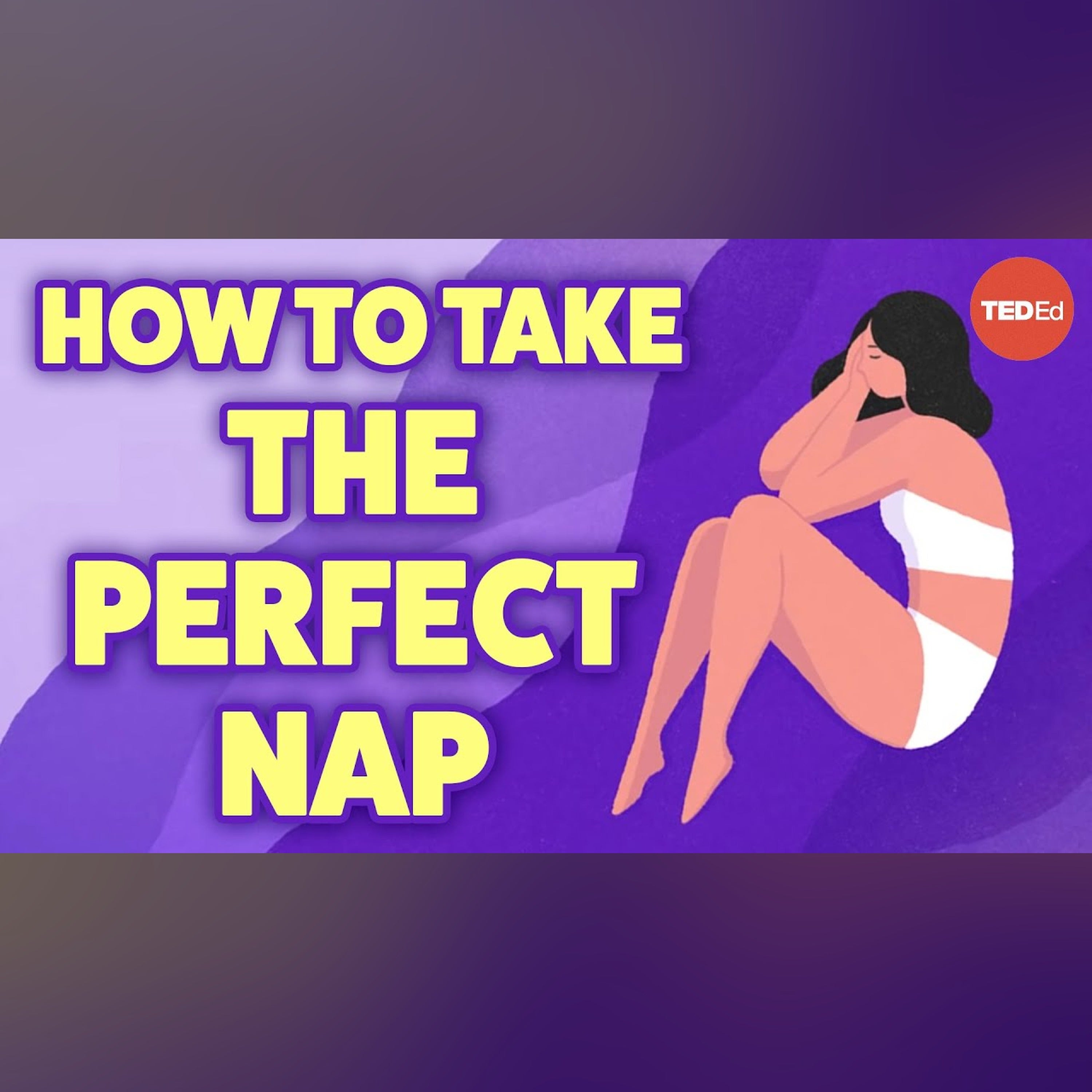
Download a free audiobook version of "Take a Nap: Change Your Life" by Sara Mednick or Matthew Walker's "Why We Sleep" and support TED-Ed's nonprofit mission: https://www.audible.com/ted-ed Uploaded 29-04-21 -- Your eyes get heavy and gradually close… But wait! It’s only lunch time and you still have so much to do. Would taking a nap help? Or would it derail your day? Well, that depends on a few things— especially what stages of sleep the nap includes. Sara C. Mednick details the cognitive benefits of napping, and explores the optimal length and time of day for a quick snooze. Lesson by Sara C. Mednick, directed by Qian Shi. Support Our Non-Profit Mission ---------------------------------------------- Support us on Patreon: http://bit.ly/TEDEdPatreon Check out our merch: http://bit.ly/TEDEDShop ---------------------------------------------- Connect With Us ---------------------------------------------- Sign up for our newsletter: http://bit.ly/TEDEdNewsletter Find us on Twitter: http:/
This is a Grave Talks CLASSIC EPISODE! PART TWO For John Olson, the paranormal was never something reserved for ghost stories or late-night television. It was woven into everyday life. Growing up in a home filled with strange noises, shadowy figures, and the constant feeling of being watched, John learned early on to accept the unexplained as part of reality. But over time, acceptance turned into curiosity. Why was this happening? And why did so many other people seem to share similar experiences? As John searched for answers, he discovered that stories like his were far more common than he ever imagined. His experiences led him to explore not only the hauntings within his own life, but the haunted lives of others who grew up surrounded by spirits and unexplained activity. On this episode of The Grave Talks, John shares what it’s like to spend a lifetime living alongside the paranormal. #TheGraveTalks #HauntedHouse #Paranormal #GhostStories #ShadowPeople #Haunting #ParanormalPodcast #S
This is a Grave Talks CLASSIC EPISODE! In Galion, Ohio, the Gill House stands as a striking example of Victorian architecture and social prominence. Built by Bloomer Gill as a grand family residence, the home once hosted lavish gatherings and welcomed notable visitors, including Thomas Edison, Henry Ford, and Andrew Firestone. But the elegance that once defined the house has long since given way to something far less celebratory. Today, visitors and investigators report a wide range of unexplained activity throughout the home. Children’s laughter has been heard coming from the attic, shadow figures have been seen moving through hallways, and tapping sounds echo through otherwise quiet rooms. The basement, however, is said to be the most unsettling area of all—where disembodied voices, screams, and encounters with a figure known as “Johnny Cake” have been reported. Brenda Treisch, Jane Baker, and Mary Butterfield explore the history and hauntings of the Gill House. From lingering former
Hank brings us the story of the electron and describes how reality is a kind of music, discussing electron shells and orbitals, electron configurations, ionization and electron affinities, and how all these things can be understood via the periodic table. Watch this video in Spanish on our Crash Course en Español channel! https://youtu.be/N5apS0tE67c Pssst... we made flashcards to help you review the content in this episode! Find them on the free Crash Course App! Download it here for Apple Devices: https://apple.co/3d4eyZo Download it here for Android Devices: https://bit.ly/2SrDulJ Table of Contents Snobby Scientists 00:43 Great Dane/Bohr Model 01:57 Electrons as Music 04:13 Electron Shells and Orbitals 04:44 Electron Configurations 05:54 Ionization and Electron Affinities 08:17 Periodic Table 10:18 Crash Course is on Patreon! Want to find Crash Course elsewhere on the internet? Facebook - http://www.facebook.com/YouTubeCrashCourse Twitter - http://www.twitter.com/TheCrashCourse Inst
Today Phil explains that YES, there are other planets out there and astronomers have a lot of methods for detecting them. Nearly 2000 have been found so far. The most successful method is using transits, where a planet physically passes in front of its parent star, producing a measurable dip in the star’s light. Another is measuring the Doppler shift in a star’s light due to reflexive motion as the planet orbits. Exoplanets appear to orbit nearly every kind of star, and we’ve even found planets that are the same size as Earth. We think there may be many billions of Earth-like planets in our galaxy. For more information on reflexive motion, you can check out Phil's blog: http://www.slate.com/blogs/bad_astronomy/2015/08/07/crash_course_astronomy_exoplanets.html Check out the Crash Course Astronomy solar system poster here: http://store.dftba.com/products/crashcourse-astronomy-poster -- Chapters: Introduction: Exoplanets 00:00 Reflexive Motion 1:29 Discovering the First Exoplanets 2:07 51
In which Craig Benzine introduces a brand new Crash Course about U.S. Government and Politics! This course will provide you with an overview of how the government of the United States is supposed to function, and we'll get into how it actually does function. The two aren't always the same thing. We'll be learning about the branches of government, politics, elections, political parties, pizza parties, and much, much more! Produced in collaboration with PBS Digital Studios: http://youtube.com/pbsdigitalstudios Support is provided by Voqal: http://www.voqal.org (http://www.voqal.org/) Chapters: Introduction: Craig asks the big questions 00:00 What are government & politics and why do we study them? 1:58 How to participate in the U.S. political process 3:28 Crash Course Government & Politics will cover... 4:54 Credits 6:17 Crash Course is on Patreon! Want to find Crash Course elsewhere on the internet? Facebook - http://www.facebook.com/YouTubeCrashCourse Twitter - http://www.twitter.com/T
Thanks to KiwiCo for Supporting PBS. For more information go to https://www.kiwico.com/CrashCourse Even though animals can look very different on their surface, there are surprising similarities in how they’ve evolved to solve major problems - like how to support and move their bodies. Today, we’ll take a look at the various ways animals can grow, learn how and why some animals evolved to have a head and others evolved to not have a head, and examine the different types of skeletons - from those inside bodies (like our own), to skeletons outside bodies (like in insects), and even those made of water (like in jellyfish). Evolution is a wild journey that brings us so many different animals with a huge array of bodies and sizes - that is, until everything turns into a crab! Learn more about Rae here! https://www.raewynngrant.com (https://www.raewynngrant.com/) #CrashCourse #Zoology #PBSNature Watch our videos and review your learning with the Crash Course App! Download here for Apple Devi