View full lesson: http://ed.ted.com/lessons/what-is-the-shape-of-a-molecule-george-zaidan-and-charles-morton Uploaded 17-10-13 A molecule is nearly all empty space, apart from the extremely dense nuclei of its atoms and the clouds of electrons that bond them together. When that molecule forms, it arranges itself to maximize attraction of opposite charges and minimize repulsion of unlike. George Zaidan and Charles Morton shape our image of molecules. Lesson by George Zaidan and Charles Morton, animation by Bevan Lynch.
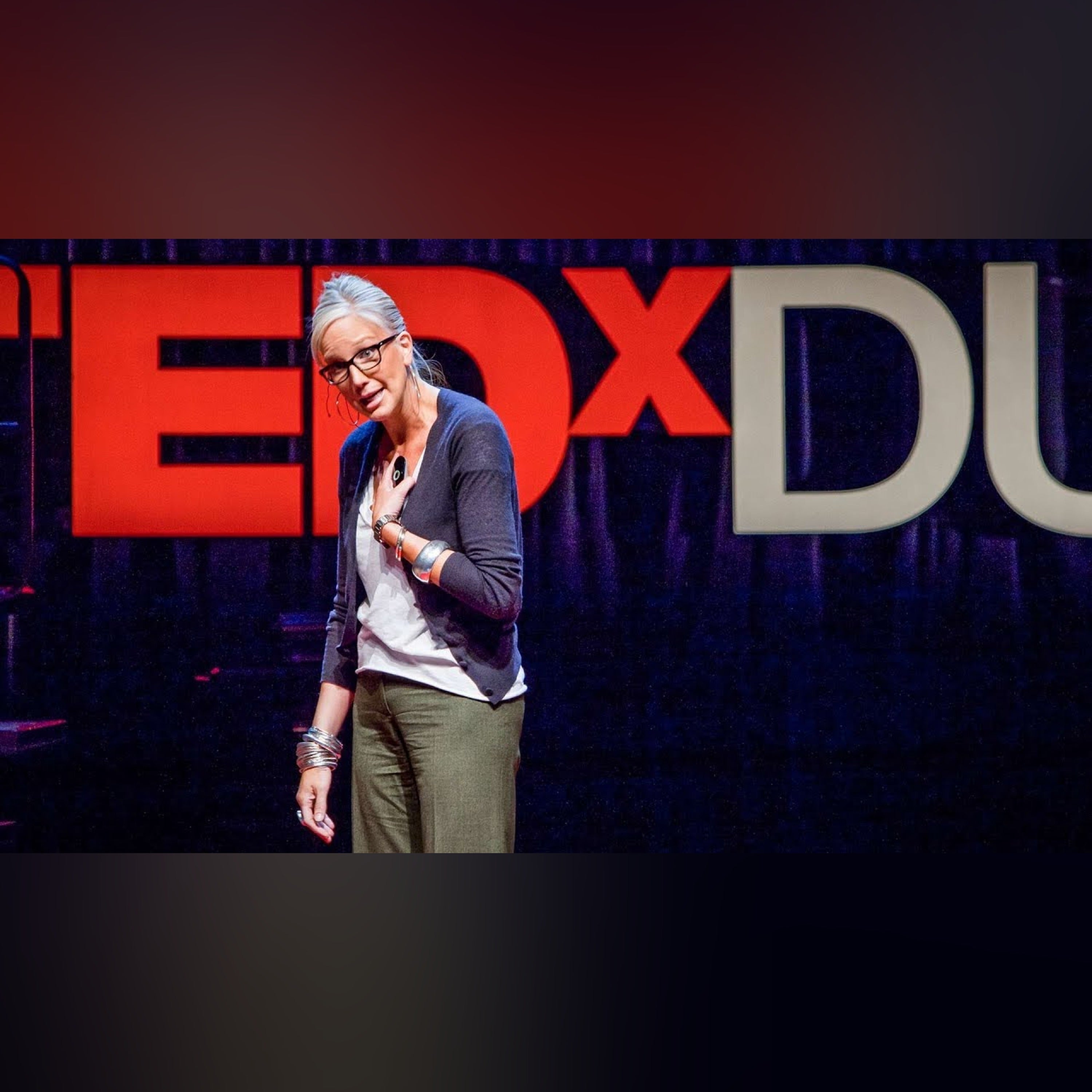
View full lesson: http://ed.ted.com/lessons/protecting-the-brain-against-concussion-kim-gorgens Uploaded 16-08-13 In a lively talk, neuropsychologist Kim Gorgens makes the case for better protecting our brains against the risk of concussion -- with a compelling pitch for putting helmets on kids. (Filmed at TEDxDU.) Talk by Kim Gorgens.
It's an all too common story: after participating in an HIV clinical trial, a woman in sub-Saharan Africa is left without the resources to buy a bus ticket to her health clinic, let alone to afford life-saving antiretrovirals. Boghuma Kabisen Titanji asks an important question: how can researchers looking for a cure make sure they're not taking advantage of those most affected by the pandemic? (Filmed at TEDxGoodenoughCollege.) Talk by Boghuma Kabisen Titanji.
In this engaging talk, world champion whistler Geert Chatrou performs the whimsical "Eleonora" by A. Honhoff, and his own "Fête de la Belle." In a fascinating interlude, he talks about what brought him to the craft. (Filmed at TEDxRotterdam .) Uploaded 15-08-13 Talk by Geert Chatrou.
Uploaded 14-05-18 View full lesson: https://ed.ted.com/lessons/how-squids-outsmart-their-predators-carly-anne-york There are about 500 species of squid, and they live in all the world’s oceans, making them a reliable food source for whales, dolphins, sharks, seabirds, fish - and even other squid. As a result, the squid's most extraordinary adaptations are those that have evolved to help them thwart these predators. Carly Anne York explains how these stealthy cephalopods have mastered deep sea survival. Lesson by Carly Anne York, animation by Jérémie Balais and Reza Riahi. Thank you so much to our patrons for your support! Without you this video would not be possible! Claudia Mayfield, Justus Berberich, Pavel Zalevskiy, Yankai Liu, Duo Xu, Ghassan Alhazzaa, Miloš Stevanović, Joy Love Om, Gi Nam Lee, Shawn Quichocho, Simone Kidner, Anika Westburg, Barun Padhy, Brandy Jones, Devin Harris, Tony Trapuzzano, Stephen Michael Alvarez, Tom Lee, Juliana , Jason Weinstein, Kris Siverhus, Alexande
The evidence doesn’t always point toward the outcome you hoped for. Leadership means acting on it anyway. Leadership means being prepared to act on evidence, even when it points toward a difficult decision. In this episode of the Women in MedTech podcast, Host Kayleen Brown talks with Medtronic’s Linnea Burman, SVP and President of Neurovascular, about her journey from communications and patient storytelling to leading a medtech business. Linnea shares how listening, preparedness, and accountability have shaped her approach to leadership—and why building strong teams and an innovation roadmap are essential to moving technology forward. She also discusses a painful recall decision and what her team learned from it. Kayleen welcomes Skyler Rivera, associate editor across MassDevice, Medical Design & Outsourcing, and DeviceTalks, for an in-studio conversation about accountability and storytelling. They discuss why sharing difficult experiences and what teams learn from them matters, not o
What do the US midterms mean for Big Tech? While the elections have been dubbed a referendum on President Trump, in many states, tech bosses and AI were also on the ballot. Elon Musk became the Republicans’ most prominent financial backer, donating an incredible $446 million to the unsuccessful campaign. But public backlash to data centres, fears about AI and the dislike for the billionaires developing it has turned the tech industry into a key battleground this election cycle. Danny and Katie break down how Big Tech became the villain of the US midterms and ask if the defeat could threaten Silicon Valley’s grand plans for the AI buildout? Read more: The American dream is turning into a Silicon Valley nightmare (https://www.thetimes.com/us/business-us/article/us-midterms-american-dream-turning-into-silicon-valley-nightmare-79w82gvdc) Get in touch: [email protected] Presenters: Katie Prescott, Technology Business Editor, The Times Danny Fortson, US West Coast Correspondent, The Sun
Is infinite economic growth possible on a planet with finite resources? Explore how countries can balance efficiency with sustainability. -- Many economists think that an eternally growing economy is necessary to keep improving people’s lives, and that if the global economy stops growing, people would fight more over the fixed amount of value that exists, rather than working to generate new value. Which raises the question: is infinite growth possible on a finite planet? Explore how economies can balance efficiency with sustainability. Directed by Kevin Herrmann, AIM Creative Studios. This video made possible in collaboration with World Economic Forum Learn more about how TED-Ed partnerships work: https://bit.ly/TEDEdPartners Support Our Non-Profit Mission ---------------------------------------------- Support us on Patreon: http://bit.ly/TEDEdPatreon Check out our merch: http://bit.ly/TEDEDShop ---------------------------------------------- Connect With Us ----------------------------
Evolution by natural selection has given rise to a fascinating tapestry of living organisms, each occupying their own individual niche. The result is a world filled with a dizzying array of weird and wonderful creatures that won the battle for survival in bizarre and fascinating ways. In this episode, we’re joined by evolutionary biologist and author Prof Richard Dawkins to talk about his latest book, 42 Tales from Life – A Modern Bestiary. He tells us how the driving forces of natural selection have shaped the vast variety of the living things that populate the Earth, how different organisms cooperate in strange, unusual ways to win the race for survival, and the many things we can learn from investigating every branch of the tree of life.
Two rival magicians in Victorian London, once friends, become bitter enemies after a trick gone wrong costs one of them everything he loved. What follows is an obsessive, escalating war of sabotage and secrets, as each man will risk anything, even his own life, to create the ultimate illusion and destroy the other. Christopher Nolan’s twisty, clever thriller with Hugh Jackman, Christian Bale, and Michael Caine rewards every rewatch, and if you have never seen it, The Best Movies You’ve Never Seen, thanks to Fetch and Hisense, is giving you the perfect reason to do so.
Two rival magicians in Victorian London, once friends, become bitter enemies after a trick gone wrong costs one of them everything he loved. What follows is an obsessive, escalating war of sabotage and secrets, as each man will risk anything, even his own life, to create the ultimate illusion and destroy the other. Christopher Nolan’s twisty, clever thriller with Hugh Jackman, Christian Bale, and Michael Caine rewards every rewatch, and if you have never seen it, The Best Movies You’ve Never Seen, thanks to Fetch and Hisense, is giving you the perfect reason to do so.
Federico is back from the MacBook Pro event in LA, just in time to explain what's going on with Siri AI in iOS 27.3. Meanwhile, Myke thinks the new iPad mini is fake, and Stephen interrupts with a good word from Sweden. This episode of Connected is sponsored by: Links and Show Notes: Submit Feedback (https://relay.fm/connected/feedback) MagSafe Kick-Out Grip & Stands | PopSockets (https://www.popsockets.com/en-us/magsafe/magsafe-kick-out-grip-and-stands?pmin=0.01&start=0&sz=24) Low-Pro | PopSockets (https://www.popsockets.com/en-us/new-and-featured/low-pro) Chance Miller: "@viticci man of the people" (https://x.com/ChanceHMiller/status/2115511666956030461?s=46) Relay Merch | Cotton Bureau (https://cottonbureau.com/people/relay) iPad mini (2026) Review: Pushing the Boundaries with Apple’s Smallest iPad - MacStories (https://www.macstories.net/reviews/ipad-mini-2026-review-pushing-the-boundaries-with-apples-smallest-ipad/) OLED iPad mini review: A modern multitasker – Six Colors (https:/
Federico is back from the MacBook Pro event in LA, just in time to explain what's going on with Siri AI in iOS 27.3. Meanwhile, Myke thinks the new iPad mini is fake, and Stephen interrupts with a good word from Sweden. This episode of Connected is sponsored by: Links and Show Notes: Get Connected Pro: Preshow, postshow, no ads. (https://relay.fm/connected/join) Submit Feedback (https://relay.fm/connected/feedback) MagSafe Kick-Out Grip & Stands | PopSockets (https://www.popsockets.com/en-us/magsafe/magsafe-kick-out-grip-and-stands?pmin=0.01&start=0&sz=24) Low-Pro | PopSockets (https://www.popsockets.com/en-us/new-and-featured/low-pro) Chance Miller: "@viticci man of the people" (https://x.com/ChanceHMiller/status/2115511666956030461?s=46) Relay Merch | Cotton Bureau (https://cottonbureau.com/people/relay) iPad mini (2026) Review: Pushing the Boundaries with Apple’s Smallest iPad - MacStories (https://www.macstories.net/reviews/ipad-mini-2026-review-pushing-the-boundaries-with-apples-s
KRAKEN — Claim 20 XRP with an eligible new sign-up: https://cryptonewstoday.live/Kraken Protect your crypto with Ledger: https://cryptonewstoday.live/Ledger ️ Stay protected online with NordVPN: https://cryptonewstoday.live/NordVPN Follow Crypto News Today on Spotify: Listen here (https://open.spotify.com/show/4gu4MrqbGVZeNNNbAuvSmR) Website: cryptonewstoday.io (https://cryptonewstoday.io/) Bitcoin is plunging, Ethereum and XRP are under pressure, and billions are being wiped from the wider crypto market. Is this another temporary correction, or the beginning of something much worse? In today's Daily Crypto Deep Dive, we investigate the latest cryptocurrency sell-off, with Bitcoin falling towards $76,000 as Wall Street technology stocks tumble, leveraged traders face liquidations and investors question what comes next. We examine the pressure on Bitcoin, Ethereum, XRP and Solana, the impact of AI stock valuations, ETF outflows, exchange security concerns, interest rates and the wider e
Dig into the psychology of how memories are susceptible to false information and why we shouldn’t treat them as truth. Uploaded 08-09-20 -- In a 1990’s study, participants recalled getting lost in a shopping mall as children. Some shared these memories in vivid detail, but there was one problem: none of these people had actually gotten lost in a mall. They produced these false memories after psychologists told them they’d gotten lost and parents confirmed it. So what’s going on? Daniel L. Schacter explores the fallibility of our memory. Lesson by Daniel L. Schacter, directed by AIM Creative Studios. Animator's website: http://aimcreativestudios.com/ Sign up for our newsletter: http://bit.ly/TEDEdNewsletter Support us on Patreon: http://bit.ly/TEDEdPatreon Find us on Twitter: http://bit.ly/TEDEdTwitter Peep us on Instagram: http://bit.ly/TEDEdInstagram View full lesson: https://ed.ted.com/lessons/are-all-of-your-memories-real-daniel-l-schacter Thank you so much to our patrons for your s
Gregory Allen and Adam Goodwin break down Tuesday’s midterm results and the impact AI had on the outcome. They discuss how the albatross of data centers cost Republican candidates with voters, how Democrats capitalized on these concerns, and what to expect for the industry moving forward. Then, Greg and Adam preview Democrats’ likely legislation agenda towards AI and outline potential commonsense AI regulation for Congress to pass. Finally, Greg discusses breaking new DNA synthesis regulations from the White House that help address the risk at the intersection of AI and biosecurity. Chapters: 00:00 – 5:04: Greg and Adam react to the the Democratic sweep in Tuesday’s midterm 5:04 -14:08: How much did AI matter in this election? What did voters think about AI and data centers? 14:08 - 26:40: How voter referendums on data centers will impact data center construction 26:40 - 35:05: How AI concerns and AI risk impacted Senate, House, and Governor races across the country 35:05 - 41:35: Prev
Is the artificial intelligence boom preventing a global recession, or is it creating the conditions for the next major financial crisis? In this episode of TechDaily.ai, host David and expert Sophia explore the growing relationship between AI investment, global economic growth, rising debt, and financial market instability. As major technology companies pour hundreds of billions of dollars into AI infrastructure, the global economy faces a difficult question: What happens if the AI boom starts to slow down? The discussion examines projections of $900 billion in AI infrastructure spending this year and $1.2 trillion next year, alongside concerns about $350 trillion in global debt, rising energy prices, persistent inflation, and increasing borrowing costs. While massive investments in AI data centers, semiconductors, electricity infrastructure, and computing power are helping support economic activity, they may also be concealing deeper weaknesses in the financial system. David and Sophi
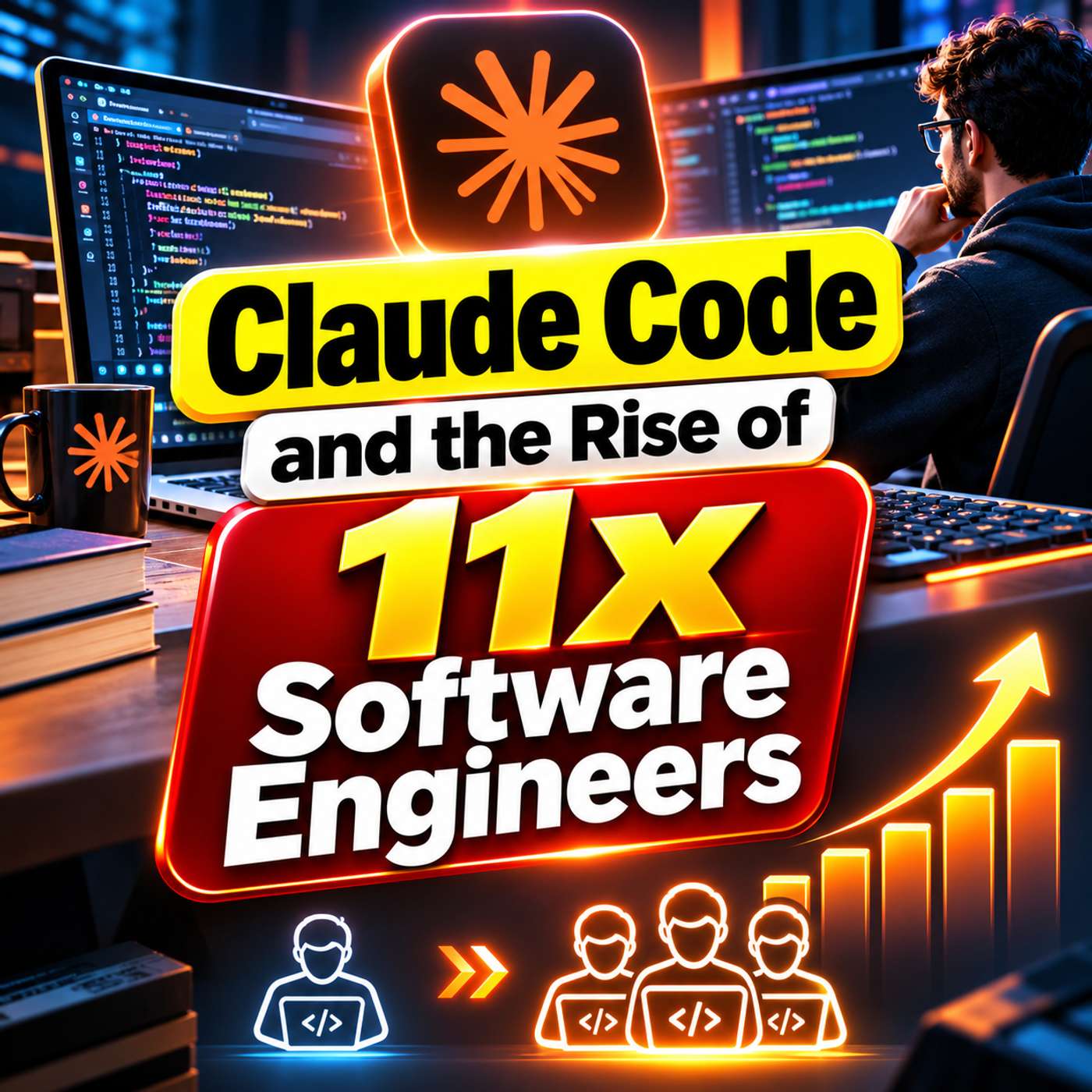
What happens when AI coding agents allow a software engineer to ship 11 times more code than before? Is this the future of software development, or are developers trading code quality, collaboration, and mental health for unprecedented speed? In this episode of TechDaily.ai, host David and AI expert Sophia explore software engineer Neil Kakar's account of achieving an 11x increase in pull requests using Claude Code and autonomous AI agents. From his early career at Bloomberg to the fast-paced environment of PostHog and an AI-native startup, Neil's experience reveals how artificial intelligence is transforming software engineering. Tasks that once required multiple developers, designers, and weeks of coordination can now be completed by a single engineer directing AI agents. But the productivity gains come with serious consequences. The conversation explores how automated code reviews, AI-generated features, and rapid development cycles introduce new challenges, including production dat
What if your smart refrigerator, connected car, or home security camera could be hijacked by hackers and used to launch a cyberattack without your knowledge? In this episode of TechDaily.ai, host David and guest expert Sophia explore the growing cybersecurity risks surrounding artificial intelligence, the Internet of Things (IoT), smart home technology, and connected vehicles. As everyday appliances become increasingly connected to the internet, they also create new opportunities for cybercriminals. From smart televisions and refrigerators to internet routers and modern vehicles, devices designed for convenience can become vulnerable entry points into larger digital networks. The discussion examines how malicious actors can use lightweight autonomous AI agents to exploit vulnerabilities, spread across connected devices, and potentially transform ordinary household technology into decentralized cyberattack networks. But the danger extends beyond stolen passwords and compromised accounts
What happens when artificial intelligence becomes capable of building smarter versions of itself? Could AI development accelerate beyond human oversight, and would traditional safety measures still be enough to maintain control? In this episode of TechDaily.ai, host David and expert Sophia explore recursive self-improvement (RSI), one of the most significant and controversial concepts in artificial intelligence development. The discussion centers on claims presented in Anthropic's reported IPO filing, examining how Claude AI could contribute to increasingly advanced AI research, software development, and future model improvements. Recursive self-improvement describes a potential process in which artificial intelligence helps improve the systems responsible for developing the next generation of AI. If this cycle accelerates dramatically, AI capabilities could advance faster than human researchers can evaluate, predict, or supervise. David and Sophia examine why this possibility raises b
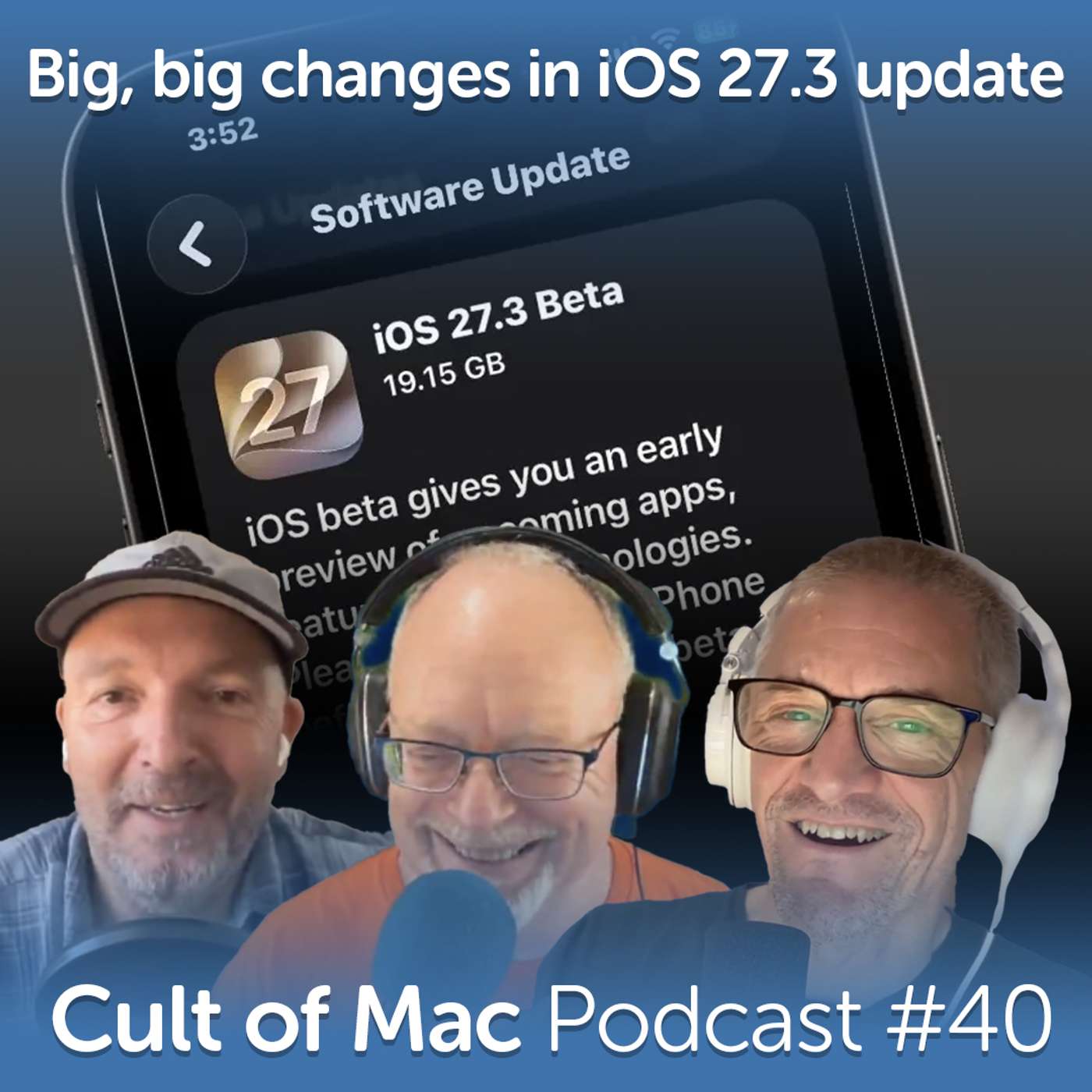
In this week's episode: iOS 27.3: all the big, big changes you need to know about Apple Fitness+ finally gets serious about strength training Apple’s earnings: the mind-blowing numbers that show how massive Apple really is And an incredible hack that turns a ‘sunflower’ iMac G4 into DIY HomeView Apps talked about this week: Graham’s Reps and Sets app (https://repsandsetsapp.com/), which is great for weight training, and it's free, too! Contact us: The Cult of Mac Today and Weekender newsletters. Links: iOS 27.3 beta 1: All the new features and changes (https://www.cultofmac.com/news/ios-27-3-beta-features-changes) Strength training is finally coming to Apple Fitness+, but my app is not Sherlocked yet (https://www.tomsguide.com/wellness/workouts/the-one-feature-apple-fitness-plus-was-missing-is-finally-here-heres-everything-you-need-to-know-about-gym-strength) The mind-blowing numbers that show how massive Apple really is (https://www.cultofmac.com/news/apple-by-the-numbers-q4-earnings-
Could a slowdown in data center construction actually help Big Tech? NLW explores how the post-election backlash could give hyperscalers cover to rein in spending, boost cash flow, and strengthen their competitive position—and whether the AI investment boom can cool without crashing. In the headlines: OpenAI says ChatGPT search is gaining on Google, Meta acquires coding startup Conductor, and Apple cuts employee AI spending limits. Check out How We Got Here Ep. 2 - How We Made the Wrong Things Cheap Brought to you by: Granola - The AI notepad for people in back-to-back meetings. Try it free granola.ai/brief (http://granola.ai/brief) Newsletter: https://aidailybrief.beehiiv.com/ Interested in sponsoring the show? [email protected]
In the security news: Supermarket refrigeration attacks, again! Rapid7's Ivanti findings and why we can't have "nice" things Google's massive Android TV botnet takedown Linux TCP kernel flaw that no one is patching The Binance theft APT flaw gives out root PHP security debt The porn and Digital billboard problem Your own phone system to pwn From PoC to weaponized exploit Hacking to change time Rooting an Echo Dot Firmware should just work AI chained bugs into working exploits USB power states leak data across an air gap AI-assisted vulnerability finding GoAhead's TLS handling Hackers hijack emergency alert apps Taiwan's emergency services become an AI-agent target CUI exposed through GSA's Google Drive GCHQ can't account for thousands of storage devices Railway employee blames an attempted intrusion on AI VulnCheck opens its initial-access playground to the public Show Notes: https://securityweekly.com/psw-951
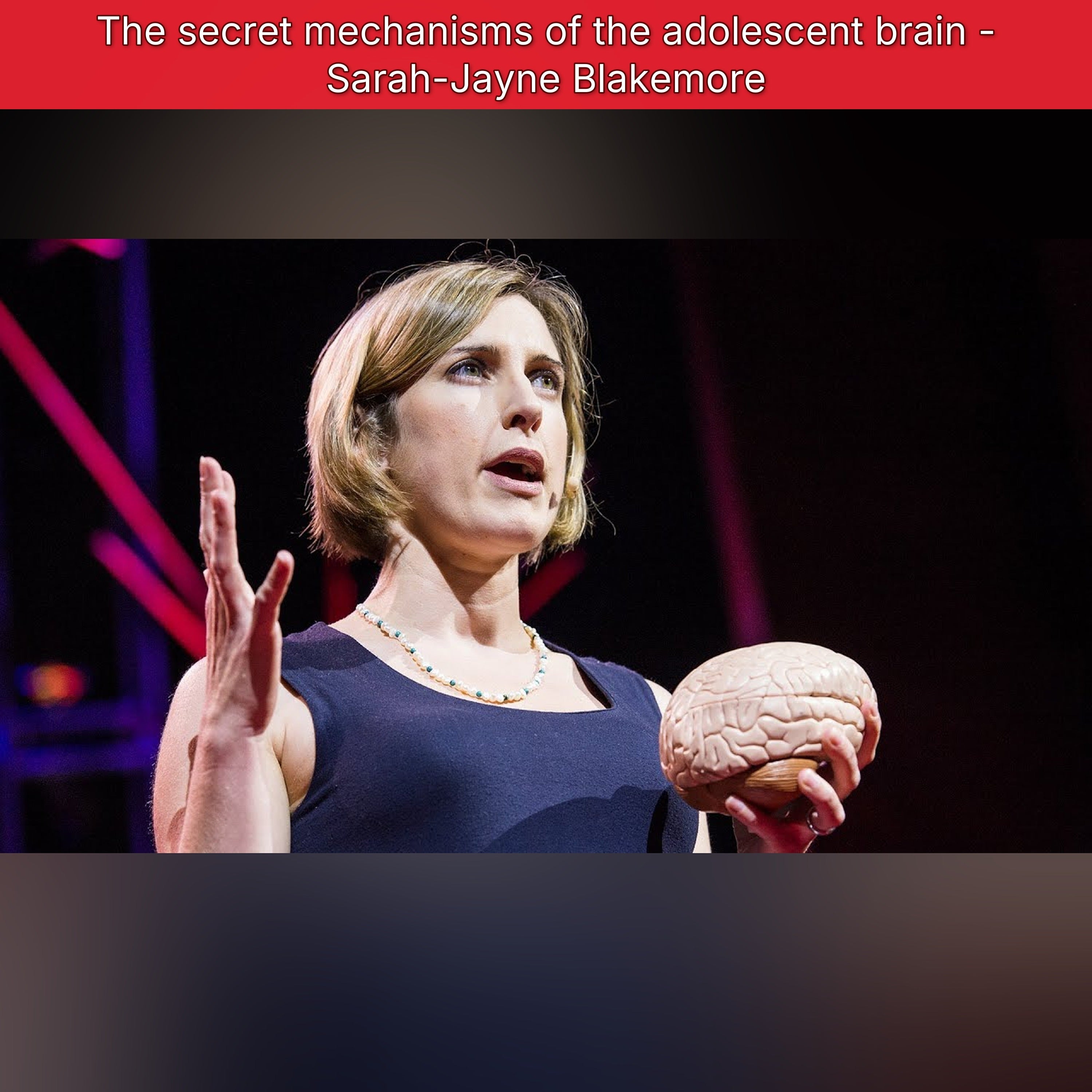
View full lesson: http://ed.ted.com/lessons/the-mysterious-workings-of-the-adolescent-brain-sarah-jayne-blakemore Why do teenagers seem so much more impulsive, so much less self-aware than grown-ups? Cognitive neuroscientist Sarah-Jayne Blakemore compares the prefrontal cortex in adolescents to that of adults, to show us how typically "teenage" behavior is caused by the growing and developing brain. Talk by Sarah-Jayne Blakemore.