What does it mean to build wealth as an individual investor in today’s society, especially as gains continue to get concentrated into smaller groups of VCs or institutional investors? Robinhood’s CEO and co-founder Vlad Tenev has a vision that can be summed up in one word: Ownership. In this episode, Sarah Guo chats with Vlad to get a closer look at how Robinhood has evolved from a simple app to buy stocks at zero commission into a global conglomerate that allows customers to own across a wide variety of surfaces and asset classes. Vlad explains how Robinhood is helping users extend ownership amidst the current economy and ongoing AI revolution through Trump accounts, tokenization of privates, and newer product offerings like Robinhood Chain, Agentic Trading, and Agentic Credit Card. He also talks about how his new mathematical superintelligence startup, Harmonic, is revolutionizing the field and how he hopes it will decentralize new discoveries and inventions. Vlad and Sarah also disc
All links and images can be found on CISO Series (https://cisoseries.com/is-our-dated-hiring-process-creating-vulnerabilities/) Check out this post (https://www.linkedin.com/posts/brettconlon_the-biggest-threat-to-cybersecurity-isnt-share-7444770987671298049-u8Zy/?rcm=ACoAAAAGB-ABR5yqhAwT3wmdEjT0Znha5c_QJ6s) for the discussion that is the basis of our conversation on this week's episode co-hosted by me, David Spark (https://www.linkedin.com/in/davidspark/), the producer of CISO Series (https://cisoseries.com/), and Brett Conlon (https://www.linkedin.com/in/brettconlon/), CISO, American Century Investments (https://www.americancentury.com/home/). Joining us is Carla Sweeney (https://www.linkedin.com/in/carlasweeney/), SVP of InfoSec at Red Ventures (https://www.redventures.com/). In this episode: Proof versus gatekeeping Talent is built one way and judged another What a multiple-choice exam can't teach The hire that got blocked A huge thanks to our sponsor, ThreatDown ThreatDown deliver
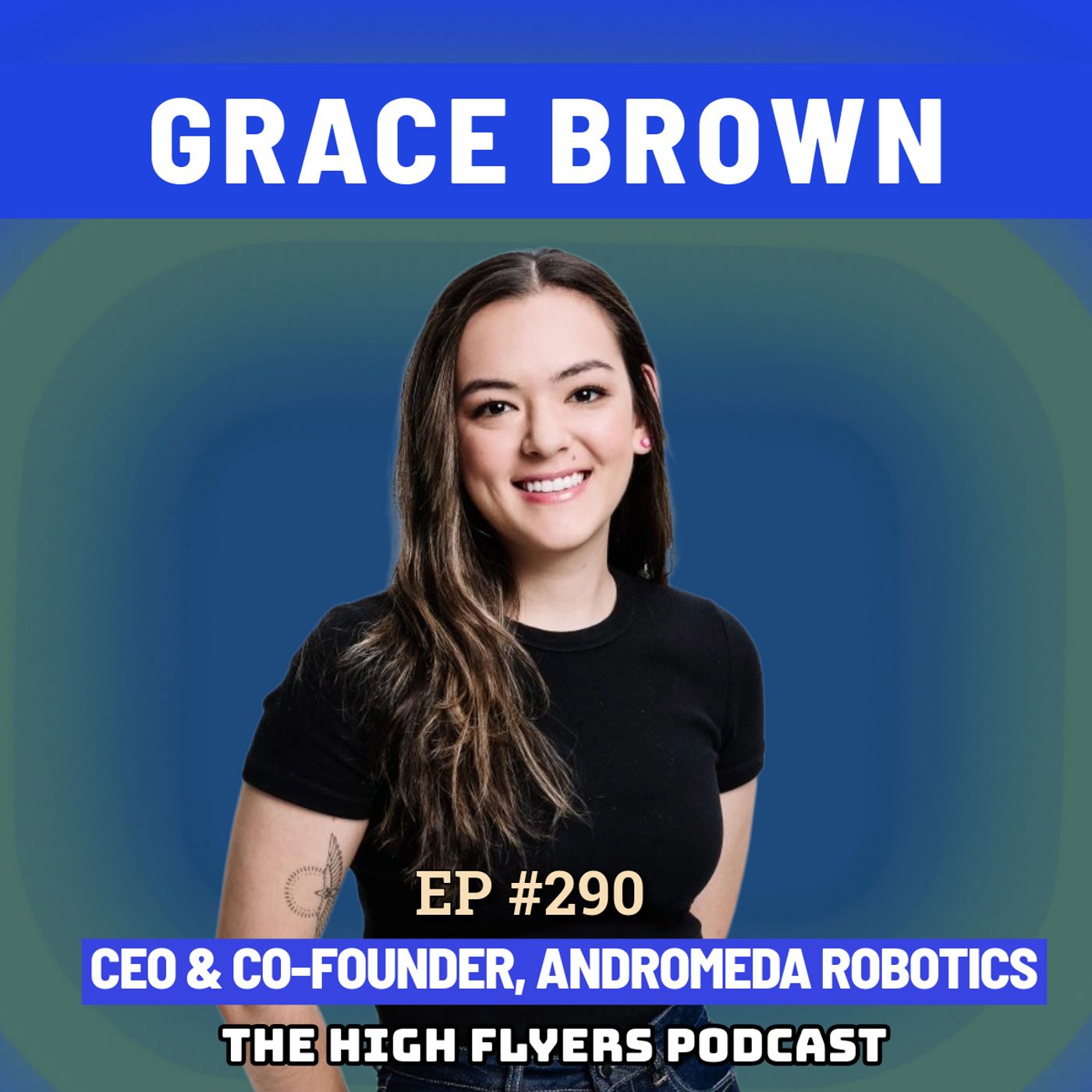
________ What does it take to go from building a robot in your university bedroom during COVID to creating a $100 million robotics company at just 26? And what if the future of robotics isn't about what machines can do, but how they make us feel? Grace Brown is the CEO and Co-Founder of Andromeda Robotics, building a future where robots don't just work for humans, they connect with them. What began as a university project to tackle loneliness is today a $100 million robotics company, backed by leading investors including Silicon Valley's Forerunner Ventures. Its flagship humanoid robot, Abi, is already bringing AI-powered companionship to aged-care residents, with ambitions to scale globally. In this unusually personal conversation, Grace takes us behind the headlines. From growing up between Australia and China and paying her own rent at 17, to finding inspiration in Disney and Pixar, dropping her engineering degree and turning a A$10,000 competition win into the beginnings of Androme
OpenAI is merging ChatGPT's Chat and Work modes and putting ChatGPT and Codex on one metered token allowance, while planning a post-midterm push in Washington and signing government deals in Abu Dhabi. We also look at Nvidia's reported plan to guarantee debt on Anthropic's West Virginia data center, the banks and retailers shutting out personal AI agents like Meta's Muse, and China's AI moves as Apple brings Qwen into Siri and DeepSeek open-sources an always-on agent design. This episode includes AI-generated content.
Today’s agents are stuck in what Ronak Malde calls “pseudo continual learning”: intelligent, but updated in offline batches, like a paper road map you can’t reroute mid-trip. Ronak, co-founder of Trajectory, explains why closing that loop is the next learning paradigm, and why training your own model, which used to take a dedicated research team, months of work and hundreds of millions in compute, is now something a company can do in a few clicks with their own data. He details two research bets they are making available to everyone with their product: 1) a variant of GRPO that removes the need for a simulated environment by learning from single real-world rollouts instead of 16 replays of the same task, and 1) a meta-grader that increased data efficiency by 100x. Ronak explains how Harvey trained a model six times cheaper than frontier, improving an open-source baseline by over 4x on Harvey's own legal benchmark. He defines the difference between continual learning and recursive self-
A lot of voters said no data centers on Election Day. We'll talk about the national advocacy groups that helped organize it. Plus, how to keep your smart home running in a power outage and the phrases that get you past an AI phone bot to a human.
Get to know Amy Tan’s novel “The Joy Luck Club,” a series of interconnected vignettes centered around four Chinese American families. Uploaded 16-12-19 -- In her Auntie An-mei’s home, Jing-Mei reluctantly takes her seat at the eastern corner of the mahjong table. At the north, south and west corners are her aunties, long-time members of the Joy Luck Club. This gathering is the point of departure for a series of interconnected vignettes in Amy Tan’s debut novel. Sheila Marie Orfano explores why the novel still captivates readers worldwide. Lesson by Sheila Marie Orfano, directed by Kayu Leung and Alo Trusz. Animator's websites: https://www.instagram.com/kayucaillou... Sign up for our newsletter: http://bit.ly/TEDEdNewsletter Support us on Patreon: http://bit.ly/TEDEdPatreon Find us on Twitter: http://bit.ly/TEDEdTwitter Peep us on Instagram: http://bit.ly/TEDEdInstagram View full lesson: https://ed.ted.com/lessons/why-should-you-read-the-joy-luck-club-by-amy-tan-sheila-marie-orfano #boo
My guest today is Willy Shih, an economist, a professor of management practice at Harvard Business School, and the author of the upcoming book, Where Does My Stuff Come From? The Powerful Economics Behind Global Supply Chains. Willy’s new book is all about the economics underlying global trade, which our politicians and regulators seem to insistently ignore. So we got into Trump’s tariffs, why the markets have reacted to supply chain disruptions the way they have, and why China remains a global manufacturing powerhouse even though every other country thinks that’s so risky. Read the full interview transcript on The Verge (https://www.theverge.com/e/1024438). Links: Where Does My Stuff Come From? | Willy Shih (https://www.wiley.com/en-us/shop/general-introductory-business-management/where-does-my-stuff-come-from-the-powerful-economics-behind-global-supply-chains-p-9781394408962) RAM price hikes: the latest on the global memory shortage | The Verge (https://www.theverge.com/news/839353/p
We're excited to share the fifth episode of The Builders. In this series, bestselling biographer Walter Isaacson sits down with the most consequential names in AI and tech to understand the futures they're racing to build. As the leader of Y Combinator, the startup accelerator behind Airbnb, Stripe and DoorDash, Garry Tan backs founders with the ambition to change how we live. Tan wants more billionaires, but he also believes big tech has too much power. So, how does he square that? Garry and Walter discuss how a 10-minute interview is all you need to vet a transformative founder, why he fears a future controlled by five AI “kings,” and how personal AI could put your social media feed back in your hands. A chat about how to lift the gatekeeping in Silicon Valley and the responsibility that comes with choosing who gets through. Interview taped June 19, 2026. And be sure to pick up Walter Isaacson’s The Innovators: How a Group of Hackers, Geniuses, and Geeks Created the Digital Revolutio
How do organizations decide what AI should do, where to set boundaries, and when to keep humans in control? In this special episode, we bring you three more talks from the Midwest AI Summit, exploring how organizations are putting AI into practice. Don Barger of the International Mission Board shares how establishing an AI charter helped define what the organization would and wouldn't use AI for. Mark Lay of Noblis explores four key decisions for managing AI across an organization, from delegation and accountability to technical debt. And Darren Taillie of Aerocore Technologies walks through how his team uses AI agents, text-to-SQL, and vision models to improve data access and automate work order verification. Featuring: Don Barger – LinkedIn (https://www.linkedin.com/in/donbarger/) Mark Lay – LinkedIn (https://www.linkedin.com/in/marklay/) Darren Taillie – LinkedIn (https://www.linkedin.com/in/dgtail/) Daniel Whitenack – Website (https://www.datadan.io/), GitHub (https://github.com/dw
Chris and Hector break down the record-setting Binance hack, which the FBI has attributed to North Korea, and what billions in rapidly frozen funds say about how decentralized crypto really is. They also cover a compromised third-party script that drained Polymarket accounts, a DNS hijacking at name.com that targeted DeFi projects, and Claude’s new restrictions on cloning video games. Plus a cheap aftermarket car stereo found loaded with backdoors, and a university employee who won a religious accommodation to avoid using AI at work. Send HATF your questions at [email protected]
- Many Moving Price Targets After Apple Earnings - Wall Street's Post-Election Rally - Evercore Thinks Tuesday's "Blue Wave" Is Good for AAPL - Apple to Scan for "Harmful Content" in Public iCloud Links - Report: Apple Lowering Caps on Employee A.I.
An unpublished manuscript by Erwin Schrödinger from the 1940s has resurfaced, revealing a lesser-known exploration of hidden variables in quantum mechanics. His mathematical model suggested that alternative explanations for quantum behavior deserved serious consideration, without proving that the universe is fully deterministic. Could this rediscovered work change how we understand one of physics’ most enduring debates? This episode includes AI-generated content.
Hungry on the road? Gemini is now built into Google Maps, and it's rolling out to Apple CarPlay, so you can ask for a restaurant hands-free. Plus, you can chat with ChatGPT through CarPlay, and AI can audit a car quote for hidden fees.
Explore the differences between weather and climate – what they are, how we predict them, and what those predictions can tell us. Uploaded 25-08-20 -- From 2016 to 2019, the world saw record-breaking heat waves, rampant wildfires, and the longest run of category 5 tropical cyclones on record. The number of extreme weather events has been increasing for the last 40 years, and current predictions suggest that trend will continue. So, is the increase in extreme weather due to random chance, or changing climate? R. Saravanan investigates. Lesson by R. Saravanan, directed by Hype CG. Animator's website: https://www.hype.cg/ and https://www.luisacopetti.com/ Educator's website: https://r.saravanan.us/ Sign up for our newsletter: http://bit.ly/TEDEdNewsletter Support us on Patreon: http://bit.ly/TEDEdPatreon Find us on Twitter: http://bit.ly/TEDEdTwitter Peep us on Instagram: http://bit.ly/TEDEdInstagram View full lesson: https://ed.ted.com/lessons/is-the-weather-becoming-more-extreme-r-sarav
The rapidly growing popularity and mainstream adoption of prediction markets during the 2026 U.S. midterm elections, where platforms like Kalshi and Polymarket experienced massive trading volumes and public engagement. Alongside this mainstream breakthrough, these financial forecasting platforms face increasing legal jeopardy, highlighted by criminal charges brought by Utah against Kalshi's founders for operating unlawful gambling services. Furthermore, experts predict that this growing industry will encounter intense bipartisan scrutiny in Washington, as lawmakers and regulators debate tighter oversight of political betting and election-related financial contracts. Despite controversies regarding insider risks, slow settlement times, and potential market manipulation, supporters argue that these crowdsourced platforms provide valuable, real-time insights into political outcomes that often bypass traditional polling methods.
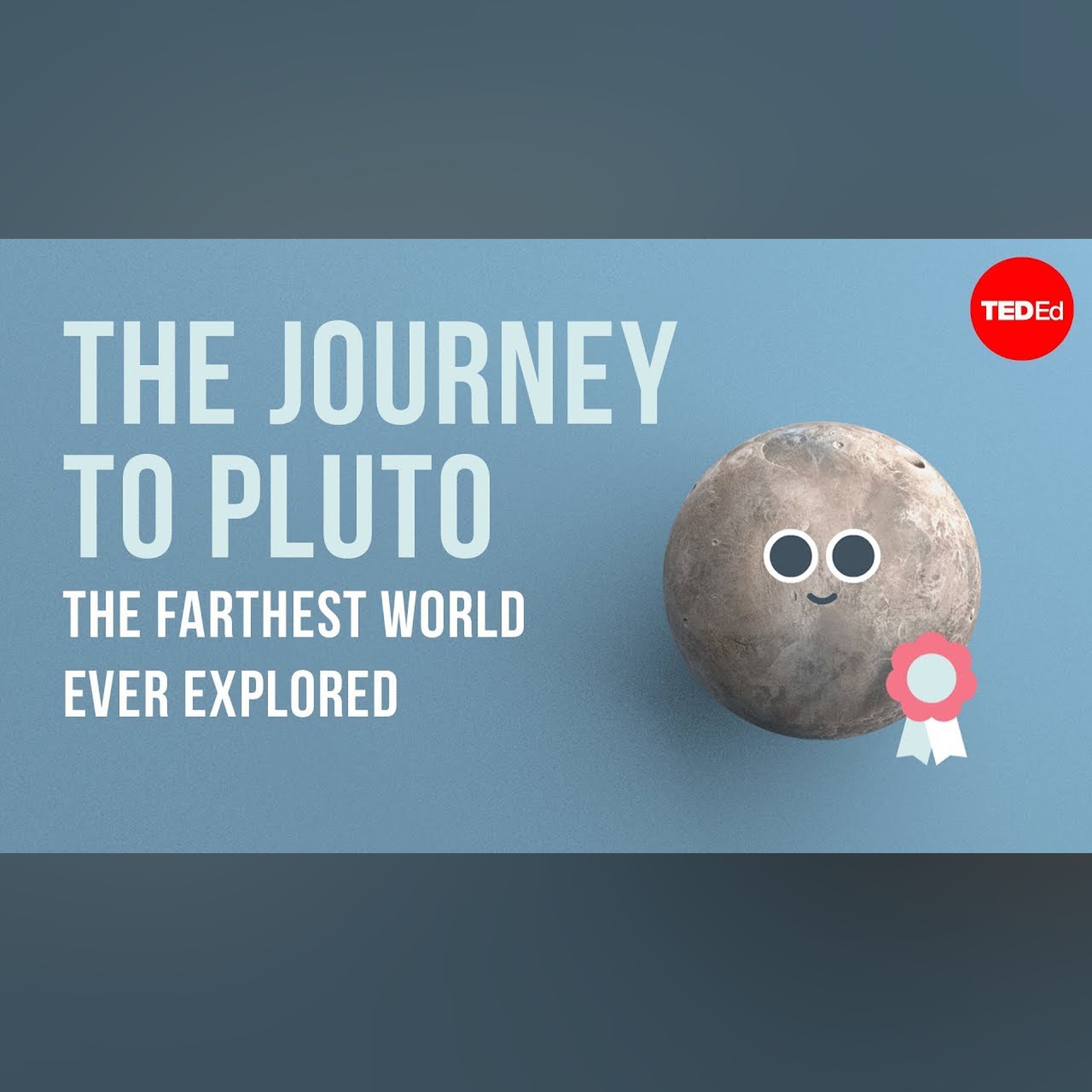
Check out Alan Stern's "Chasing New Horizons": https://shop.ed.ted.com/collections/ted-ed-book-recommendations/products/chasing-new-horizons Uploaded 17-05-18 View full lesson: https://ed.ted.com/lessons/the-journey-to-pluto-the-farthest-world-ever-explored-alan-stern As of 1989, mankind had successfully sent craft to every known planet in the solar system except one: Pluto. Located in an mysterious region called the Kuiper Belt, Pluto is a scientific goldmine, and could hold clues to the formation of our solar system. Alan Stern explains how NASA's New Horizons mission is going to allow us to see Pluto for the first time. Lesson by Alan Stern, animation by Eoin Duffy. Thank you so much to our patrons for your support! Without you this video would not be possible! Husain Mohammad, Max Shuai Tang, Côme Vincent, Astia Rizki Safitri, Alan Froese, alessandra tasso, Gerald Onyango, Katrina Harding, Ezgi Yersu, Al the Scottish Wildcat, Katie Dean, Kin Lon Ma, Carsten Tobehn, Boris Langvand,
Scientists have achieved unprecedented control over a single positron, the antimatter counterpart of an electron, by trapping and cooling it in an ultra-high vacuum. This breakthrough could enable exceptionally precise tests of fundamental physics by comparing the magnetic properties of matter and antimatter. Could even the tiniest difference help explain why our universe contains far more matter than antimatter? This episode includes AI-generated content.
Download a free audiobook version of “The Lord of the Rings: The Fellowship of the Ring“ and support TED-Ed's nonprofit mission: https://www.audible.com/ted-ed -- More than 2,000 years ago, the Greek philosopher Plato recounted the legend of the Ring of Gyges in “Republic.” The story of the ring surfaces as the philosopher, Socrates, and his student discuss why people act justly: is it because it’s what’s right? Or because it’s a convention that’s enforced through punishment and reward? Alex Gendler shares the allegory of the ill-gotten, magical ring. Lesson by Alex Gendler, directed by Vitalii Nebelskyi. Learn more about how TED-Ed partnerships work: https://bit.ly/TEDEdPartners Support Our Non-Profit Mission ---------------------------------------------- Support us on Patreon: http://bit.ly/TEDEdPatreon Check out our merch: http://bit.ly/TEDEDShop ---------------------------------------------- Connect With Us ---------------------------------------------- Sign up for our newsletter:
Titan OS has raised $110 million in funding to date. Also, cybersecurity focused Ballistic Ventures is seeking to raise $360 million for a new flagship fund and another $130 million for a separate investment vehicle. And Fal is a five year startup and recently raised a $1.3 billion round led by Bessemer.
SpaceX Daily Qualcomm Dragonwing platforms will power tens of thousands of Starlink Mobile 5G base stations starting in 2027. Top News SpaceX selects Qualcomm Dragonwing for Starlink Mobile nationwide 5G network SpaceX chose Qualcomm's Dragonwing QRU100 and QDU100 platforms plus Layer 1 software to equip Massive MIMO radio units with 64 transmit and 64 receive paths. ... Sources: news.lavx.hu (https://news.lavx.hu/article/qualcomm-dragonwing-selected-for-spacex-starlink-mobile-nationwide-5g-network) · teslarati.com (https://www.teslarati.com/spacex-moves-challenge-att-verizon-qualcomm-powered-5g/) · driveteslacanada.ca (https://driveteslacanada.ca/spacex/norway-marlink-starlink-satellite-communications-defence-deal/) · analyticsinsight.net (https://www.analyticsinsight.net/news/elon-musk-proposes-space-data-centers-as-democratic-victory-raises-concerns-over-ai-infrastructure) · wapt.com (https://www.wapt.com/article/elon-musk-announces-two-xai-data-centers-near-mississippi-tennessee-st
Lula has made history as the first candidate to win a presidential election despite losing the first round of voting, all while Meta seemed to be putting its thumb on the scale for his far-right competition. Laís Martins joins Paris Marx to discuss the Brazilian presidential election, how Meta’s moderation heavily favored Flávio Bolsonaro while limiting Lula’s reach, and where Brazilian tech policy might go next. Laís Martins is a technology reporter at The Intercept Brasil (https://www.intercept.com.br/equipe/lais-martins/). The podcast is made in partnership with The Nation. Production is by Kyla Hewson. Also mentioned in this episode: Order your copy of Paris' book Hyperscale at hyperscalebook.com (https://hyperscalebook.com/). Join Paris at an upcoming event (https://parismarx.com/speaking/) near you. Meta was ordered (https://www.aljazeera.com/news/2026/10/19/brazilian-court-orders-meta-to-prove-lula-and-bolsonaro-get-equal-treatment) to prove both candidates received equal treatm
The Staria Load Electric has two 12.5 inch screens, with the driver's display mounted above the steering wheel. I describe the physical navigation shortcuts and the fixed rotary gear selector beside the wheel, which leaves space to move across the cabin. For couriers, that layout means easier movement to the passenger side; I also explain how the climate system avoids cooling an empty passenger area.