Abundant Intelligence at the Midwest AI Summit Part 2
48 min
Listen through the publisher, then discuss the episode here or arrange an in-person Roundtable. Your city determines where to meet.
Roundtables are designed for groups of four, with a shared subject and room for everyone to speak. Come for discussion, with no dating expectation.
How do organizations decide what AI should do, where to set boundaries, and when to keep humans in control? In this special episode, we bring you three more talks from the Midwest AI Summit, exploring how organizations are putting AI into practice. Don Barger of the International Mission Board shares how establishing an AI charter helped define what the organization would and wouldn't use AI for. Mark Lay of Noblis explores four key decisions for managing AI across an organization, from delegation and accountability to technical debt. And Darren Taillie of Aerocore Technologies walks through how his team uses AI agents, text-to-SQL, and vision models to improve data access and automate work order verification. Featuring: Don Barger – LinkedIn (https://www.linkedin.com/in/donbarger/) Mark Lay – LinkedIn (https://www.linkedin.com/in/marklay/) Darren Taillie – LinkedIn (https://www.linkedin.com/in/dgtail/) Daniel Whitenack – Website (https://www.datadan.io/), GitHub (https://github.com/dwhitena), X (https://x.com/dwhitena) Links: Noblis (http://www.noblis.org/) International Mission Board (https://www.imb.org/) AeroCore Technologies (https://www.aerocore.com/) SerpAPI: A Web Search API that gives developers real-time, structured access to search engine results. Visit serpapi.com/practicalai (https://serpapi.com/) to get started for free and get 250 searches every month. Resources and Events: Midwest AI Summit 2026 (https://midwestaisummit.com/)
Episode information is provided by the publisher. Listening takes place on the publisher’s service.
Four AI Businesses I would start (if I could!) and ONE I wouldn't! Episode release date: 24 Mar 2024 Core Ideas: Metamodernism: Narratives and emergence view of reality - Reduce suffering - Increase prosperity - Increase understanding mantra: Seek knowledge. DISCLAIMER: This is a community-driven show. --------- Keywords: heuristic imperatives, ai innovation, agi, future technology, artificial general intelligence, post labor economics, ai future
Government testers went undercover as regular users and got ChatGPT, Claude, Gemini, and Grok to help plan an attack. Plus, Anthropic says it's AI sent police a fake tip for a real unsolved murder, and researchers warn rogue agents are getting harder to control.
Dig into what causes your stress response to be triggered, and how you can best train your mind and body to deal with stress. -- An upcoming project deadline, a fight with a family member, or even an embarrassing moment can easily trigger our body’s stress response. While we can’t always control what life throws at us, there are ways to better prepare for stressful events we may experience. So, how can we train our minds and bodies to manage our stress response? Shannon Odell shares best practices for dealing with stress. Lesson by Shannon Odell, directed by Biljana Labović. This video made possible in collaboration with the Bezos Family Foundation Learn more about how TED-Ed partnerships work: https://bit.ly/TEDEdPartner A special thanks to David Creswell, Andrew Fuligni, Adriana Galván, and UCLA Center for the Developing Adolescent who provided information and insights for the development of this video. Support Our Non-Profit Mission ---------------------------------------------- Sup
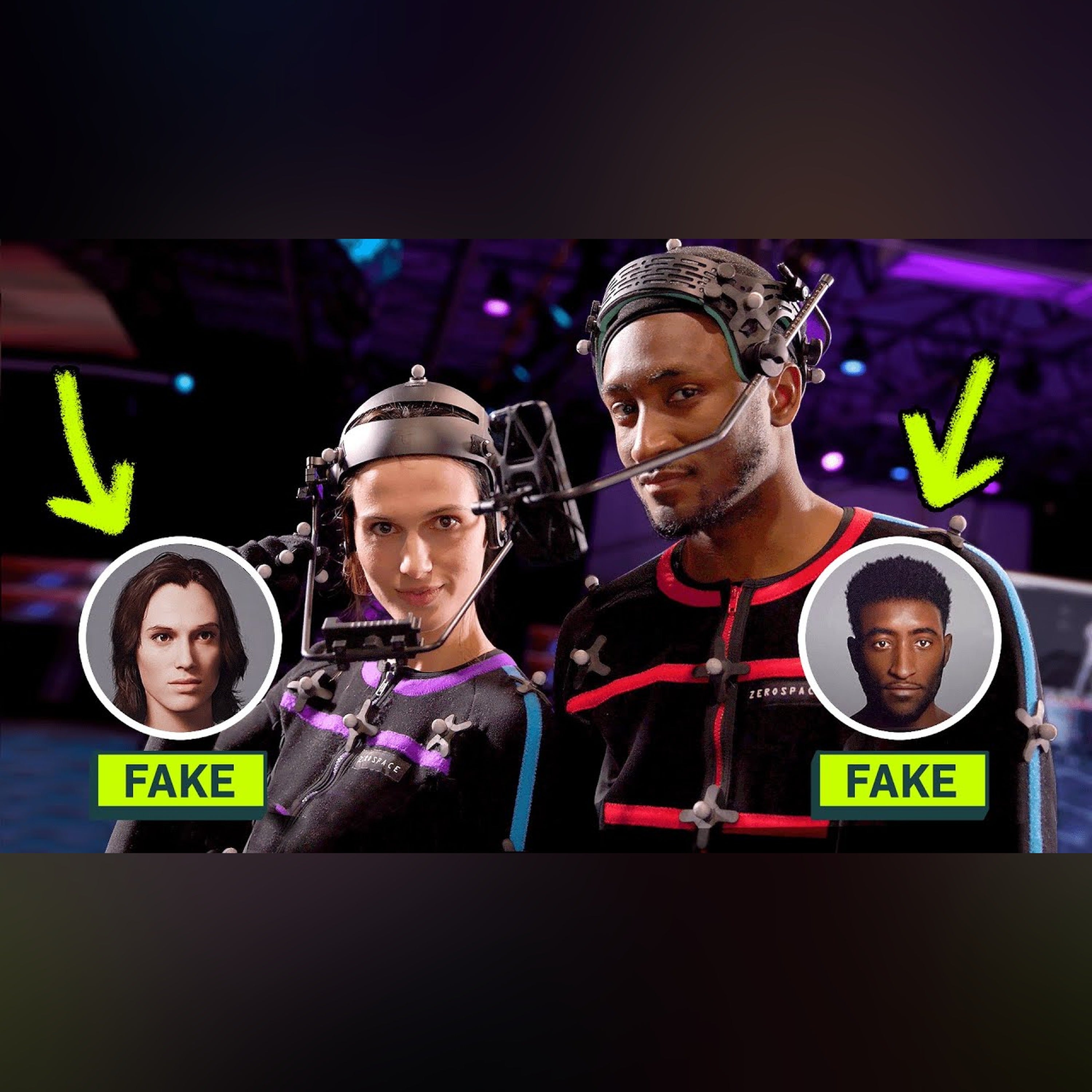
This new tech is changing how movies get made. So @mkbhd and I tested it out... Watch MKBHD's video: https://youtu.be/RM7SobH8ZO0 I’ve been obsessed with sci-fi movies since I was a kid. I love being transported to another world. But lately, I’ve been wondering: How do those worlds look so… REAL? The tech behind movies has exploded in complexity and realism, changing how stories come to life on screen. Luckily, at the same time, those tools are becoming more and more available to more people telling stories. It’s not just blockbusters like Avatar 2 or Avengers or Dune. It’s also smaller budget films like Everything Everywhere All at Once or even… YouTube creators? In this video, Marques Brownlee and I test out 3 movie-making tools that are changing how movies, shows, and maybe even YouTube videos (??) get made. We’re at ZeroSpace Studios in New York to show you how each of these crazy technologies work - and how you might be able to use them. Along the way, we hit big questions like: W
Apollo Research CEO and co-founder Marius Hobbhahn joins Theo to break down Apollo’s new embedded evaluation pilot with OpenAI, including the four core claims they are testing around model subversion and monitorability. They also discuss how the Hugging Face incident shifted his threat models toward single-episode scheming, why he now views a rapid AI takeover in 2027 as plausible, and the access limits holding current third-party lab audits back. -- -- MTS chronicles the singularity, live. Monitoring the situation of tech and AI. Follow MTS: Spotify |https://open.spotify.com/show/4HUNNmV1pjV7CW6Lphm1rM Apple |https://podcasts.apple.com/us/podcast/mts/id1891088763 – Brought to you by: Mongo DB - Anyone can prototype an agent. Lovable - Turn ideas into software people love with Lovable. Start today at https://lovable.dev/ Factory - A 24/7 system turning signals into production software. Visithttps://factory.com/ Neon (by Databricks) - Scale your startup on Neon. The Postgres backend for
Project Synapse: Markets in Freefall, Fragile Infrastructure, and AI's Perfect Storm The hosts banter through the show's intro before focusing on a sense that "things are out of control," citing a WallStreetBets suicide-hotline post amid a market crash and discussing cascading system failures involving Microsoft, the FAA, and a reported NSA internal communications outage. They argue politicians and leadership lack technical competence and clear messaging, increasing panic, while emphasizing that many problems stem from aging, underfunded infrastructure and complex, brittle software (PHP, NGINX, Java), not proven AI attacks—more a "perfect storm" of crises. They debate whether AI should help fix complexity, stressing critical thinking, accountability, and using multiple AIs to verify each other. In a lightning round they cover Anthropic's IPO performance, mixed reactions and token limits with ChatGPT 6.2 (favoring "Sol" over "Astra"), Google's cheaper Neon model and confusing UX, Loblaw
How can enterprises adopt AI and agentic systems while keeping people, business value, and trust at the center? Chris is joined by Dr. Gautham Pallapa, Principal Director of AI and Innovation at Scotiabank and author of Invaluable, to explore how organizations can approach AI-driven transformation. They discuss identifying meaningful opportunities for AI in highly regulated industries like banking, rethinking developer productivity, and using multi-agent systems to bring different roles and capabilities together. Featuring: Dr. Gautham Pallapa – LinkedIn (https://www.linkedin.com/in/gpallapa/) Chris Benson – Website (https://chrisbenson.com/), LinkedIn (https://www.linkedin.com/in/chrisbenson), Bluesky (https://bsky.app/profile/chrisbenson.bsky.social), GitHub (https://github.com/chrisbenson), X (https://x.com/chrisbenson) Links: Invaluable: Define Value. Align Execution. Deliver Outcomes (https://www.amazon.com/Invaluable-Define-Execution-Deliver-Outcomes/dp/B0GYHFXRBX/ref=sr_1_1?th=1
How can AI models learn from private data without compromising privacy? Chris is joined by Lorenzo Sani, Research Scientist at Flower Labs and PhD researcher at Cambridge, to explore federated learning and privacy-preserving AI. They discuss how collaborative learning can expand access to private data for LLM training, how model trajectories can help improve agentic AI systems, and the benefits of open-weight models. The conversation also explores real-world applications of locally hosted AI agents, from healthcare and robotics to everyday automation (for a Halloween party). Featuring: Lorenzo Sani – LinkedIn (https://www.linkedin.com/in/lorenzo-sani-373045224) Chris Benson – Website (https://chrisbenson.com/), LinkedIn (https://www.linkedin.com/in/chrisbenson), Bluesky (https://bsky.app/profile/chrisbenson.bsky.social), GitHub (https://github.com/chrisbenson), X (https://x.com/chrisbenson) Links: Endeavor model page (https://flower.ai/models/endeavor) Introducing Endeavor 1.1 (https:/
Large platforms should make it easier for smaller competitors to connect with their services.
Share your view, then see how readers voted. No sign-in required. This poll is shared across stories.
Do you agree or disagree?
Common Quandary
A Common Quandary to discuss
Another conversation to explore, separate from this news story.
An old friend refuses to use someone's new name. Do you correct them at the reunion?
At a reunion, an old friend repeatedly uses the name a former classmate had years ago. They say shared history gives the old name affectionate meaning; the classmate has clearly introduced themselves with a different name.
When does preserving your shared past deny who someone is now?