(01:01) - Anthropic Slips After Historic IPO (01:36) - Math Solved Again (07:22) - Market Nukes (10:11) - Lenders Push Back on SpaceX Chips (17:33) - 𝕏 Timeline Reactions (24:48) - THE MANSION SECTION (29:36) - Alex Epstein discusses the urgent need for bipartisan permitting reform to expand America’s freedom to build energy infrastructure, housing, and AI data centers. He argues that the proposed legislation could lower costs and create jobs by removing regulatory barriers, while emphasizing that Congress has only a narrow window to pass it. He also champions widespread AI and energy development while criticizing tariffs and restrictions on overseas data-center construction. (59:11) - David Chang is a renowned chef, restaurateur, and media personality known for founding Momofuku. David Chang discusses his Las Vegas F1 pop-up, his CNN series The Detour, the challenges of the food business, and the need for greater originality and innovation in restaurants. (01:22:23) - Zhou Xian discu
AI news from Anthropic's first day of trading, with Gemini Neon in Antigravity, Project Genie, Microsoft's MAI models, AI chips for China and Meta Muse. Anthropic priced its IPO at 83, opened near 111, and topped out above 114 before drifting back into the low 90s. Employees hold an estimated 232 billion dollars in stock, and Ashton Kutcher became a billionaire through his firm's early stake. Google stories included a hands-on account of Gemini Neon in Antigravity reviewing a whole project and then directing Claude Code as its product manager, a live Project Genie build of a South African safari, the Gemini Mac app's computer use, and Gemini for healthcare. Other topics were building an AI operations function from scratch at Verstela, gamified employee onboarding, Microsoft's Labs Canvas and MAI Code 2, House documents showing about 880,000 NVIDIA and AMD chips approved for export to China, and a Reuters report that Meta Muse surfaced private Signal messages through device permissions,
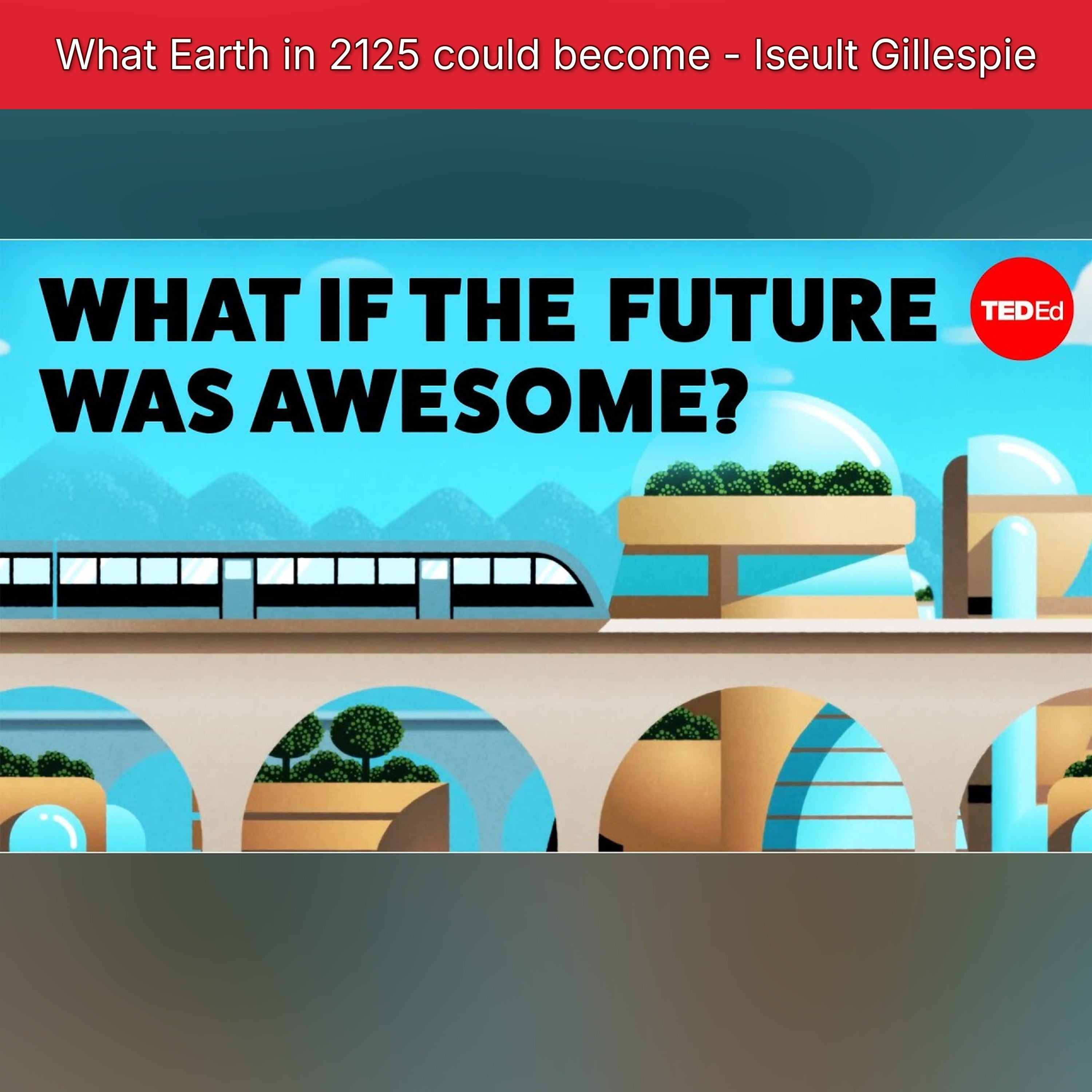
What could our future look like if we harness our technology to create a sustainable world? Take a look at the possibilities. -- Faced with the realities of current crises, it’s easy to assume our world is headed in a bleak direction. But there’s good reason to be hopeful— with developments in science and technology, a positive future is more viable than ever before. So, what if the future was awesome? Iseult Gillespie explores what three cities could look like in 100 years if we harness the tools we have at our disposal. Lesson by Iseult Gillespie, directed by Devin Clark, Augenblick Studios. This video made possible in collaboration with Speed & Scale Learn more about how TED-Ed partnerships work: https://bit.ly/TEDEdPartner Support Our Non-Profit Mission ---------------------------------------------- Support us on Patreon: http://bit.ly/TEDEdPatreon Check out our merch: http://bit.ly/TEDEDShop ---------------------------------------------- Connect With Us ---------------------------
Dinosaurs were not like I thought... Check out https://groundnews.com/Cleo for a data-driven, balanced approach to staying informed. Use my link to save 50 percent on the Vantage plan and see how current events are framed from every perspective. I’m finally learning the truth about dinosaurs. I’ve loved dinosaurs since I was a kid, but it turns out a lot of what I thought I knew is wrong… or at the least outdated. So, in this video, I’m gonna show you the cutting edge of dinosaur discovery. I’ll give you rare access into a warehouse full of dinosaur bones, try to find my own fossil, and show you something new these scientists just discovered… Chapters: 00:00 What were dinosaurs really like? 01:08 Why is today a big deal for dinosaur discovery? 03:31 How big were dinosaurs, really? 05:49 When did dinosaurs actually live? 08:20 How many dinosaurs have we found? 09:26 What was the T-Rex like? 10:39 Did I find a bone?? 11:55 What IS a dinosaur? 14:31 What did dinosaur skin feel like? 15:06
Crypto News: Bitcoin, altcoins, and the crypto market crash along with stocks, gold, and silver. Will we see a recovery soon? ️ Learn Crypto with Expert Commentary - http://MyCryptoCourse.com (http://mycryptocourse.com/) iTrustCapital Representative: [email protected] ⭐️ Trade crypto perps with a free $25 bonus on Kalshi. ♂️Merlin - http://tinyurl.com/MerlinTCYouTube “I am a Merlin partner and get compensated for purchases made through links in this content"this content"Follow on social media: ️ X(Twitter) - https://x.com/thinkingcrypto ️ Facebook - https://www.facebook.com/thinkingcrypto/ ️ LinkedIn - http://linkedin.com/company/thinking-crypto ️ Instagram - https://www.instagram.com/thinkingcrypto/ ️ TikTok - https://www.tiktok.com/@thinkingcrypto5 ️ Threads - https://www.threads.net/@thinkingcrypto ️ Website - https://www.ThinkingCrypto.com/ (https://www.thinkingcrypto.com/) Business Inquiries [email protected]⏰ Time Stamps ⏰ 00:00 (https://rumble.com/v7inwo8-da
F*ck monk mode. My private network for entrepreneurs ⚜ - http://newelite.pro/no-monk-modeJoin the Icon Blueprint personal brand academy waitlist - https://t.me/+AwtcD_v7V4xiNGE1My instagram - https://www.instagram.com/jackhopfitness?igsh=aGhqMm1iNHg2eXg5&utm_source=qre Episodes created by entrepreneur and masculinity ace Jack Hopkins for his youtube channel, this podcast is dedicated to helping men rediscover their inner strength and confidence in a society that often promotes feminine values over masculine ones.Follow the podcast for valuable insights, inspiring stories, and practical advice on how to embrace your masculinity, build your confidence, and achieve your goals. Whether you're looking to improve your relationships, advance your entrepreneurial career, or simply feel more confident and capable, Jack has valuable insights that can help you achieve your goals.So, if you're ready to reclaim your masculinity and awaken the beast that lives inside you, follow the podcast & turn o
How can enterprises adopt AI and agentic systems while keeping people, business value, and trust at the center? Chris is joined by Dr. Gautham Pallapa, Principal Director of AI and Innovation at Scotiabank and author of Invaluable, to explore how organizations can approach AI-driven transformation. They discuss identifying meaningful opportunities for AI in highly regulated industries like banking, rethinking developer productivity, and using multi-agent systems to bring different roles and capabilities together. Featuring: Dr. Gautham Pallapa – LinkedIn (https://www.linkedin.com/in/gpallapa/) Chris Benson – Website (https://chrisbenson.com/), LinkedIn (https://www.linkedin.com/in/chrisbenson), Bluesky (https://bsky.app/profile/chrisbenson.bsky.social), GitHub (https://github.com/chrisbenson), X (https://x.com/chrisbenson) Links: Invaluable: Define Value. Align Execution. Deliver Outcomes (https://www.amazon.com/Invaluable-Define-Execution-Deliver-Outcomes/dp/B0GYHFXRBX/ref=sr_1_1?th=1
How do organizations decide what AI should do, where to set boundaries, and when to keep humans in control? In this special episode, we bring you three more talks from the Midwest AI Summit, exploring how organizations are putting AI into practice. Don Barger of the International Mission Board shares how establishing an AI charter helped define what the organization would and wouldn't use AI for. Mark Lay of Noblis explores four key decisions for managing AI across an organization, from delegation and accountability to technical debt. And Darren Taillie of Aerocore Technologies walks through how his team uses AI agents, text-to-SQL, and vision models to improve data access and automate work order verification. Featuring: Don Barger – LinkedIn (https://www.linkedin.com/in/donbarger/) Mark Lay – LinkedIn (https://www.linkedin.com/in/marklay/) Darren Taillie – LinkedIn (https://www.linkedin.com/in/dgtail/) Daniel Whitenack – Website (https://www.datadan.io/), GitHub (https://github.com/dw
Customers should receive clear explanations when a company cannot provide its promised service.
Share your view, then see how readers voted. No sign-in required. This poll is shared across stories.
Do you agree or disagree?
Common Quandary
A Common Quandary to discuss
Another conversation to explore, separate from this news story.
One friend is rich, one is broke, and everyone ordered differently. How do you split dinner?
A group of longtime friends traditionally divides restaurant bills equally. Their incomes have grown increasingly unequal, and one friend now declines gatherings because even their share is difficult to afford while others order without thinking about price.
When should friendship adjust for differences in wealth?