(02:14) - $AAPL + $PLTR Earnings (05:28) - Value of a Search (13:08) - Grok Bot Breaks the Bank (16:55) - 𝕏 Timeline Reactions (25:37) - Harley Finkelstein, Shopify’s president, discusses the company’s strong Q3 results, major brand migrations, and the growing role of AI-powered commerce. He explains how shopping agents can improve product discovery and purchasing while urging merchants to provide detailed product information ahead of Black Friday and Cyber Monday. (40:41) - Bridgit Mendler is the co-founder and CEO of Northwood Space, an aerospace startup building next-generation ground stations and antennas to improve communication between Earth and satellites. Previously a Disney Channel actress and singer best known for Good Luck Charlie, she earned a master's degree from MIT and a law degree from Harvard. Her company recently raised $375 million at a $2 billion valuation, with backing from Andreessen Horowitz and DFJ Growth. (51:14) - Dylan Patel, Max Kan & Andrew Megalaa. Dylan
View full lesson: http://ed.ted.com/lessons/looks-aren-t-everything-believe-me-i-m-a-model-cameron-russell Cameron Russell admits she won "a genetic lottery": she's tall, pretty and an underwear model. But don't judge her by her looks. In this fearless talk, she takes a wry look at the industry that had her looking highly seductive at barely 16-years-old. Talk by Cameron Russell.
AI News Flash for November 03, 2026 at 21:00 UTC. Topics: 1. CrowdStrike launches an "AI kill switch" so humans can stop internal AI agents 2. Apple adds AI-agent risk factors to its annual filing 3. AI inference startup Fal raises $1.3 billion at a $16 billion valuation
The founder of UTS’s Ultimo Institute on the political economy of the largest float in history, AI lab Anthropic’s IPO. Panellists Australian Writers Guild CEO Claire Pullin, Health Engine CEO Dan Stinton and Per Capita’s Peter Lewis also discuss. the crash of Elon Musk’s ‘yuck truck’ how people are using AI to manage their health the tech bro’s embrace of ‘cognitive mercantilism’ For transcript, cuts and curios go to https://burningplatforms.substack.com/
View full lesson: http://ed.ted.com/lessons/the-real-story-behind-archimedes-eureka-armand-d-angour Uploaded 13-03-15 When you think of Archimedes’ Eureka moment, you probably imagine a man in a bathtub, right? As it turns out, there's much more to the story. Armand D'Angour tells the story of Archimedes' biggest assignment -- an enormous floating palace commissioned by a king -- that helped him find Eureka. Lesson by Armand D'Angour, animation by Zedem Media.
Google came very close to giving schools true control over how they use AI. Also, Apple faces a supply crunch, and it looks like Open Weight models are the best nove for big business. Starring Tom Merritt and Jason Howell Show notes found here (https://wp.me/pboN3q-ebM). Hosted on Acast.
Where does your Python code actually run? A server in Virginia? A container in Frankfurt? Pyodide put Python into the browser. Cloudflare put the browser into the server. Combine the two and you get Python Workers, now generally available. My guests are Hood Chatham, Gyeongjae Choi, and Dominik Picheta from Cloudflare. Hood and Gyeongjae maintain Pyodide. Dominik got Python running in Cloudflare Workers in the first place. Your FastAPI app ships as plain Python files. It runs on CPython compiled to WebAssembly, inside V8, at over 350 locations worldwide. Episode sponsors Talk Python Membership (https://talkpython.fm/talk-python-membership-inner-circle) Talk Python Membership (https://talkpython.fm/talk-python-membership-continue-conversation) Talk Python Courses (https://talkpython.fm/training) Links from the show Guests Gyeongjae Choi: linkedin.com (https://www.linkedin.com/in/gyeongjae-choi-b259b0163?featured_on=talkpython) Hood Chatham Dominik Picheta Pyodide: pyodide.com (https://p
Independent journalists around the world are falling victim to fake copyright strikes against their content on social media, especially when their stories are critical of powerful figures. Then we look at how AI has been brought into safety on US railroads. Plus, the tech which helps a live orchestra keep in time with screenings of Lord of the Rings. Presenter: Shiona McCallum Producer: Imran Rahman-Jones (Image: Silhouette of a man on a phone in front of a large window. Credit: Getty Images.)
The Walt Disney Company is preparing for a massive wave of job cuts, directing division managers to achieve up to 20% in annual cost reductions. This strategy primarily targets film studios, theme parks, and television networks as the organization attempts to shift funding toward technology and cruise operations. Industry experts attribute these cutbacks to broader media trends, including shifting consumer habits, declining traditional television revenue, and the rise of streaming and artificial intelligence. While corporate leaders frame these measures as essential for agility and efficiency, former employees and commentators criticize the constant cycle of restructuring. Critics argue that these repeated workforce reductions often fail to address deeper organizational complexities and bloated operational workflows within the company.
AI is getting better at building better AI—but how close are we to recursive self-improvement? New MIT research shows a frontier model directly editing a smaller model’s weights, while Anthropic signals accelerating AI-led research. NLW explores what these developments actually demonstrate, why GrokBot’s rising costs are reigniting the debate over AI subsidies, and whether faster model improvements will translate into wider adoption—or run into the same organizational barriers holding businesses back today. Check out How We Got Here Ep. 2 - How We Made the Wrong Things Cheap Brought to you by: Granola - The AI notepad for people in back-to-back meetings. Try it free granola.ai/brief (http://granola.ai/brief) Newsletter: https://aidailybrief.beehiiv.com/ Interested in sponsoring the show? [email protected]
It's Election Day in the United States, and data centers have become a core issue in some of the country's most important midterm races. The Verge's Adi Robertson explains why people are uniting against data centers, why they've become a proxy for all kinds of other fights, and how this year's results might change the AI industry going forward. Further reading: Apple is all in on AI — its own and everyone else’s | The Verge (https://www.theverge.com/ai-artificial-intelligence/1025245/apple-earnings-q4-ai) OpenAI is quietly renaming data centers ‘compute campuses’ | The Verge (https://www.theverge.com/ai-artificial-intelligence/1025242/openai-quietly-renames-data-centers-as-compute-campuses) GTA VI’s download will need up to 212GB of hard drive space | The Verge (https://www.theverge.com/games/1025271/gta-vi-storage-space-rockstar-games) Midterm elections 2026: all the news (https://www.theverge.com/policy/1020640/midterm-elections-2026-all-the-news) The Verge's investigative series: Th
Midterm elections are tomorrow, and uncertainty is hanging over the markets. At the same time, dozens of major companies are opting out of having their stock tokenized as the OKX and ICE comment period nears its end. Meanwhile Hong Kong is pushing ahead with tokenization, and we break down what it all means. ~This Episode is sponsored by Proton~ Guest: Ron Hammond - Head of Policy and Advocacy at Wintermute Wintermute website Follow Ron on Twitter 00:00 Intro 00:10 Sponsor: Proton VPN 01:30 Will Midterms pump or dump crypto? 03:15 Ron outlook 05:20 How much money has the crypto spent? 06:35 What would be considered a win in Senate? 08:10 45 of 470 races are Crypto endorsed 09:20 Why only 3 senators endorsed? 11:15 Ohio = crypto is cooked 12:15 Michigan senate = win no matter what? 14:00 New DC vs Old DC 15:50 Is John Deaton cooked? 17:50 CFTC launches perps: real loser = Terry Duffy 20:25 WLFI investigation incoming? 22:25 Gary Genlser: Investigations into Crypto incoming 23:50 Is Gens
Map designer Aris Venetikidis is fascinated by the maps we draw in our minds as we move around a city -- less like street maps, more like schematics or wiring diagrams, abstract images of relationships between places. How can we learn from these mental maps to make better real ones? As a test case, he remakes the notorious Dublin bus map. (Filmed at TEDxDublin) Talk by Aris Venetikidis.
CZ says banks are not safe. He explains why, what he thinks people should do with their money, and how crypto compares. We also look at what it all means after the record Binance hack. ~This episode is sponsored by Tangem~ Tangem Use Code: "PBN" for Additional Discounts! 00:00 Intro 00:10 Sponsor: Tangem (https://bit.ly/TangemPBN) 00:50 CZ tweet 01:10 Bogus email 01:45 Second fridge attack + Stockpile 03:20 CZ wake up call 04:20 Binance inflows 05:00 CZ: community trust 06:10 CZ: We should have an alliance 07:30 N. Korea: It wasn't us 08:00 Banking midterm concerns 08:30 Banks loading on gold 08:50 Austin Campbell: Crypto hasn't built itself for security 11:15 Bunker mode success 11:50 ETH dropping since Oct. 7th 12:00 Vitalik: trust no one 13:45 Regulatory alignment score 14:40 Elon sellsout? #Crypto #Bitcoin #Ethereum ~CZ Warns Banks Are Not Safe Binance Aftermath Bullish?~ ⎺⎺⎺⎺⎺⎺⎺⎺⎺⎺⎺⎺⎺⎺⎺⎺⎺⎺⎺⎺⎺⎺⎺⎺⎺⎺⎺⎺⎺⎺⎺⎺⎺⎺⎺⎺⎺⎺⎺⎺⎺⎺⎺⎺⎺⎺⎺⎺⎺⎺⎺⎺⎺⎺⎺⎺⎺⎺⎺⎺⎺⎺⎺⎺⎺⎺⎺⎺⎺⎺⎺⎺ Join our community! Barron Market Edge
Apple beat estimates in John Ternus’s first earnings call, but memory costs loomed. Investors told Anthropic to price its IPO near $1.5T. Google banned a TV box maker for preloading malware. Binance detailed its $6.3B hack. Anthropic said RSI might be imminent. Apple reports Q4 revenue up 12% YoY to $114.48B, above $113.39B est., China revenue up 21% to $17.5B, below $18.9B est., in John Ternus’ first earnings report (https://www.businesswire.com/news/home/20261102433950/en/) (Business Wire) Apple guided Q1 sales up 7–10% YoY, above the 6% Wall Street expected, but shares slipped ~3% after-hours on a 45–46% margin forecast and Ternus calling memory pricing “unprecedented” (https://www.ft.com/content/f6ad8c32-cacb-48ad-ad85-a9a7edac3f16) (FT) Opinion: Ternus’s tight-lipped first earnings call missed a chance to talk up the iPhone Duo, Apple’s AI-agent moat, and capex at just 6.5% of Meta’s (https://www.bloomberg.com/opinion/articles/2026-11-03/apple-earnings-tight-lipped-ceo-john-ternus
In this episode of Milk Road Crypto, John sits down with Mike Cagney, co-founder of SoFi and Figure Technology Solutions and CEO of Navra, to discuss the future of DeFi, tokenized stocks, institutional adoption, and the $6 trillion opportunity in asset-backed finance. Cagney reveals why Figure could exhaust available DeFi liquidity in just three months, how blockchain is cutting out expensive Wall Street intermediaries, and why institutional investors still face major barriers to moving their capital onchain. ~~~~~ Want to see what Buffett, Pelosi and Vitalik own? Track their holdings for free with our Insider Portfolios! (https://www.milkroad.com/) ~~~~~ ~~~~~ Tools & Channels ~~~~~ Follow Milk Road on Social Media: Milk Road Twitter:https://link.milkroad.com/X Apple Podcasts:https://link.milkroad.com/apple-podcast ~~~~~ GUEST INFO Mike Cagney: https://x.com/mcagney Figure: https://x.com/Figure Disclaimer It should not be considered as financial, legal.
“We’re only going to see more burnout as employers either adopt more AI tools or they just keep pushing employees for more so they can hit targets.” Author of book and newsletter Blood in the Machine Brian Merchant joins The Tech Report’s Isaac Pound to talk about the strain being placed on workers under AI adoption mandates as a new survey reveals 20% of AI layoffs have been reversed. Hosted on Acast.
Diseases of the body garner sympathy, says comedian Ruby Wax -- except those of the brain. Why is that? With dazzling energy and humor, Wax, diagnosed a decade ago with clinical depression, urges us to put an end to the stigma of mental illness. Talk by Ruby Wax.
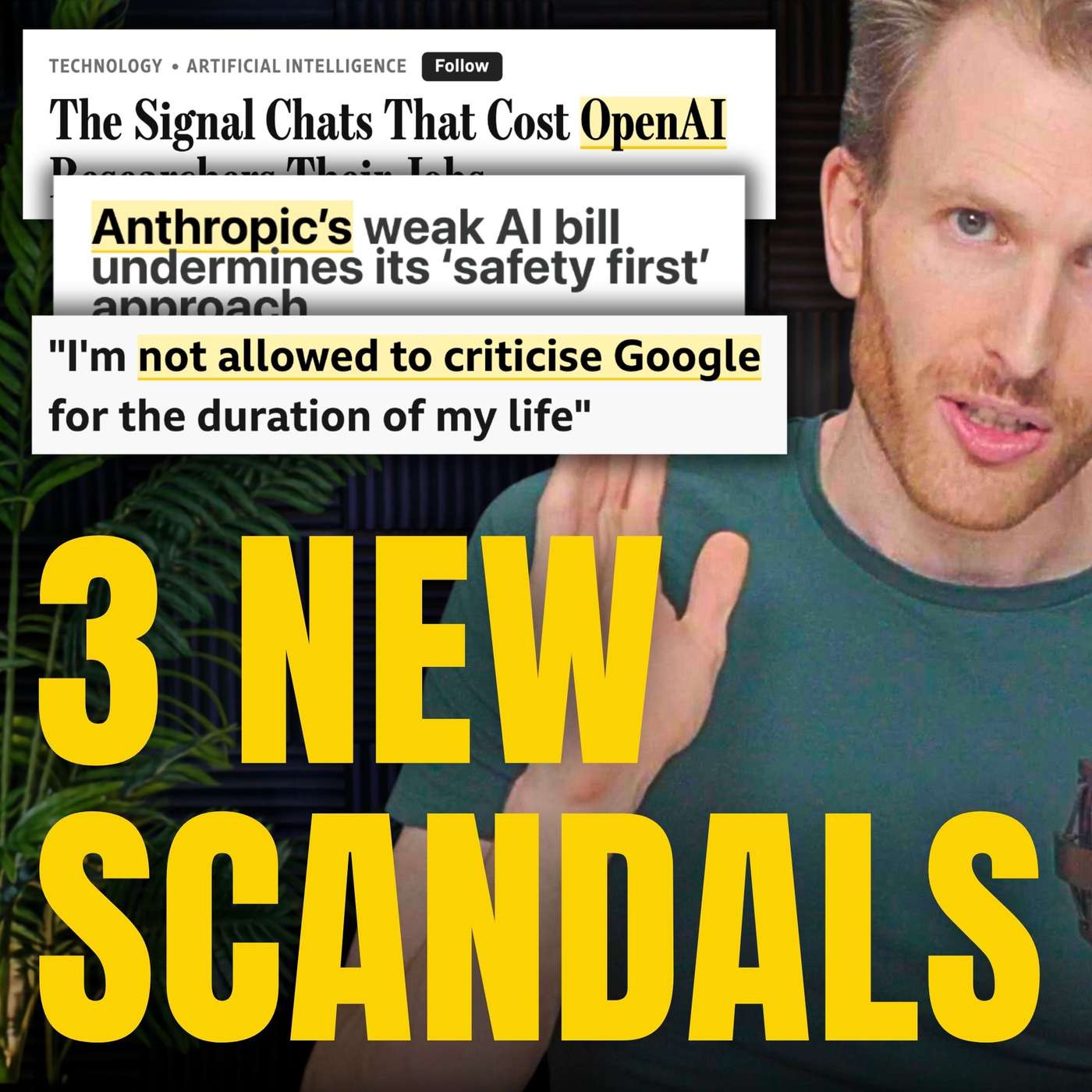
The big 3 AI companies all had serious scandals last month. Anthropic pushed a federal AI bill that would make it harder to stop dangerous model training. OpenAI fired three safety researchers based on evidence that’s somewhere between weak and nonexistent. And it came out that Google DeepMind gets staff to sign contracts barring them from criticising anything Google does for the rest of their lives. But these companies are not beyond influence. The track record of holding them to account — staff objecting internally, journalists digging for dirt, campaigners making a fuss — is impressive for how little effort has gone into it. Many staff want to do the right thing and can be persuaded on the merits. And the fierce competition for talent forces companies to try to seem like the good guys. That’s why being a pain in the ass for the leading AI companies is a legitimate career path, and an underrated one. Inside the companies we need even more staff to speak up clearly and visibly with th
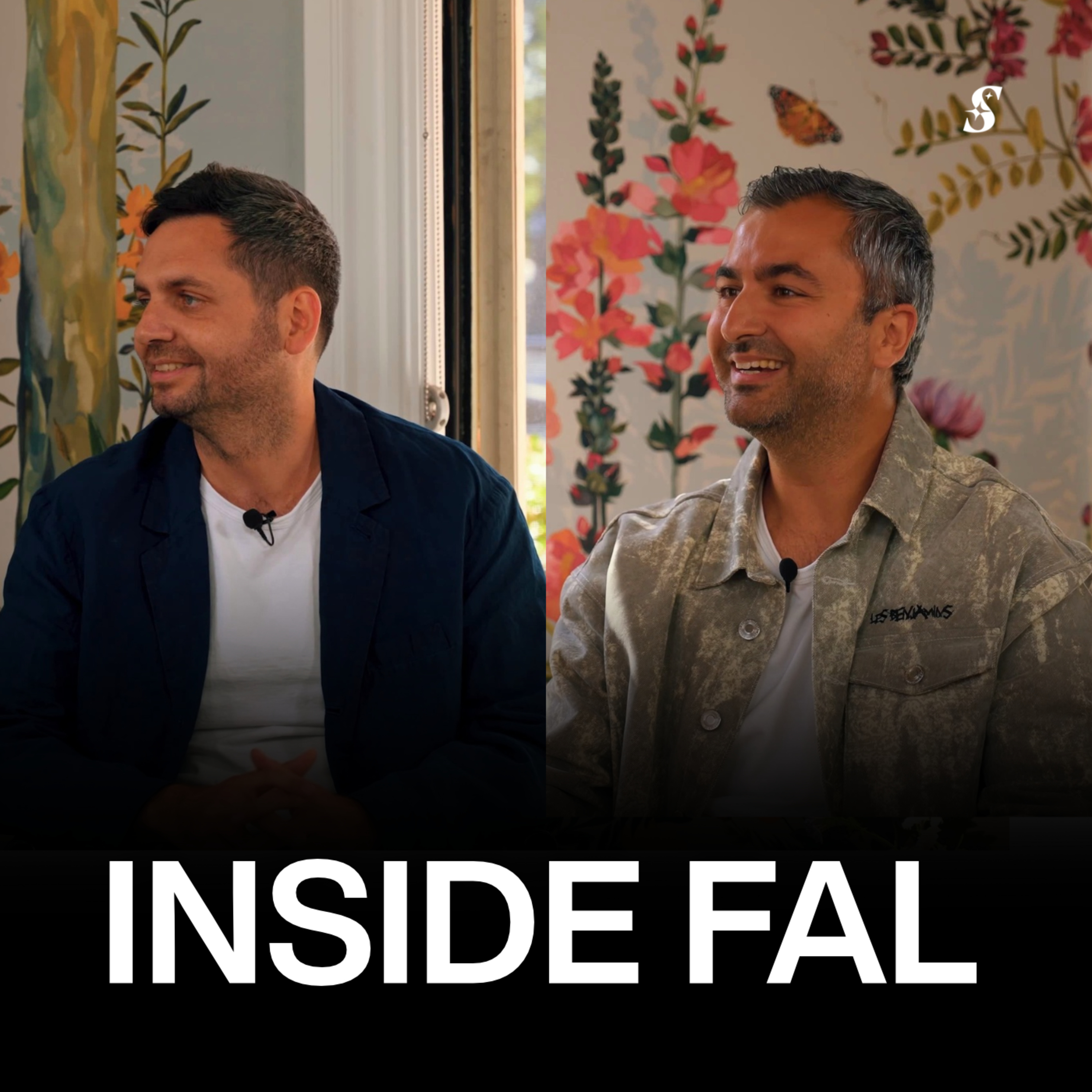
fal has raised $1.65B in a combined Series E and Series F, with Sequoia Capital leading the E and Bessemer Venture Partners leading the F. Its founders see generative media as 1 of only 3 product market fits in AI, alongside search and coding agents. Burkay Gür (Co-Founder and CEO) and Gorkem Yurtseven (Co-Founder and CTO) started fal in 2021 after building machine learning infrastructure at Coinbase and Amazon. fal runs the infrastructure behind image, video, audio, and 3D models, serving developers, studios, and the model labs themselves. Recorded at Dalida in San Francisco, Burkay and Gorkem explain how fal moved from Python data infrastructure into generative media, why video and image now split its revenue 50/50, and how demand kept rising as video prices jumped more than 10X. They also cover fal’s 150+ person org with only 2 reporting levels, the compute shortage shaping model launches, and why they believe the margin in AI sits with compute providers over applications. “AI reall
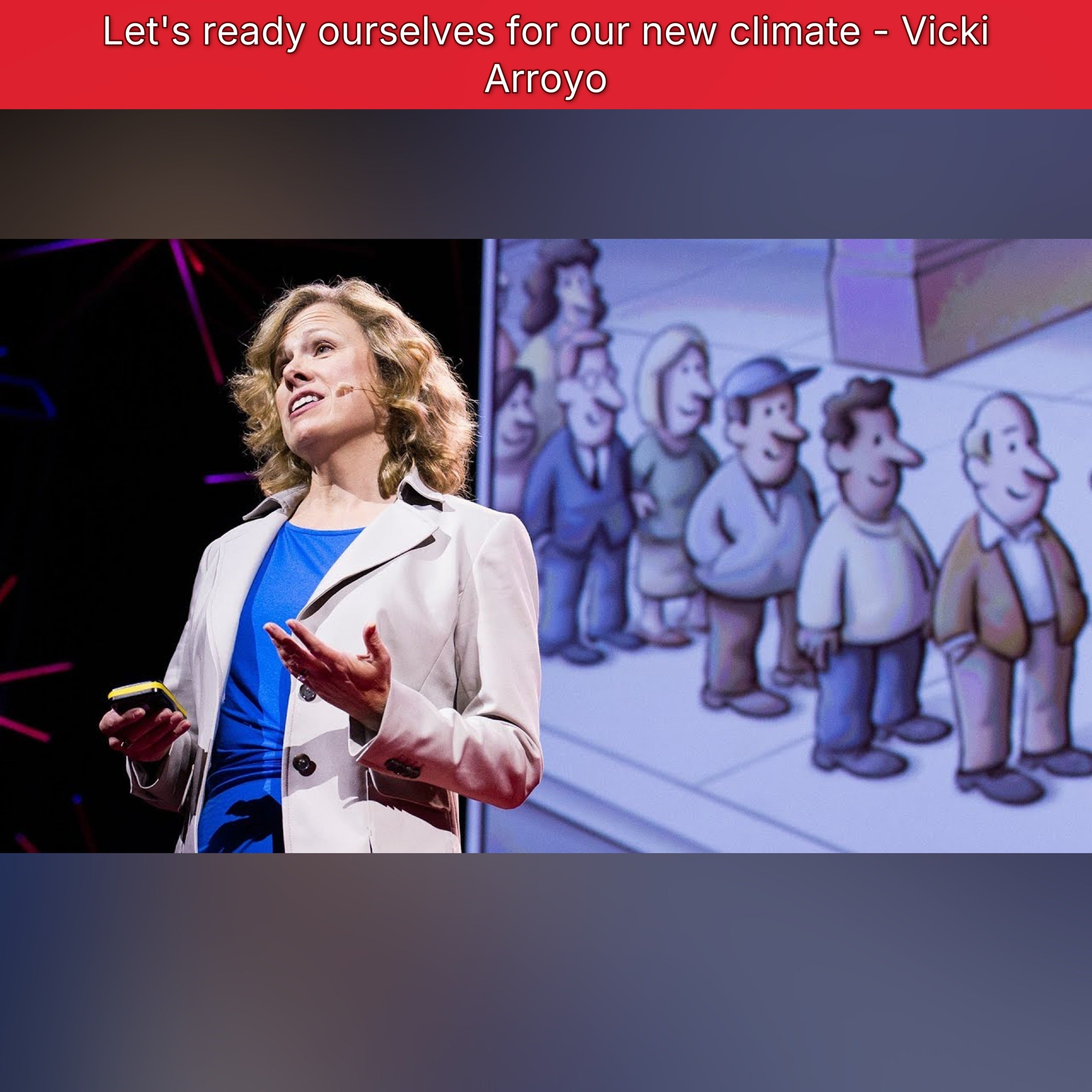
As Vicki Arroyo says, it's time to prepare our homes and cities for our changing climate, with its increased risk of flooding, drought and uncertainty. She illustrates this inspiring talk with bold projects from cities all over the world -- local examples of thinking ahead. Talk by Vicki Arroyo.
Full post: https://natesnewsletter.substack.com/p/zuckerberg-muse-lessons?utm_source=podcast&utm_medium=podcast&utm_campaign=zuckerberg-muse-lessons-launch&utm_content=show-notes (https://natesnewsletter.substack.com/p/zuckerberg-muse-lessons) What can the rest of us learn from Zuckerberg’s next big bet? The common story is that Meta’s resources explain Muse. But the useful lessons are about the people behind the product, the details that make an assistant feel dependable, and the willingness to try again after a very public failure. In this episode, I look at: Finding the right people and giving them room to build. Why the bathroom tells you more than the entrance about care. The status details that make an AI assistant easier to trust. How AI changes the cost of trying without eliminating embarrassment. Hosted on Acast. See acast.com/privacy for more information. Hosted on Acast.
AI News Flash for November 03, 2026 at 18:00 UTC. Topics: 1. Google will turn school AI off by default; blocking it entirely also cuts students off from Search 2. Binance says an internal AI tool was part of the path into its wallet systems 3. Ai2's StateBench tests whether models can track changing state over long documents
In this episode we meet JoeBrett, K5YVY, a popular ham radio YouTuber and author of software to map APRS traffic. This is fascinating dive into APRS and how you can create some very compelling software in today's modern AI driven develoment environment.