11/21/26 – Shiur 584 – Why can’t we concentrate anymore? ADHD, technology or lack of motivation?
83 min
Listen through the publisher, then discuss the episode here or arrange an in-person Roundtable. Your city determines where to meet.
Roundtables are designed for groups of four, with a shared subject and room for everyone to speak. Come for discussion, with no dating expectation.
How can a Rebbi distinguish between ADHD and a student who is bored, unmotivated, or struggling emotionally? Are phones and social media damaging concentration, even among those without ADHD? When should parents or Rebbeim seek a professional evaluation? What are the biggest mistakes parents and rebbeim make when dealing with a child who struggles to concentrate? Host: Ari Wasserman with Rabbi Dr. Zev Wiener, MD – Shul Rav, psychiatrist and maggid shiur – 5:46 with Rabbi Dovid Kaplan – Mashgiach Ruchani, Yeshivas Beis Yisrael and Senior Lecturer, Ohr Somayach – 29:07 with Rabbi Shmuel Reich –ADHD Coach and Rebbe at Yeshivas Ohr Reuven, Suffern, NY – 48:26 Conclusions and Takeaways – 1:16:07
Episode information is provided by the publisher. Listening takes place on the publisher’s service.
#JimRohn, #Motivation, #MotivationalSpeech, #SuccessMindset, What if your entire life could start changing with just a few powerful daily habits? What if success, confidence, discipline, and peace were hiding inside the small things you do every single day? Uploaded 20-05-26 In this powerful 35-minute motivational speech inspired by Jim Rohn’s timeless wisdom, you will discover the 10 life-changing habits that can completely transform your mindset, future, discipline, confidence, success, and personal growth. If you feel stuck, lost, unmotivated, lazy, confused, or tired of watching life pass you by… this speech is for you. This isn’t just motivation. This is a wake-up call. A deep lesson about discipline, consistency, regret, self-belief, mindset, personal responsibility, daily habits, success psychology, emotional growth, and becoming the person you were born to become. You’ll learn why: Small daily habits change everything Discipline matters more than motivation Your future depends
What if your child already loves learning... and you’re just looking for it in the wrong place? This week, I’m exploring one of the questions I get asked more than almost any other: “My child used to be so curious. What happened?” In today’s episode, I challenge one of the biggest myths in modern parenting: that a love of learning looks like a child happily reading, sitting at a desk, completing homework without complaint, and engaging enthusiastically with educational activities. I explain what the research actually tells us and walk you through the psychology of curiosity, the science of intrinsic motivation, why children become obsessed with Minecraft, dinosaurs, trains, or random facts, and why those interests may be far more important than they appear. I also unpack why children seem to have a built‑in radar for anything that feels educational, why homework battles happen so often, and what the evidence really says about homework in the primary years. If you've ever worried that y
We’re about to time travel into the future Sam Altman is building… I interviewed Sam Altman, the CEO of OpenAI, the company behind ChatGPT. They’re trying to build a “superintelligence” that could far exceed humans in almost every field – and they just released their most powerful tool yet, GPT-5. A few years ago, that would’ve sounded like science fiction! Not anymore. In fact, they’re not alone. We’re in the middle of the most high stakes global race any of us have ever seen. Hundreds of billions of dollars and an unbelievable amount of human work… It’s a profound moment. Most people never see a huge technological shift like this in their lives and it’s happening all around us right now. So in this conversation, I’m going to try to time travel into the future with Sam Altman, to see what he’s trying to build… so you and I can really understand what’s coming. Welcome to HUGE* Conversations. Chapters: 0:00 What future are we headed for? 2:06 What can GPT-5 do that GPT-4 can’t? 6:57 Wha
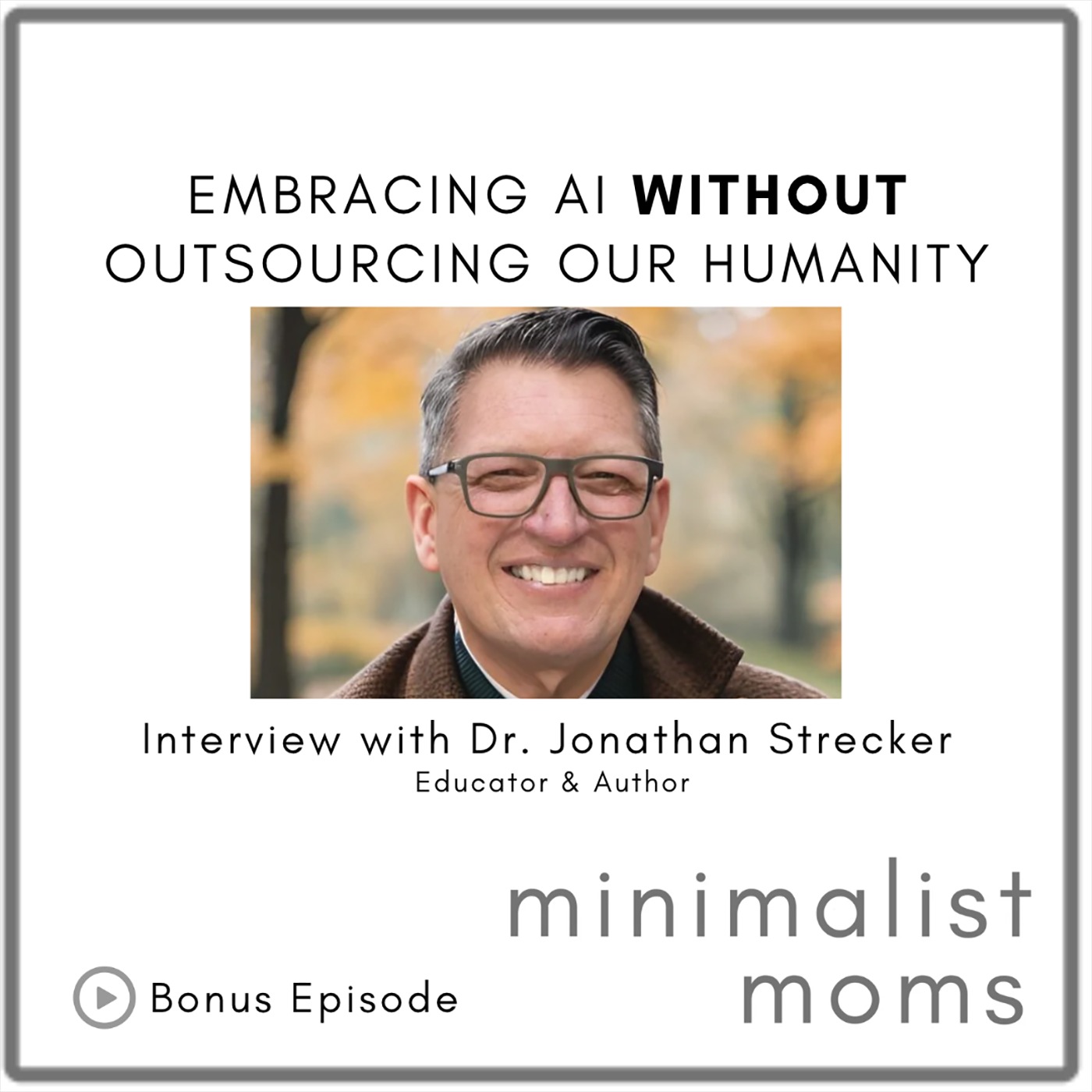
How can we embrace the benefits of AI without outsourcing the very skills that make us human? Today, I'm joined by educator and author Jonathan Strecker to explore the intersection of artificial intelligence, convenience culture, and childhood development. Drawing from his book, Emergence: How Modern Convenience Is Dumbing Down Our Children and What Parents and Schools Can Do About It (https://www.amazon.com/dp/1493094254?asc_item-id=amzn1.ideas.DL4M6AD2Z4ZN&creativeASIN=1493094254&linkCode=ssc&ref_=aip_sf_list_spv_ons_mixed_d_asin&tag=onamzdianebod-20&th=1), Jonathan challenges us to consider what children might be losing in a world increasingly designed to make life easier. We explore the developmental value of boredom, frustration, and struggle, the difference between enhancing our thinking and outsourcing it, and the essential human skills our children need to thrive in an AI-driven future. Rather than taking a fear-based or anti-technology approach, this conversation invites us to
What could a hacker find about you in just 20 minutes? Old passwords? Phone number? Childhood home? Ethical hacker Ryan Montgomery aka 0day reveals how exposed your personal data already is, and the simple moves that protect your online privacy. Ryan Montgomery is an ethical hacker and cybersecurity expert who overcame addiction and jail as a teenager to become a go-to expert helping law enforcement unmask online predators. He is the founder of the cybersecurity company Pentester and works with the Sentinel Foundation on child-crime and counter-trafficking investigations. His tools are built on the same technology he uses to track predators, and they show ordinary people exactly what’s exposed about them online and then remove it. In this episode, he explains: ■ The Reverse Password Trap: One unique old password leaked in a data breach lets hackers trace every other email account you’ve ever tied to it. ■ The Invisible Footprint: Even people who have never used a computer are exposed,
Dig into the science of how microwave ovens use electromagnetic waves to heat your food, and what you should avoid cooking in them. -- In 1945, engineer Percy Spencer was standing near a RADAR device that produced high-intensity microwaves and noticed that his candy bar had melted. He then exposed popcorn kernels to the magnetron device, and sure enough, they popped. Soon after, the first microwave oven became available, using the very same technology. So, how does it work? Aaron Slepkov explores the science of microwave ovens. Lesson by Aaron Slepkov, directed by Yuriy Polyashko, Darvideo Animation Studio. Support Our Non-Profit Mission ---------------------------------------------- Support us on Patreon: http://bit.ly/TEDEdPatreon Check out our merch: http://bit.ly/TEDEDShop ---------------------------------------------- Connect With Us ---------------------------------------------- Sign up for our newsletter: http://bit.ly/TEDEdNewsletter Find us on Twitter: http://bit.ly/TEDEdTwitt
What are the three biggest differences between men and women that contribute to Shalom Bayis problems? What are the most common mistakes husbands and wives make because they don't understand these differences Once they understand these differences, what can husbands and wives do differently to improve their marriage? Host: Ari Wasserman with Rabbi Yitzchok Silver – Posek, Rav at the Mir Yeshiva, autho, and expert on shidduchim and Shalom Bayis – 10:11 with Mrs. Elisheva Liss – Licensed Marriage and Family Therapist, lecturer and author Relationship Skills 101 (https://get-intimate.mykajabi.com/relationships101) – 38:20 with Rabbi Manis Friedman – author, speaker, educator and Shalom Bayis expert – 1:06:30 Conclusions and Takeaways – 1:29:17 מראי מקומות (https://mcdn.podbean.com/mf/web/m68arj8tmdbti6wt/shiur_583_Gender-Differences.pdf)
NO DRIVER. NO MELACHA. NO PROBLEM?! Is the driverless car the ultimate Shabbos loophole — or a blatant חילול שבת? When technology takes the wheel, does Halacha hit the brakes? with Rabbi Rabbi Yisroel Krengel – Tzomet Institue – 21:20 with Rabbi Benjamin Yasgur – Rov, Century Village Boca Raton, Florida – 39:32 מראי מקומות (https://mcdn.podbean.com/mf/web/a8u9dik4gyr8aqnj/shiur_582_self-driving-cars.pdf)
Products should disclose expected service life and repairability before purchase.
Share your view, then see how readers voted. No sign-in required. This poll is shared across stories.
Do you agree or disagree?
Common Quandary
A Common Quandary to discuss
Another conversation to explore, separate from this news story.
Your neighbor saves a public parking spot with an orange cone. Do you move it?
Street parking is scarce after a snowstorm. Your neighbor spent an hour digging out the space in front of their home and now guards it with an orange cone, even though curb spaces legally belong to everyone. You arrive tired and the cone is blocking the only open spot.
Can effort create a personal claim to something public?