110 | Can the IPCC fix how countries count removals? - with Sara Vicca
Listen through the publisher, then discuss the episode here or arrange an in-person Roundtable. Your city determines where to meet.
Roundtables are designed for groups of four, with a shared subject and room for everyone to speak. Come for discussion, with no dating expectation.
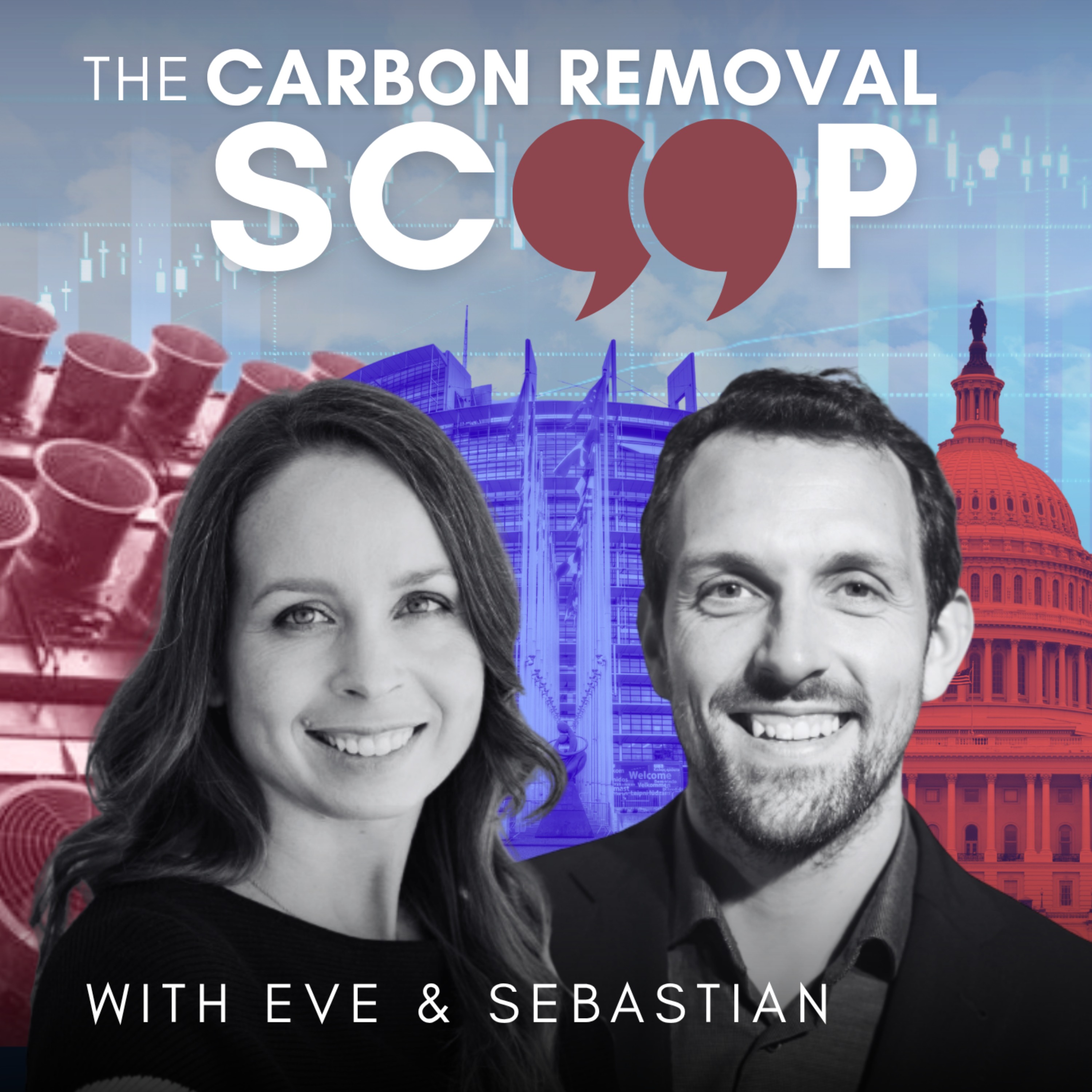
In this episode of The Carbon Removal Scoop, Eve Tamme and Sebastian Manhart sit down with Sara Vicca, Associate Professor at the University of Antwerp and a lead author on the IPCC's forthcoming methodology report on carbon dioxide removal technologies, carbon capture, utilisation and storage for national greenhouse gas inventories. For years, stakeholders have argued that governments cannot properly count novel removals without updated rules from the IPCC. Those rules are now being written, and the first draft has just opened for expert review. Sara explains why guidance inn the 2006 IPCC Guidelines needs an update for direct air capture, direct ocean capture and enhanced weathering, and walks through the road from first draft to approval in late 2027. Because the draft itself is confidential, the conversation stays on the principles rather than the text, and Sara is clear about who the authors most want to hear from before the review window closes. Eve and Sebastian then dig into enhanced weathering, Sara's section of the report. What happens when carbon captured on a farm in one country travels down rivers and out to sea through several others? How should governments learn from voluntary market methodologies that do not even agree on how to characterise rock feedstock? Sara draws a sharp line between carbon crediting and national inventories: inventories compare emissions and removals year by year, so there is no counterfactual baseline and no additionality test, and methods are organised into three tiers, from generic emission factors to detailed measurement and modelling. They close on the gap between the EU's Carbon Removals and Carbon Farming certification framework and what countries actually report, and on how a report this large is coordinated across more than a hundred authors. Tune in to hear why Sara thinks a country could count enhanced weathering without a single carbon credit ever being issued, and why that rings alarm bells for Sebastian. LINKS Sara Vicca: LinkedIn (https://www.linkedin.com/in/sara-vicca-43887799/), University of Antwerp profile (https://www.uantwerpen.be/en/staff/sara-vicca/) and Bluesky (https://bsky.app/profile/saravicca.bsky.social) IPCC: Register to review the First Order Draft (https://www.ipcc.ch/2026/10/30/ipcc-methodology-report-cdrtccus-expert-review/) (review open until 20 December 2026; registration closes 11 December) IPCC: 2027 Methodology Report on Carbon Dioxide Removal Technologies, Carbon Capture, Utilization, and Storage (https://www.ipcc.ch/report/2027-ipcc-methodology-report-on-carbon-dioxide-removal-technologies-carbon-capture-utilization-and-storage-for-national-greenhouse-gas-inventories-additional-guidance/) IPCC: List of Coordinating Lead Authors, Lead Authors and Review Editors (https://www.ipcc-nggip.iges.or.jp/home/docs/2027cdrccus/List-of-CDRCCUS-authors_15-September-2026.pdf) Paul Zakkour: Dispatch from the IPCC lead author meeting in Mexico City: CCUS and carbon removals (https://www.lse.ac.uk/granthaminstitute/news/dispatch-from-the-ipcc-lead-author-meeting-in-mexico-city-ccus-and-carbon-removals/) (LSE Grantham Research Institute) 2006 IPCC Guidelines for National Greenhouse Gas Inventories (https://www.ipcc-nggip.iges.or.jp/public/2006gl/) 2019 Refinement to the 2006 IPCC Guidelines (https://www.ipcc-nggip.iges.or.jp/public/2019rf/index.html) 2013 Supplement to the 2006 IPCC Guidelines: Wetlands (https://www.ipcc-nggip.iges.or.jp/public/wetlands/) Eve Tamme and Paul Zakkour: Will the Carbon Removal Certification Framework count in the race to climate neutrality? (https://evetamme.com/2024/03/25/will-crcf-count-in-climate-neutrality/) Previous Scoop episode: Is Enhanced Rock Weathering Ready for Scale? — with Dirk Paessler and Mel Murphy (https://pod.link/1790305658/episode/NmE3OGM1MDhhYTU1N2U2MmRjZjc3NzEy) Hosted on Acast.
Episode information is provided by the publisher. Listening takes place on the publisher’s service.
Listen at the source ↗