167 - Vented Over-Roofs & Double-Stud Walls: Building Science Tradeoffs
38 min
Listen through the publisher, then discuss the episode here or arrange an in-person Roundtable. Your city determines where to meet.
Roundtables are designed for groups of four, with a shared subject and room for everyone to speak. Come for discussion, with no dating expectation.
Are vented over-roofs and double-stud walls worth the added complexity? Steve, Jake, and Pete debate two high-performance building assemblies where moisture management, thermal performance, cost, and constructability all come into play. First up: vented over-roofs. Adding a ventilation space above the structural roof deck sounds straightforward, but the details get complicated quickly. The crew digs into ventilation gap depth, furring strip configurations, spacer mesh, roofing underlayments, and the challenges of integrating these systems with standing seam metal roofs. They also explore night-sky radiation and how it can affect roof temperatures and moisture behavior. Then the conversation shifts to double-stud wall assemblies and how they compare with exterior continuous insulation systems like Huber ZIP-R and mineral wool XCI. Which approach delivers better performance? How do thermal bridging, moisture management, installation complexity, and cost influence the decision? As usual, the boys have plenty of opinions—and aren't afraid to challenge each other. The takeaway? There isn't one perfect assembly for every project. Climate, trade experience, constructability, budget, and long-term durability all matter when choosing how to build. PETE'S RESOURCES: Steve Baczek – Roof Vent Over (https://www.youtube.com/watch?v=HFVWHbX1Emk) Nocturnal Radiation Cooling Tests (ScienceDirect) (https://pdf.sciencedirectassets.com/277910/1-s2.0-S1876610212X00213/1-s2.0-S1876610212016219/main.pdf) Green Building Advisor – Double-Stud Wall vs. Exterior Insulation (https://www.greenbuildingadvisor.com/article/double-stud-wall-vs-exterior-insulation) Pete's Note: This article requires GBA Prime, but it's an excellent technical comparison of the two approaches. Huber ZIP System R-Sheathing Installation Manual (https://www.huberwood.com/uploads/documents/technical/ZIP-System-R-sheathing-Installation-Manual.pdf) Pete's Note: See pages 12 and 48 for guidance on addressing panel gaps. Huber ZIP System Wall Sheathing (https://www.huberwood.com/zip-system/wall-sheathing) Pete's Note: Huber supports ZIP System tape installation down to 0°F. At those temperatures, proper surface preparation is critical. Surfaces must be clean, dry, and frost-free, with sufficient application pressure to achieve adhesion. Consult Huber's current installation instructions for cold-weather requirements.
Episode information is provided by the publisher. Listening takes place on the publisher’s service.
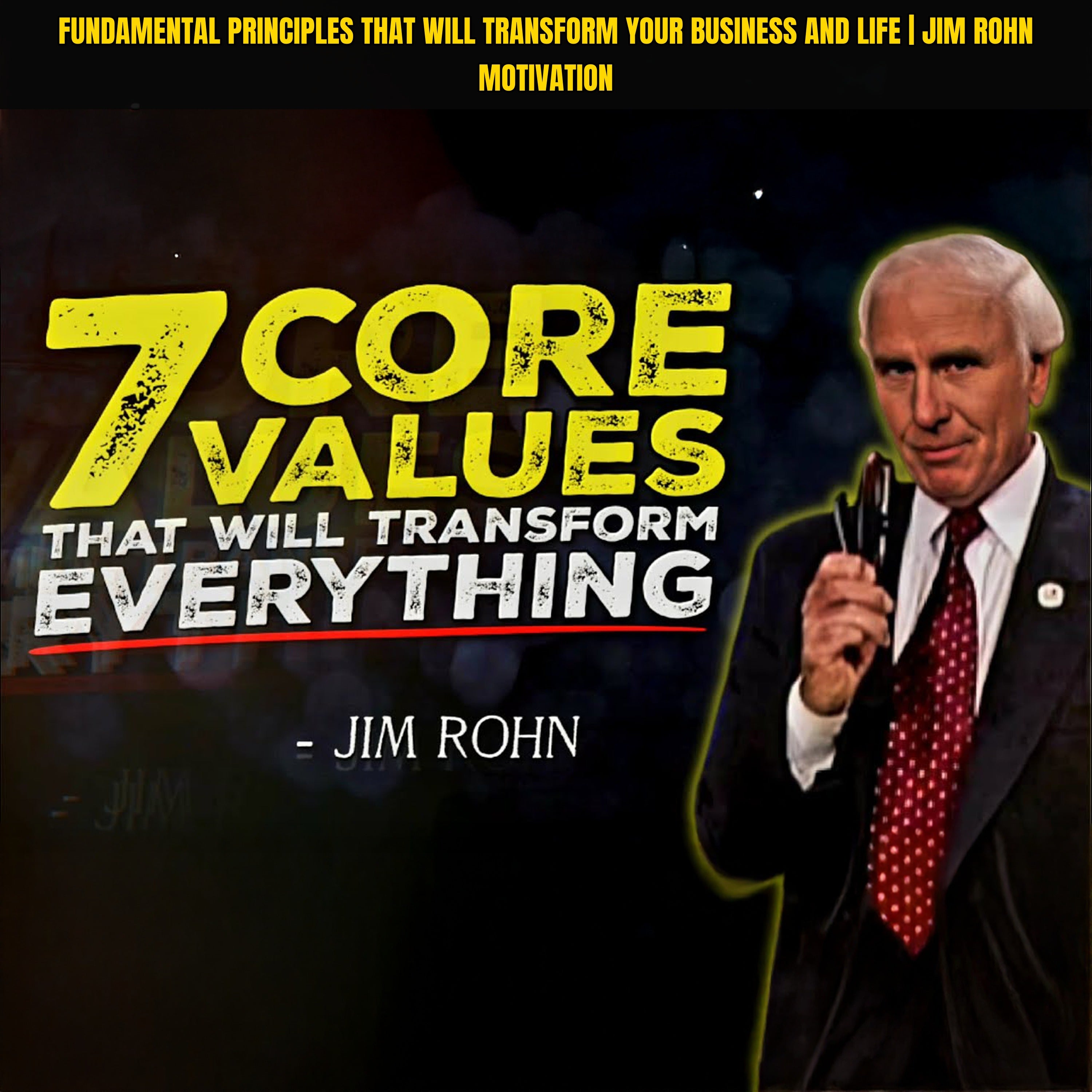
In this Jim Rohn Motivation speech, we dive deep into the 7 Core Values that transform not just leadership—but life. From integrity to courage, this message reminds us that success isn’t just about performance. It’s about principle. When your values lead, your results follow. Key Topics From This Motivational speech: Why integrity is the foundation for trust and influence How responsibility shifts you from blame to power Why discipline is the difference between vision and results How humility unlocks wisdom and real leadership Why adaptability is essential for growth in uncertain times How generosity builds impact, not just income Why courage is required to move before you're ready This Jim Rohn motivational speech isn’t about hype—it’s about the habits and values that hold you up when motivation fades. If your results feel unstable, start with your values. Because when those are clear, your actions have direction, your leadership has depth, and your business has backbone. These values
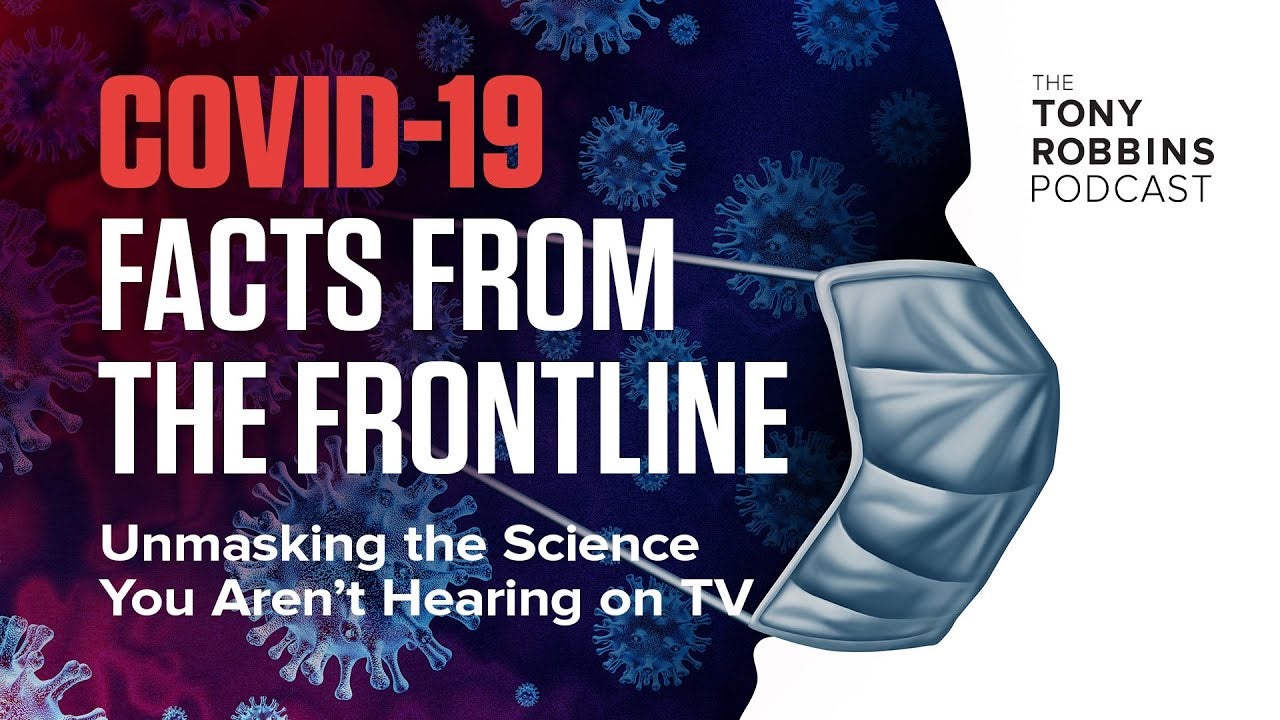
Introducing the “Facts From the Frontlines” episode of #TheTonyRobbinsPodcast – where Tony uncovers the truth about coronavirus with a 7-person panel of highly qualified researchers, an experienced epidemiologist, a Nobel Laureate, and M.D.s testing and treating patients on the frontlines. Together, they reveal the evidence-based research that has come to light in the last two months. Uploaded 23-05-20 This is one of the most important interviews Tony has ever conducted. It reminds us to stand guard at the door of our mind, practice discernment when determining trustworthy sources, and think critically in order to stay flexible and maintain the ability to pivot in light of new information – especially when lives depend on it. To hear the full interview, go here: https://www.tonyrobbins.com/podcasts/covid-19-facts-from-the-frontline/ *COVID-19 Playlist* https://www.youtube.com/watch?v=YgP_Au5RZVw&list=PLYTXvUDQT5pUaoPTzi71UIqilqgBOKkQe (https://www.youtube.com/watch?list=PLYTXvUDQT5pUao
This episode was sponsored by Cardiff & 365 Thermal LightSpeed VT: https://www.lightspeedvt.com/ Dropping Bombs Podcast: https://www.droppingbombs.com/ "When the power grid goes down, the night belongs to whoever can see in it." Today's Dropping Bombs episode delivers a blunt conversation with Wade Bryan, the Marine veteran who built a thermal optics company in a town of 1,100 on $20,000 and a $50,000 overdraft after every manufacturer told him no. Wade explains why a thermal scope turns the dark into an advantage, what a power grid failure could do to your neighborhood, and why the "is night hunting fair?" debate misses the point. If the grid ever goes down, you'll either be glad you heard this one or wish you had. Connect with Wade Instagram (Personal): https://www.instagram.com/wadebryan365 Instagram (Business): https://www.instagram.com/365thermal YouTube: https://www.youtube.com/@365thermal Website: https://365thermal.shop (https://365thermal.shop/) Additional Resources Mentioned
Explore how the Hubble Space Telescope reveals the Universe, from iconic images to major discoveries, and how it complements the James Webb Space Telescope. "ASTROMAN: the Dark Sky Guardian" is a podcast channel that aims to explore popular science in multiple disciplines and research on interdisciplinary approaches, such as sustainability, dark-sky protection, astrophotography, space exploration, astronomy innovation, inclusive science communication, and STEAM Education by integrating science and arts. Exodus Chun-Long Sit, also known as the ASTROMAN, is a transmedia astronomy educator, popular science author, STEAM educator, and science communicator in Hong Kong. He is recently the National Astronomy Education Coordinator (Chair of Hong Kong, China) of the International Astronomical Union and President of Starrix. He was also an International Committee Member of the Dark Sky International, regularly organizing public lectures at the Hong Kong Space Museum and the Hong Kong Science Mu
Uploaded 14-12-17 View full lesson: https://ed.ted.com/lessons/how-your-digestive-system-works-emma-bryce Across the planet, humans eat on average between 1 and 2.7 kilograms of food a day, and every last scrap makes its way through the digestive system. Comprised of ten organs covering nine meters, this is one of the most complicated systems in the body. Emma Bryce explains how the different parts of the digestive system work to transform your food into the nutrients and energy that keep you alive. Lesson by Emma Bryce, animation by Augenblick Studios. Thank you so much to our patrons for your support! Without you this video would not be possible! Narat Suchartsunthorn, Joy Love Om, Gi Nam Lee, Shawn Quichocho, Simone Kidner, Anika Westburg, Dale Dualan, Barun Padhy, John Ess, Brandy Jones, Devin Harris, Tony Trapuzzano, Stephen Michael Alvarez, Tom Lee, Juliana , Jason Weinstein, Hoang Ton, Kris Siverhus, Alexander Walls, Annamaria Szilagyi, Morgan Williams, Abhijit Kiran Valluri, Ma
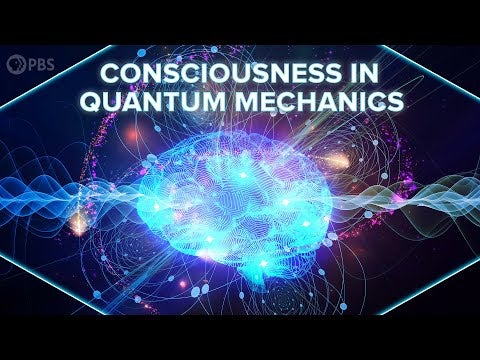
PBS Member Stations rely on viewers like you. To support your local station, go to: http://to.pbs.org/DonateSPACE ↓ More info below ↓ Uploaded 18-02-20 Sign Up on Patreon to get access to the Space Time Discord! Check out the Space Time Merch Store It’s not surprising that the profound weirdness of the quantum world has inspired some outlandish explanations - nor that these have strayed into the realm of what we might call mysticism. One particularly pervasive notion is the idea that consciousness can directly influence quantum systems - and so influence reality. Today we’re going to see where this idea comes from, and whether quantum theory really supports it. Hosted by Matt O'Dowd Written by Matt O'Dowd Graphics by Leonardo Scholzer and Adriano Leal Post Production: Yago Ballarini, Max Willians, Pedro Osinski Directed by: Eric Brown and Andrew Kornhaber Executive Producers: Eric Brown and Andrew Kornhaber End Credits Music by J.R.S. Schattenberg: https://www.youtube.com/channel/UCRl6
“I've been doing it this way for 40 years!” But is that experience enough when nearly everything about homebuilding has changed? In this episode of the UnBuild It Podcast, Jake Bruton, Steve Baczek, and Peter Yost look back at four decades of residential construction to explore how building materials, construction methods, building codes, technology, and industry expectations have evolved—and why doing things the way they've always been done isn't necessarily good enough anymore. From advances in building science and high-performance materials to stricter energy codes, year-round construction, and increasingly specialized trade contractors, the industry looks very different than it did 30 or 40 years ago. The conversation also explores how the internet has transformed access to technical information, how homeowners' expectations have changed, and why builders and architects face a very different set of challenges today. But has all this progress actually made us more productive? Despit
Schools should evaluate new teaching approaches by actual improvements in learning.
Share your view, then see how readers voted. No sign-in required. This poll is shared across stories.
Do you agree or disagree?
Common Quandary
A Common Quandary to discuss
Another conversation to explore, separate from this news story.
A stranger is behaving horribly in public. Do you record them?
You witness a stranger berating a service worker in public. Recording could create accountability and protect the worker, but posting the video could expose everyone involved to a permanent online audience.
Who gets to decide when public behavior becomes public content?