Listen through the publisher, then discuss the episode here or arrange an in-person Roundtable. Your city determines where to meet.
Roundtables are designed for groups of four, with a shared subject and room for everyone to speak. Come for discussion, with no dating expectation.
Setting Boundaries Around Weight Talk In this short Thanksgiving special, I'm speaking to you as both a clinician and a mom, sharing practical ways to navigate uncomfortable or unwelcome food and body conversations without turning Thanksgiving dinner into a family argument. In this episode, you'll learn: How to set expectations with family before holiday gatherings What to say when someone comments on your child's body or food choices Three ways to respond, from gently redirecting to setting firm boundaries How to repair the moment if you didn't speak up Why the way we talk about our own bodies matters, too Our children deserve to enjoy holiday traditions without feeling like their bodies or plates are being evaluated. Happy Thanksgiving! Go have more pie! Any Questions? Connect with Colleen: Instagram (https://www.instagram.com/examroomnutrition/) LinkedIn (https://www.linkedin.com/in/examroomnutrition/)
Episode information is provided by the publisher. Listening takes place on the publisher’s service.
Joan MacDonald was 70, around 200 pounds, and out of breath on the stairs at a family holiday dinner when she mentioned her doctor wanted to increase her blood pressure medication. A decade later, she's 80, lifting heavy, and inspiring millions of women to chase transformations of their own through Train With Joan. In this special maintenance episode, Gina Livy and Odette sit down with Joan and her daughter and coach, Michelle MacDonald, to talk about what keeps a transformation going ten years in. They get into the promise Joan made to herself, how to inspire a loved one to get healthier by changing how you talk about your own habits and why strength training for women in their 70s is possible for anyone. Joan opens up about growing up with food scarcity and how it still shows up at the holiday table, to why leaning into new challenges keeps your world from shrinking as you age. Where to find Joan and Michelle: Website: https://www.trainwithjoanandmichelle.com/ Joan's Instagram: https
Prepare for Thanksgiving—or any day—with Scott as he applies all the core principles of the podcast to this potentially anxiety-producing holiday. He discusses tried-and-true concepts like being bold with insulin, bumping and nudging, using increased temp basals and extended boluses to provide a "blanket" of insulin to help make the grazing and unusual mix of food associated with the day easier. Episode first aired on November 21, 2017 as episode 139. Eversense CGM (https://bit.ly/evercgm) MiniMed (https://bit.ly/jbpmini) Tandem Mobi (https://bit.ly/4hyIrTn) ** Dexcom G7 (http://bit.ly/DexAd) Touched By Type 1 (http://bit.ly/TByType1) Take the T1DExchange (https://bit.ly/t1dexjbp) survey Thank you! *The Pod has an IP28 rating for up to 25 feet for 60 minutes. The Omnipod 5 Controller is not waterproof. RX ONLY. Safety info: tandemdiabetes.com/safetyinfo
What if your health, mind, body, and spirit was truly your responsibility to lead? In this deeply personal conversation, Sage Robbins shares her 20-year journey back to herself: through loss and longing, through the humbling road to motherhood, and through a health wake-up call that changed everything. Along the way, she came to embrace something Tony often says that we are meant to be the CEO of our own life and our own health. Uploaded 27-09-26 Watch more videos like this How to Raise a Secure Child Without Controlling Them: https://youtu.be/VdjnK8NhXKM STOP Self Sabotage by Shifting These 3 Simple Habits : https://youtu.be/-0Ln4-h4LQQ How to Find Peace in Difficult Times | Byron Katie and Sage Robbins: https://youtu.be/vYD5IiO91b0 These Questions Transformed Our Marriage with Tony and Sage Robbins: https://youtu.be/eeuianOXbrg Join my weekly newsletter 'The Mirror' to receive these exclusive videos each week: https://www.sagerobbins.com (https://www.sagerobbins.com/) Follow Sage Rob
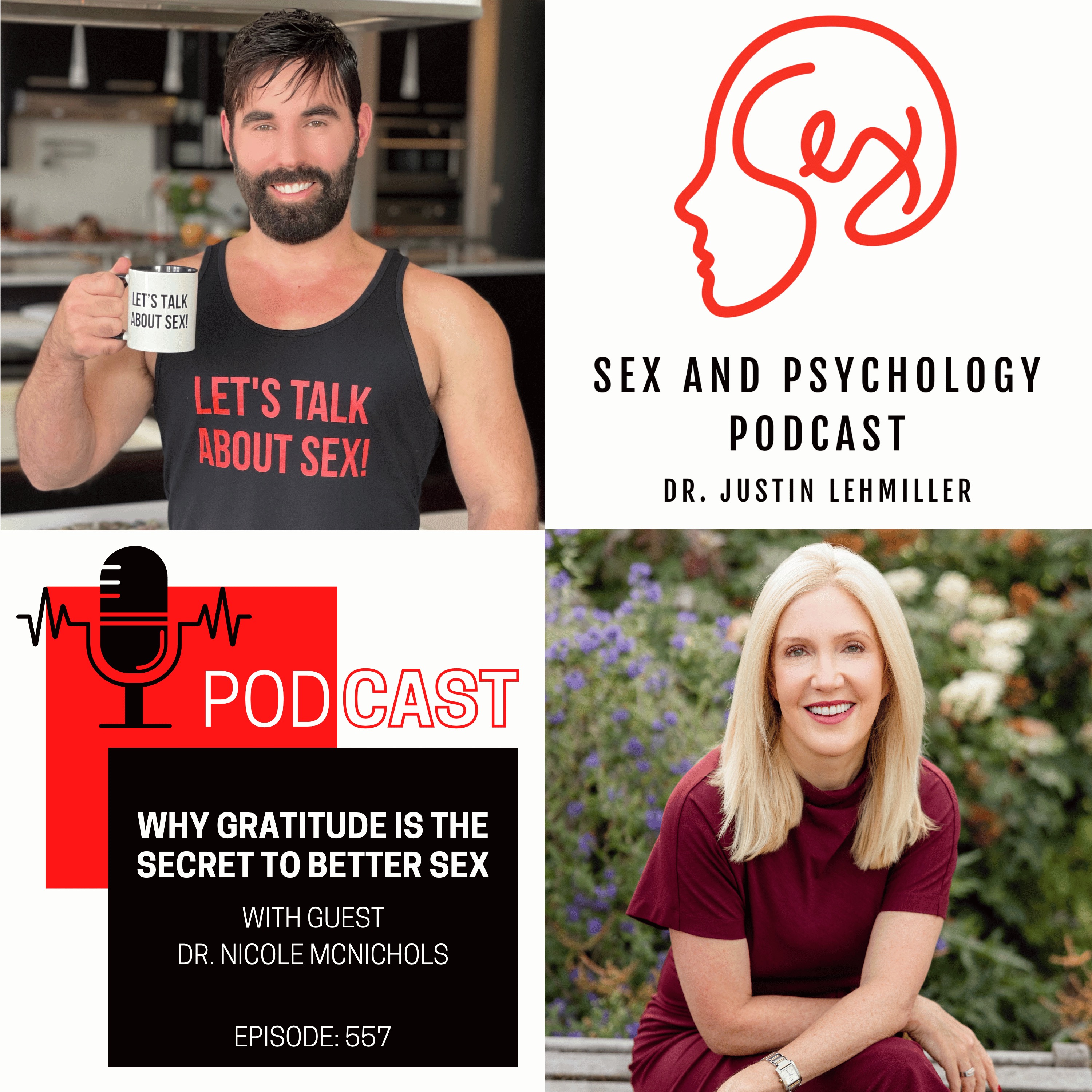
Thanksgiving is a time to reflect on the things we're grateful for, but when was the last time you stopped to appreciate your sex life? In this episode, we're exploring the surprising connection between gratitude and sexual desire. We'll discuss how feeling appreciated can strengthen intimacy, why gratitude can motivate us to be more attentive to our partners' needs, and simple ways to bring more appreciation into our sex lives without turning it into another obligation. I am joined once again by Dr. Nicole McNichols (https://nicolethesexprofessor.com/about-nicole/), an Associate Teaching Professor in the Department of Psychology at the University of Washington. Nicole's course, "The Diversity of Human Sexuality," is the largest and most popular course in the university's history with four thousand enrolled students each year. Nicole is author of the book You Could Be Having Better Sex. (https://link.amazon/B0iYWx0Q4) Some of the specific topics we cover include: What does it mean to p
"As you both recovered now, do you still experience doubt when anxiety shows up? Or do you just think, oh, it's a wave, and it'll be over soon?" A listener sent in this question, and a lot of people carry it around during recovery. Drew and Josh answer from their own experience: yes, the doubt still shows up sometimes. What changed is what they do next and how much it costs them. We cover why there is no delete button for old anxious pathways, why a trigger can still produce a flash of fear with a "what was that?" attached, and what that moment looks like now: dropping the shopping bags, then picking them back up instead of staring at them for two hours. Josh describes a sauna session where his heart rate stayed high, and Drew a tired evening on the sofa. Both lasted minutes. We also look at the "how will I know I'm recovered?" question and why asking it repeatedly is often more certainty-seeking. Instead, we talk about measuring functional impact: how long it took, how much of your da
This wasn't in the book... Andy is one of the most popular science fiction writers alive today. He also wrote The Martian. What’s special about his work is how real his fake stories are. He showed me the secret spreadsheets he uses to calculate the science in his writing (including my favorite, “wrong math”). The reason that matters is that fiction can help you see the real world more clearly. Sci-fi is “huge if true”! This show is about real science and tech, but we’ve done a little sci fi to explain complex things. So I wanted to learn from Andy. In this conversation, we go deep inside Andy’s fictional worlds to see how exactly he makes them so real… And we play out a BRAND NEW sci fi story together in real time… Welcome to HUGE* Conversations. Chapters 00:00 Who is Andy Weir? 03:10: The world’s largest meteorite 06:04 Andy Weir’s secret spreadsheets 10:04 How Rocky became Rocky 13:02 Where Rocky’s story really began 15:07 What didn’t make it into the book for Project Hail Mary 17:22
Butter alternatives and plant-based spreads still carry a lot of baggage from the 1990s, but the products on shelves today have changed. In this episode, I’m joined by registered dietitian nutritionist Mandy Enright to take a fresh look at modern plant-based spreads and where they fit in nutrition discussions today. This episode is sponsored by Flora Food Group, maker of brands including I Can’t Believe It’s Not Butter!® and Country Crock®. In this episode, we cover: Spreads health benefits and science support Saturated fat and dietary guidance Spreads as a practical tool for patient care How to position spreads to your patients Resources: Learn more at the I Can’t Believe It’s Not Butter! Wellness Hub at icantbelieveitsnotbutter.com (http://icantbelieveitsnotbutter.com/) for recipes, smart swaps, and additional nutrition resources. Holiday Recipes (https://www.icantbelieveitsnotbutter.com/en/recipes/holiday-favorites) American Heart Association Life's Essential 8 (https://www.heart.or
IBS Symptom Relief Without Lifelong Food Restriction The low FODMAP diet can be an effective tool for managing IBS symptoms, but what happens when a temporary dietary intervention turns into years of food avoidance? In this episode, I'm joined by Samina Qureshi a dietitian specializing in digestive disorders and disordered eating. In This Episode, You'll Learn: What to ask when patients say "everything I eat bothers my stomach" Who is a good candidate for a low FODMAP diet, and when a history of disordered eating, malnutrition, or significant food restriction should make you reconsider. What are FODMAPs and how the three phases of a low FODMAP diet work The warning signs that symptom management has become food fear Why adding more fiber can sometimes worsen IBS symptoms What to know about probiotics, digestive enzymes, peppermint oil, and IgG food sensitivity testing Resources Mentioned Monash University: FODMAPs and IBS (https://www.monashfodmap.com/about-fodmap-and-ibs/) Monash Unive
Infant Feeding: Gagging, Choking, and First Foods Starting solids can feel surprisingly complicated for parents, especially when the advice they receive from healthcare providers, social media, and well-meaning family members doesn't always agree. Purées or baby-led weaning? Four months or six? And is food before one really just for fun? In this episode, I'm joined by Kinzie Matzeller, a registered dietitian and PhD candidate at Colorado State University who researches infant feeding, nutrition, and growth. What We Talk About: What developmental signs to look for when determining whether a baby is ready for solids, and why age alone doesn't tell the whole story Whether baby-led weaning actually offers advantages over purées How to explain the difference between gagging and choking Why “food before one is just for fun” overlooks important nutritional needs Kinzie's approach to introducing common food allergens and how to help parents navigate conflicting recommendations How much food ba
Universities should protect controversial speech unless it directly threatens or harasses others.
Share your view, then see how readers voted. No sign-in required. This poll is shared across stories.
Do you agree or disagree?
Common Quandary
A Common Quandary to discuss
Another conversation to explore, separate from this news story.
A coworker tells you their salary in confidence—and proves everyone else is underpaid. Do you share it?
A coworker privately tells you their salary and asks you not to repeat it. You later realize the figure is strong evidence that several equally experienced colleagues are being underpaid.
When does fairness outweigh a promise of confidentiality?