Sign Up on Patreon to get access to the Space Time Discord! Uploaded 15-09-21 We’ve traveled to lots of weird places on this show - from the interiors of black holes to the time before the big bang. But today I want to take you on a journey to what has got to be the weirdest place in the modern universe - a place where matter exists in states I bet you’ve never heard of. Today we take a journey to the center of the neutron star. Check out the Space Time Merch Store Sign up for the mailing list to get episode notifications and hear special announcements! Hosted by Matt O'Dowd Written by Matt O'Dowd Graphics by Leonardo Scholzer, Yago Ballarini, Pedro Osinski, Adriano Leal and Stephanie Faria GFX Visualizations: Ajay Manuel Directed by Andrew Kornhaber Assistant Producer: Setare Gholipour Executive Producers: Eric Brown and Andrew Kornhaber End Credits Music by J.R.S. Schattenberg: https://www.youtube.com/user/MultiDroideka Special thanks to Our Patreon Sponsors Big Bang Sponsors David N
Wild turkey has a reputation for drying out—and both recipes in this episode are built to beat that. Chef Gavin Jobe of Meribo Restaurant (https://www.meribopizza.com/) stuffs a butterfly-cut breast with a buttery rice-and-pecan roulade and finishes it sous vide. Meanwhile, up in West Virginia, Chris Ellis of Timney Triggers (https://timneytriggers.com/) and Jack Ellis spatchcock a fall bird brined in pickle juice and finish it with homemade turkey neck bone gravy. Together, they crack the code on one of hunting’s toughest table fare challenges. This Gun Talk Hunt is brought to you by Smith & Wesson (https://www.smith-wesson.com/), ZEISS (https://www.zeiss.com/corporate/us/home.html), Shooting Sports Life (https://www.shootingsportslife.com/), Savage Arms (https://savagearms.com/), and Range Ready Studios (https://rangereadystudios.com/). About Gun Talk Hunt Gun Talk Media's Gun Talk Hunt (http://guntalk.com/gun-talk-hunt), with Kevin “KJ” Jarnagin, pairs decades of experience with tod
Happy Pot Luck Saturday! We talk Cary Grant, David Niven, Loretta Young, an angel with questionable intentions, and a Christmas movie that takes four nights to finish. We cover the 1947 classic The Bishop’s Wife and try to figure out how a film with five Oscar nominations earns only one and a half candy canes. We talk Cary Grant’s charm, David Niven’s stiff bishop, a wealthy widow who just wants to build a cathedral, and an angel who seems more interested in the bishop’s wife than saving Christmas. We talk Hollywood casting mistakes, Billy Wilder’s rewrites, and on-set tensions. We talk endless ice skating, glowing cathedrals, magically refilling bottles, self-decorating Christmas trees, and familiar faces from It’s a Wonderful Life. We talk Siskel and Ebert, critics who loved the wrong movies, and Kev rewriting the entire story into something we might actually want to watch. Plus, Whitney Houston and Denzel Washington in The Preacher’s Wife, Alastair Sim versus George C. Scott as Scro
You’re 15 yards away, in the rough. How close do you need to chip it to break even on strokes gained? Mark and Greg guess for a scratch player, a 10 index and a 20 index, and the real numbers might change how you think about your short game. Timestamps 00:00 Mark’s favorite film line: “We’ve accidentally come on holiday” 01:05 This week’s question: breaking even on strokes gained from 15 yards in the rough 03:04 Mark and Greg make their guesses 04:45 The answers revealed 07:38 Lou’s practice idea for chipping from 15 yards 08:51 Why these distances are hard to picture, and Greg on real rough in pro-ams 10:25 Mark on amateurs using one chip for every lie, and how tour pros read a lie 11:56 Who wins this week? Data is sourced from Arccos Golf. They have over 1 BILLION shots in their database. Check them out at: https://www.arccosgolf.com/
AI is here. Now what? Everyone’s talking about artificial intelligence and machine learning. There are lots of names thrown around - OpenAI’s ChatGPT and DALLE-2, Google’s Bard, Meta’s LLaMa 2, Midjourney, AlphaFold… Right now, we’re in this weird moment where lots of smart people agree we’re on the cusp of a truly world-changing technology. But some seem to be saying it's going to lead to human extinction while others are saying it’s “more profound than fire.” But it all feels so VAGUE. I want to know: How specifically would AI kill me? Or totally transform my life for the better? In this video, that’s what I’m going to try to learn. We dive into what the most extreme bad and good AI futures actually look like, so that you and I can get ready. And more importantly, so we can make sure that we get our real future RIGHT. Chapters: 00:00 Why is AI so confusing? 1:13 What is AI? 2:37 Why is everyone talking about AI now? 5:12 Why is AI dangerous? 6:22 How would AI kill me? 8:08 Should we
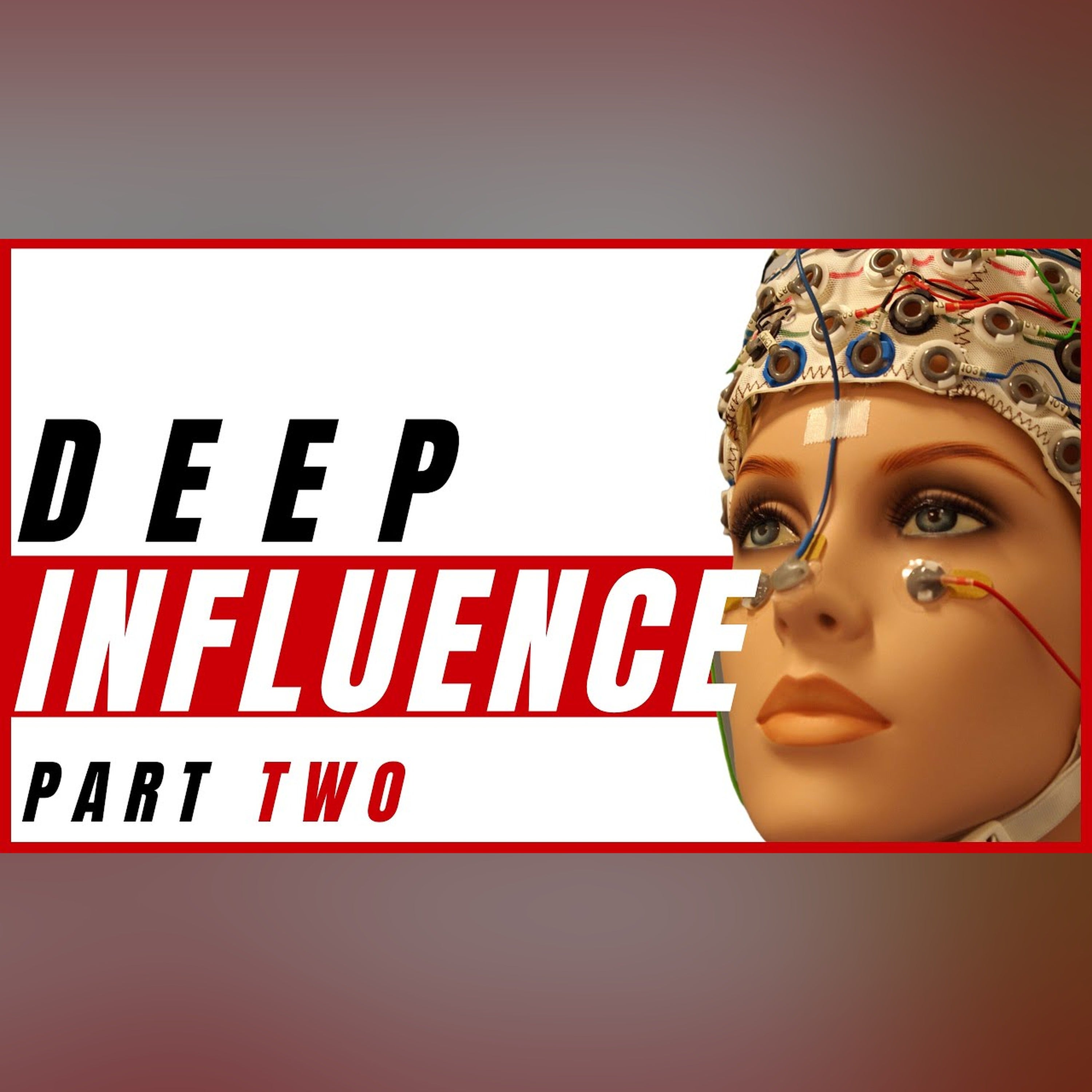
Join NCI University today to master human behavior and influence: Uploaded 06-03-23 In PART TWO, we're uncovering what our ancestors left in our DNA, and why it opens us up to loopholes in our mind - WHICH CAN BE OPENED ANYTIME Fascinating new research into the genetic influences of persuasion and influence has uncovered a powerful truth: we are more susceptible to manipulation than ever before. Join me as I dive deep into this discovery and decode the secrets of our ancestors in order to gain a better understanding of how we can guard ourselves against unwanted manipulation. Uncover the hereditary power of persuasion and regain control over your personal autonomy! Influence, Persuasion, Psychology, Behavior, Behavior Panel, Chase Hughes, David Snyder, Mark Bowden, Scott Rouse, Dr. Phil, Hypnosis, Mind Control, Brainwashing, Behaviour
Tax increases should include clear measures for judging whether the promised benefits occur.
Share your view, then see how readers voted. No sign-in required. This poll is shared across stories.
Do you agree or disagree?
Common Quandary
A Common Quandary to discuss
Another conversation to explore, separate from this news story.
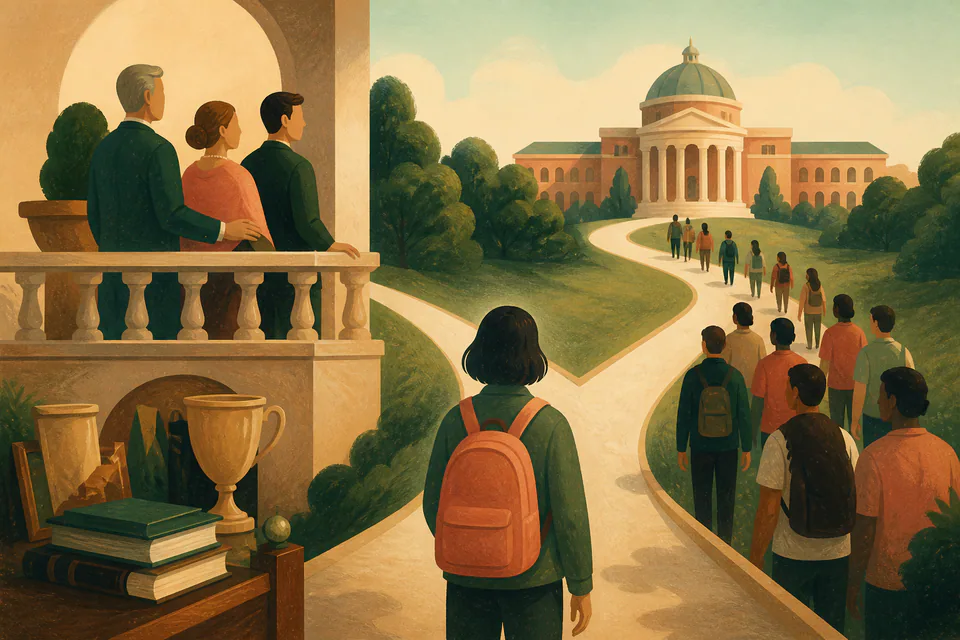
Your family connection could get your child into their dream school. Do you use it?
A university argues that considering family ties builds loyalty and encourages donations that fund scholarships. Critics say the preference preserves inherited advantage and takes places from stronger applicants.
Can benefits to the whole institution justify an unequal admissions advantage?