Listen through the publisher, then discuss the episode here or arrange an in-person Roundtable. Your city determines where to meet.
Roundtables are designed for groups of four, with a shared subject and room for everyone to speak. Come for discussion, with no dating expectation.
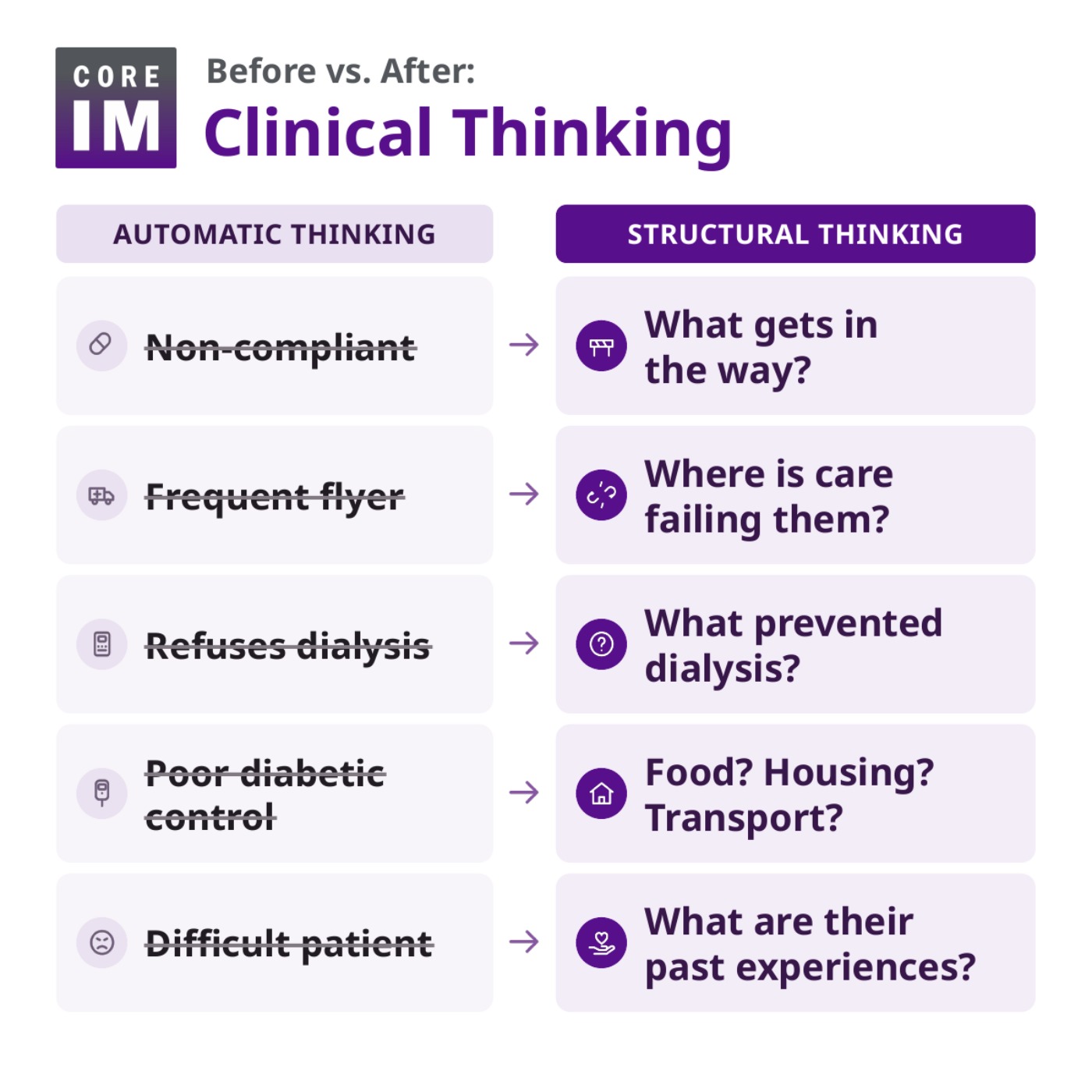
“Frequent flyer.” “Noncompliant.” “Refusing care.” We’ve all heard these terms thrown around on rounds. How do they change what we ask when we walk into the room? One patient missed dialysis because her building’s elevator broke. Another kept coming back to the ED with uncontrolled asthma despite multiple inhalers. In this Core IM episode on the social determinants of health, we talk through what to ask at the bedside, who to call when housing or transportation gets in the way, and how to start a conversation when a patient tells you they felt mistreated. One question to take back to rounds comes from Dr. Richard Greene, who learned it from a resident. “What else do I need to know about you to take care of you?” Transcript and Show Notes (https://www.coreimpodcast.com/2026/11/18/frequent-flyer-cases-what-are-we-missing/) 00:00 A dialysis conversation that started with listening 03:36 Uncontrolled asthma and environmental exposures 05:54 Redlining, housing, and health 12:17 What clinicians can ask and do 15:01 Missed dialysis and a broken elevator 18:19 When rides to dialysis fall through Tags: IMCore, Internal Medicine, Medical Education, Social Determinants of Health, Patient Advocacy, Healthcare Access, Public Health, Primary Care, Medical Humanities Find the best disability insurance for you: https://www.patternlife.com/disability-insurance?campid=497840 Our Sponsors: * Check out Eko: https://ekohealth.com * Check out ElevenReader and use my code PODCAST for a great deal: https://elevenreader.io * Check out FIGS and use my code FIGSRX for a great deal: https://wearfigs.com Privacy & Opt-Out: https://redcircle.com/privacy
Episode information is provided by the publisher. Listening takes place on the publisher’s service.
Today, Mel is doing something she's never done before on The Mel Robbins Podcast. She's bringing members of her team into the studio for live coaching with world-renowned communications expert Vinh Giang. Vinh is known for teaching millions of people online how to stop sounding insecure, speak more clearly, and get people to listen when you talk. And when you hear him coaching today, it will be like he’s coaching you. One person freezes when they're put on the spot. Another can't stop interrupting people. Someone else has great ideas but stays quiet because they're afraid of being judged. Does any of that sound familiar? And Vinh isn't just giving advice. He's coaching real people through practical exercises, right there in the studio, so you can hear the difference and start making those same changes in your own life. As Mel says, put yourself in their shoes. As Vinh works with each person, you'll recognize things you struggle with, too. You'll learn: -What to do when your mind goes b
A kiss can be wonderful. It can create an instant connection, spark romance, or make you feel closer to someone. But a kiss can also have the opposite effect — and sometimes ruin everything. So what makes kissing so powerful, and why can one kiss make such a difference? There's some fascinating science behind it. https://www.scientificamerican.com/article/why-we-kiss/ We spend an enormous amount of time worrying about what's going to change. What's next? What's coming? How do we prepare? But what if we're paying attention to the wrong things? Some of the most important forces shaping our lives never change, and understanding them may be far more valuable than trying to predict the future — something humans are notoriously bad at. Morgan Housel, partner at The Collaborative Fund and author of Same as Ever: A Guide to What Never Changes (https://amzn.to/3SwWn6u) (https://amzn.to/3SwWn6u)), joins me to explain why the things that stay the same may be the most important things to understan
Giouli thought alcohol was the one thing that let her stop being perfect. Hear how a 30-day break she expected to end in January led her to write the first quit lit book in Greece and help change how her country talks about drinking. What happens when a question you ask yourself one January refuses to go away? For Giouli, alcohol started as freedom from perfectionism at university. It followed her through a demanding events career and into motherhood, when wine came home every night and blackouts began to scare her. Rules and moderation only left her feeling guilty. Then, holding a glass of red wine on her balcony, she asked herself who she was without it. That question led her to write two books, become a coach, and help shift the drinking culture in Greece. Why alcohol felt like freedom from perfectionism, not a way to numb The common belief about drinking at home that kept her from questioning alcohol What moderation rules did to her guilt and her sense of control The balcony moment
Master the skills that change lives — enroll in your free human behavior course today: https://nci.university/learn Uploaded 10-04-26 The Cheat Code for Controlling Conflict Every argument, meltdown, or power struggle follows a pattern. Most people miss it—and that’s why they lose control in the moment. This video breaks down the exact psychological system behind conflict escalation, including why people suddenly become defensive, aggressive, manipulative, or unpredictable. Once you see it, you’ll recognize the moment before things spiral—and you’ll know how to respond without escalating, backing down, or losing your frame. This isn’t about winning arguments. It’s about understanding what actually triggers human behavior under pressure. Inside this breakdown: • Why people suddenly “flip” in conversations • The hidden triggers behind anger, defensiveness, and power plays • How ego threat drives conflict escalation • Why logic fails when emotions take over • How to read the exact moment
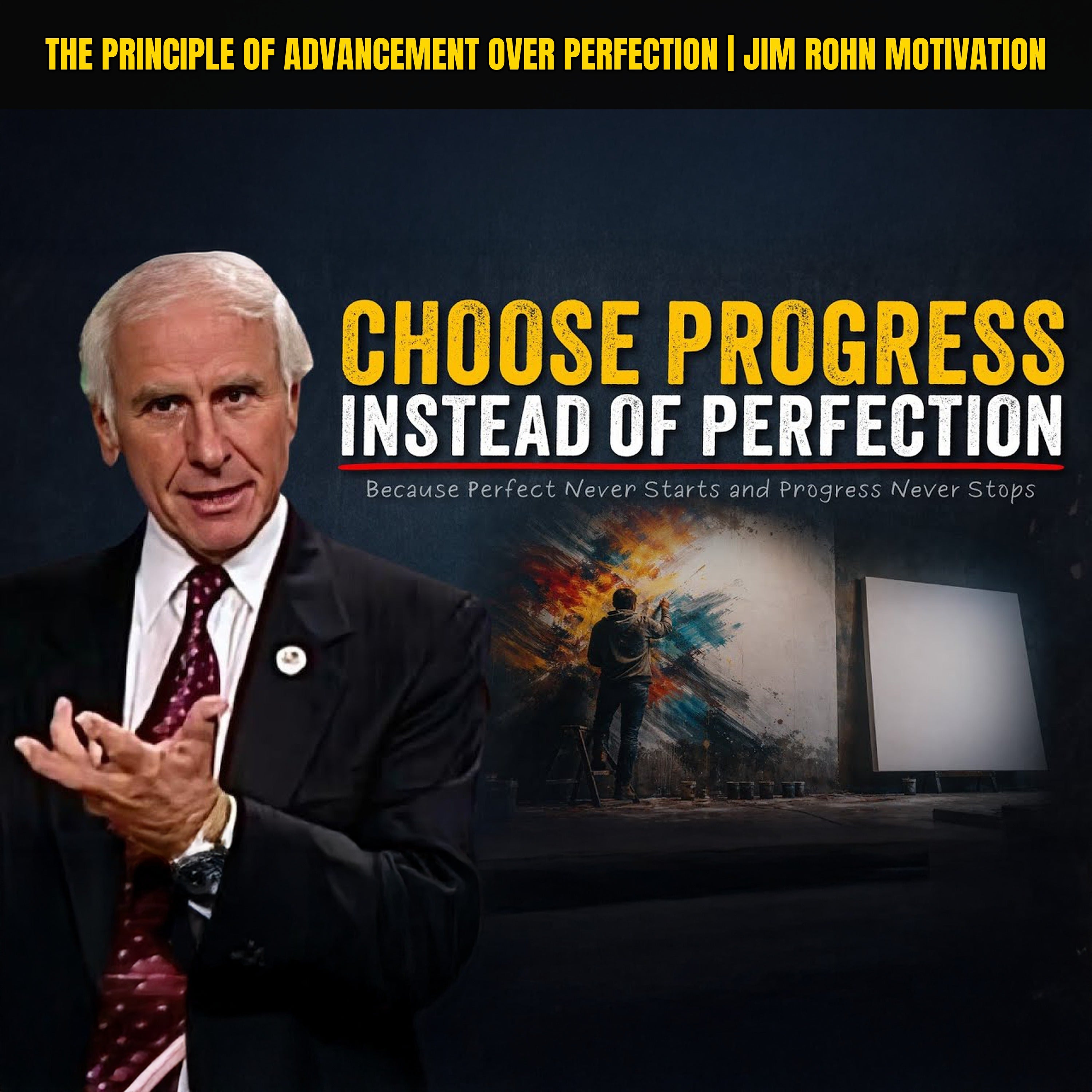
In this Jim Rohn Motivation video, you’ll discover how the pursuit of perfection can be the greatest trap of all. Jim reveals why action—not readiness—is the real key to success, and how progress is the true measure of growth, not flawless beginnings. Key Topics From This Motivational Video: The danger of perfectionism as procrastination Why certainty is a luxury you can’t wait for How action creates clarity, not the other way around The power of feedback in personal growth Confidence as a byproduct of steady progress This powerful Jim Rohn motivational video explores the illusion of perfection and why waiting for the “perfect moment” often leads to missed opportunities. Jim explains how progress is made through action, how feedback accelerates your growth, and why you don't need to be flawless to move forward. It's an inspiring message that urges you to take that first imperfect step—because the world rewards those who act, not those who wait. This Jim Rohn Motivational Video Is Perfe
Explore what makes polio so dangerous, what is causing the 21st century resurgence of cases, and how we can eradicate the disease. -- In 1952, polio was everywhere: killing or paralyzing roughly half a million people annually. Yet just 10 years later, paralytic polio cases in the US dropped by 96% and we were on track to get rid of polio for good. But in recent years, the virus started striking back. So, what’s behind these recent spikes? Explore the dangers of poliovirus and the possibility of eradicating this deadly disease. Directed by Anton Bogaty. This video made possible in collaboration with Gates Ventures Learn more about how TED-Ed partnerships work: https://bit.ly/TEDEdPartner A special thanks to Ananda Bandyopadhyay, Amber Zeddies, and Kathleen O'Reilly who provided information and insights for the development of this video. Support Our Non-Profit Mission ---------------------------------------------- Support us on Patreon: http://bit.ly/TEDEdPatreon Check out our merch: htt
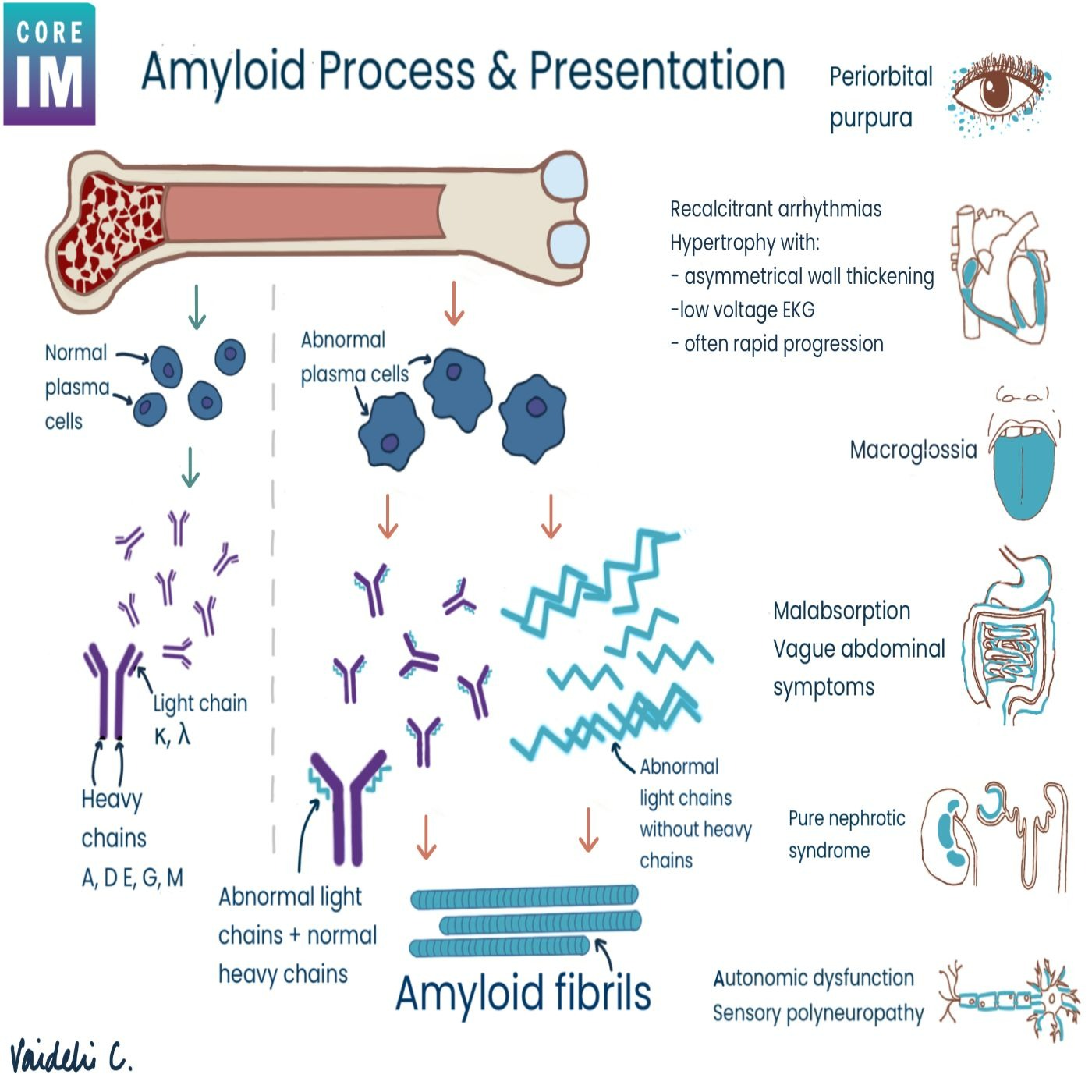
“Could amyloidosis be the reason behind a patient’s unexplained symptoms?” This episode explores the clinical clues that should prompt clinicians to consider AL amyloidosis and recognize patterns of organ involvement that may otherwise be easy to overlook. Learn how to connect the findings, spot important red flags, and bring amyloidosis into your differential diagnosis. Transcript and Show Notes (https://www.coreimpodcast.com/2026/11/11/amyloidosis-presentation-gray-matters-segment/) 00:55 Aliquot 1 04:38 Deep Dive 1: When to suspect Amyloid - Warning Signs 10:31 Aliquot 2 12:28 Deep Dive 2: Organ System Involvement 24:38 Aliquot 3 Tags: IMCore, Internal Medicine, Medical Education, Nephrotic Syndrome, Restrictive Cardiomyopathy, Periorbital Purpura, Unexplained Proteinuria, Hematology Find the best disability insurance for you: https://www.patternlife.com/disability-insurance?campid=497840 Our Sponsors: * Check out Eko: https://ekohealth.com * Check out ElevenReader and use my code P
Manufacturers should help cover harm from unsafe products even if older standards permitted them.
Share your view, then see how readers voted. No sign-in required. This poll is shared across stories.
Do you agree or disagree?
Common Quandary
A Common Quandary to discuss
Another conversation to explore, separate from this news story.
A better public school is one borrowed address away. Would you use it?
Your child is struggling at the assigned school. A grandparent lives inside the boundary of a much stronger public school and offers to let you use their address. The desired school has limited places and verifies residency unevenly.
Can a parent's duty justify taking an opportunity allocated by an unfair boundary?