English-language podcasts

Supreme Court Oral Arguments

[25-581] St. Mary Catholic Parish v. Roy
123 min

Listen through the publisher, then discuss the episode here or arrange an in-person Roundtable. Your city determines where to meet.

Roundtables are designed for groups of four, with a shared subject and room for everyone to speak. Come for discussion, with no dating expectation.

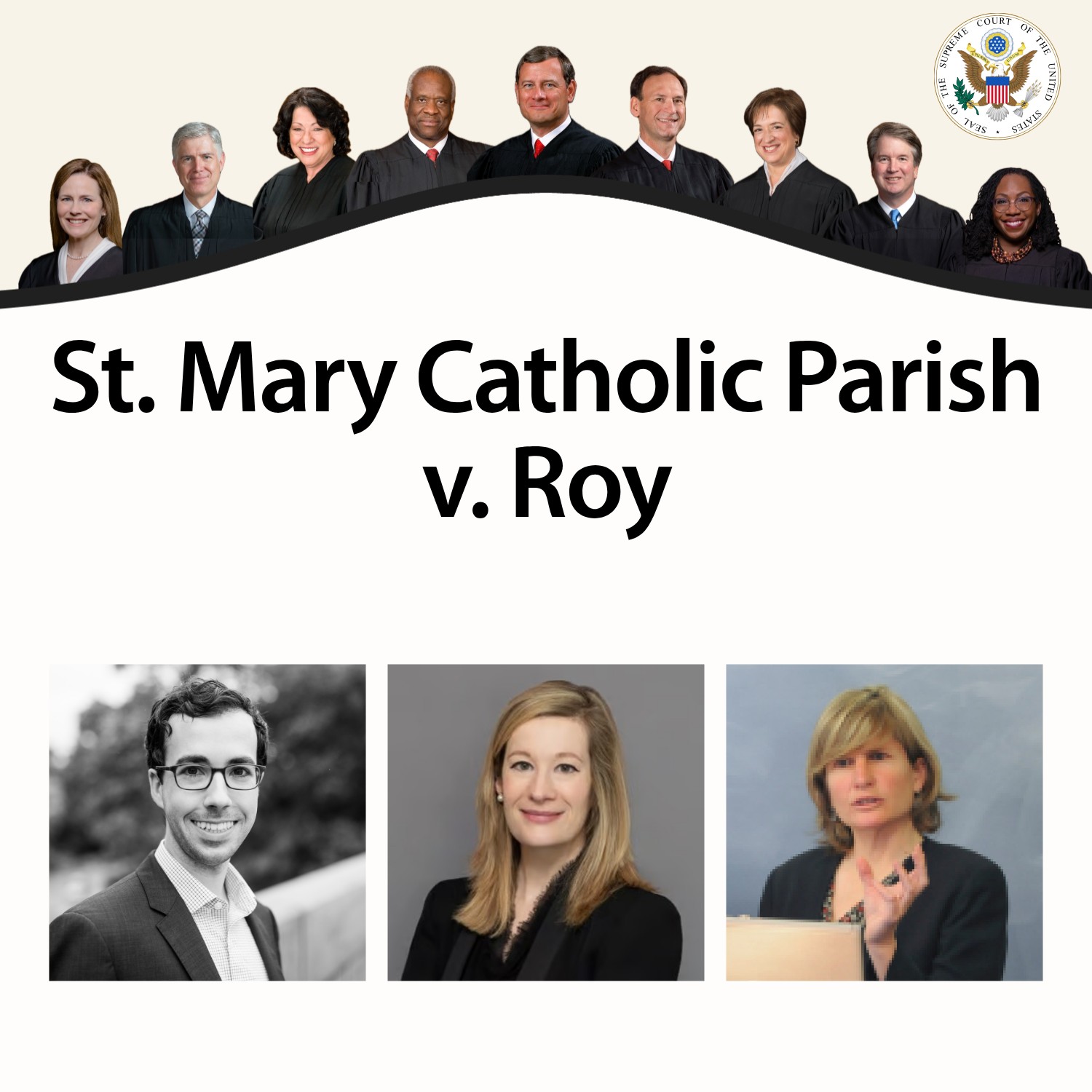
St. Mary Catholic Parish v. Roy Justia (https://supreme.justia.com/cases/federal/us/2026/25-581/) · Docket (https://www.supremecourt.gov/docket/docketfiles/html/public/25-581.html) · oyez.org (https://www.oyez.org/cases/2026/25-581) · YouTube (https://www.youtube.com/watch?v=8mEkIO1si04) Argued on Nov 3, 2026. Petitioner: St. Mary Catholic Parish, Littleton, Colorado. Respondent: Lisa Roy, in Her Official Capacity as Executive Director of the Colorado Department of Early Childhood. Advocates: Nicholas R. Reaves (for the Petitioners) Sarah M. Harris (for the United States, as amicus curiae, supporting the Petitioners) Helen Norton (for the Respondents) Facts of the case (from oyez.org) Colorado voters established the Universal Preschool Program (UPK) to provide free preschool services through a “mixed delivery system” of public and private providers. To receive state funds, providers must sign a nondiscrimination agreement that requires them to enroll students regardless of their sexual orientation or gender identity. Two Catholic parishes and the Archdiocese of Denver sought to participate in the program but refused to sign the agreement. They argued that their religious tenets require them to consider the sexual orientation and gender identity of families during admissions to maintain their religious environment. The schools specifically challenged the program’s “preference system,” which uses an algorithm to match families with schools based on categories like sibling enrollment or congregation membership. They also highlighted a “temporary waiver” provision that allows the state to grant providers extra time to meet certain quality standards. The schools argued that these features create a system of “individualized exemptions” where the state exercises discretion to favor secular interests. Because the state allows these secular preferences while denying a religious exemption to the nondiscrimination rule, the schools contended the program unconstitutionally penalizes them for their religious character. The district court denied the schools’ request for a permanent injunction, ruling that the nondiscrimination requirement is a neutral and generally applicable law. The U.S. Court of Appeals for the Tenth Circuit affirmed that decision, holding that the state’s program does not grant the type of unfettered discretion that would trigger strict scrutiny. Question Does a law lack general applicability under the Free Exercise Clause only if it permits unfettered discretion or secular exemptions, and does the rule against excluding religious institutions from public benefits apply only to explicit government bans on participation?

Episode information is provided by the publisher. Listening takes place on the publisher’s service.

Listen at the source ↗

Featured places to meet in Palo Alto, CA

Explore these places and arrange a conversation through ThinkMatch.

City guide for Palo Alto, CA

More from Supreme Court Oral Arguments

Supreme Court Oral Arguments

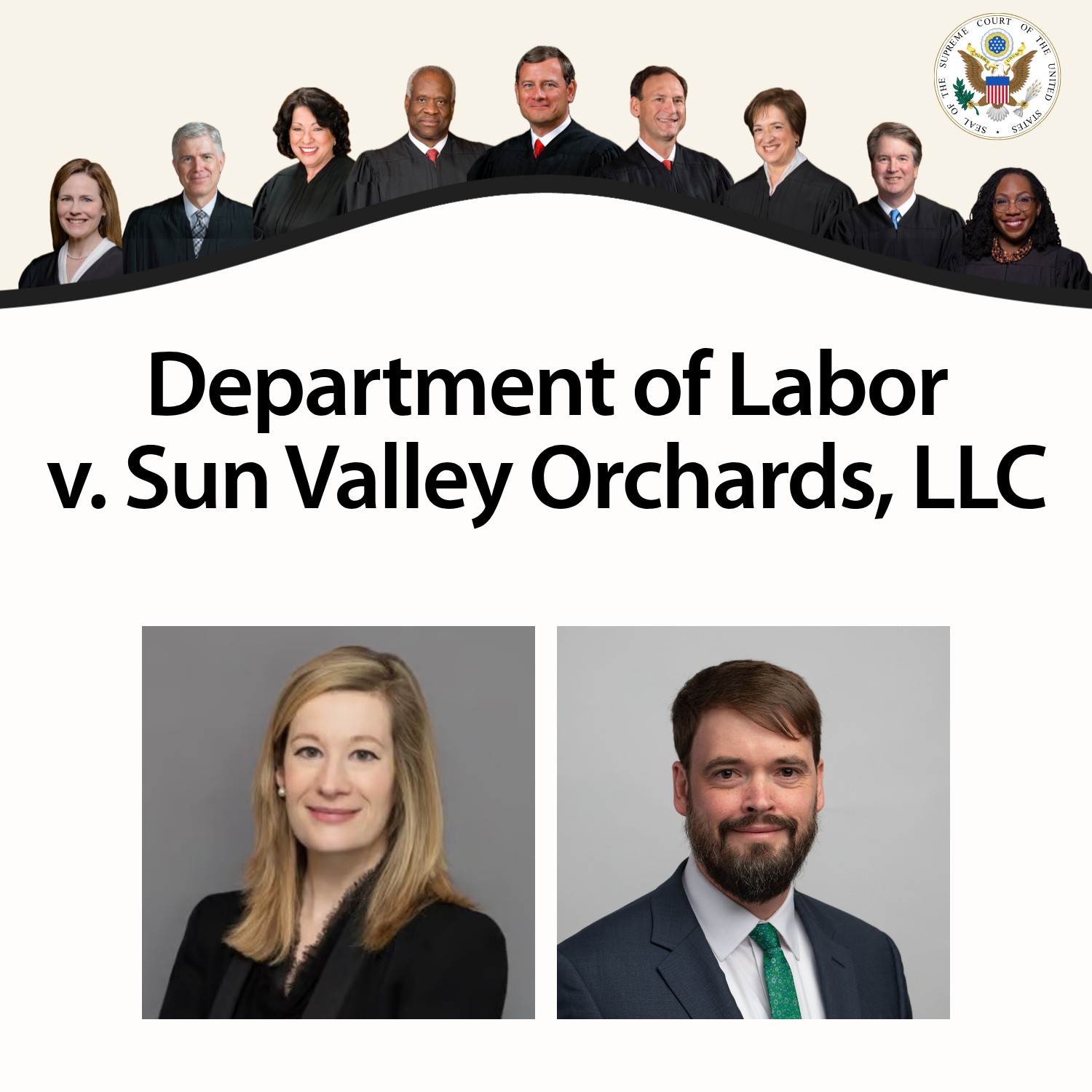
[25-966] Department of Labor v. Sun Valley Orchards, LLC

103 min

Department of Labor v. Sun Valley Orchards, LLC Justia (https://supreme.justia.com/cases/federal/us/2026/25-966/) · Docket (https://www.supremecourt.gov/docket/docketfiles/html/public/25-966.html) · oyez.org (https://www.oyez.org/cases/2026/25-966) · YouTube (https://www.youtube.com/watch?v=K2nVsb_BRfU) Argued on Nov 10, 2026. Petitioner: Department of Labor,. Respondent: Sun Valley Orchards, LLC. Advocates: Sarah M. Harris (for the Petitioners) Robert E. Johnson (for the Respondent) Facts of the case (from oyez.org) Sun Valley Orchards, a New Jersey farm, hires seasonal workers through the H-2A visa program. Under this program, the farm must provide certain benefits, such as safe housing and transportation, which it outlines in a “job order” that serves as a work contract. After an investigation into the 2015 growing season, the Department of Labor alleged that Sun Valley breached this contract by providing infested housing, failing to provide required kitchen access, and firing worke

Discuss this episode

Supreme Court Oral Arguments

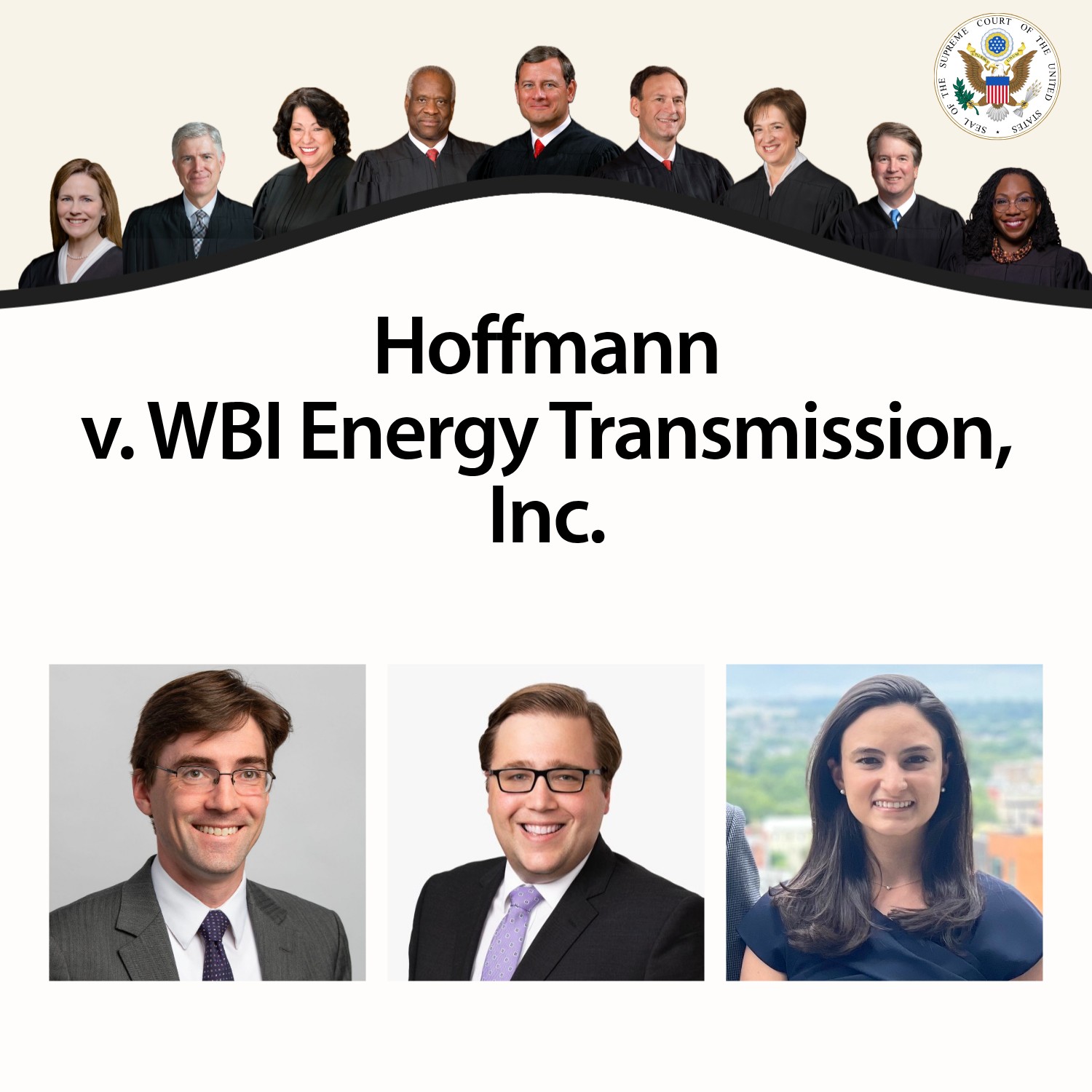
[25-159] Hoffmann v. WBI Energy Transmission, Inc.

60 min

Hoffmann v. WBI Energy Transmission, Inc. Justia · Docket (https://www.supremecourt.gov/docket/docketfiles/html/public/25-159.html) · oyez.org (https://www.oyez.org/cases/2026/25-159) · YouTube (https://www.youtube.com/watch?v=JFZQ8OSmpCI) Argued on Nov 9, 2026. Petitioner: Leonard W. Hoffmann. Respondent: WBI Energy Transmission, Inc. Advocates: Robert J. McNamara (for the Respondents) Paul W. Hughes (for the Respondent) Zoe A. Jacoby (for the United States, as amicus curiae, supporting the Respondent) Facts of the case (from oyez.org) WBI Energy Transmission, Inc. is a private natural gas company that holds a federal certificate authorizing it to use eminent domain to build and operate a natural gas pipeline. WBI used that authority to condemn an easement across ranchland in McKenzie County, North Dakota, owned by Leonard Hoffmann, Margaret Hoffmann, Denae Hoffmann, Rocky & Jonilla Farms, LLP, and Randall Stevenson. After roughly three years of litigation over the value of the taken

Discuss this episode

Supreme Court Oral Arguments

[25-417] Nielsen v. Watanabe

83 min

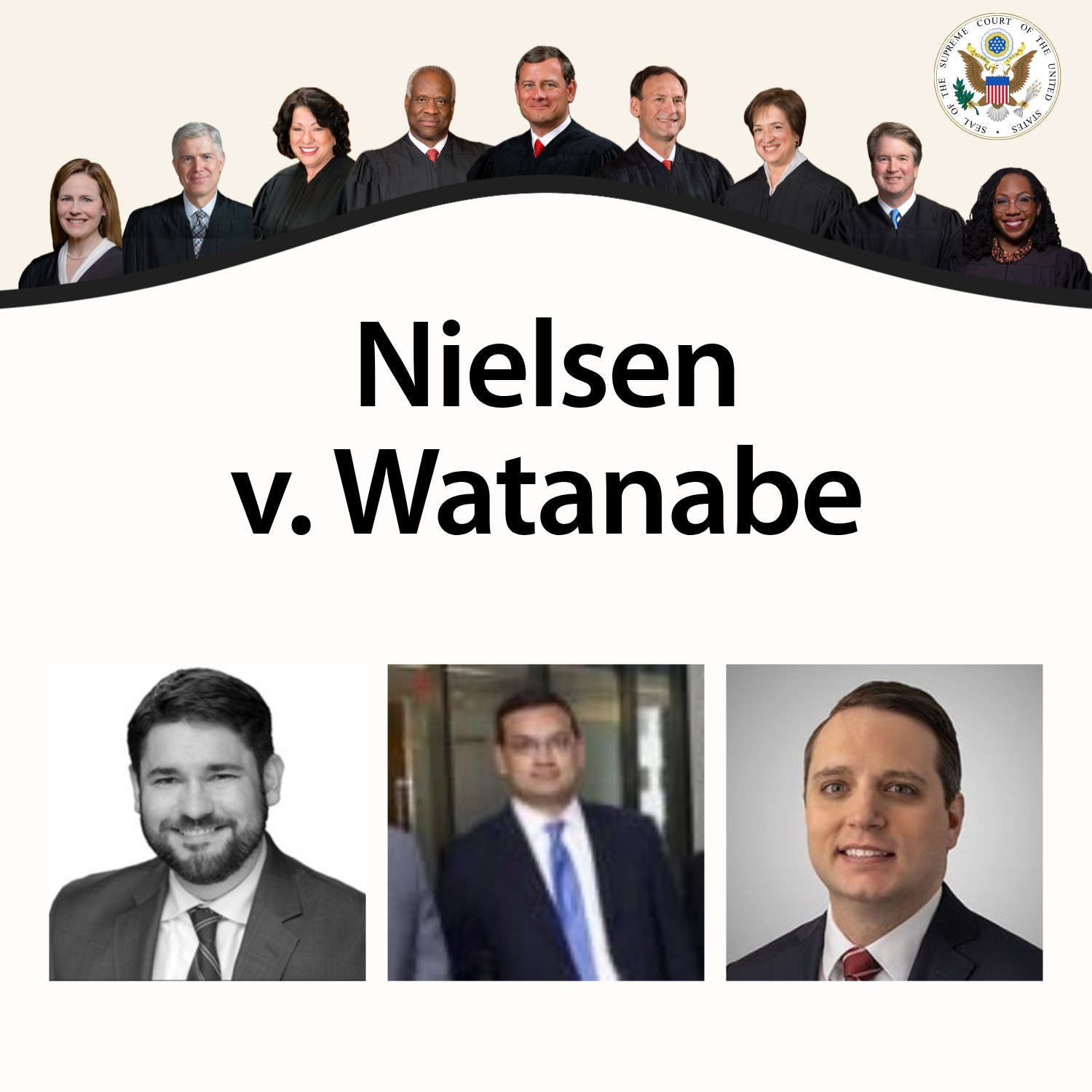
Nielsen v. Watanabe Justia · Docket (https://www.supremecourt.gov/docket/docketfiles/html/public/25-417.html) · oyez.org (https://www.oyez.org/cases/2026/25-417) · YouTube (https://www.youtube.com/watch?v=hi29t0a4Qm8) Argued on Nov 9, 2026. Petitioner: Francis Nielsen. Respondent: Kekai Watanabe . Advocates: Lucas M. Walker (for the Petitioner) Vivek Suri (for the United States, as amicus curiae, supporting the Petitioner) Joshua M. Wesneski (for the Respondent) Facts of the case (from oyez.org) Kekai Watanabe was a federal detainee at the Federal Detention Center in Honolulu when, in July 2021, rival gang members attacked him during a prison riot. After staff restored order, prison officials documented his visible injuries and placed him on sick call. Later that day, Watanabe told correctional officers he had headaches and pain and asked to see medical staff. He eventually described his condition to Francis Nielsen, a staff nurse at the facility, who denied his request to go to the ho

Discuss this episode

Community Poll

Individuals should control whether organizations share their personal information.

Share your view, then see how readers voted. No sign-in required. This poll is shared across stories.

Do you agree or disagree?

Choose one answer

Common Quandary

A Common Quandary to discuss

Another conversation to explore, separate from this news story.

The sign says twelve items and you have fourteen. Is the express lane still yours?

The regular checkout lines are long and the express lane is empty. You count fourteen small items, two over the posted limit. A shopper approaches behind you carrying a single carton of milk as the cashier waves you forward.

Are small rules optional when enforcing them would seem fussier than breaking them?

Explore this quandary