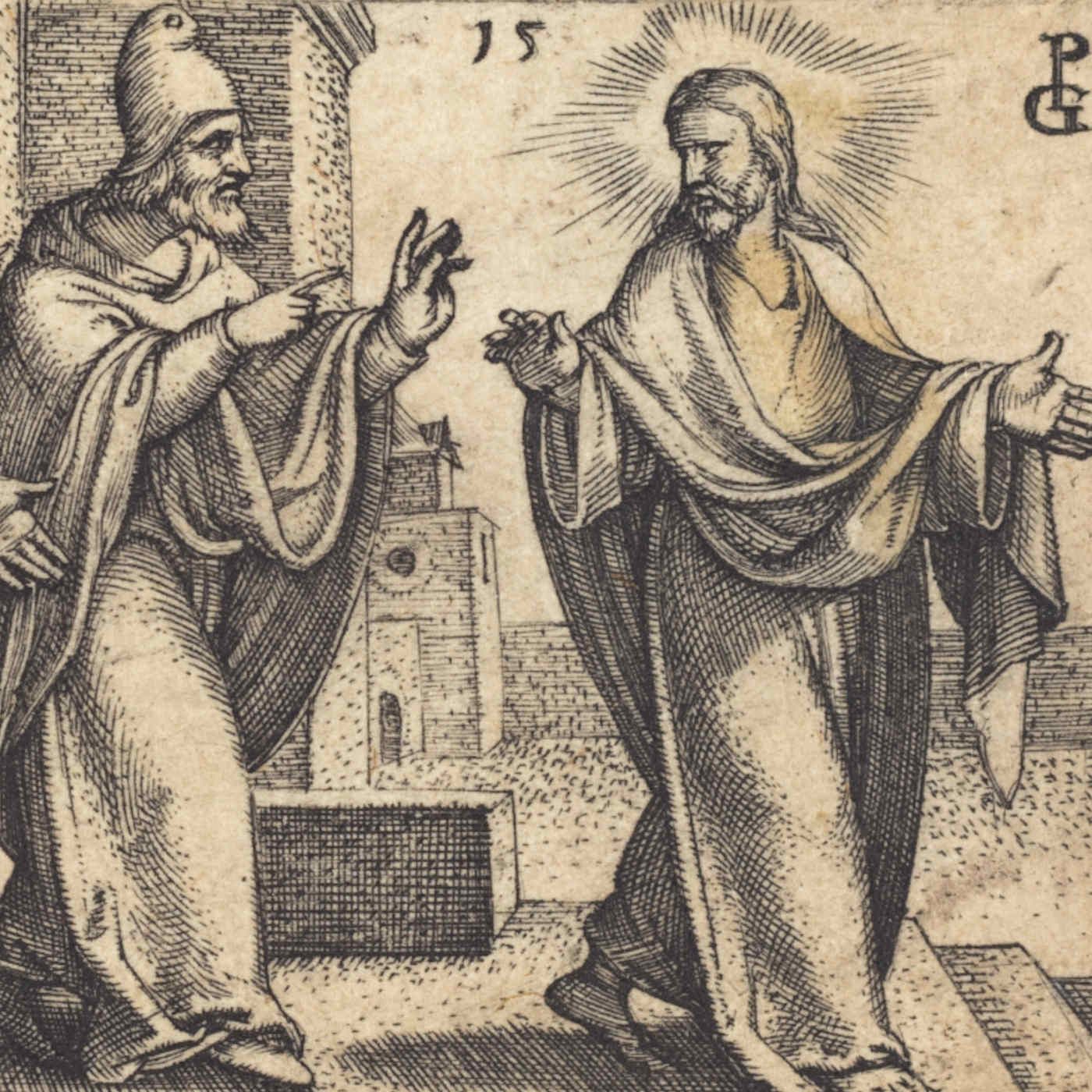
33rd Sunday in Ordinary Time (Year A) - Matt 25: 14-30
38 min
Listen through the publisher, then discuss the episode here or arrange an in-person Roundtable. Your city determines where to meet.
Roundtables are designed for groups of four, with a shared subject and room for everyone to speak. Come for discussion, with no dating expectation.
Matt 25: 14-30 - 'You have been faithful in small things: come and join in your master's happiness.' Catechism of the Catholic Church Paragraphs: - 546 (in 'The Proclamation of the Kingdom of God') - Jesus' invitation to enter his kingdom comes in the form of parables, a characteristic feature of his teaching. Through his parables he invites people to the feast of the kingdom, but he also asks for a radical choice: to gain the kingdom, one must give everything. Words are not enough, deeds are required. The parables are like mirrors for man: will he be hard soil or good earth for the word?What use has he made of the talents he has received? (abbreviated). - 1936 (in 'Equality and Differences among men') - On coming into the world, man is not equipped with everything he needs for developing his bodily and spiritual life. He needs others. Differences appear tied to age, physical abilities, intellectual or moral aptitudes, the benefits derived from social commerce, and the distribution of wealth. The "talents" are not distributed equally. - 1029 (in 'Heaven') - In the glory of heaven the blessed continue joyfully to fulfill God's will in relation to other men and to all creation. Already they reign with Christ; with him "they shall reign for ever and ever." - 1720 (in 'Christian Beatitude') - The New Testament uses several expressions to characterize the beatitude to which God calls man: the coming of the Kingdom of God, the vision of God, entering into the joy of the Lord, entering into God's rest." - 2683 (in 'A Cloud of Witnesses') - The witnesses who have preceded us into the kingdom, especially those whom the Church recognizes as saints, share in the living tradition of prayer by the example of their lives, the transmission of their writings, and their prayer today. They contemplate God, praise him and constantly care for those whom they have left on earth. When they entered into the joy of their Master, they were "put in charge of many things." Their intercession is their most exalted service to God's plan. We can and should ask them to intercede for us and for the whole world. Got a Bible question?
Episode information is provided by the publisher. Listening takes place on the publisher’s service.
Sunday 22 November 2026 Today is Sunday the 22nd of November, the solemnity of Our Lord Jesus Christ, King of the Universe, beginning the 34th week of Ordinary Time. In the scripture we will pray with today, we hear of Jesus’ deep desire for us to love and serve those in need. As you hear Madison Cunningham with The Porter’s Gate singing, ‘Little Things with Great Love’, how does this song speak to you? In the garden of our Savior, no flower grows unseen; His kindness rains like water on every humble seed. No simple act of mercy escapes His watchful eye — for there is One who loves me: His hand is over mine. In the kingdom of the heavens, no suffering is unknown; each tear that falls is holy, each breaking heart a throne. There is a song of beauty on every weeping eye — for there is One who loves me: His heart, it breaks with mine. Oh, the deeds forgotten; oh, the works unseen, every drink of water flowing graciously, every tender mercy, You’re making glorious. This You have asked us:
Good morning, “I’m the king, and she’s my queen… she doesn’t get to usurp the throne.” Not words from a Shakespearian tragedy, but the words of Aaron Edwards, the Christian theologian and father of seven who features in a new documentary on the BBC this week. Edwards and his wife Molly are one of the families in filmmaker Poppy Jay’s Young British and Tradwife, exploring women embracing traditional gender roles, often showcased on Instagram. For some, this is more than a choice to stay at home rather than go to work – feminism’s aim was to give women choice, after all. But rather for some it’s also a belief rooted in their reading of the Bible that wives should submit to their husbands. As a Christian feminist, I won’t get into the debate here, but what struck me was how questions of sovereignty, submission and power are finding their ways into much of our public debate. In the home, in the Church, in the nation, in our politics, we’re asking: who exactly is in charge? Who should submi
Read Online (https://catholic-daily-reflections.com/2026/11/20/questioning-god/) Questioning God Some Sadducees, those who deny that there is a resurrection, came forward and put this question to Jesus, saying, “Teacher, Moses wrote for us, If someone’s brother dies leaving a wife but no child, his brother must take the wife and raise up descendants for his brother. Now there were seven brothers…” Luke 20:27–29 After entering Jerusalem for the Passover and cleansing the Temple, Jesus returned each day to teach within its courts. The people warmly received Him, hanging on His every word. Yet the religious leaders, fearful of His influence, deliberately and methodically sought to trap Him, discredit Him, and destroy Him. First, the chief priests, scribes, and elders challenged His authority, questioning His right to drive out the moneychangers and those selling animals for sacrifice. He declared they had turned His Father’s house into a den of thieves. When that ploy failed, the leaders
What if God's love for you isn't merely an abstract theology, but the relentless, heartbreaking devotion of a faithful spouse refusing to walk away from an unfaithful partner? In Hosea and Joel, we meet two prophets whose words cut through the noise of superficial religion. Through an astonishing marriage that mirrors the covenant and apocalyptic visions of swarming locusts, the Lord reveals how He transforms our "No Mercy" into everlasting lovingkindness. Summary: In this poignant study of Hosea and Joel, we launch into the Minor Prophets, discovering why the Lord raises up prophetic witnesses during seasons of acute political, social, and spiritual collapse. While Isaiah spoke in majestic poetry and Jeremiah endured public stocks, Hosea's very home became the message. Paired with Joel's piercing trumpet blasts toward the Day of the Lord, these books offer a roadmap back to intimate covenant connection. An Emodied Parable of Mercy: In Hosea 1–3, Hosea is commanded to marry Gomer and t
Life is too short to waste on things that don't last. In this powerful message, Dr. Michael Youssef challenges believers to stop living without purpose and start living fully for Jesus Christ. Drawing from 1 Peter 4, Dr. Youssef points to Jesus, who remained focused on the Father's will even as He faced the Cross. His example shows us what it means to live with spiritual purpose, resist temptation, and remain faithful when life gets difficult. A transformed identity in Christ changes your priorities. Instead of chasing comfort, approval, or worldly success, God calls you to live for what matters eternally. This episode challenges you to: Discover your purpose through Jesus Christ, Stop wasting time on temporary pursuits, Resist sin and pursue Biblical holiness, Follow Christ's example of unwavering obedience, Repent of distractions and misplaced priorities, Pray for the Church and those who don't know Christ. You were created for more than just getting through life. When Christ becomes
Matthew 25: 31-46 - 'I was naked and you clothed me; sick, and you visited me.' Catechism of the Catholic Church Paragraphs: - 544 (In 'The Kingdom of God is at hand') - Jesus identifies himself with the poor of every kind and makes active love toward them the condition for entering his kingdom (abbreviated) - 1033-1034 (in 'I Believe in Life Everlasting') - Our Lord warns us that we shall be separated from him if we fail to meet the serious needs of the poor and the little ones who are his brethren...Jesus often speaks of "Gehenna" of "the unquenchable fire" reserved for those who to the end of their lives refuse to believe and be converted, where both soul and body can be lost. Jesus solemnly proclaims that he "will send his angels, and they will gather . . . all evil doers, and throw them into the furnace of fire," and that he will pronounce the condemnation: "Depart from me, you cursed, into the eternal fire!" - 2447 (in 'Love for the Poor') - The works of mercy are charitable acti
Luke 20: 27-40 - 'In God all men are alive.' Catechism of the Catholic Church Paragraphs: - 330 (In 'Who are Angels'?) - As purely spiritual creatures angels have intelligence and will: they are personal and immortal creatures, surpassing in perfection all visible creatures, as the splendor of their glory bears witness. - 575 (In 'Jesus and Israel') - Many of Jesus’ deeds and words constituted a “sign of contradiction,” but more so for the religious authorities in Jerusalem, whom the Gospel according to John often calls simply “the Jews,” than for the ordinary People of God. To be sure, Christ’s relations with the Pharisees were not exclusively polemical. Some Pharisees warned him of the danger he was courting; Jesus praises some of them, like the scribe of Mark 12:34, and dines several times at their homes. Jesus endorses some of the teachings imparted by this religious elite of God’s people: the resurrection of the dead, certain forms of piety (almsgiving, fasting, and prayer), the c
Luke 19: 41-44 - 'Jesus sheds tears over the coming fate of Jerusalem.' Catechism of the Catholic Church Paragraphs: - 558 (In 'Jesus' ascent to Jerusalem') - Jesus recalls the martyrdom of the prophets who had been put to death in Jerusalem. Nevertheless he persists in calling Jerusalem to gather around him: “How often would I have gathered your children together as a hen gathers her brood under her wings, and you would not!” When Jerusalem comes into view he weeps over her and expresses once again his heart’s desire: “Would that even today you knew the things that make for peace! But now they are hid from your eyes.” Got a Bible question?
Disease statistics should include context about who is affected and how counts are collected.
Share your view, then see how readers voted. No sign-in required. This poll is shared across stories.
Do you agree or disagree?
Common Quandary
A Common Quandary to discuss
Another conversation to explore, separate from this news story.
You can clone the best dog you ever had. Would you?
After a beloved dog dies, its owner can afford to have it cloned. The procedure is legal and improving, but it uses animals as surrogates and will not recreate the original dog's memories or personality.
What do our obligations to animals permit us to create for our own comfort?