Listen through the publisher, then discuss the episode here or arrange an in-person Roundtable. Your city determines where to meet.
Roundtables are designed for groups of four, with a shared subject and room for everyone to speak. Come for discussion, with no dating expectation.
For more nuances and references, see the associated Newsletter: https://staycuriousmetabolism.substack.com/p/microplastics-in-my-heart-its-worse?r=40ekz2 Most people think of plastic as an environmental problem—something that harms oceans, wildlife, and ecosystems. But emerging science is revealing something far more personal: microplastics don’t just pollute the planet— they may be poisoning your heart. A landmark study published in the New England Journal of Medicine found microplastics and nanoplastics embedded inside human arterial plaque. Even more alarming, patients with these particles inside their arteries had a 350% higher risk of heart attack, stroke, or death. This research suggests microplastics may drive cardiovascular disease through oxidative stress, inflammation, immune activation, and vascular damage. Under the microscope, jagged plastic fragments were found lodged inside macrophages—immune cells that normally clear debris—triggering inflammation and accelerating plaque instability. We also explore what you can do today—from reducing heat-exposed plastics, filtering water, and improving air quality, to emerging research on internal defense strategies aimed at binding microplastics before they’re absorbed. This isn’t fear. It’s empowerment. Knowledge isn’t meant to panic us—it’s meant to protect us. Stay curious. Chapters 0:00 – Plastic Poisons the Heart. But There’s Good News! 1:15 – Find More Information at StayCurious Metabolism 1:41 – A Landmark NEJM Study 2:42 – 350% Increased Risk of Heart Attack, Stroke and Death! 4:15 – Microplastics Associate with Inflammation 5:02 – Microplastics Lodged in Macrophage Immune Cells 6:41 – Comparison to LDL Cholesterol 8:15 – How to Reduce Your Exposure to Microplastics 9:54 – A Probiotic That Shields You from Microplastics #microplastics #cardiovasculardisease #microbiome #hearthealth #heartdisease #NEJM #microplastics #hearthealth #cardiovasculardisease #nanoplastics #inflammation #science #longevity #metabolichealth #heartattack #stroke #healthscience #NickNorwitz #StayCuriousMetabolism
Episode information is provided by the publisher. Listening takes place on the publisher’s service.
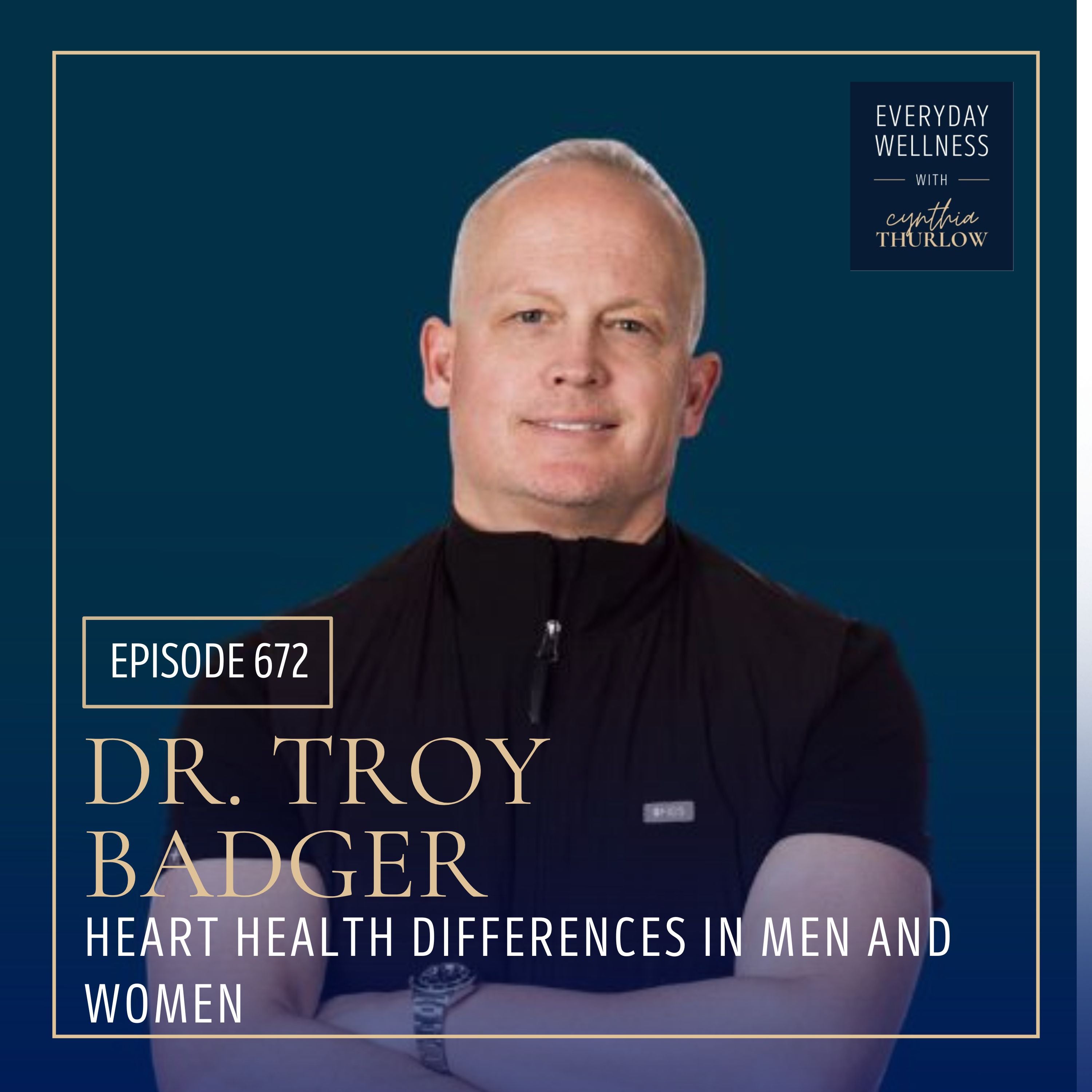
Today, I’m honored to connect with Dr. Troy Badger. He is a board-certified cardiologist and interventionalist and the founder of Cardiostrong, a concierge preventive cardiology clinic in Provo, Utah, focused on reducing cardiovascular risk, optimizing metabolic health, and improving strength and cardiorespiratory fitness for executives and athletes. In today’s conversation, we discuss Dr. Badger’s gender- and age-specific approach to heart health, including treatment differences for men and women, and diagnoses such as INOCA, SCAD, vasospastic disease, and Takotsubo. We examine emotions and their influence on heart health, coronary ischemia and cardiomyopathies, labs and diagnostics, how Dr. Badger assesses risk in his patients, and the differences between a CAC and a CCTA. Dr. Badger also shares the labs he finds essential for all patients and discusses the role of VO2 Max, cardiovascular training, and lifestyle—specifically nutrition, the use of GLP-1 drugs, and a multidisciplinary
Wyoming’s wide-open landscapes have long been shared with grizzly bears and black bears — and history shows that not every encounter ended peacefully. In this episode of Scary Bear Attacks, we explore some of the most infamous bear attacks ever recorded in Wyoming, from early frontier encounters to modern-day incidents. These are true stories of hunters, hikers, settlers, and travelers who crossed paths with powerful predators in remote terrain. You’ll hear how these attacks unfolded, what triggered them, and what lessons can still be learned today from Wyoming’s long history of human-bear conflict. This episode focuses on real, documented bear attacks, told in a narrated, fireside storytelling style designed for listeners who enjoy educational yet chilling wildlife history — whether you’re watching closely or listening while you relax. Support the channel and view exclusive photos and early releases on Patreon: https://www.patreon.com/user?u=73787379 Watch more true bear attack storie
Fear has a way of quietly taking control of your life. It convinces you to stay where you are, avoid difficult conversations, delay decisions, tolerate situations you know aren’t good for you, and settle for a life that is far smaller than the one you are capable of living. In this episode of The Strong Life Project, we explore how fear impacts your thinking, your relationships, your career, your leadership, and ultimately your ability to live a meaningful life. Fear doesn’t always look like panic. Sometimes it looks like procrastination, overthinking, making excuses, people pleasing, avoiding conflict, or constantly waiting for the perfect moment. The problem is that every time you allow fear to make a decision for you, you reinforce the belief that you are incapable of handling what comes next. Over time, this creates a pattern of avoidance that undermines confidence, resilience, emotional strength, and personal growth. Learning to manage fear doesn’t mean becoming fearless. It means
Trauma and PTSD Expert Arielle Schwartz discusses how journaling and writing practices can help individuals work through trauma and facilitate healing, even without a therapist. She shares practical tips, mental models, and personal insights on trauma, shame, and post-traumatic growth. Sign up for my free Panic Attacks course https://courses.therapyinanutshell.com/ending-panic-attacks-and-anxiety-attacks Can trauma journaling help with healing trauma? In this conversation, Dr. Arielle Schwartz joins me to explore how writing and narrative therapy can support processing and integrating trauma, building self-compassion, and finding greater connection with yourself and others. Whether you’re navigating PTSD, complex PTSD, or painful experiences from your past, approaching your story can feel overwhelming. We discuss how to begin gently, build a foundation of safety, and recognize when it’s time to pause and reach for support. https://drarielleschwartz.com (https://drarielleschwartz.com/)
☀️ HARNESSING THE POWER OF THE SUN — THE SCIENCE BEHIND C60 EVO! What happens when scientists recreate extraordinary, sun-like temperatures inside a laboratory to produce one of the most fascinating carbon molecules ever studied? Michael Jaco welcomes Patty Greer and Chris Burres back to Unleashing Intuition for a fascinating behind-the-scenes look at C60 Evo, the technology used to produce ESS60, and the science behind this unique carbon molecule. Chris takes us inside the laboratory to explain the intense temperatures, specialized production methods, and purification processes involved in creating ESS60 — C60 Evo's proprietary form of Carbon 60. The conversation explores the relationship between antioxidants, mitochondria, cellular energy, and oxidative stress, along with why C60 Evo combines ESS60 with carefully selected extra virgin olive oil. Patty and Chris also share their perspectives on wellness, personal experiences, and the growing interest in carbon-based technology. Inside
View full lesson: http://ed.ted.com/lessons/sylvia-earle-s-ted-prize-wish-to-protect-our-oceans Legendary ocean researcher Sylvia Earle shares astonishing images of the ocean -- and shocking stats about its rapid decline -- as she makes her TED Prize wish: that we will join her in protecting the vital blue heart of the planet. Sylvia Earle has been at the frontier of deep ocean exploration for four decades. She's led more than 50 undersea expeditions, and she's been an equally tireless advocate for our oceans and the creatures who live in them. Talk by Sylvia Earle.
Robb Wolf Interview Part 1: https://youtu.be/Wi-6KttZ54g LMNT “Scandal” Video: https://youtu.be/uI2ewgimH3g Salt, Leptin and Blood Pressure: https://staycuriousmetabolism.substack.com/p/salt-vs-fat-rethinking-the-root-causes?r=40ekz2 Oleuropein and Calcium Signaling: https://youtu.be/ljuimrT2a1s In Part 2 of my conversation with Robb Wolf, we dig into one of the most misunderstood aspects of nutrition and metabolic health: electrolytes. Most people think electrolytes simply matter for athletes or hot summer workouts, but the reality is far more complex. We also get into the science behind sodium, why the old fear of salt never made sense mechanistically, and how obesity and leptin signaling influence salt sensitivity, and more. Chapters 0:00 – Why Electrolytes Matter More Than You Think 3:12 – Low-Carb, Insulin and Hidden Electrolyte Loss 7:38 – How to Know If You’re Sodium Deficient 11:25 – The Truth About Sodium, Obesity and Blood Pressure 21:59 – How Much Sodium You Really Need 29:1
For a written breakdown, more nuances and early access to content, see the associated newsletter: https://open.substack.com/pub/staycuriousmetabolism/p/im-finally-lowering-my-cholesterol?r=40ekz2&utm_campaign=post&utm_medium=web&showWelcomeOnShare=true (https://open.substack.com/pub/staycuriousmetabolism/p/im-finally-lowering-my-cholesterol?r=40ekz2&showWelcomeOnShare=true) Statin RCT Video: https://youtu.be/d9LeDSoYOVc Ezetimibe Video: https://youtu.be/5idzP5ghT7A Bempedoic Acid Letter: https://staycuriousmetabolism.substack.com/p/beyond-cholesterol-the-unfolding?r=40ekz2 Description For the last seven years, despite extremely high cholesterol, I refused cholesterol-lowering medications. But I’ve just changed my mind…sort of. In this video, I walk through the full decision-making process: the risks, the uncertainty, the medical context, and the nuances that made this case unusually complicated. There are three plot twists. This is not medical advice. It’s a detailed look at an unusual
StayCurious Newsletter on Snyder’s Fiber Randomized Controlled Trial: https://staycuriousmetabolism.substack.com/p/fiber-is-good-for-you-is-lazy-science?r=40ekz2 StayCurious Newsletter on Inulin and Fructose Resistance: https://staycuriousmetabolism.substack.com/p/the-fiber-that-fights-fat-how-inulin?r=40ekz2 Snyder Interview 1, Four Types of Diabetes: https://youtu.be/mCrc4gfbK2o Snyder Interview 2, Most Viral Aging Study: https://youtu.be/kMpGkg4zMOU Snyder Interview 3, Most Beautiful Exercise Study: https://youtu.be/_9ywulQF2Ho Why does the same food spike one person’s blood sugar while barely affecting another? In this fourth conversation with Stanford’s Professor Michael Snyder, we explore new research on individualized glycemic responses, insulin resistance subtypes, and why one-size-fits-all nutrition advice keeps failing. From rice spiking glucose more than ice cream, to the power of the grape-to-potato ratio, and beyond, this discussion reveals how metabolism, microbiome, immu
A study's methods should be available before its findings influence public policy.
Share your view, then see how readers voted. No sign-in required. This poll is shared across stories.
Do you agree or disagree?
Common Quandary
A Common Quandary to discuss
Another conversation to explore, separate from this news story.
A stranger rings up fancy apples as the cheap kind. Do you mind your own business?
At self-checkout, the shopper beside you labels expensive organic apples as the cheapest variety. An employee is distracted nearby. The difference is only a few dollars, the store is a huge chain, and the shopper notices that you noticed.
When does witnessing a small cheat make it any of your business?