Listen through the publisher, then discuss the episode here or arrange an in-person Roundtable. Your city determines where to meet.
Roundtables are designed for groups of four, with a shared subject and room for everyone to speak. Come for discussion, with no dating expectation.
It was a pretty momentous week in US politics this week with a historic midterm election outcome that inspired us to sit down and discuss our media consumption on election night, including the Kornacki Cam and the Giant Bombification of the Internet, plus algorithmic social media bubbles and more. We also caught up on some recent news we've been meaning to get to, like the touchscreen MacBook Pros, (minor) problems with the iPhone Duo, Reddit moving to a logged-in-only site, and the end of the Cybertruck. Lastly, we touch on some low-cost 10 gigabit network hardware and Steam Frame insert optics that we've been hands-on testing. It's a pretty packed podcast! Notes 'n links: https://tinyurl.com/techpod-364-kornacki Support the Pod! Contribute to the Tech Pod Patreon and get access to our booming Discord, a monthly bonus episode, your name in the credits, and other great benefits! You can support the show at: https://patreon.com/techpod
Episode information is provided by the publisher. Listening takes place on the publisher’s service.
To learn to think like a scientist check out http://Brilliant.org/SpaceTime (http://brilliant.org/SpaceTime) Uploaded 20-12-18 PBS Member Stations rely on viewers like you. To support your local station, go to: http://to.pbs.org/DonateSPACE Check out the new Space Time Merch Store! Support Space Time on Patreon There’s this idea that beauty is a powerful guide to truth in the mathematics of physical theory. String theory is certainly beautiful in the eyes of many physicists. Beautiful enough to pursue even if it’s wrong? Tweet at us! @pbsspacetime Facebook: facebook.com/pbsspacetime Email us! pbsspacetime [at] gmail [dot] com Comment on Reddit: http://www.reddit.com/r/pbsspacetime Help translate our videos! Previous Episode: Quantum Physics in a Mirror Universe https://www.youtube.com/watch?v=UyTqgnKD3sw&t=5s (https://www.youtube.com/watch?t=5s&v=UyTqgnKD3sw) Hosted by Matt O'Dowd Written by Matt O'Dowd Graphics by Luke Maroldi Assistant Editing and Sound Design by Mike Petrow Made by
Listen to the full 1 Hour plus Between Friends episode. Go Directly to this Patreon Episode "I Just Need Everyone to Go Away plus Unicorn Lifeguards, Stalkers, Trauma and Me Fully Melting Down" Picture this: Your houseguest arrives in an hour, the furniture delivery is a disaster, and the bed is in the WRONG room! Chalene shares the hilarious chaos of trying to move a massive bed herself, in a tight dress and heels, while Bret gets sent on an emergency hardware store run. But just when they think they've got it handled, things take a painful turn! This story is part of The Saturday Spill series a little peek into the wild, unfiltered stuff that usually stays on Patreon. Some weeks it's hilarious, some weeks it's jaw-dropping, but it's always real life that doesn't quite fit on the regular show. If you're into a little chaos and behind-the-scenes tea, you're in the right place. If you love it, amazing…you can listen to the full, unedited version here https://Chalene.com/more (https://ww
Project Synapse: Markets in Freefall, Fragile Infrastructure, and AI's Perfect Storm The hosts banter through the show's intro before focusing on a sense that "things are out of control," citing a WallStreetBets suicide-hotline post amid a market crash and discussing cascading system failures involving Microsoft, the FAA, and a reported NSA internal communications outage. They argue politicians and leadership lack technical competence and clear messaging, increasing panic, while emphasizing that many problems stem from aging, underfunded infrastructure and complex, brittle software (PHP, NGINX, Java), not proven AI attacks—more a "perfect storm" of crises. They debate whether AI should help fix complexity, stressing critical thinking, accountability, and using multiple AIs to verify each other. In a lightning round they cover Anthropic's IPO performance, mixed reactions and token limits with ChatGPT 6.2 (favoring "Sol" over "Astra"), Google's cheaper Neon model and confusing UX, Loblaw
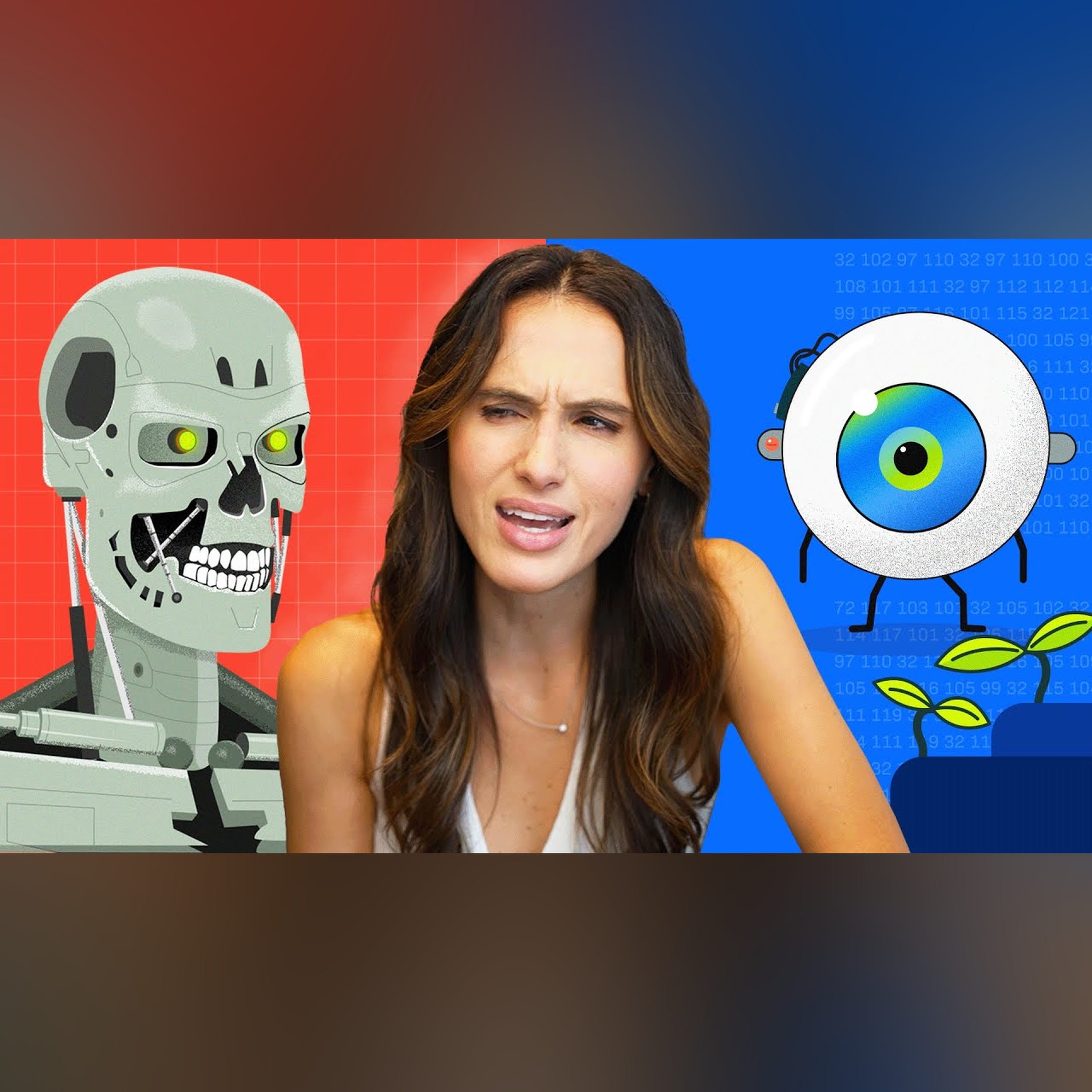
AI is here. Now what? Everyone’s talking about artificial intelligence and machine learning. There are lots of names thrown around - OpenAI’s ChatGPT and DALLE-2, Google’s Bard, Meta’s LLaMa 2, Midjourney, AlphaFold… Right now, we’re in this weird moment where lots of smart people agree we’re on the cusp of a truly world-changing technology. But some seem to be saying it's going to lead to human extinction while others are saying it’s “more profound than fire.” But it all feels so VAGUE. I want to know: How specifically would AI kill me? Or totally transform my life for the better? In this video, that’s what I’m going to try to learn. We dive into what the most extreme bad and good AI futures actually look like, so that you and I can get ready. And more importantly, so we can make sure that we get our real future RIGHT. Chapters: 00:00 Why is AI so confusing? 1:13 What is AI? 2:37 Why is everyone talking about AI now? 5:12 Why is AI dangerous? 6:22 How would AI kill me? 8:08 Should we
Master the skills that change lives — enroll in your free human behavior course today: https://nci.university/learn Uploaded 15-01-26 EXECUTIVE SUMMARY: Video: What It Feels Like to See Into People Purpose: Reframe how human behavior is actually driven and perceived Outcome: Permanent shift in how you experience people and conversations CORE IDEA: Human behavior is not driven by beliefs, opinions, or logic. Those are after-action reports. Behavior is driven by the nervous system’s constant assessment of: • safety • approval • power • avoidance of shame Decisions are made before conscious thought. Beliefs are constructed afterward to justify what already happened. WHY THIS MATTERS: Most people spend their lives interacting with: • beliefs • arguments • explanations • surface narratives As a result, they miss the layer where real decisions are made. This video focuses on that lower layer — the one that actually governs: • conflict • influence • attraction • resistance • leadership • trus
Alex and Sam cover Claude Code 2.1.329 and a review workflow that names the pull request, pins the changes, separates findings from tests and checks that the right code was examined. All worked scenarios are hypothetical. Includes a Railway affiliate advertisement. Sources: https://github.com/anthropics/claude-code/releases/tag/v2.1.329 Includes a Railway affiliate advertisement. Find our links at https://aishows.cc; we may earn a commission.
It was hard not to talk about the rapidly ballooning Nvidia scandal this week, involving smuggling advanced AI chips to Chinese cutouts in violation of US law, CEO Jensen Huang's affairs with a Chinese spy and two Nvidia employees, signs of malfeasance in the Trump administration. We try to take stock of where the reporting is at on this growing story, along with what it might mean for the future of Nvidia as a gaming hardware company. Since it's an extra nutty week, we also talk about the Federal Aviation Administration's nationwide grounding of air travel, and the huge Microsoft 365 outage that's plagued the Internet late this week. Some articles referenced in this ep: Support the Pod! Contribute to the Tech Pod Patreon and get access to our booming Discord, a monthly bonus episode, your name in the credits, and other great benefits! You can support the show at: https://patreon.com/techpod
Employers should help workers retrain when their jobs disappear.
Share your view, then see how readers voted. No sign-in required. This poll is shared across stories.
Do you agree or disagree?
Common Quandary
A Common Quandary to discuss
Another conversation to explore, separate from this news story.
An app can text exactly like someone you lost. Would you keep talking to it?
A service can create a conversational likeness from a deceased person's messages and recordings. A grieving family member finds it comforting, although the deceased never consented to this use of their data.
Can comfort justify creating a voice the dead never authorized?