4 lessons from robots about being human - Ken Goldberg
22 min
Listen through the publisher, then discuss the episode here or arrange an in-person Roundtable. Your city determines where to meet.
Roundtables are designed for groups of four, with a shared subject and room for everyone to speak. Come for discussion, with no dating expectation.
View full lesson: http://ed.ted.com/lessons/4-lessons-from-robots-about-being-human-ken-goldberg Uploaded 07-07-13 The more that robots ingrain themselves into our everyday lives, the more we're forced to examine ourselves as people. At TEDxBerkeley, Ken Goldberg shares four very human lessons that he's learned from working with robots. (Filmed at TEDxBerkeley.) Talk by Ken Goldberg.
Episode information is provided by the publisher. Listening takes place on the publisher’s service.
Where is the economy is today – is it growing? Flat? Declining? Uploaded 15-10-19 What about YOUR economy – your personal investments, your nest egg? How safe is it, and how likely it is to grow at the rate you want it to? When you think about your current investments, how do you feel? Secure, or are you half-panicked? For many, the recession of 2008 still lingers. Those who suffered are waiting, white-knuckled, holding on to their portfolios and still wondering what to do next. We have, after all, been in one of the longest bull markets in history and bull markets always come to an end at some point. So how do you protect yourself from the possibility of another 2008? And how can you start to take a more proactive, confident approach to your portfolio? When Tony wrote Money Master the Game, he had the unique privilege of sitting down with some of the most successful, masterful investors and financial gurus of all time – including the legendary Ray Dalio. Ray founded the investment man
Master the skills that change lives — enroll in your free human behavior course today: https://nci.university/learn Uploaded 14-03-26 During the first ninety seconds of any interaction, a window opens in the human brain that most people never notice. A specific sequence of neurological events unfolds — predictable, exploitable, and almost never taught outside of military and intelligence training. Very few people alive understand the full mechanics of what happens inside that window. Only operators, interrogators, and behavioral scientists with the right access have ever had this mapped out for them. Someone made sure it stayed that way. Every interaction you've ever had — every negotiation, every first impression, every moment you walked into a room — was governed by this sequence. You were either running it or it was being run on you. Most people spend their entire lives on the receiving end without ever knowing it. Language is the delivery system. But language isn't where it starts.
Jim Rohn reveals how he went from broke to rich through some of the greatest lessons he ever learned. He shares countless lessons that will change your life including what you can learn from each of the 4 seasons. Uploaded 27-11-25 A timeless message from Jim Rohn® Don’t just feel inspired—take action and start building the life you’ve always wanted! _____________ Speaker: Jim Rohn Jim Rohn (1930–2009) was a world-renowned motivational speaker, author, and personal development expert. He inspired millions with his lessons on discipline, mindset, and taking consistent action to achieve success. Known as the 'mentor to the mentors,' Rohn directly influenced some of today's most popular speakers such as Tony Robbins and Brian Tracy. _____________ SUCCESS® presents: Jim Rohn®. To discover more powerful messages and timeless teachings from Jim Rohn, visit: https://www.success.com/subscriptions/ Licensed for use from https://mindsetdrm.com/ Music licensed from Soundstripe #jimrohn #personald
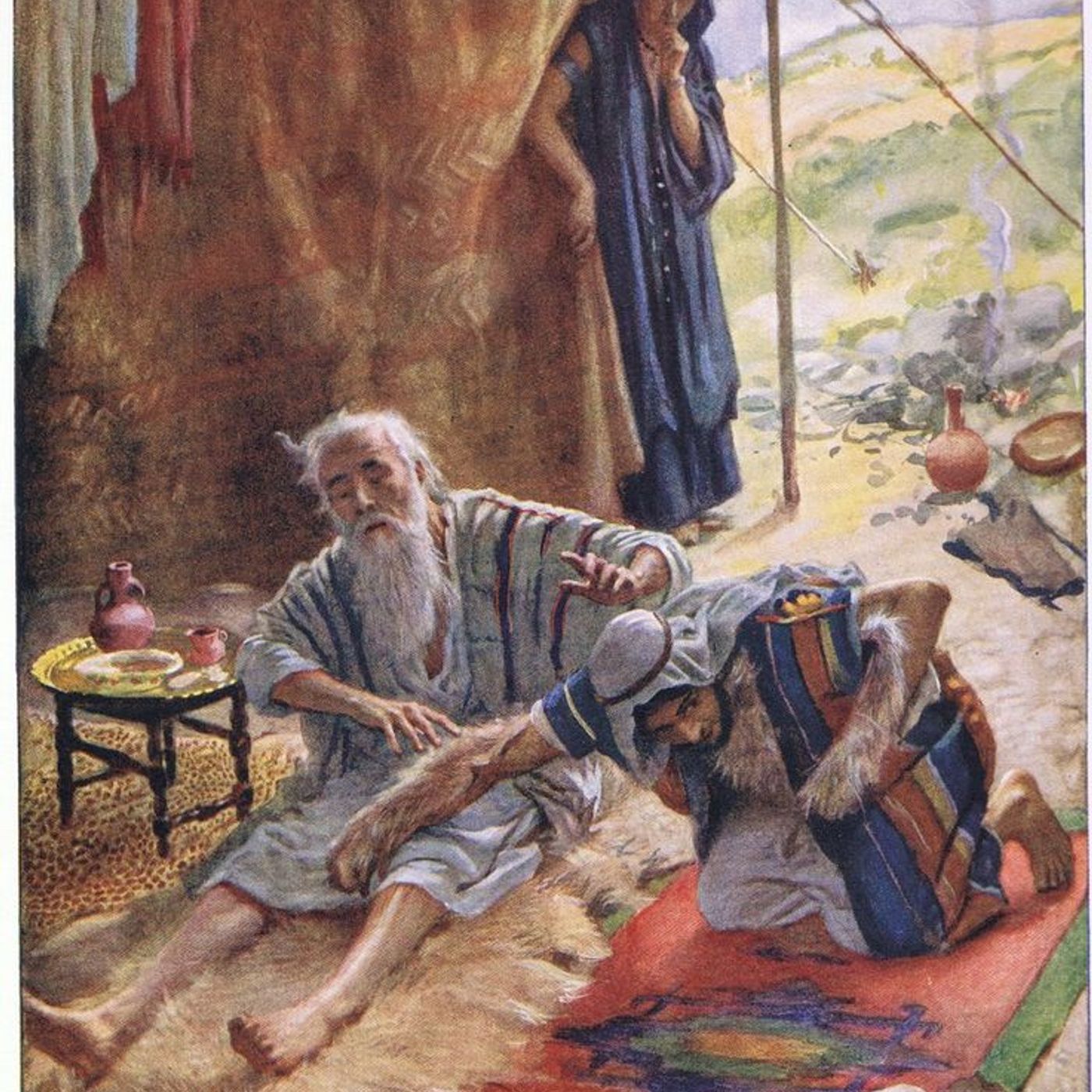
Genesis 27:1–40 focusing on how Jacob secured his father Isaac's primary blessing through elaborate deception prompted by his mother Rebekah. This reveals the damage that can follow when people attempt to secure what they desire through manipulation. Jacob had received a promise concerning his future before this event, but the story shows how human schemes can bring painful consequences. Every contribution counts. Thank you for being part of our journey!
In this calm and sleepy facts episode, we look up and explore the enormous, slowly turning galaxy that contains everything humanity has ever known. We begin with what the Milky Way actually is, a barred spiral galaxy roughly 100,000 light years across, home to somewhere between 100 and 400 billion stars, one of which is our own Sun, quietly orbiting about two thirds of the way out from the center. We trace the galaxy's structure from the dense central bulge and its bar of stars outward through the great spiral arms, past stellar nurseries where new stars are still being born in vast clouds of gas and dust, and into the faint stellar halo where ancient globular clusters orbit high above and below the galactic plane. At the very heart of it all sits Sagittarius A star, a supermassive black hole roughly four million times the mass of the Sun, hidden behind thick lanes of dust that block visible light but reveal themselves in infrared and radio waves. We explore the stellar population of t
We’re about to time travel into the future Sam Altman is building… I interviewed Sam Altman, the CEO of OpenAI, the company behind ChatGPT. They’re trying to build a “superintelligence” that could far exceed humans in almost every field – and they just released their most powerful tool yet, GPT-5. A few years ago, that would’ve sounded like science fiction! Not anymore. In fact, they’re not alone. We’re in the middle of the most high stakes global race any of us have ever seen. Hundreds of billions of dollars and an unbelievable amount of human work… It’s a profound moment. Most people never see a huge technological shift like this in their lives and it’s happening all around us right now. So in this conversation, I’m going to try to time travel into the future with Sam Altman, to see what he’s trying to build… so you and I can really understand what’s coming. Welcome to HUGE* Conversations. Chapters: 0:00 What future are we headed for? 2:06 What can GPT-5 do that GPT-4 can’t? 6:57 Wha
Dig into the slippery slope fallacy, which assumes that one step will lead to a series of events that lead to an extreme— often bad— scenario. Uploaded 19-08-21 -- It’s 1954. Vietnamese nationalists are on the verge of securing an independent Vietnam under communist leader Ho Chi Minh. U.S. President Eisenhower claims that by virtue of the "falling domino principle," communist control of Vietnam would lead to the global spread of authoritarian communist regimes. Can you spot the problem with this argument? Elizabeth Cox explores the slippery slope fallacy. Lesson by Elizabeth Cox, directed by TOGETHER. Support Our Non-Profit Mission ---------------------------------------------- Support us on Patreon: http://bit.ly/TEDEdPatreon Check out our merch: http://bit.ly/TEDEDShop ---------------------------------------------- Connect With Us ---------------------------------------------- Sign up for our newsletter: http://bit.ly/TEDEdNewsletter Find us on Twitter: http://bit.ly/TEDEdTwitter Pe
View full lesson: http://ed.ted.com/lessons/how-do-we-measure-distances-in-space-yuan-sen-ting Uploaded 09-10-14 When we look at the sky, we have a flat, two-dimensional view. So how do astronomers figure the distances of stars and galaxies from Earth? Yuan-Sen Ting shows us how trigonometric parallaxes, standard candles and more help us determine the distance of objects several billion light years away from Earth. Lesson by Yuan-Sen Ting, animation by TED-Ed.
As machines take on more jobs, many find themselves out of work or with raises indefinitely postponed. Is this the end of growth? No, says Erik Brynjolfsson -- it's simply the growing pains of a radically reorganized economy. A riveting case for why big innovations are ahead of us ... if we think of computers as our teammates. Be sure to watch the opposing viewpoint from Robert Gordon. Uploaded 30-08-13 Talk by Erik Brynjolfsson.
Canceling a digital subscription should be as easy as starting one.
Share your view, then see how readers voted. No sign-in required. This poll is shared across stories.
Do you agree or disagree?
Common Quandary
A Common Quandary to discuss
Another conversation to explore, separate from this news story.
An AI wrote the perfect condolence message for you. Is it still from the heart?
Your friend is grieving. You want to reach out, but words fail you, so you ask an AI to draft a condolence message. It expresses exactly what you feel. You revise it and send it without mentioning the help.