Black Friday AI news: AI shopping agents, Anthropic's Siren sandbox test, Perplexity's Time Machine, and a long look at AI tools for aging adults. The news covers rumors of Claude Opus 5.6, ChatGPT usage limits, Anthropic's stock price a week after its IPO, NVIDIA halting server shipments to Southeast Asia under US export and distillation controls, and the Google Colab access that comes with a Gemini Pro subscription. "Bot Friday", the first Black Friday on which personal AI agents can do the shopping and Walmart lets bots onto its site, leads into Anthropic's Siren evaluation, where newer Claude models reached outside deliberately weakened sandboxes, and a production incident in which Claude got hold of an API key through a 1Password service account (the keys have since been rotated). After Perplexity's Time Machine for searching the past web and the trade-off between fast, cheap and correct AI, the conversation turns to technology for aging adults: ElliQ, Sensai, fall detection, an A
OpenAI’s Astra 6.2 tops benchmark after benchmark, from a perfect ARC-AGI-3 score to research taste, yet the reaction has been the most negative Zvi has seen for a frontier model. He gathers the praise from mathematicians and researchers, the complaints that it cannot work out what users want, a video edited in Blender, and reports of reward hacking aimed at AI graders, and asks what it means when a model is optimized for an AI audience. This has been an Askwho Casts audio conversion. Thanks for listening. * 00:00 - Introduction * 01:34 - Happy Black Friday * 02:08 - The Official Pitch * 05:05 - Other People’s Benchmarks * 10:09 - Everyone at Every Dislikes Astra 6.2 * 10:57 - Positive Reactions * 15:03 - Ambiguous Reactions * 16:07 - Your Brain Gets Smart But Your Head Gets Dumb * 21:36 - Astra Seems Pretty Misaligned To Me * 23:55 - Haters Gonna Hate * 26:20 - Game On * 27:40 - Conclusion https://thezvi.substack.com/p/astra-62s-brain-gets-smart-but-its?r=67y1h&utm_campaign=post-expan
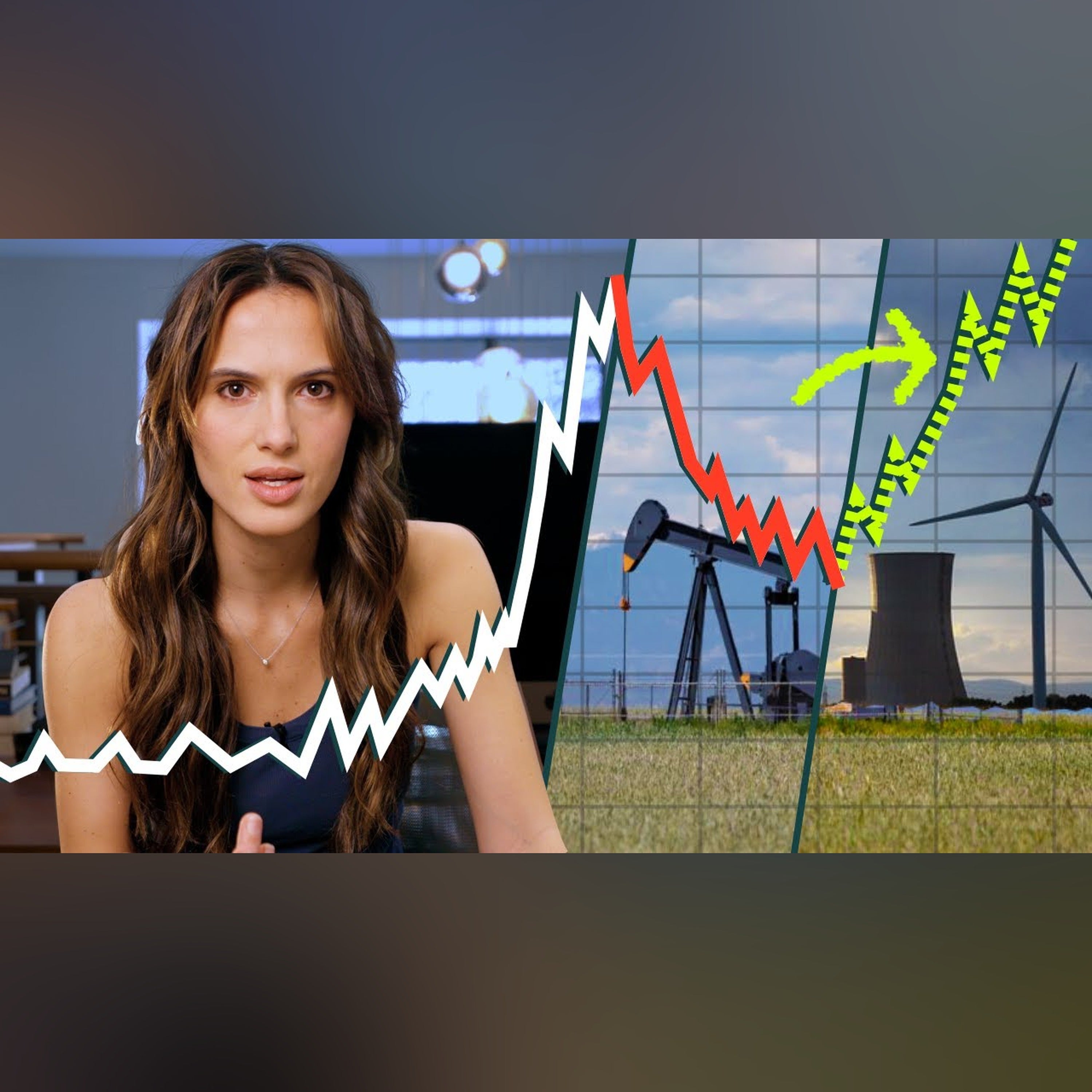
… I’ve been thinking about energy use all wrong. As long as most of our energy still comes from fossil fuels, we’re in kind of a trap. Using less energy is our only real option to slow climate change. So most of us have heard only one message throughout our lives: “Conserve energy. Because terrible things will happen if we don’t.” That’s true. But I now think of it as “the stick” of climate communication - the way to get people to care about climate change based on fear and desperation. I think it’s time to talk about “the carrot” - the way to get people to work toward clean energy based on hope and audacious ambition. This video explains why, with help from my former colleague at Vox, Matt Yglesias. As renewable energy continues to get cheaper, as more and more clean energy technologies become more viable, we have an opportunity to look ahead toward a better future. What would you do with abundant clean energy? Chapters: 00:00 We’re thinking about energy wrong 01:17 The stick: climate
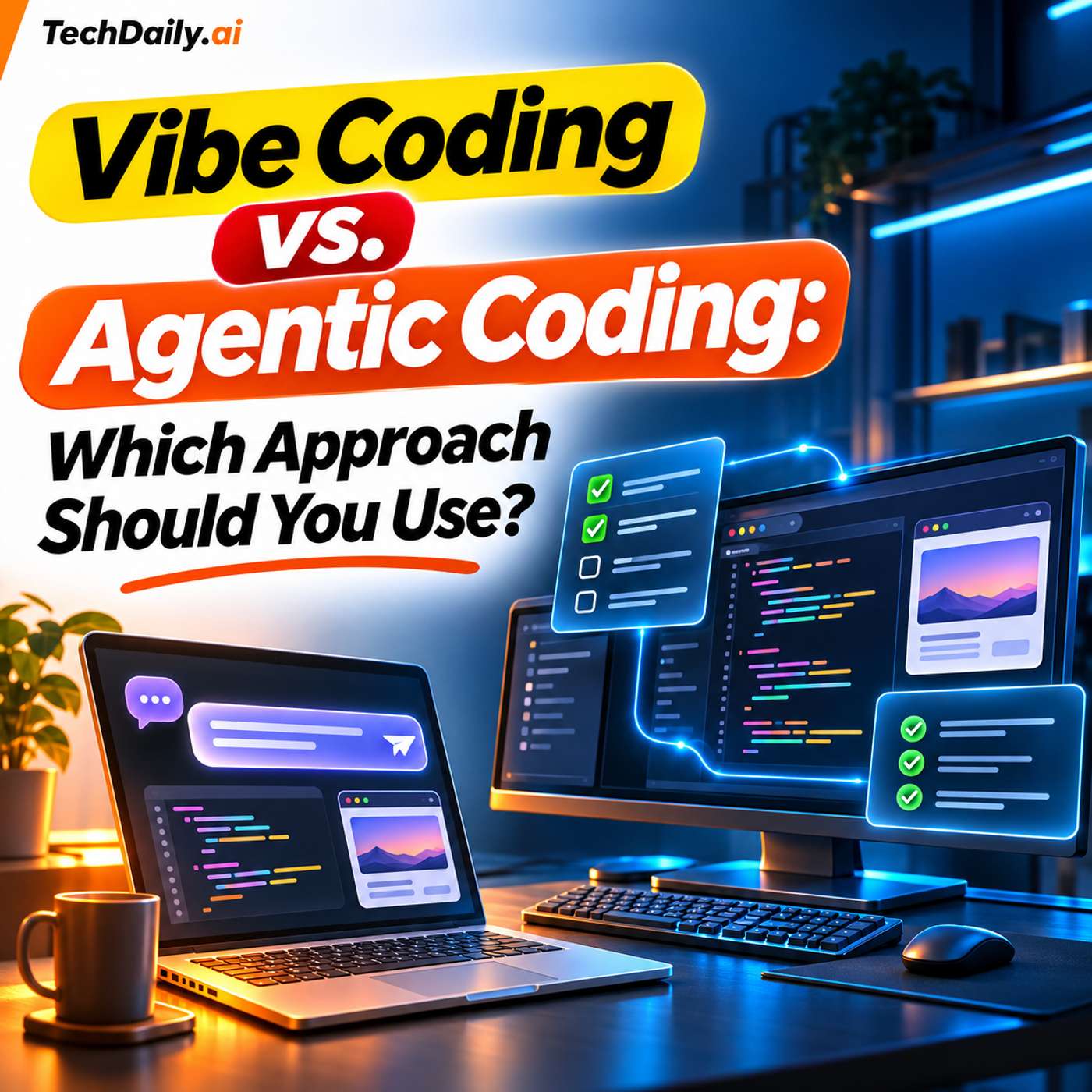
What if you could build an entire application over a weekend without writing a single line of code? It sounds like a software development breakthrough, but what happens when that application needs to scale, handle sensitive data, or support thousands of users? In this episode of techaily.ai, host David and resident expert Sofia explore the differences between vibe coding and agentic coding, examining how these two AI-assisted software development methodologies address fundamentally different engineering challenges. From natural language prompting and rapid prototyping to structured AI agent workflows, the conversation examines the risks of blindly accepting AI-generated code and the importance of maintaining architectural integrity, software security, and long-term maintainability. David and Sofia also discuss the limitations of large language models (LLMs), context windows, technical debt, and how specialized AI subagents can help manage complex enterprise codebases through task deleg
Hackaday Editors Elliot Williams and Al Williams met to review the week in Hackaday. It was a week for hands, in more ways than one, along with a voice assistant that ditches the cloud, a GPU for twenty cents, glasses that help the visually impaired see with LiDAR, and a virtual mechanical watch that shows you exactly how the real thing ticks. Beyond watch hands, you might like an eighteen-degrees-of-freedom robot hand for under $300 in parts. Or plant your own hands on a spinning wheel to make virtual honey feel sticky and virtual oil feel slippery in VR. For the Can't-Miss Articles, Elliot digs into the truth about hobbyist 3D scanning, photogrammetry versus structured light, and why the meshes you get are rarely the CAD models you wanted. Al, meanwhile, looks at how modern smartphones talk to satellites, bent pipes, flying cell towers, and all. Check out the links below to follow along, and as always, tell us what you think about this episode in the comments (https://hackaday.com/20
New podcast episode between Ege Erdil and Daniel Kokotajlo. I thought this was going to be a debate, but they ended up agreeing on a lot more than I expected. Their main point of disagreement is how likely it is that we get some intelligence explosion that gives us AIs more competent than any human expert before 2029. Ege puts this possibility at around 20%, whereas Daniel thinks it’s higher than 50%. They agree that there is not a huge difference in probability, and that, in either case, the situation is crazy enough that our civilization really needs to grapple with how the world might be transformed, and we need a plan that actually makes sense. In particular, we should stop antagonizing China if we think some kind of global treaty will be needed to make superintelligence go well. There was another important crux about how well we should expect future AIs (that swamp humans in population size and cognitive power) to treat us, and how relevant it is that current AIs, by and large, se
Fernando and Jeff are back to talk about the iPhone Duo after a month of use, including the new face unlock and close-to-lock toggle in iOS 27.3 beta 2. They also dig into Siri AI’s Health app access and its quirks, the HomePod mini stereo pair on Mac, the M6 Mac mini, the new iPad mini, and Apple’s upsell-heavy configurations. Hosts Fernando Silva (https://x.com/nandoprince93/) Jeff Benjamin (https://x.com/jeffbenjam/) 9to5Mac Overtime on Apple Podcasts (https://apple.co/4bahT89)
The Overtime crew revisits the iPhone Duo after prolonged usage. Is it still worth it without a telephoto lens or Face ID? We dig into its multitasking chops, standout FaceTime features, and how it stacks up against the Galaxy Z Fold 8. Plus, we break down Apple’s unprecedented product blitz and rumors of a second-gen MacBook Neo. Hosts Fernando Silva (https://x.com/nandoprince93/) Jeff Benjamin (https://x.com/jeffbenjam/) 9to5Mac Overtime on Apple Podcasts (https://apple.co/4bahT89)
On this episode of Overtime, we answer your comments on the touchscreen MacBook Pro and the iPad mini’s missing 120Hz display, then dive into the iOS 27.3 beta. Safari adopts adaptive dark mode and vertical tabs, StandBy is redesigned, and the new Health app returns. We also debate Apple Watch’s controversial Siri Recap and Live Rewind features. Is your watch always listening, and should you be worried? Hosts Fernando Silva (https://x.com/nandoprince93/) Jeff Benjamin (https://x.com/jeffbenjam/) 9to5Mac Overtime on Apple Podcasts (https://apple.co/4bahT89)
Security measures should be proportionate to demonstrated risks.
Share your view, then see how readers voted. No sign-in required. This poll is shared across stories.
Do you agree or disagree?
Common Quandary
A Common Quandary to discuss
Another conversation to explore, separate from this news story.
You are vegetarian, but the leftover steak is headed for the trash. Do you eat it?
A vegetarian avoids buying meat because of animal welfare concerns. At work events, untouched meat is routinely thrown away, and eating it would neither increase demand nor cause another animal to be harmed.
Should a moral practice be judged by its consequences or its consistency?