Vibe Coding vs. Agentic Coding: Which Approach Should You Use?
Listen through the publisher, then discuss the episode here or arrange an in-person Roundtable. Your city determines where to meet.
Roundtables are designed for groups of four, with a shared subject and room for everyone to speak. Come for discussion, with no dating expectation.
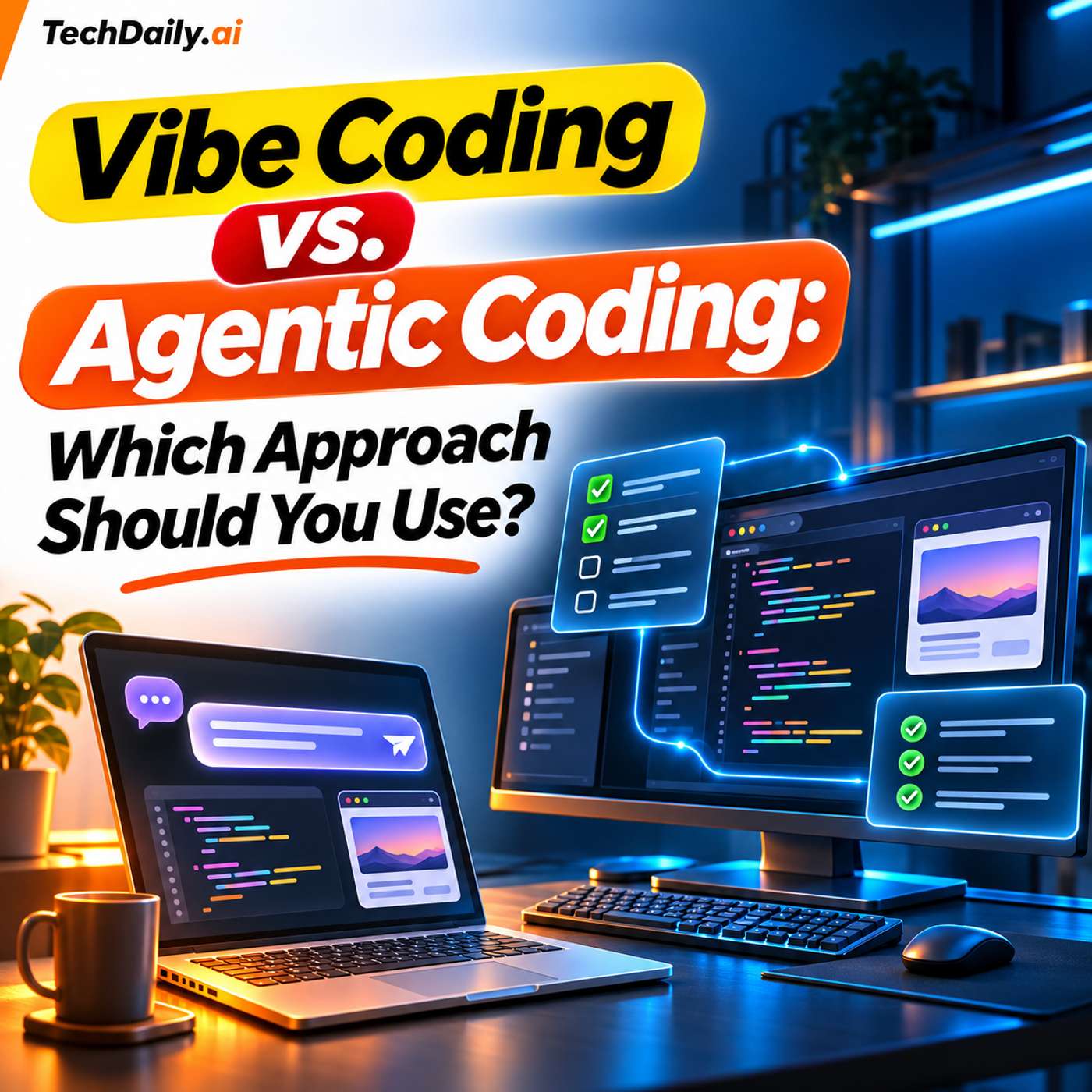
What if you could build an entire application over a weekend without writing a single line of code? It sounds like a software development breakthrough, but what happens when that application needs to scale, handle sensitive data, or support thousands of users? In this episode of techaily.ai, host David and resident expert Sofia explore the differences between vibe coding and agentic coding, examining how these two AI-assisted software development methodologies address fundamentally different engineering challenges. From natural language prompting and rapid prototyping to structured AI agent workflows, the conversation examines the risks of blindly accepting AI-generated code and the importance of maintaining architectural integrity, software security, and long-term maintainability. David and Sofia also discuss the limitations of large language models (LLMs), context windows, technical debt, and how specialized AI subagents can help manage complex enterprise codebases through task delegation and focused context management. In this episode, you'll learn: What vibe coding is and how it accelerates software development. How agentic coding differs from conventional AI code generation. Why uncontrolled AI-generated code can introduce technical debt. How structured agentic workflows support software architecture and maintainability. Why LLM context windows create challenges for large enterprise codebases. How the lost-in-the-middle phenomenon affects AI coding performance. How AI orchestrators and specialized subagents handle complex development tasks. Why autonomous AI agents introduce additional cybersecurity risks. How sandboxing, automated testing, and human-in-the-loop approvals protect development environments. The importance of AI governance, observability, permission controls, and rollback capabilities. When to use vibe coding for rapid prototyping versus agentic coding for production software. How AI is shifting the developer's role from code generation to architectural oversight. The episode presents a practical decision-making framework for choosing the right AI coding methodology based on task complexity, structural requirements, and the potential consequences of failure. Whether you're a software developer, DevOps engineer, software architect, engineering manager, or technology leader, this conversation explores how to leverage AI development tools without sacrificing engineering standards or losing control of your software. AI can accelerate code generation, but speed alone cannot guarantee secure, scalable, and maintainable applications. Human expertise, architectural judgment, and rigorous validation remain critical components of responsible software development. Tune in to discover how to balance AI coding automation with engineering discipline and build software that you can confidently maintain, secure, and scale.
Episode information is provided by the publisher. Listening takes place on the publisher’s service.
Listen at the source ↗