English-language podcasts

TechDaily.ai

GTA 6 and the Future of Gaming in the Generative AI Era

18 min

Listen through the publisher, then discuss the episode here or arrange an in-person Roundtable. Your city determines where to meet.

Roundtables are designed for groups of four, with a shared subject and room for everyone to speak. Come for discussion, with no dating expectation.

Can artificial intelligence recreate the magic of a video game that takes thousands of human developers more than a decade to build? Or is the painstaking, inefficient process of human creativity precisely what makes great entertainment so valuable? In this episode of techdaily.ai, host David and his guest expert explore the philosophical clash between Rockstar Games' Grand Theft Auto VI (GTA 6) and Anthropic's vision of AI-powered efficiency. Using GTA 6 and Anthropic's reported IPO as contrasting examples, the conversation examines two competing visions for the future of technology and entertainment. One celebrates human craftsmanship, artistic intention, and meticulous world-building, while the other promises instant content generation, automation, and hyperpersonalized digital experiences. The discussion explores whether generative AI can genuinely replicate human creativity and what the entertainment industry risks losing as it prioritizes production speed, cost reduction, and algorithmic efficiency. In this episode, you'll learn: Why GTA 6 represents a contrasting philosophy to generative AI. How Rockstar Games' approach to game development emphasizes human craftsmanship. Why creative inefficiency can contribute to exceptional artistic experiences. How Anthropic and large language models are reshaping the economics of creative production. How Google's Project Genie could challenge traditional video game development. Why technology leaders are betting on AI-generated personalized entertainment. The limitations of generative AI in artistic judgment and creative decision-making. Why rejecting bad ideas is an essential part of the creative process. How AI-generated content can introduce quality control challenges. Why hyperpersonalized media could fragment shared cultural experiences. What AI automation could mean for game developers, artists, and creative professionals. Whether traditional video game development can survive the industry's pursuit of efficiency. The episode also examines a fundamental difference between generating content and creating meaningful art. While generative AI can rapidly produce digital assets, stories, and virtual environments, human creators bring intentionality, judgment, experimentation, and the willingness to discard ideas that simply don't work. From handcrafted open-world environments to the prospect of instantly generated video games, this conversation raises important questions about the future of gaming, digital entertainment, and the creative economy. As artificial intelligence makes content easier and cheaper to produce, will audiences place greater value on experiences shaped by human imagination? Or will convenience and personalization redefine what we expect from entertainment? Tune in to explore the intersection of GTA 6, generative AI, human creativity, and the future of the entertainment industry.

Episode information is provided by the publisher. Listening takes place on the publisher’s service.

Listen at the source ↗

Featured places to meet in Palo Alto, CA

Explore these places and arrange a conversation through ThinkMatch.

City guide for Palo Alto, CA

More from TechDaily.ai

TechDaily.ai

Vibe Coding vs. Agentic Coding: Which Approach Should You Use?

20 min

What if you could build an entire application over a weekend without writing a single line of code? It sounds like a software development breakthrough, but what happens when that application needs to scale, handle sensitive data, or support thousands of users? In this episode of techaily.ai, host David and resident expert Sofia explore the differences between vibe coding and agentic coding, examining how these two AI-assisted software development methodologies address fundamentally different engineering challenges. From natural language prompting and rapid prototyping to structured AI agent workflows, the conversation examines the risks of blindly accepting AI-generated code and the importance of maintaining architectural integrity, software security, and long-term maintainability. David and Sofia also discuss the limitations of large language models (LLMs), context windows, technical debt, and how specialized AI subagents can help manage complex enterprise codebases through task deleg

Discuss this episode

TechDaily.ai

How Anthropic Uses Claude to Reinvent Software Engineering

19 min

What happens when your software developer, code reviewer, onboarding mentor, and on-call engineer are all powered by the same artificial intelligence? Anthropic's engineering practices offer a glimpse into a future where writing code becomes less important than designing systems, orchestrating AI agents, and solving complex business problems. In this episode of techdaily.ai, host David and guest expert Sophia explore Anthropic's AI-powered engineering culture in 2026, examining how Claude is transforming software development, infrastructure management, employee onboarding, technical recruitment, and engineering productivity. The conversation begins with Anthropic's reported migration of its Claude Messages API from a Python monolith to Rust. Discover how engineers leveraged Claude to learn a new programming language, generate production code, and validate system behavior through production traffic shadowing. David and Sophia also examine how automated code reviews, AI-powered incident

Discuss this episode

TechDaily.ai

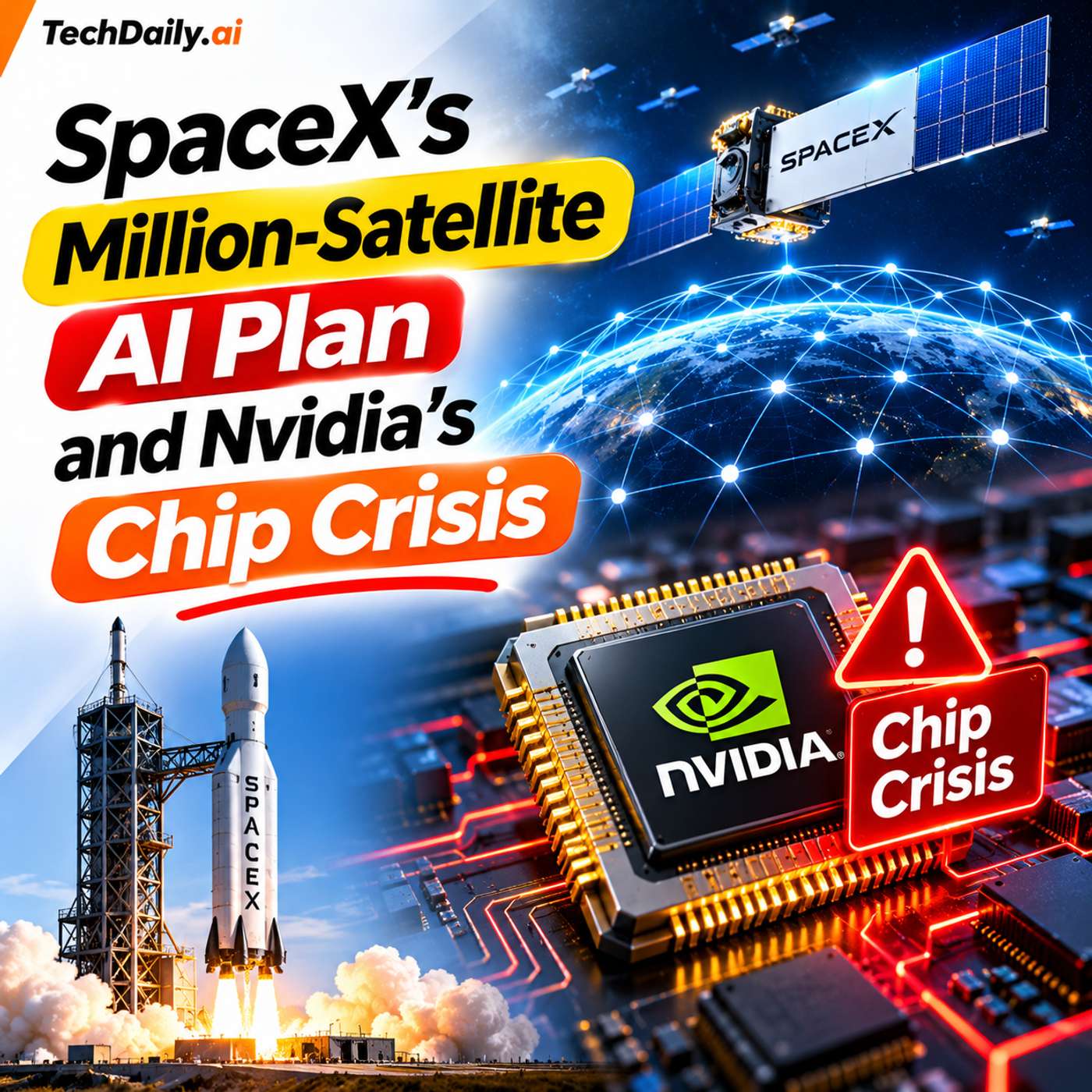
SpaceX’s Million-Satellite AI Plan and Nvidia’s Chip Crisis

14 min

What if the future of artificial intelligence isn't being built in Silicon Valley but in low Earth orbit? And what happens when the semiconductor supply chain powering that future becomes vulnerable to international chip smuggling? In this episode of TechDaily.ai, David and Sophia explore SpaceX’s ambitious vision for a million-satellite orbital AI data center network, the engineering challenges of computing in space, and the growing concerns surrounding Nvidia, semiconductor export controls, and global AI competition. From laser-powered satellite communications to advanced AI chip restrictions, this episode examines the technological, economic, regulatory, and ethical challenges shaping the future of artificial intelligence. In this episode, we discuss: SpaceX’s Star Mind project and its proposed million-satellite constellation. Orbital AI data centers and the future of computing infrastructure. Laser-based satellite communications and Starlink connectivity. Thermal management and coo

Discuss this episode

Community Poll

Sports eligibility rules should be based on transparent evidence and allow meaningful appeal.

Share your view, then see how readers voted. No sign-in required. This poll is shared across stories.

Do you agree or disagree?

Choose one answer

Common Quandary

A Common Quandary to discuss

Another conversation to explore, separate from this news story.

Your friend asks for an honest review after every date. Do their dates deserve privacy?

A close friend sends detailed post-date reports and expects your advice about every message, kiss, and awkward silence. One recent date is someone you know professionally, who would be embarrassed to learn how much you have heard.

Where does friendship's need for advice become gossip about an unsuspecting person?

Explore this quandary