Listen through the publisher, then discuss the episode here or arrange an in-person Roundtable. Your city determines where to meet.
Roundtables are designed for groups of four, with a shared subject and room for everyone to speak. Come for discussion, with no dating expectation.
A flying car -- it's an iconic image of the future. But after 100 years of flight and automotive engineering, no one has really cracked the problem. Pilot Anna Mracek Dietrich and her team flipped the question, asking: Why not build a plane that you can drive? Uploaded 09-08-13 Talk by Anna Mracek Dietrich.
Episode information is provided by the publisher. Listening takes place on the publisher’s service.
When you start your own company, it’s because you have the drive to sell a product or service you truly believe in. You feel that this item will add value to the lives of consumers or the world at large. But how do you stay in business and make progress in the professional world? The answer is strategic innovation. Think of some of the most prominent companies in the world: Netflix, Starbucks, Amazon, Apple. What do these companies have in common? They all found ways to reap the benefits of strategic innovation in their respective industries. Each of these companies found a way to deliver value to the lives of their target audience, and that’s why they continue to dominate in their fields. How can you master the art of strategic innovation? First, you have to start by asking yourself two key questions about your brand. Question #1: What business are you REALLY in? If you think about how this applies to a company like Starbucks, you might initially think they’re in the business of coffe
You are not where you want to be. You know it. You have known it for years. And you have a set of explanations — good ones — for why: the economy, your family, your background, the bad break, the boss who held you back, the relationship that took years from you. Uploaded 18-06-26 Here is the truth: every one of those might be partially true, and not one of them is the real reason. The real reason is that you have been outsourcing the responsibility for your life to circumstances, to other people, to the past, to bad luck — to anything outside of you. And as long as the cause sits outside of you, the solution sits outside of you too, so you wait for the external world to change while doing very little to change yourself. The explanations are not free. Every story you tell about why you are stuck is keeping you stuck, because the story replaces the action that would have moved you. After fifteen or twenty years of describing instead of changing, the description starts to feel like realit
The fight for the future of car racing has begun... If you want more optimistic stories about technology, subscribe to support our show! You already know about Formula 1. The car racing sport is famous around the world and is skyrocketing in popularity in the US in part because of the Netflix series Drive To Survive. But Formula 1 has a problem. More and more the cars that we drive are going fully electric, and the cars that they drive… aren’t. That matters, because the real reason F1 gets all this money and attention is that big companies are investing in and advertising their cutting edge tech. If that tech gets outdated, it loses the point - and the extra investment. What is the future of car racing? If it’s electric, does F1 change? Or is someone else going to get there first? Enter Formula E, the all-electric Formula 1. In this video, we explore the future of car racing, explain Formula E’s amazing tech and wild rules, and break down the drama within one of the world’s most popula
What do you do when you feel backed into a corner, the plan you were sure was meant for you falls through, and you honestly have no idea which way to turn next? In this raw, unscripted episode of The Positive Mindset Podcast, Henry Lawrence shares from right inside that moment—speaking to anyone sitting with the question, "What do I do?" Henry opens up about walking in faith after a door he felt certain had lined up closed unexpectedly. Instead of pretending he already has the neat answer, he walks through the shift in real time: checking the ego that resists asking for help, recognizing when we're asking God to help us control an outcome versus surrendering to His will, and discovering who we really are in our core when there is nothing external left to support it. He invites you to stop carrying the weight alone, hold your head high because of who your Father is, and bring the struggle to God first—not only in crisis, and not as a last resort. He leads an opening breath and prayer, a
After losing her mother in a sudden car accident, a woman began experiencing strange activity in the family home. For two weeks, footsteps resembling her mother's familiar high heels echoed through the house, and other unexplained incidents left the family wondering whether she was somehow still with them. Then, just as suddenly, everything stopped. Five years later, during an especially difficult time, she found herself wishing desperately that she could speak to her mother again. She called out to her repeatedly, hoping for some sign that she was listening. What happened afterward seemed like it might have been the answer she'd wanted. But as time passed, the activity in the house became increasingly disturbing, leaving her with far more questions than comfort. Had she really made contact with her mother—or had something else heard her calling? #RealGhostStoriesOnline #TrueGhostStories #AfterDeathCommunication #HauntedHouse #SignsFromBeyond #ParanormalEncounters #SpiritCommunication
Imagine taking a walk in the woods after a particularly busy week. You listen to the birds, watch the sunlight filter through the trees, and gradually notice little things you would normally walk past without a second thought. Nature has a way of bringing us back to the present moment. Hello everyone, and welcome to Daily English. Today's expression is “have a way of doing something.” When we say someone or something has a way of doing something, we mean that they have a particular ability or tendency to produce a certain effect, sometimes in a way that's difficult to explain. Let's look at a few examples. Imagine you're walking through a supermarket when you suddenly hear a song you used to listen to years ago. Within seconds, you're thinking about an old friend, a particular summer, and a version of yourself you haven't thought about in a long time. You might say: “Music has a way of bringing back memories we didn't even know we still had.” Now, imagine you've been worrying about a p
Dig into the slippery slope fallacy, which assumes that one step will lead to a series of events that lead to an extreme— often bad— scenario. Uploaded 19-08-21 -- It’s 1954. Vietnamese nationalists are on the verge of securing an independent Vietnam under communist leader Ho Chi Minh. U.S. President Eisenhower claims that by virtue of the "falling domino principle," communist control of Vietnam would lead to the global spread of authoritarian communist regimes. Can you spot the problem with this argument? Elizabeth Cox explores the slippery slope fallacy. Lesson by Elizabeth Cox, directed by TOGETHER. Support Our Non-Profit Mission ---------------------------------------------- Support us on Patreon: http://bit.ly/TEDEdPatreon Check out our merch: http://bit.ly/TEDEDShop ---------------------------------------------- Connect With Us ---------------------------------------------- Sign up for our newsletter: http://bit.ly/TEDEdNewsletter Find us on Twitter: http://bit.ly/TEDEdTwitter Pe
View full lesson: http://ed.ted.com/lessons/how-do-we-measure-distances-in-space-yuan-sen-ting Uploaded 09-10-14 When we look at the sky, we have a flat, two-dimensional view. So how do astronomers figure the distances of stars and galaxies from Earth? Yuan-Sen Ting shows us how trigonometric parallaxes, standard candles and more help us determine the distance of objects several billion light years away from Earth. Lesson by Yuan-Sen Ting, animation by TED-Ed.
As machines take on more jobs, many find themselves out of work or with raises indefinitely postponed. Is this the end of growth? No, says Erik Brynjolfsson -- it's simply the growing pains of a radically reorganized economy. A riveting case for why big innovations are ahead of us ... if we think of computers as our teammates. Be sure to watch the opposing viewpoint from Robert Gordon. Uploaded 30-08-13 Talk by Erik Brynjolfsson.
Extra learning support should avoid publicly labeling students as failures.
Share your view, then see how readers voted. No sign-in required. This poll is shared across stories.
Do you agree or disagree?
Common Quandary
A Common Quandary to discuss
Another conversation to explore, separate from this news story.
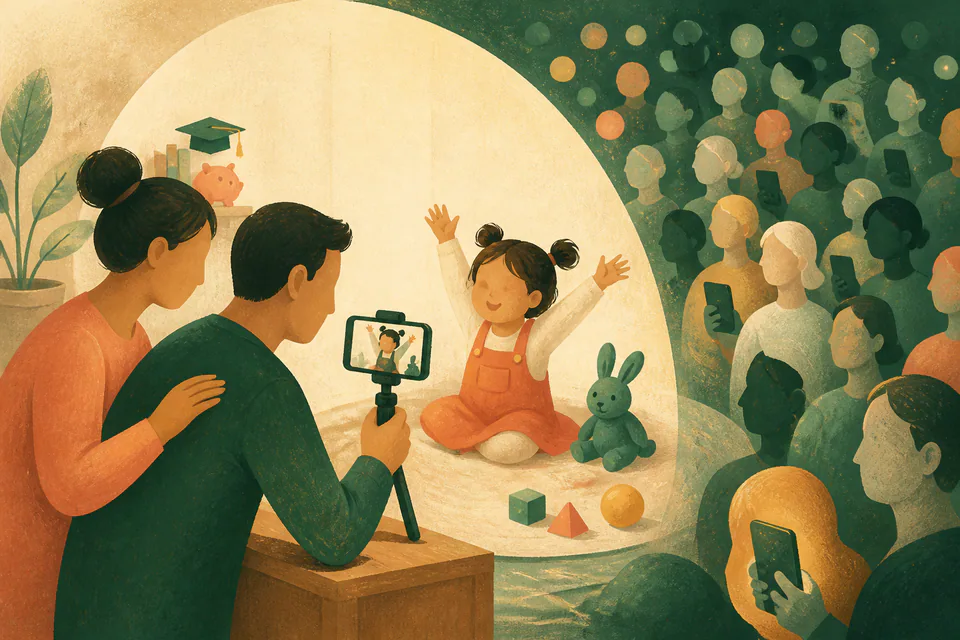
Your adorable child could pay for college by becoming an influencer. Do you start filming?
Parents post cheerful videos of their young child and earn enough to fund the child's education. The child enjoys filming now but cannot understand what it means for strangers to watch those moments years later.
Can parents consent to a permanent public identity on a child's behalf?