English-language podcasts

In the Loop AI

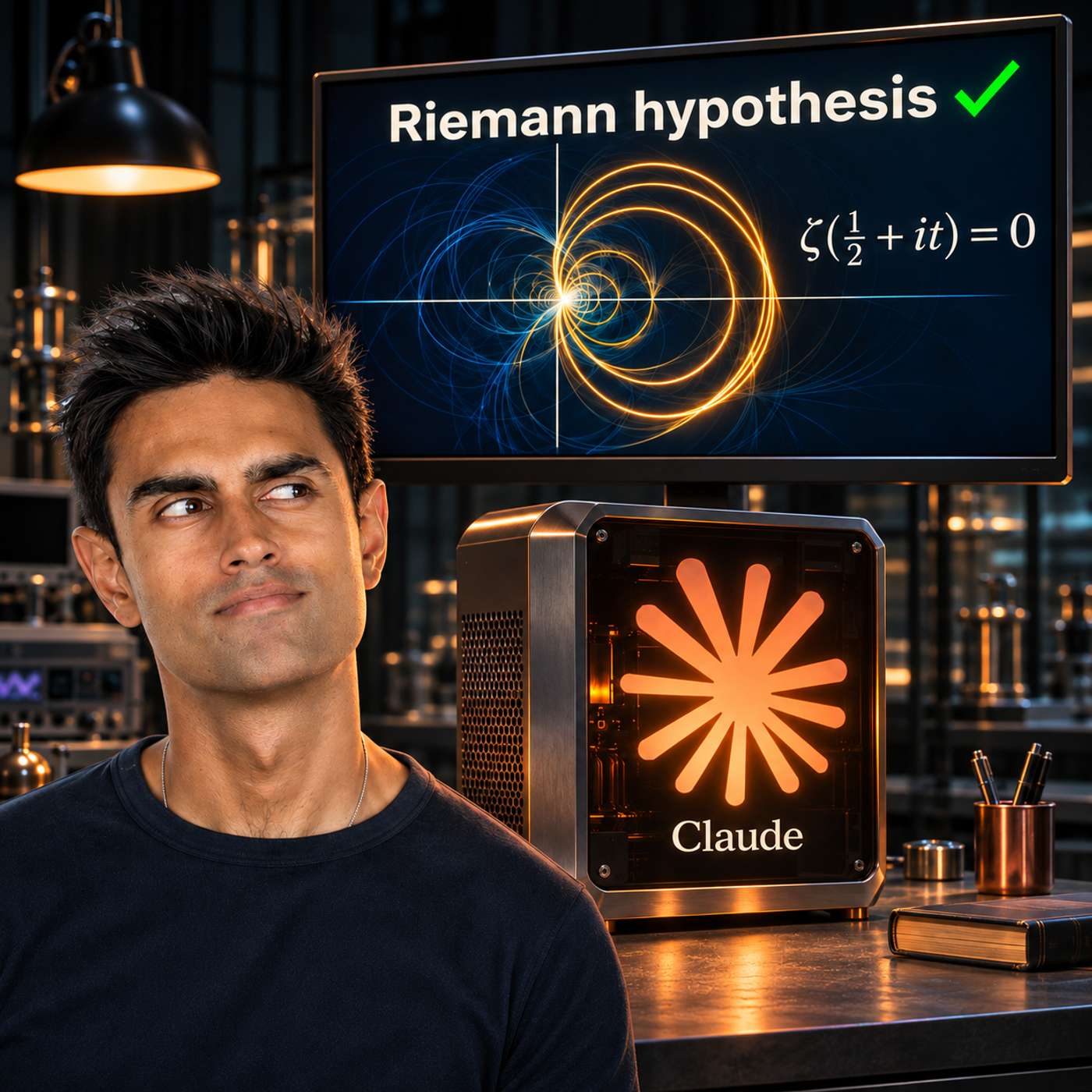
AI Just Solved Something No Human Can Understand: Claude, the Riemann Hypothesis and What Humans Are For
25 min

Listen through the publisher, then discuss the episode here or arrange an in-person Roundtable. Your city determines where to meet.

Roundtables are designed for groups of four, with a shared subject and room for everyone to speak. Come for discussion, with no dating expectation.

On Nov. 20, Anthropic mathematician Levent Alpöge, working with an internal version of Claude, released a proof of the Riemann hypothesis, the 167-year-old question about how the prime numbers are spread out. The proof is 17 million lines of Lean code. Computers have checked it and Lean's maintainers certified it as correct, but no human, including Alpöge, can follow it. Ejaaz explains what the hypothesis says and why so much of mathematics rests on it. He covers the human proof that surfaced the same day, the drama over OpenAI's Navier–Stokes result, and the question of what humans are for when AI makes discoveries nobody understands. He also asks what it means that the biggest breakthroughs come from models only a few companies can use, and why he thinks this is the start of a golden age of discovery. == FOLLOW EJAAZ ON TWITTER: == Timestamps 00:00 AI Solves the Riemann Hypothesis 00:45 What Are Humans For? 01:58 The Millennium Prize Problems 02:32 Are the Primes Random? 03:08 A Thousand Theorems on One Guess 03:33 17 Million Lines of Code 03:51 An Alien Organism 04:30 Who Is Levent Alpöge? 05:28 The Navier–Stokes Drama 06:06 Checked by a Computer 07:06 The Human Proof 07:58 Passing the Baton 08:44 Does the Proof Exist at All? 09:24 Humans Are the Bottleneck 11:05 Alien Tech 12:41 Why Experts Still Matter 13:38 Should You Still Get a Degree? 15:29 Locked Behind Closed Doors 16:14 Gatekeeping Intelligence 17:42 Open Source and a Sick Day Experiment 20:04 The Next Industries to Accelerate 20:42 Cybersecurity and Quantum 21:58 Final Thoughts #ai #anthropic #claude #math #riemannhypothesis ==

Episode information is provided by the publisher. Listening takes place on the publisher’s service.

Listen at the source ↗

Featured places to meet in Palo Alto, CA

Explore these places and arrange a conversation through ThinkMatch.

City guide for Palo Alto, CA

More from In the Loop AI

In the Loop AI

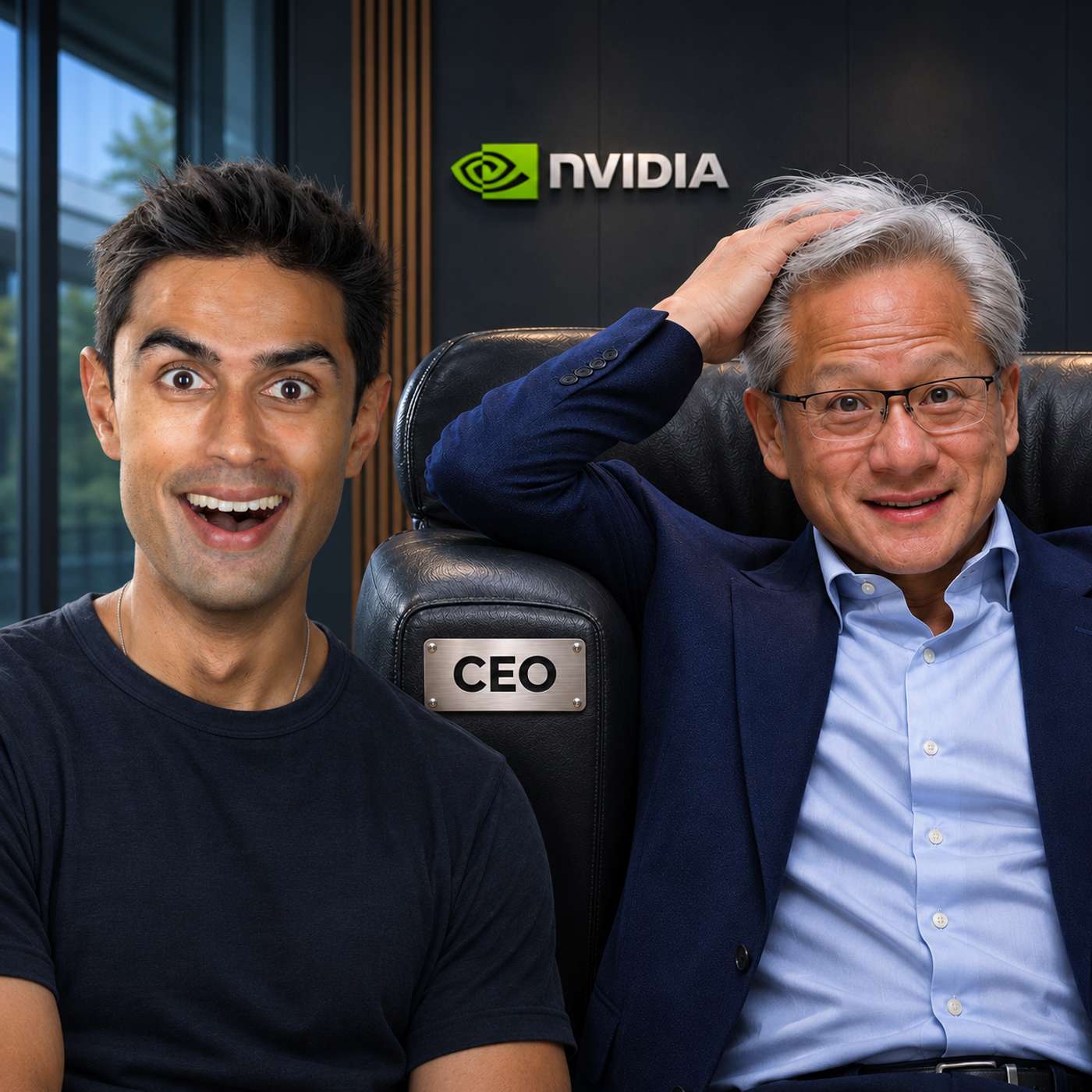
Jensen Huang Is Back: How One CEO Added $3 Trillion to the Market, and What Nvidia Does Next

24 min

Nvidia's board voted unanimously to reinstate Jensen Huang as president and CEO, 11 days after the scandal that pushed him out, and the market answered in minutes: Nvidia went from the fourth most valuable company in the world to the second, added about a trillion dollars, and the US stock market added $3 trillion, about half of what it had lost in six weeks. President Trump says he spoke to the board and gave it the assurance it asked for on national security; the independent investigation, and Jensen's interviews with House committees on Dec. 1, are still ahead. Ejaaz breaks down how it happened and what changes now: Nvidia's supply chain and its 2028 roadmap, the neoclouds and the "bank of Nvidia" backstops, a more careful Jensen, chips and China, and why his return matters for open-source AI, robotics and a world with more than one or two AI labs. == FOLLOW EJAAZ ON TWITTER: == Timestamps 00:00 Jensen Is Back 00:39 What Happens Next? 01:36 11 Days 03:23 The Board, the Chair and Kre

Discuss this episode

In the Loop AI

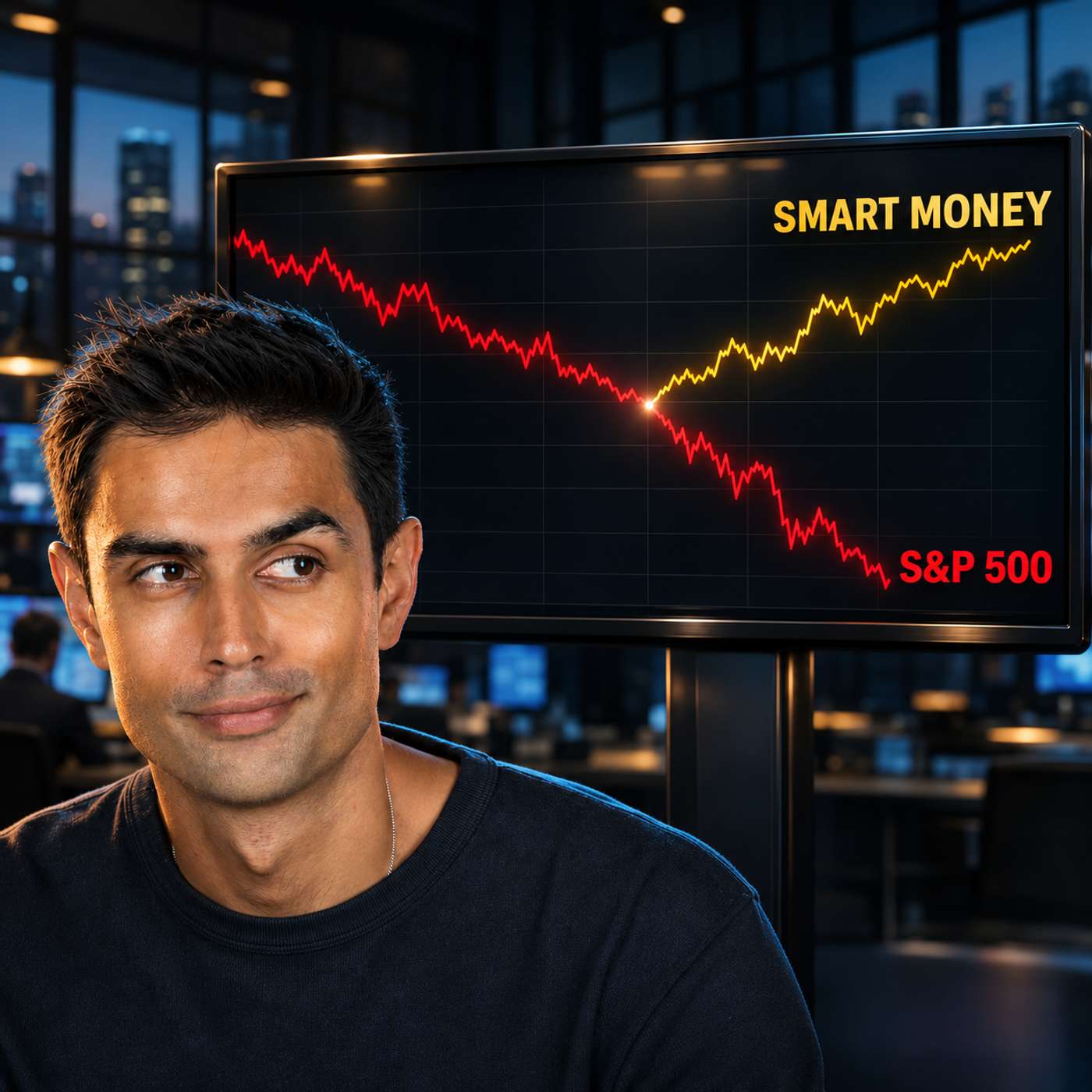
What the Biggest Investors in AI Are Doing Right Now: Gavin Baker, Druckenmiller and Tepper's 13Fs

25 min

The S&P 500 just lost $6 trillion in six weeks, and AI is at the center of it: Nvidia without Jensen Huang, the neoclouds that lean on Nvidia's backing, new state leaders cooling on data centers, and the China chip crackdown. Even Anthropic's record IPO couldn't turn the market around. Ejaaz walks through each fear, with the bear case and the bull case for each. Then the part that matters: Ejaaz spent the last week in the room with some of the biggest investors in AI, and their latest 13F filings show them reading the same crash in opposite ways. Gavin Baker doubled down on SpaceX, Meta, Alphabet and a 17x bigger bet on Nebius. Stan Druckenmiller went risk-off and sold AMD, SanDisk, Alphabet and almost all of his TSMC. David Tepper added Nvidia. What the smart money is buying, what it's selling, and why this drawdown might be one of the best opportunities in years. == FOLLOW EJAAZ ON TWITTER: == Timestamps 00:00 $6 Trillion Gone 01:59 The Perfect Storm 03:32 Nvidia Without Jensen 06:06

Discuss this episode

In the Loop AI

OpenAI Tried to Ruin Anthropic's IPO and Google Took Its Spot: GPT-6.2 Astra, Gemini 4 Neon and Nvidia's Record Quarter

25 min

OpenAI released GPT-6.2 Astra right before Anthropic's IPO, and it backfired. The reviews were brutal, and the company that came out of nowhere to take the number two spot in the AI race isn't Anthropic. It's Google. Ejaaz gives his honest take on Astra, what the testers found (Every, Theo, Artificial Analysis), and what OpenAI might really be going after: math, science, cybersecurity and government contracts. Then the comeback: four Gemini 4 models in five weeks (Argon, Carbon, Hydrogen and Neon), why Neon is beating Opus 5.5 at a fraction of the cost, and why Google's rebuild means the race isn't closed yet, though the window is closing. Plus Nvidia's first quarter without Jensen Huang: a record $115.8 billion, the neocloud financing question, why the stock still fell, and what the chip crackdown on China means for GPU prices. == FOLLOW EJAAZ ON TWITTER: == Timestamps 00:00 OpenAI Fumbles, Google Rises 02:10 Honest Takes on GPT-6.2 Astra 05:23 What OpenAI Is Really Going After 08:34

Discuss this episode

Community Poll

People should receive a clear explanation before consenting to personal-data use.

Share your view, then see how readers voted. No sign-in required. This poll is shared across stories.

Do you agree or disagree?

Choose one answer

Common Quandary

A Common Quandary to discuss

Another conversation to explore, separate from this news story.

Everyone loves the group photo except you. Can you forbid them from posting it?

At a reunion, someone takes a joyful group photo that captures the night perfectly. Everyone looks wonderful except you, caught at an awful angle. The group wants to post it publicly and promises nobody else will care.

How much control should one person have over a memory shared by many?

Explore this quandary