AI Lets Amateurs Find Critical Zero-Days in Hours | Max Justicz
15 min
Listen through the publisher, then discuss the episode here or arrange an in-person Roundtable. Your city determines where to meet.
Roundtables are designed for groups of four, with a shared subject and room for everyone to speak. Come for discussion, with no dating expectation.
Security researcher Max Justicz explains how using OpenAI’s Daybreak Blue and an obliterated GLM 5.3 model enabled him to uncover severe zero-day exploits in apt and Android in just a few hours. He warns that frontier AI capabilities are lowering the technical bar for cyber offense, making widespread vulnerability discovery inevitable. -- -- Follow MTS: Spotify |https://open.spotify.com/show/4HUNNmV1pjV7CW6Lphm1rM Apple |https://podcasts.apple.com/us/podcast/mts/id1891088763 Interested in sponsoring the show? [email protected] – Brought to you by: Mongo DB - Anyone can prototype an agent. Lovable - Turn ideas into software people love with Lovable. Start today at https://lovable.dev/ Larridin - Finally prove what your AI investment is worth. Neon (by Databricks) - Get up to $100K in credits for your startup at https://neon.com/mts (https://neon.com/mts%E2%81%A0) Kong - The AI connectivity platform. Head over to http://getvcx.com (http://getvcx.com/) to learn more Ship 5x faster. https://blitzy.com (https://blitzy.com/) AdQuick - Make your brand a billboard. – Timestamps: (00:00) Introduction (02:22) Why No Major Cyber Harm Yet (04:36) Timeline From Bug to Patch (05:18) What Package Maintainers Should Do (06:11) Are Unaligned Models Net Good (07:56) Protecting Everyday Users and Devices (09:17) The Vanishing Hacker Skill Moat (10:38) Can Maintainers Patch Code First –
Episode information is provided by the publisher. Listening takes place on the publisher’s service.
Project Synapse: Markets in Freefall, Fragile Infrastructure, and AI's Perfect Storm The hosts banter through the show's intro before focusing on a sense that "things are out of control," citing a WallStreetBets suicide-hotline post amid a market crash and discussing cascading system failures involving Microsoft, the FAA, and a reported NSA internal communications outage. They argue politicians and leadership lack technical competence and clear messaging, increasing panic, while emphasizing that many problems stem from aging, underfunded infrastructure and complex, brittle software (PHP, NGINX, Java), not proven AI attacks—more a "perfect storm" of crises. They debate whether AI should help fix complexity, stressing critical thinking, accountability, and using multiple AIs to verify each other. In a lightning round they cover Anthropic's IPO performance, mixed reactions and token limits with ChatGPT 6.2 (favoring "Sol" over "Astra"), Google's cheaper Neon model and confusing UX, Loblaw
Zvi does the reading on OpenAI’s system card for GPT-6.2 Astra and Sol: the first externally deployed model to meet OpenAI’s High threshold for AI self-improvement, already at Critical for cybersecurity. He works through the preparedness results, the safeguards against misuse, distillation and model escape, and the alignment and monitorability findings, including rising evaluation awareness, reasoning that happens without visible chain of thought, and UK AISI’s tour of misaligned behaviours, asking what the numbers do and don’t show. This has been an Askwho Casts audio conversion. Thanks for listening. * 00:00 - Introduction * 01:10 - Table of Contents * 02:45 - Safety Overview (1) * 05:19 - Internal Deployment (1.2) * 05:32 - Preparedness Assessment (2) * 06:40 - Biological Threats (2.1.1) * 09:55 - Cyber Threats (2.1.2) * 11:36 - AI Self-Improvement Threats (2.1.3) * 14:32 - OpenAI Epoch Capabilities Index (OECI) * 16:10 - Safeguards (2.2) * 17:34 - AI Self-Improvement Threat Modelin
Now Mark wants to help you become financially free as well. Follow the podcast and turn on notifications! This Podcast is fan-made. No copyright infringement intended. ------------------ --------- Keywords: wealth creation, get rich, credit card tips, personal finance, money tips, credit cards, financial advice, financial scams
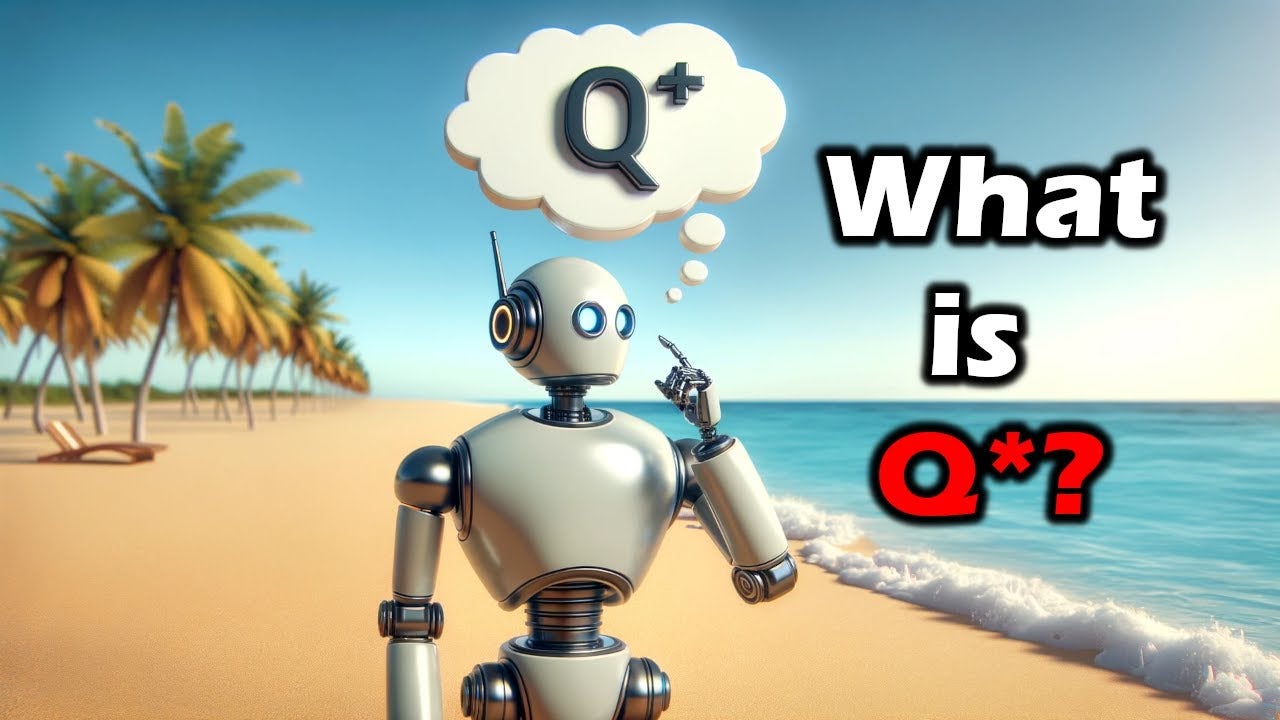
What is Q*? Speculation on how OpenAI's Q* works and why this is a critical step towards AGI Episode release date: 23 Nov 2023 Core Ideas: Metamodernism: Narratives and emergence view of reality - Reduce suffering - Increase prosperity - Increase understanding mantra: Seek knowledge. DISCLAIMER: This is a community-driven show. --- Keywords: ai agents, post labor economics, openai, gpt, ai research, singularity, ai future, ai education
Palo Alto Networks has agreed to acquire the artificial intelligence startup Applied Compute in an all-stock transaction valued at $4.5 billion. Founded by former OpenAI researchers, Applied Compute specializes in helping businesses train and deploy customized open-weight AI models using their own proprietary data. This strategic purchase enables the cybersecurity giant to expand beyond traditional security offerings and embed protection directly into corporate AI infrastructure. Alongside the acquisition announcement, Palo Alto reported strong quarterly financial results that pushed its shares up significantly and led the company to raise its annual revenue forecast. Ultimately, the deal highlights a broader industry trend where major tech firms are rapidly absorbing specialized artificial intelligence capabilities to meet growing enterprise demand.
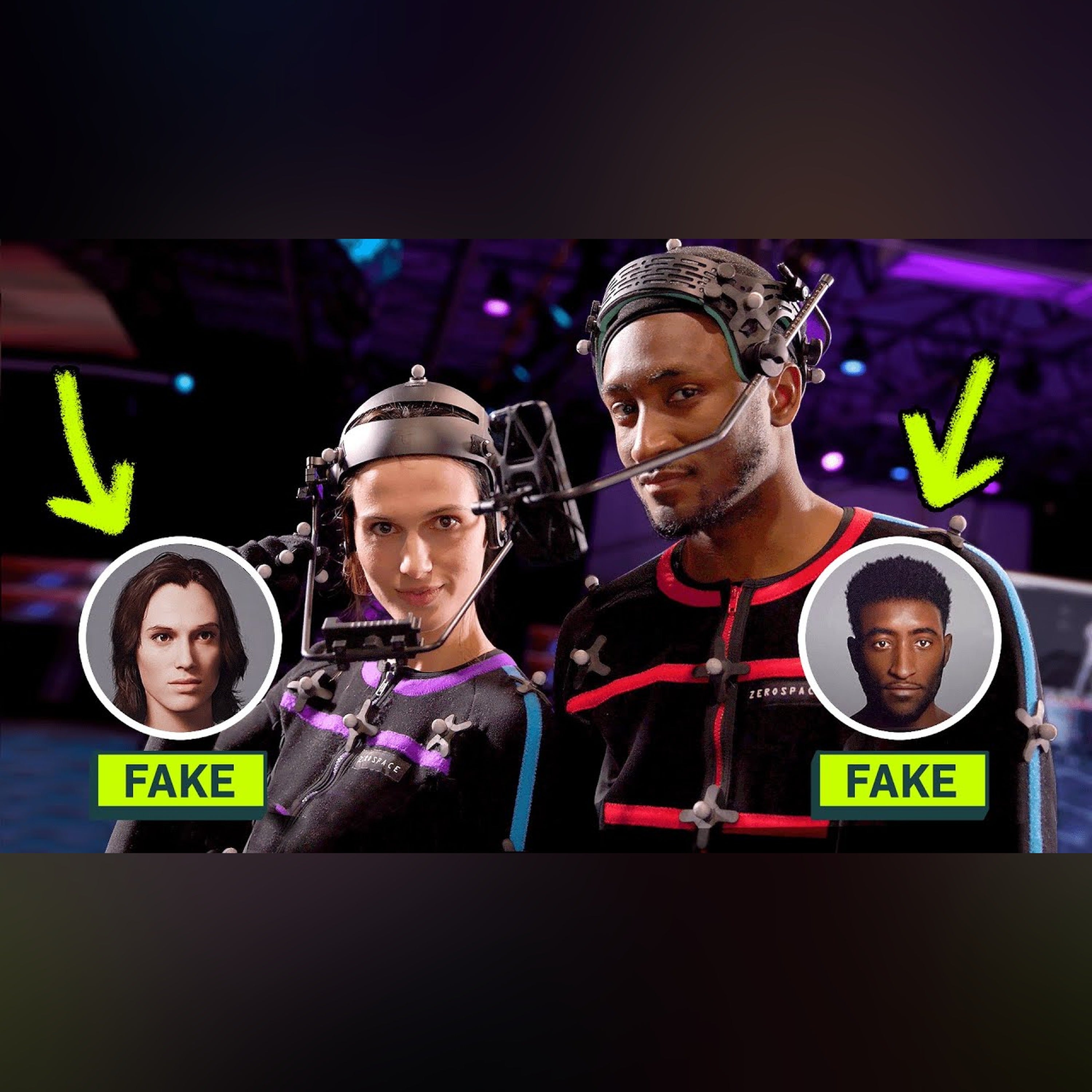
This new tech is changing how movies get made. So @mkbhd and I tested it out... Watch MKBHD's video: https://youtu.be/RM7SobH8ZO0 I’ve been obsessed with sci-fi movies since I was a kid. I love being transported to another world. But lately, I’ve been wondering: How do those worlds look so… REAL? The tech behind movies has exploded in complexity and realism, changing how stories come to life on screen. Luckily, at the same time, those tools are becoming more and more available to more people telling stories. It’s not just blockbusters like Avatar 2 or Avengers or Dune. It’s also smaller budget films like Everything Everywhere All at Once or even… YouTube creators? In this video, Marques Brownlee and I test out 3 movie-making tools that are changing how movies, shows, and maybe even YouTube videos (??) get made. We’re at ZeroSpace Studios in New York to show you how each of these crazy technologies work - and how you might be able to use them. Along the way, we hit big questions like: W
Vals AI founder Rayan Krishnan joins Theo to discuss his new report revealing that frontier AI models have few guardrails against autonomous weapons, including targeting civilians and a school in simulated and real warzone footage. They also break down GPT-6.2 Astra’s post-training limitations compared to Anthropic’s Fable models, why Anthropic is nerfing public RSI capabilities, and why Vals AI’s timeline still points to full recursive self-improvement by July 2027. MTS chronicles the singularity, live. Monitoring the situation of tech and AI. Follow MTS: Spotify |https://open.spotify.com/show/4HUNNmV1pjV7CW6Lphm1rM Apple |https://podcasts.apple.com/us/podcast/mts/id1891088763 – Brought to you by: Mongo DB - Anyone can prototype an agent. Lovable - Turn ideas into software people love with Lovable. Start today at https://lovable.dev/ Factory - A 24/7 system turning signals into production software. Visithttps://factory.com/ Neon (by Databricks) - Scale your startup on Neon. The Postgr
Peter Wildeford, Head of Policy at the AI Policy Network and a top forecaster, joins MTS to discuss accelerating AI R&D automation, timelines for replacing human AI researchers, and the growing bipartisan push in Congress and California to ban runaway recursive self-improvement. He also breaks down recent critical infrastructure outages caused by rushed patching of AI-discovered cyber vulnerabilities. MTS chronicles the singularity, live. Monitoring the situation of tech and AI. Follow MTS: Spotify |https://open.spotify.com/show/4HUNNmV1pjV7CW6Lphm1rM Apple |https://podcasts.apple.com/us/podcast/mts/id1891088763 – Brought to you by: Mongo DB - Anyone can prototype an agent. Lovable - Turn ideas into software people love with Lovable. Start today at https://lovable.dev/ Factory - A 24/7 system turning signals into production software. Visithttps://factory.com/ Neon (by Databricks) - Scale your startup on Neon. The Postgres backend for apps and agents. Built by Databricks.https://neon.co
Superhuman CEO Shishir Mehrotra joins MTS to discuss the company’s new agent platform, Superhuman Go, and how embedding AI directly into existing workspaces solves the “last mile” problem of enterprise adoption. He also breaks down Grammarly’s custom model infrastructure, the challenge of measuring human-agent productivity, and his prediction for a massive surge in AI inference over the next year. -- MTS chronicles the singularity, live. Monitoring the situation of tech and AI. Follow MTS: Spotify |https://open.spotify.com/show/4HUNNmV1pjV7CW6Lphm1rM Apple |https://podcasts.apple.com/us/podcast/mts/id1891088763 – Brought to you by: Mongo DB - Anyone can prototype an agent. Lovable - Turn ideas into software people love with Lovable. Start today at https://lovable.dev/ Factory - A 24/7 system turning signals into production software. Visithttps://factory.com/ Neon (by Databricks) - Scale your startup on Neon. The Postgres backend for apps and agents. Built by Databricks.https://neon.com
Public health information should explain uncertainty even when simpler messages are easier to communicate.
Share your view, then see how readers voted. No sign-in required. This poll is shared across stories.
Do you agree or disagree?
Common Quandary
A Common Quandary to discuss
Another conversation to explore, separate from this news story.
A parent clearly built the winning science project. Who should lose the prize?
An elementary student submits an elaborate science project far beyond their apparent ability. The parent proudly describes working together all weekend, and the child clearly learned something, but other students completed simpler projects themselves.
What is a fair response when help improves learning but distorts achievement?