Analyzing a zombie: brain and behavior (Part two) - Tim Verstynen and Bradley Voytek
6 min
Listen through the publisher, then discuss the episode here or arrange an in-person Roundtable. Your city determines where to meet.
Roundtables are designed for groups of four, with a shared subject and room for everyone to speak. Come for discussion, with no dating expectation.
View full lesson: http://ed.ted.com/lessons/diagnosing-zombies-brain-and-behavior-tim-verstynen... How are different brain stimulations involved with human behaviors--and how can observing a zombie help us understand the brain? In the second part of the Diagnosing Zombies series, two scientists continue to ponder the erratic behaviors of a zombie to explore the relationship between the brain and behavior. Lesson by Tim Verstynen & Bradley Voytek, animation by TED-Ed.
Episode information is provided by the publisher. Listening takes place on the publisher’s service.
PBS Member Stations rely on viewers like you. To support your local station, go to:http://to.pbs.org/DonateSPACE Sign Up on Patreon to get access to the Space Time Discord! Physics is the business of figuring out the structure of the world. So are our brains. But sometimes physics comes to conclusions that are in direct conflict with concepts fundamental to our minds, such as the realness of space and time. How do we tell who’s correct? Are time and space objective realities or human-invented concepts? Episode Companion Playlist Check out the Space Time Merch Store Search the Entire Space Time Library Here: https://search.pbsspacetime.com/ Hosted by Matt O'Dowd Written by Bahar Gholipour & Matt O'Dowd Post Production by Leonardo Scholzer, Yago Ballarini, Pedro Osinski, Caique Oliveira, Adriano Leal & Stephanie Faria Directed by Andrew Kornhaber Associate Producer: Bahar Gholipour Executive Producers: Eric Brown & Andrew Kornhaber Executive in Charge for PBS: Maribel Lopez Director of P
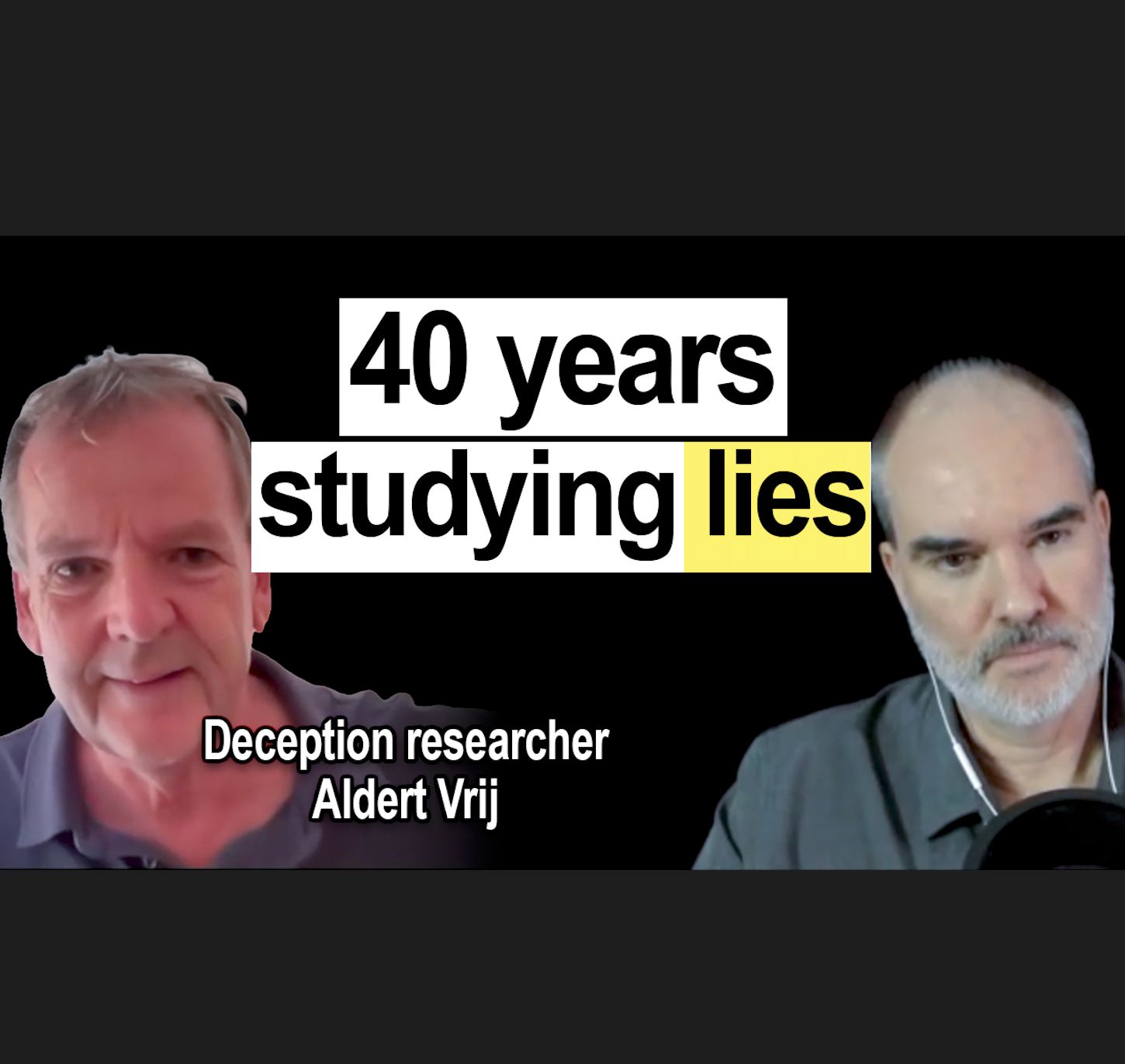
What actually works when it comes to detecting lies, and why are so many popular ideas about reading people and nonverbal behavior at odds with the scientific research? I talk with Aldert Vrij, one of the world's leading deception-detection researchers, who has spent almost four decades studying these topics. We discuss why what people say is far more revealing than their body language; why the perceived “sexiness” of reading nonverbal behavior has contributed to widespread myths and misconceptions; whether vocal behaviors like pitch, volume, and hesitation contain meaningful clues; and whether there's value in analyzing minor word choices and turns of phrase, as is done in so-called “statement analysis.” We discuss Paul Ekman's legacy as a source of faulty ideas about deception, micro-expression-based deception detection training, and the strategies that popular “body language experts” use to appear scientifically credible while simultaneously promoting ideas that conflict with the sc
Why do we have a tendency to hold on to the past? Why do we continue to let the most painful experiences in our lives not only influence, but control our future? And what would life look like if we were able to let go of the past, shed the stories that we carry with us and move forward in a way that is untethered to the pain? Uploaded 15-10-19 Welcome to the Tony Robbins Podcast. In this episode of the real breakthrough series, we’re diving into a particularly sensitive subject – letting go of past trauma. Some of you may have endured unspeakable trauma in your lives. But as horrific as these experiences were, you may continue to hold on to them, fervently at times. Because letting go can be terrifying. But holding on has profound consequences of its own. We continue to give the pain power. We keep cords of energy tied to the people that hurt us. We even let these terrible experiences become part of our identity. In this episode, you’re going to hear from JoLynn – a woman who endured t
View pictures and support us on Patreon(https://www.patreon.com/user?u=73787379) This episode examines documented black bear encounters involving hikers, hunters, campers, homeowners, and backcountry workers. These incidents range from surprise encounters and defensive attacks to prolonged confrontations where bears returned repeatedly, testing human endurance, decision-making, and survival instincts.Black bears are often described as shy or non-aggressive, but these cases reveal how quickly circumstances can change when food sources, cubs, human behavior, or environmental pressure collide. Each story is carefully researched and presented to highlight what went wrong, what saved lives, and what these encounters reveal about black bear behavior in the wild.
Master the skills that change lives — enroll in your free human behavior course today: https://nci.university/learn Uploaded 09-01-26 You were never reacting to chaos — you were responding to structure. Outcomes don’t appear suddenly; they’re assembled long before you notice them. Understanding how pressure is built changes how the world feels immediately. All influence follows patterns once you know where to look. Reality doesn’t break — it gets reshaped in layers. Every system depends on predictable human responses. Given the right conditions, behavior becomes almost automatic. Once you see the architecture, panic loses its leverage. Detection beats reaction — every time. Please note that the content provided in this broadcast is for informational and educational purposes only and should not be construed as legal, medical, financial, or professional advice. No material in this communication establishes any form of professional relationship that is privileged or confidential. The insi
🇺🇸 TWO NAVY SEALS. TWO INCREDIBLE JOURNEYS. ONE POWERFUL MISSION TO TRANSFORM YOUR FINANCIAL FUTURE! Michael Jaco welcomes fellow former Navy SEAL Larry Yatch, founder of TruPath Mastery, for an eye-opening conversation about success, leadership, financial trauma, and the hidden subconscious patterns that can keep even the most accomplished people from reaching their full potential. With 24 years as a Navy SEAL and 11 years as a CIA security operative, Michael shares the powerful lessons of mental discipline, intuition, and personal transformation that shaped his extraordinary journey. Larry brings 10 years of Navy SEAL service and an impressive career advising Fortune 50 executives. But despite achieving tremendous professional success, he discovered that the survival patterns that once made him successful were also keeping him trapped in his own business. THE BIG REVELATION: YOUR MONEY HABITS MAY HAVE VERY LITTLE TO DO WITH MONEY! From childhood programming and fear of scarcity to
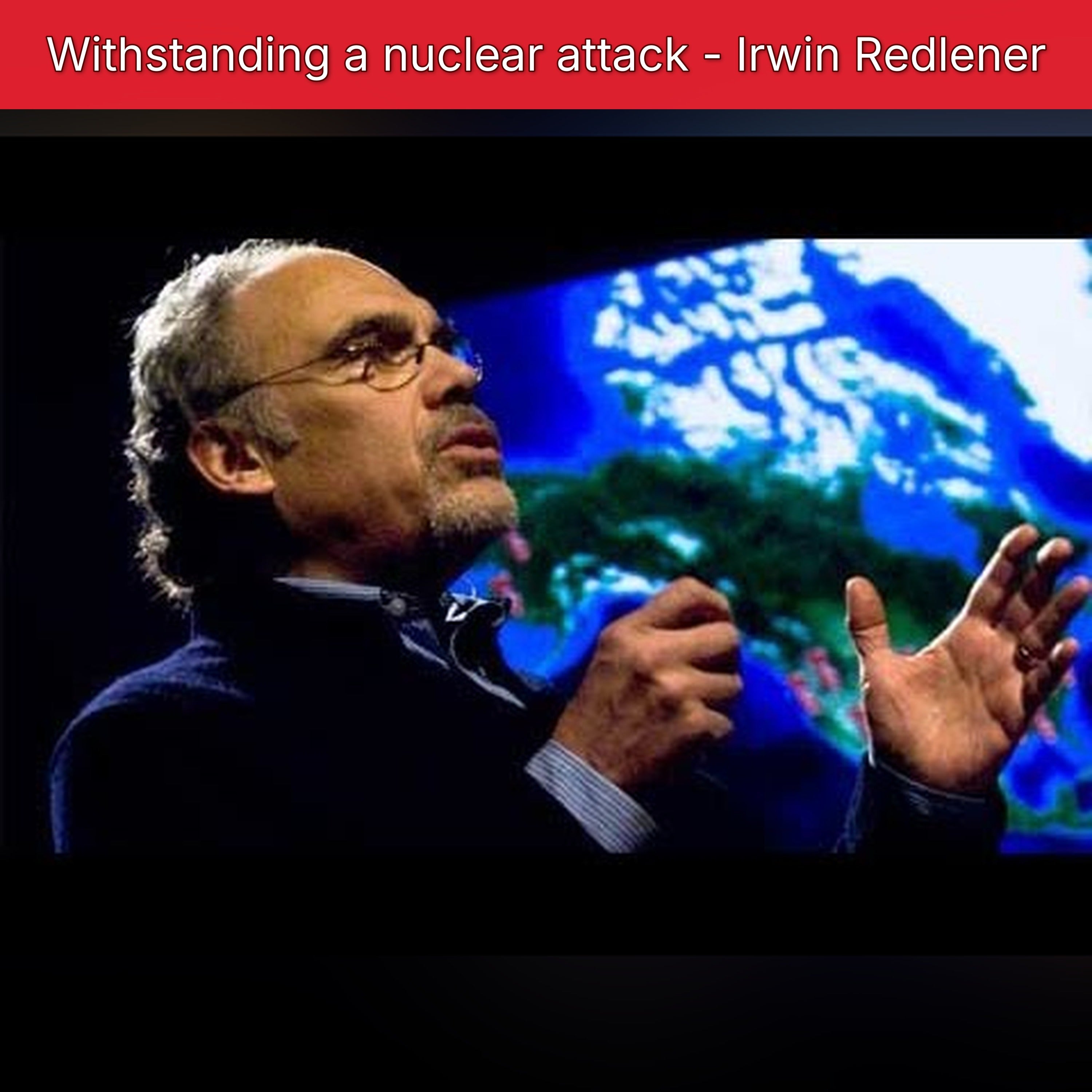
View full lesson: http://ed.ted.com/lessons/surviving-a-nuclear-attack-irwin-redlener The face of nuclear terror has changed since the Cold War, but disaster-medicine expert Irwin Redlener reminds us the threat is still real. He looks at some of history's farcical countermeasures and offers practical advice on how to survive an attack. Talk by Irwin Redlener.
Explore what makes polio so dangerous, what is causing the 21st century resurgence of cases, and how we can eradicate the disease. -- In 1952, polio was everywhere: killing or paralyzing roughly half a million people annually. Yet just 10 years later, paralytic polio cases in the US dropped by 96% and we were on track to get rid of polio for good. But in recent years, the virus started striking back. So, what’s behind these recent spikes? Explore the dangers of poliovirus and the possibility of eradicating this deadly disease. Directed by Anton Bogaty. This video made possible in collaboration with Gates Ventures Learn more about how TED-Ed partnerships work: https://bit.ly/TEDEdPartner A special thanks to Ananda Bandyopadhyay, Amber Zeddies, and Kathleen O'Reilly who provided information and insights for the development of this video. Support Our Non-Profit Mission ---------------------------------------------- Support us on Patreon: http://bit.ly/TEDEdPatreon Check out our merch: htt
Todd Humphreys forecasts the near-future of geolocation when millimeter-accurate GPS "dots" will enable you to find pin-point locations, index-search your physical possessions ... or to track people without their knowledge. And the response to the sinister side of this technology may have unintended consequences of its own. (Filmed at TEDxAustin.) Uploaded 26-06-13 Talk by Todd Humphreys.
Communities should usually repair existing infrastructure before building replacements.
Share your view, then see how readers voted. No sign-in required. This poll is shared across stories.
Do you agree or disagree?
Common Quandary
A Common Quandary to discuss
Another conversation to explore, separate from this news story.
One sibling did years of caregiving. Should they get more of the inheritance?
One sibling lives near an aging parent and handles appointments, errands, and emergencies. The others live far away, call regularly, and assume the nearby sibling will receive the same inheritance despite years of unpaid work.
When does family care become labor that should be repaid?