Anhedonia: Why Nothing Feels Good Anymore, and How to Fix It
74 min
Listen through the publisher, then discuss the episode here or arrange an in-person Roundtable. Your city determines where to meet.
Roundtables are designed for groups of four, with a shared subject and room for everyone to speak. Come for discussion, with no dating expectation.
Dr. Rick and Forrest explore anhedonia, the loss of interest or pleasure in the things that used to feel good. They discuss the relationship between anhedonia and depression, why pleasure goes missing, and what brings it back. This includes the four kinds of “nothing feels good,” the difference between liking and wanting, and why anhedonia is actually more of a “wanting problem.” Then they get practical with Positive Affect Treatment, a therapy built to turn the good up rather than just turning the bad down, which turns out to look a lot like Rick’s practice of taking in the good. Rick then walks Forrest through a live demonstration of learning to want something again. Key Topics: 0:00: Introduction 1:33: What anhedonia feels like, and the four kinds of “nothing feels good” 8:29: Liking vs. wanting 11:29: Why the wanting goes missing, and why “just do stuff” isn’t enough 20:24: Why we stop noticing good things 27:41: Positive Affect Treatment: wanting, liking, learning 32:07: A demonstration of learning to want something again 45:11: Learning from good experiences: replaying and installation 52:50: What’s the function of anhedonia? 1:00:27: Recap Learn more about Rick’s new course on Grief and Loss at RickHanson.com/loss and use coupon code BeingWell25 to receive a 25% discount. If you'd like to support the podcast, follow this link. (https://www.patreon.com/beingwellpodcast) Sponsors Sign up for a one-dollar-per-month trial period at https://shopify.com/beingwell. Go to https://Zocdoc.com/BEINGWELL (http://zocdoc.com/BEINGWELL) to find and instantly book a top-rated doctor today
Episode information is provided by the publisher. Listening takes place on the publisher’s service.
Your free behavior course: https://nci.university/learn Uploaded 10-05-25 Exclusive NCI-4 (Grad School) Vault Release This is Behavioral Magnetics—the hidden force that draws you back to chaos, to patterns you swore you’d outgrow, to people who echo your oldest pain. It’s why peace feels boring. Why CALM makes you anxious. It’s not intuition—it’s your nervous system recycling what it knows. In this Grad School lecture, we uncover the 4 emotional magnets that shape who you trust, chase, or sabotage... even when it hurts. If you've ever said, “Why do I keep doing this?”—this is your answer. Why you're attracted to the wrong people The 4 types of emotional magnets How trauma rewires your compass Why peace can feel like withdrawal How to break free from recycled patterns Please note that the content provided in this broadcast is for informational and educational purposes only and should not be construed as legal, medical, financial, or professional advice. No material in this communication
Does your relationship feel like home, or does it feel like standing on the edge of something you might lose? In Part 3 of our Relationship Anxiety series, clinical hypnotherapist and former paramedic Martin Hewlett guides you through the process of teaching your nervous system that love doesn't have to hurt to be real. We explore the physical manifestations of anxiety—the tight chest, the 2:00 AM racing mind, and the "stomach drop" when a text takes too long—and provide the tools to "turn down the alarm" of your internal survival response. If you are ready to stop "cherry-picking" evidence of disaster and start building a foundation of trust, this session is for you. In This Episode, We Cover: The Science of Safety: Understanding how your nervous system confuses love with danger. Guided Visualization: A journey into your own "safe room" where you are already enough. Rewiring the Brain: Moving from worst-case disaster reels to the reality of small, daily kindnesses. Breaking the Cycle:
You're not a victim in your life, you're a co-creator with it. In this video, Sage Robbins shares the practice of Taking Full Responsibility. It's not about self-blame, it's about recognizing that our choices, our words, our actions, and even where we place our attention shape everything we feel and experience. Uploaded 12-07-26 Sage walks through a simple question she asks herself the moment she feels resistance or tension in a relationship: "Am I cultivating harmony right now, or am I adding to the discord?" And she shares what it actually sounds like to repair a moment in real time — "I'm sorry. Can we begin again?" If you've ever caught yourself waiting for someone else to change before you can feel okay, this one's for you. Watch more videos like this I Was Humiliated… And It Made Me Who I Am: https://youtu.be/-YDXWSJ-gu0 How to Find Compassion When Someone Wrongs You: https://youtu.be/uRi3xrVjjVA The #1 Secret to Helping ANY Child Self Regulate Their Emotions: https://youtu.be/Pw
Learn to act like nothing bothers you. Episodes created by entrepreneur and masculinity ace Jack Hopkins for his youtube channel, this podcast is dedicated to helping men rediscover their inner strength and confidence in a society that often promotes feminine values over masculine ones.Follow the podcast for valuable insights, inspiring stories, and practical advice on how to embrace your masculinity, build your confidence, and achieve your goals. Whether you're looking to improve your relationships, advance your entrepreneurial career, or simply feel more confident and capable, Jack has valuable insights that can help you achieve your goals.So, if you're ready to reclaim your masculinity and awaken the beast that lives inside you, follow the podcast & turn on notis Follow Jack Hopkins:Insta: @jackhopfitnessYT: @JackhopkinsCEODisclaimer: All content rights belong to @JackhopkinsCEO on YouTube. This is a fan page. --------------- Keywords: men's personal development, millionaire mindset
To check the transcript: https://www.buzzsprout.com/2379282 Somewhere along the way Have you ever had a friend who used to be such a big part of your life that you couldn't imagine a day without talking to them? You shared ordinary moments, private jokes, and conversations that lasted until midnight. You were the first people each other turned to, whether something wonderful happened or the world felt a little too heavy. But years passed, and life took you in different directions. Then one day, you meet again. You're happy to see each other, and there's still affection between you, but something feels different. You remember each other beautifully, yet you realize you no longer know the people you've become. “We still know so much about who we used to be, but somewhere along the way, we stopped getting to know who we were becoming.” Hello everyone, and welcome to Daily English. Today's expression is “somewhere along the way.” We use this expression when something happens or changes dur
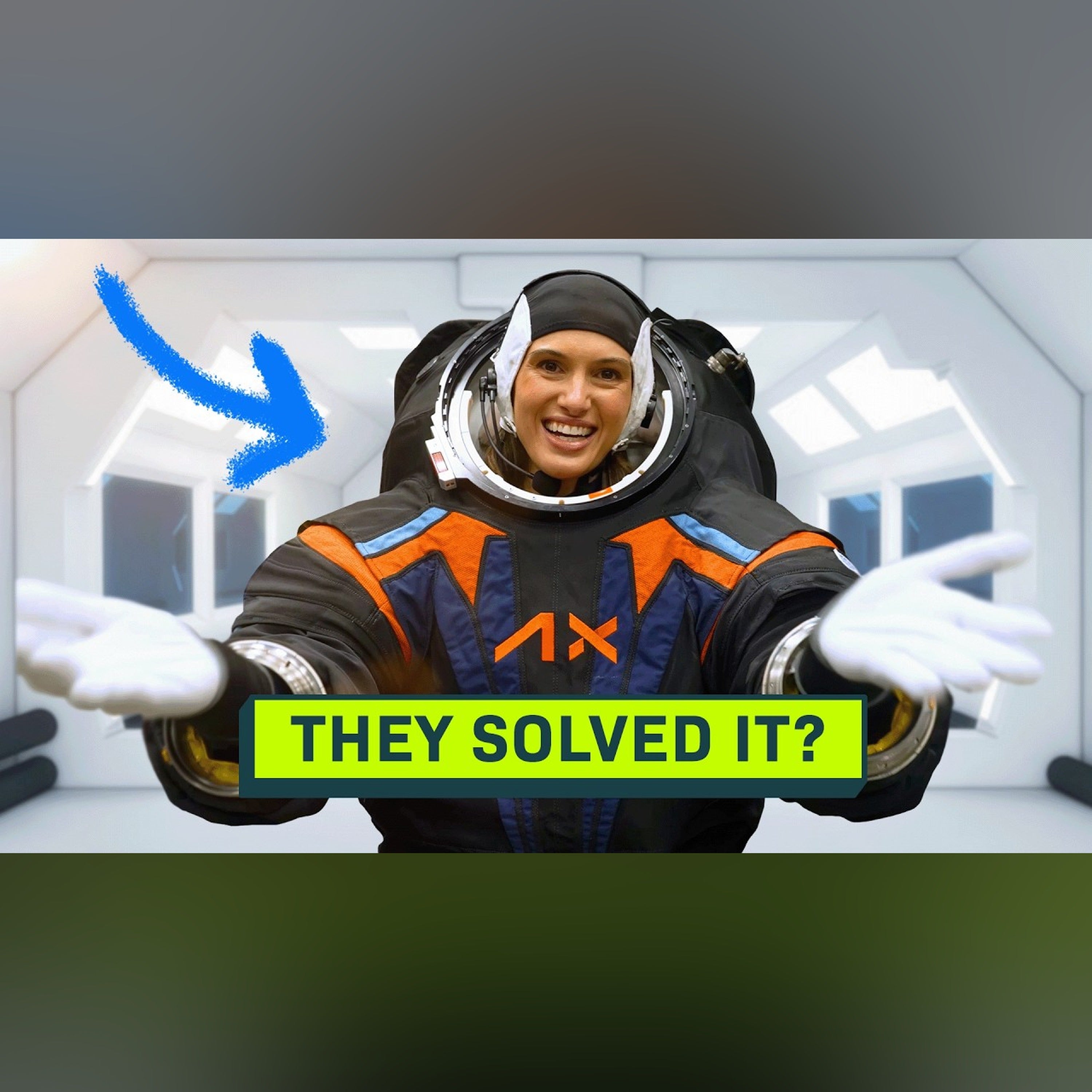
This will be the next space suit on the moon. What can it do? Only 12 people have ever walked on the moon and they all did it within just 4 years of each other. Then, for the last 50 years, no one has gone back… but that’s about to change. Soon, astronauts will return to the moon to prepare for people to live there long-term and to get us ready to send the first humans to Mars. But to do it, they need to survive outside in space and work for hours in one of the most dangerous conditions a human will ever face. The problem is, our spacesuits for the Moon haven’t been updated in decades! But now, to make this next chapter in space possible, space suits are getting a major upgrade. These new suits will give astronauts the superpower to do more, for longer… and I’m one of the first civilians to put one on. In this video, we’re taking you behind the scenes to show how Axiom Space is designing, building, and testing NASA’s new space suits. I am going to put myself and this suit to the test,
Why do we keep reacting in ways we don’t want to? Forrest sits down with the meditator and poet Yung Pueblo to talk about reactivity, letting go, and what it takes to slow down enough to choose something different. They get into why your first reaction usually isn’t the “real you,” how to stay present with someone else’s bad mood without getting pulled into it, and how to feel your feelings without becoming them. Key Topics: 00:00: Intro 01:22: Why aren’t men as interested in personal growth content? 05:29: Your first reaction isn't the real you 15:57: Staying present with someone else’s bad mood 22:47: Thoughts vs. what you feel in the body 28:45: Feeling without becoming the feeling 32:21: What is stress? 38:19: Writing Journey 43:27: Forgiveness without an apology 49:13: Who needs to let go, and who needs to try harder 52:48: Letting go of good attachments 1:02:14: Recap If you'd like to support the podcast, follow this link. (https://www.patreon.com/beingwellpodcast) Sponsors If yo
Security measures should be proportionate to demonstrated risks.
Share your view, then see how readers voted. No sign-in required. This poll is shared across stories.
Do you agree or disagree?
Common Quandary
A Common Quandary to discuss
Another conversation to explore, separate from this news story.
Your teenager locks you out of their phone. When is it okay to look?
Your usually outgoing sixteen-year-old has withdrawn and stopped seeing friends. They insist they are fine and refuse to talk. You know their phone passcode and could read their messages without being discovered.
How serious must a fear be before protection outranks privacy?