Antisemitic Protests Target Jewish Owned Restaurants in Philadelphia
16 min
Listen through the publisher, then discuss the episode here or arrange an in-person Roundtable. Your city determines where to meet.
Roundtables are designed for groups of four, with a shared subject and room for everyone to speak. Come for discussion, with no dating expectation.
A "boycott ride" targeting Jewish-owned and Israel-connected restaurants in Philadelphia took place over the weekend, and was drowned out by drowned out by hundreds of pro-Israel counter protesters. It was organized by an anti-Zionist cycling group called Philly Bike On Your Left and the event called for a boycott of six local businesses. Roughly 300 pro-Palestinian/boycott demonstrators faced off against an estimated 200 to 300 pro-Israel counter protesters and community members. Long lines of patrons formed outside the targeted businesses as a show of solidarity. FOX's Eben Brown speaks with Marti Lieberman, owner and founder of The Mac Mart in Philadelphia, who says it was scary, but she and her team got incredible support by their loyal patrons and others. Click here to Follow the FOX News Rundown: Evening Edition: https://link.podtrac.com/fnr_podeve Photo Courtesy: WTXF
Episode information is provided by the publisher. Listening takes place on the publisher’s service.
For review: 1. Iraq has reached a compromise with the powerful Iran-backed militia Kataeb Hezbollah, three senior security officials said, after Prime Minister Ali al-Zaidi readied security forces to move against the group. Reflecting the gravity of the situation, Iraqi Shiite political sources said Esmail Qaani, commander of Iran’s elite Revolutionary Guards’ Quds Force, arrived in Baghdad late on Monday to help defuse tensions with Kataeb Hezbollah, Tehran’s most powerful militia ally in Iraq. 2. Lebanese President Joseph Aoun launched a lengthy rebuke of Iran in an Independence Day address, arguing that the Islamic Republic does not have the right to interfere in Lebanon’s internal affairs, as it long has via support for its local terror proxy, Hezbollah. 3. Yemen’s Houthis launched strikes on the Saudi capital Riyadh on Saturday, after vowing reprisals for a “special operation” by the Saudi-led coalition fighting them. The coalition later said it had “intercepted and destroyed” thr
On 4th March 2023, UN member states agreed a historic treaty that had been over fifteen years in the making. The High Seas Treaty is the first ever treaty to protect the world’s oceans outside national boundaries. The aim is to meet the 30 by 30 biodiversity target, protecting 30% of the world’s oceans by the year 2030. Also known as the open sea or international waters, the high seas begin at the limit of countries’ exclusive economic zones. That means up to 370km, or 200 nautical miles, from the coastline. They account for 64% of the world’s oceans, and have been referred to as the last true wilderness, given how much mystery still lies within. Why is protecting the oceans so important? What measures are expected to come from the treaty? In under 3 minutes, we answer your questions! To listen to the last episodes, you can click here: How to make the most out of a rental property? (https://originals.bababam.com/do-you-really-know/202303090400-how-make-most-out-rental-property) What is
Europe's Little Anarchy: The Rise and Fall of Neutral Moresnet (https://bookshop.org/a/12343/9781501788147)(Cornell UP, 2026) uncovers the history of Neutral Moresnet: a once-forgotten space without borders, nationalism, or a recognized government. Between 1815 and 1919, this square mile of land wedged between Belgium, the Netherlands, and Germany was home to thousands of people living off the grid, free of taxation and oversight. But they also had no political status, police, legal currency, proper law courts, or government presence in sectors like public health, infrastructure maintenance, or education. Meanwhile, practical control over Neutral Moresnet lay in the hands of the local industry: a for-profit, multinational mining company that, because it owned rights to the land, also held a near monopoly on the supply of high-quality zinc to the rest of the world. Dr. Steven Press explores how the residents of Neutral Moresnet sought to improve their quality of life, appealing to Germa
Enjoy this special feed drop of our sister show 'In This Economy?!' The U.S. experienced its fair share of technological outages, disruptions and stoppages over the past week or so, starting off with Microsoft 365 going black last Thursday heading into Friday, followed by the FAA ground stoppage across America, and other online systems throughout this week. Host Mike Eppel speaks to Sheldon Jacobson, professor of computer science at the University of Illinois at Urbana-Champaign to discuss whether or not people are justified in their worry-shopping, and how much of a disruption to productivity took place. We love feedback at The Big Story, as well as suggestions for future episodes. You can find us: Through email at [email protected] Or @thebigstory.bsky.social on Bluesky Hosted by Simplecast, an AdsWizz company. See pcm.adswizz.com (https://pcm.adswizz.com/) for information about our collection and use of personal data for advertising.
When a new healthcare company took over a struggling hospital in Waukegan, Illinois, residents hoped it would finally revitalize the facility. Vista Medical Center East had already been bought and sold four times—but maybe this time would be different. The new owner was American Healthcare Systems, a for-profit company pitching itself as a turnaround specialist for distressed hospitals. Rick Harris, a local pastor and businessman on the hospital’s board, had never heard of it. And his research turned up a troubling example of its work: A year before, AHS took over a struggling hospital in St. Louis. When financial troubles there got worse instead of better, AHS closed it in less than a year. “I’m just thinking to myself, if I’ve got good intentions, if I can’t pay for this hospital, if I owe all of this money…then where am I getting the money to buy Vista?” he said. Soon, AHS was stiffing vendors, not paying doctors, and leaving millions in taxes unpaid. It asked the state of Illinois
November 22, 2026; 8am: Yesterday, President Trump posted a photo of him and Putin shaking hands with the caption “my friend.” This comes after his Friday press conference, where President Trump praised both Xi, and Putin but called long-time ally Canada “emboldened.” According to a former Canadian official, Canada has been emboldened to write off America in the Trump era. Chrystia Freeland, Former Deputy Prime Minister and Minister of Finance of Canada, and Anne Applebaum, Staff Writer for The Atlantic and Pulitzer Prize-winning historian, join “The Weekend” to discuss. For more, follow us on social media Bluesky: @theweekendmsnow.bsky.social Instagram: @theweekendmsnow TikTok: @theweekendmsnow Hosted by Simplecast, an AdsWizz company.
Some strange things are happening out in space and down here on Earth. Earlier this week, astrophysicist Neil deGrasse Tyson joined Aishah Hasnie (https://www.youtube.com/watch?v=yor7TRWw67k) to unpack a fast-moving object known as 1998 KY26 orbiting the Sun, UAP discussions, and the physics behind what a first alien encounter might actually look like. Tyson broke down why its trajectory doesn't follow standard gravity alone, weighed theories ranging from space junk to the Yarkovsky effect, and shared insights from his book Take Me to Your Leader: Perspectives on Your First Alien Encounter. They also dove into growing concerns around artificial intelligence, tech vulnerabilities, and why Tyson says global guardrails are essential—plus why he’d choose the future if he had a time machine. The conversation was full of laughs and interesting perspectives on space and the potential for extraterrestrial life, but it was too long for our regular midweek Rundown. So, on today's FOX News Rundow
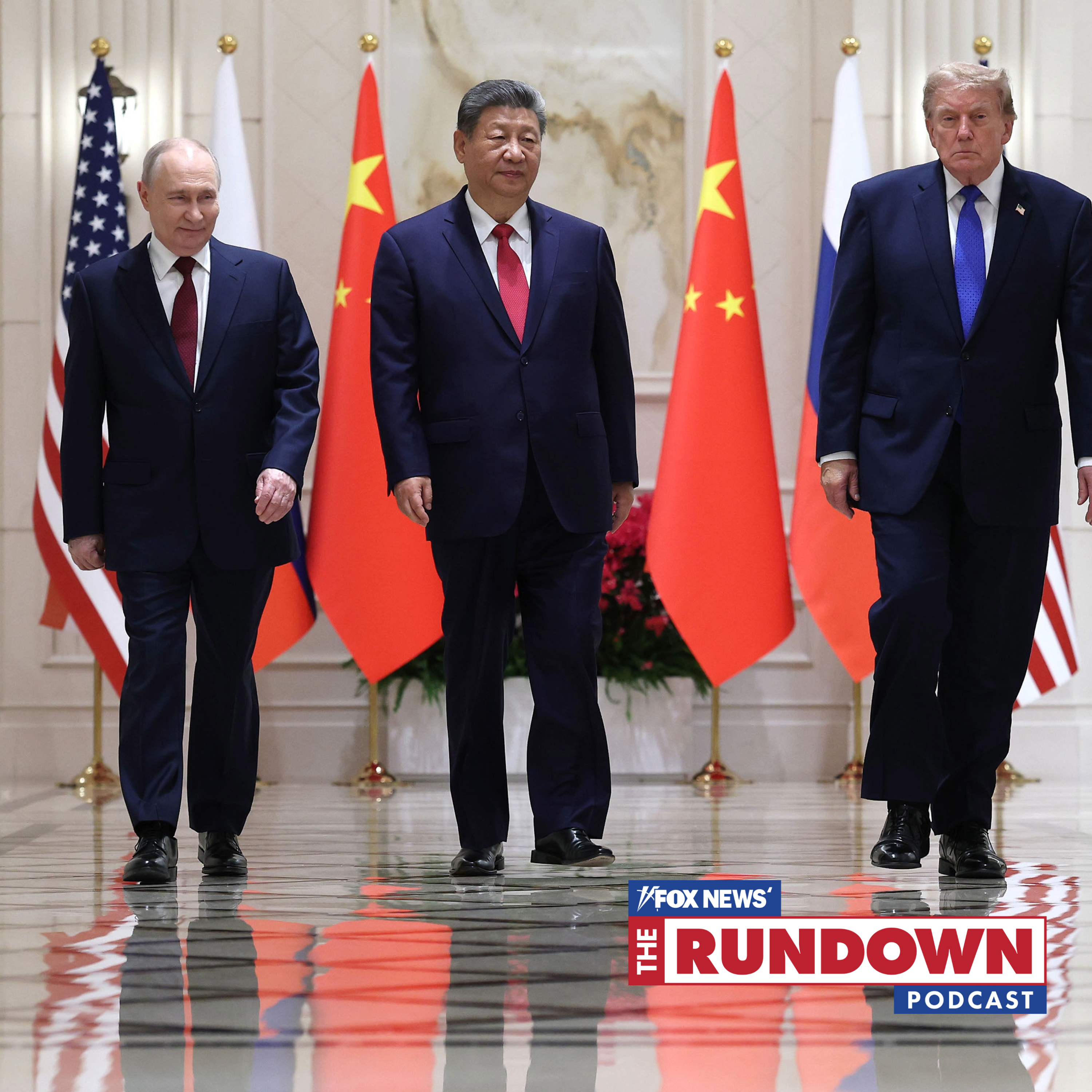
Following President Trump’s trip to Asia and a first-ever trilateral meeting with the leaders of China and Russia, foreign policy experts are weighing what was accomplished on the world stage. Former national security advisor to Vice President Dick Cheney and Heritage Foundation senior research fellow Stephen Yates joins The Rundown to analyze the summit’s outcomes on Taiwan, Ukraine, Iran, and strategic arms talks. Yates also explains how new rare-earth agreements with U.S. allies and export controls on AI chips balance Trump’s warmer rhetoric toward Beijing. Later, widespread tech outages across major platforms and government systems raise urgent questions about whether U.S. digital infrastructure is prepared for the artificial intelligence era. Former Cybersecurity and Infrastructure Security Agency (CISA) director Bridget Bean breaks down how rapid software patching can trigger cascading system failures, the growing cyber threats posed by China and Iran, and how organizations can d
Rep. Ilhan Omar’s (D-MN) immigration history is facing fresh scrutiny after federal agents searched her Washington, D.C., home in October, with new reports detailing subpoenas to relatives. There are also reports that her congressional staffers have been requested to speak about the possibility they were told to change the birth year listed in public biographies. This week, a federal judge in Washington, D.C. may have paved the way for the way to unseal the criminal search warrant and related documents against Rep. Ilhan Omar. Where do we stand on this investigation? FOX's Alexis McAdams speaks with Minnesota Republican Congressman Tom Emmer who says this isn't about background or beliefs, it is about facing consequences for criminal activity. Click here to Follow the FOX News Rundown: Evening Edition: https://link.podtrac.com/fnr_podeve Photo Credit: FOX Digital
A company's growth matters less than whether its customers receive better service.
Share your view, then see how readers voted. No sign-in required. This poll is shared across stories.
Do you agree or disagree?
Common Quandary
A Common Quandary to discuss
Another conversation to explore, separate from this news story.
Your grandfather brought home an ancient artifact. A museum wants it back. Do you surrender it?
In your grandfather's attic you discover a beautiful ancient object he brought home while working overseas decades ago. Your family treasures it and his papers suggest the rules were murky. A museum from that country says it belongs to their collection and asks for its return.
Can a family inherit clear ownership of something acquired through unclear power?