A kiss can be wonderful. It can create an instant connection, spark romance, or make you feel closer to someone. But a kiss can also have the opposite effect — and sometimes ruin everything. So what makes kissing so powerful, and why can one kiss make such a difference? There's some fascinating science behind it. https://www.scientificamerican.com/article/why-we-kiss/ We spend an enormous amount of time worrying about what's going to change. What's next? What's coming? How do we prepare? But what if we're paying attention to the wrong things? Some of the most important forces shaping our lives never change, and understanding them may be far more valuable than trying to predict the future — something humans are notoriously bad at. Morgan Housel, partner at The Collaborative Fund and author of Same as Ever: A Guide to What Never Changes (https://amzn.to/3SwWn6u) (https://amzn.to/3SwWn6u)), joins me to explain why the things that stay the same may be the most important things to understan
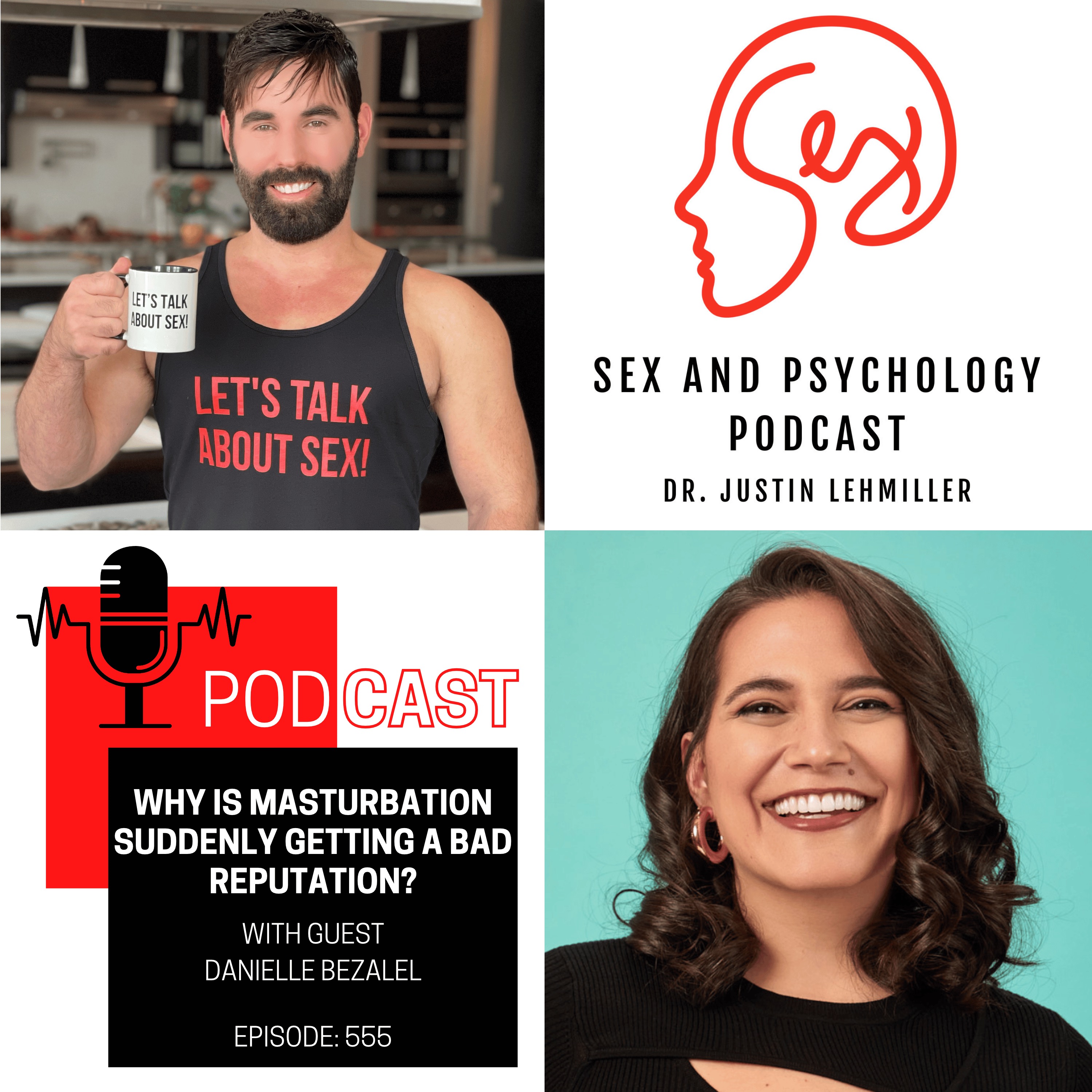
For centuries, people have been warned that masturbation could cause everything from hairy palms to blindness to insanity. Although these claims have been thoroughly debunked, anti-masturbation messages are making a comeback. But is there any science behind these claims? In this episode, we're going to separate fact from fiction when it comes to the supposed harms of masturbation and explore why so many people are convinced that something pleasurable might actually be bad for them. I am joined once again by Danielle Bezalel (https://www.sexedwithdb.com/), aka DB. Danielle earned a Master of Public Health with a focus on sexuality and reproductive health from Columbia University, and she is the Creator, Executive Producer, and Host of Sex Ed with DB (https://www.sexedwithdb.com/podcast). She is also the host of Pleasure People (https://pod.link/6819871177/episode/ZjcyZDA2ZGItMmYzMC00MzZlLWEwY2ItMDUwY2ZkMWJkYzAz), a new 6-part limited audio series exploring what happens when we treat ple
If you're training hard but feeling wiped, eating a restricted diet for your gut, or just never hungry after a tough workout, you might not be getting the protein you need. This episode breaks down how much you really need and how to get it without upsetting your gut. YOU'LL TAKEAWAY: Macronutrients and calories 101, and how restrictive diets throw off your balance How your body digests protein, and why it matters before workouts The many roles of protein, from enzymes and iron storage to post-workout appetite How much protein you need, plus 3 easy low FODMAP ways to boost it — RESOURCES & LINKS MENTIONED: ⤵️ Want high touch coaching support for IBS & fuelling performance? Apply for coaching. (http://gutfitnutrition.com/apply) Free Training: How to Control IBS So You Can Fuel Your Training Without a Lifelong Low FODMAP Diet (https://gutfitnutrition.com/heal-ibs-training-live) Supporting your immune system when you're sick (Ep. 70) (https://open.spotify.com/episode/5bCto0jWLcbC5hQW4hrH6
In this meditation, I explore how something as ordinary as drinking a cup of coffee can become a contemplative practice. As a Capuchin Franciscan, I can even claim a particular connection with coffee through Blessed Mark of Aviano, whose story became associated with the cappuccino. You can practise this meditation with coffee, tea or another warm drink, either holding a real cup or simply visualising the experience. We begin by feeling the warmth and weight of the cup in our hands. We notice its texture, the steam, the fragrance and the anticipation of taking a drink. As we take each sip, we pay attention to sensations that usually pass unnoticed: the cup against the lips, the warmth of the liquid, its movement through the mouth and throat, and the memories or stories awakened by taste and smell. By attending closely to an ordinary action, we begin to see how rich even the simplest moment can be. Towards the end of the meditation, we reflect with gratitude on everything that has allowe
Pulsatile tinnitus causes people to hear a rhythmic sound that matches their heartbeat. This report explores what causes it, why diagnosis can be challenging and the expanding treatment options available to some patients. Reporter: Sarah Diprose Guest/s Dr Robert Fahed, Interventional Neuroradiologist and Stroke Neurologist at The Ottawa Hospital, and Assistant Professor at the University of Ottawa. References The assessment of pulsatile tinnitus—a systematic review of underlying pathologies and modern diagnostic approaches (https://www.theajo.com/article/view/4101/html) Pulsatile Tinnitus: A Comprehensive Clinical Approach to Diagnosis and Management (https://www.mdpi.com/2077-0383/14/13/4428) The day the ‘whooshing’ stopped: World-first trial at The Ottawa Hospital brings relief from pulsatile tinnitus (https://ohri.ca/en/newsroom/day-whooshing-stopped-world-first-trial-ottawa-hospital-brings-relief-pulsatile-tinnitus)
Today, Mel is doing something she's never done before on The Mel Robbins Podcast. She's bringing members of her team into the studio for live coaching with world-renowned communications expert Vinh Giang. Vinh is known for teaching millions of people online how to stop sounding insecure, speak more clearly, and get people to listen when you talk. And when you hear him coaching today, it will be like he’s coaching you. One person freezes when they're put on the spot. Another can't stop interrupting people. Someone else has great ideas but stays quiet because they're afraid of being judged. Does any of that sound familiar? And Vinh isn't just giving advice. He's coaching real people through practical exercises, right there in the studio, so you can hear the difference and start making those same changes in your own life. As Mel says, put yourself in their shoes. As Vinh works with each person, you'll recognize things you struggle with, too. You'll learn: -What to do when your mind goes b
Some food additives are there to make foods safer … others are there to improve appearance, taste and mouthfeel. Should you be worried about the things being added to your food? And in a world packed with ultra-processed foods, how can you avoid them? Norman and Tegan unpack the evidence on food additives, and what the evidence can't tell us. References: The Joint FAO/WHO Expert Committee on Food Additives (https://www.who.int/news-room/fact-sheets/detail/food-additives) Meat-Related Compounds and Colorectal Cancer Risk by Anatomical Subsite (https://pmc.ncbi.nlm.nih.gov/articles/PMC3584417/) The long fascinating history of food additives – and why we’re stuck with them (https://theconversation.com/the-long-fascinating-history-of-food-additives-and-why-were-stuck-with-them-283094) Intake of food additive preservatives and incidence of cancer: results from the NutriNet-Santé prospective cohort (https://www.bmj.com/content/392/bmj-2025-084917) Randomized Controlled-Feeding Study of Dieta
Some people are trading traditional birth control for methods like fertility tracking to avoid getting pregnant. How effective are these approaches? And why are people attracted to these "natural" methods? Naomi* and Tegan discuss some of these methods, and how side effects of contraceptives might be contributing to this shift. *Dr Naomi Koh Belic is filling in for Norman Swan as he recovers from his knee replacement! Keep an eye out for Dr Naomi's Fact or Fiction on the ABC Science YouTube (https://www.youtube.com/channel/UCR_kFbcwWy1cKLCkmcMf4lg). References: “Do You Know What Birth Control Actually Does to Your Body?”: Assessing Contraceptive Information on TikTok (https://onlinelibrary.wiley.com/doi/10.1111/psrh.70025) Hormonal Birth Control Misinformation on TikTok: A Content Analysis of Influencer Narratives (https://digitalcommons.wayne.edu/som_srs/470/) Self-reported contraceptive method use at conception among patients presenting for abortion in England: a cross-sectional anal
Officials should publicly explain serious mistakes that affect a competition's outcome.
Share your view, then see how readers voted. No sign-in required. This poll is shared across stories.
Do you agree or disagree?
Common Quandary
A Common Quandary to discuss
Another conversation to explore, separate from this news story.
Your carry-on fits only if you sit on it. Do you try the airport sizer?
Your suitcase is slightly larger than the airline allows, although it has fit overhead on previous flights. Checking it costs extra and risks missing a connection. Other passengers have equally questionable bags and staff are checking inconsistently.
Does uneven enforcement weaken a traveler's duty to follow the rule?