Today, I’m sitting down with Shalin Shah (https://mariuspharma.com/team/shalin-y-shah/), whose personal health journey led him to challenge some of the biggest myths around testosterone therapy and men’s health. After being diagnosed with borderline low testosterone at the age of 30, Shalin launched a 13-year mission that not only resulted in the creation of the first FDA-approved oral testosterone pill, Kyzatrex, but also sparked him to advocate for better hormone education and diagnostics for both men and women. Episode Timestamps: Introduction and FDA changes regarding testosterone ... 00:00:00 Testosterone Project: advocacy and public health ... 00:06:37 Regulatory hurdles and the history of restrictions ... 00:08:17 Dispelling cardiovascular and prostate cancer myths ... 00:12:06 Declining testosterone trends and contributing factors ... 00:14:42 Concerns about low testosterone in younger generations ... 00:18:13 Importance of early screening and baselines ... 00:20:36 Early, over
Pulsatile tinnitus causes people to hear a rhythmic sound that matches their heartbeat. This report explores what causes it, why diagnosis can be challenging and the expanding treatment options available to some patients. Reporter: Sarah Diprose Guest/s Dr Robert Fahed, Interventional Neuroradiologist and Stroke Neurologist at The Ottawa Hospital, and Assistant Professor at the University of Ottawa. References The assessment of pulsatile tinnitus—a systematic review of underlying pathologies and modern diagnostic approaches (https://www.theajo.com/article/view/4101/html) Pulsatile Tinnitus: A Comprehensive Clinical Approach to Diagnosis and Management (https://www.mdpi.com/2077-0383/14/13/4428) The day the ‘whooshing’ stopped: World-first trial at The Ottawa Hospital brings relief from pulsatile tinnitus (https://ohri.ca/en/newsroom/day-whooshing-stopped-world-first-trial-ottawa-hospital-brings-relief-pulsatile-tinnitus)
If you're training hard but feeling wiped, eating a restricted diet for your gut, or just never hungry after a tough workout, you might not be getting the protein you need. This episode breaks down how much you really need and how to get it without upsetting your gut. YOU'LL TAKEAWAY: Macronutrients and calories 101, and how restrictive diets throw off your balance How your body digests protein, and why it matters before workouts The many roles of protein, from enzymes and iron storage to post-workout appetite How much protein you need, plus 3 easy low FODMAP ways to boost it — RESOURCES & LINKS MENTIONED: ⤵️ Want high touch coaching support for IBS & fuelling performance? Apply for coaching. (http://gutfitnutrition.com/apply) Free Training: How to Control IBS So You Can Fuel Your Training Without a Lifelong Low FODMAP Diet (https://gutfitnutrition.com/heal-ibs-training-live) Supporting your immune system when you're sick (Ep. 70) (https://open.spotify.com/episode/5bCto0jWLcbC5hQW4hrH6
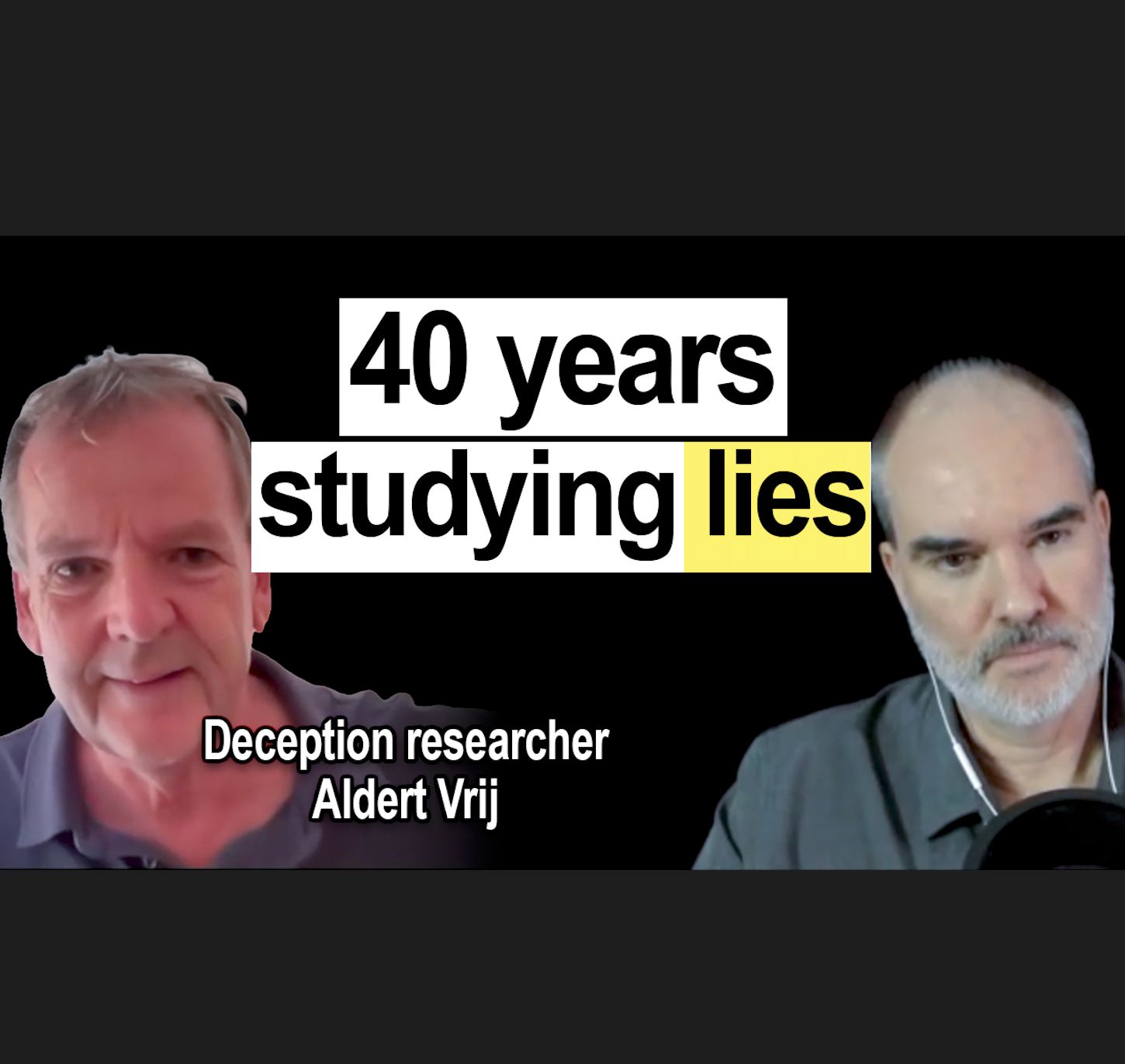
What actually works when it comes to detecting lies, and why are so many popular ideas about reading people and nonverbal behavior at odds with the scientific research? I talk with Aldert Vrij, one of the world's leading deception-detection researchers, who has spent almost four decades studying these topics. We discuss why what people say is far more revealing than their body language; why the perceived “sexiness” of reading nonverbal behavior has contributed to widespread myths and misconceptions; whether vocal behaviors like pitch, volume, and hesitation contain meaningful clues; and whether there's value in analyzing minor word choices and turns of phrase, as is done in so-called “statement analysis.” We discuss Paul Ekman's legacy as a source of faulty ideas about deception, micro-expression-based deception detection training, and the strategies that popular “body language experts” use to appear scientifically credible while simultaneously promoting ideas that conflict with the sc
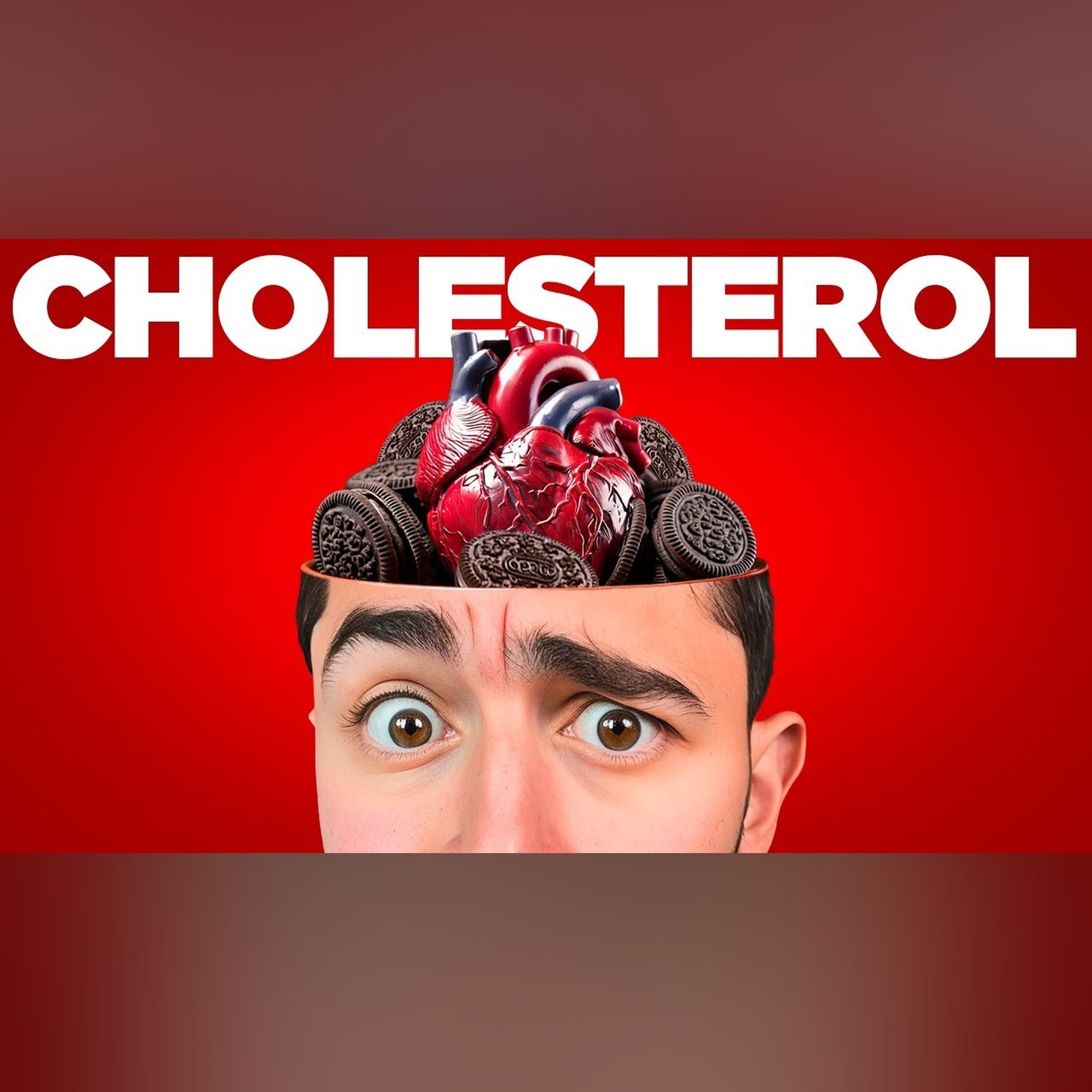
For all references and even deeper nuances, check out the StayCurious Metabolism letter: https://staycuriousmetabolism.substack.com/p/the-true-story-of-the-cookie-that?r=40ekz2 Oreo vs Statin Paper: https://pubmed.ncbi.nlm.nih.gov/38276308/ Lipid Energy Model Paper: https://pubmed.ncbi.nlm.nih.gov/35629964/ What if Oreo cookies could lower cholesterol faster — and more powerfully — than a multi-billion-dollar statin drug? That’s the question I set out to test in a 5-month controlled self-experiment I ran as a Harvard Medical School student. And the results were so shocking they were eventually published in peer-reviewed literature. This video shares the full story — why my LDL cholesterol skyrocketed into the 500s after going ketogenic, the physiology behind the lean-mass hyper-responder phenomenon, and how adding 12 Oreo cookies per day dropped my LDL twice as much as high-dose statin therapy and in one-third of the time. But this isn’t just about cookies…This is a video about challen
This week Kiley and I discuss Carb Cycling while Pregnant. Is it safe to Carb Cycle and break Ketosis during Pregnancy? I also talk about my experience at a conferences were I learned about Carb Cycling and explain the interesting research done on Carb Cycling. I also talk about Ketones for Brain development and more specifically, Ketones for Brain development as an Infant. It’s incredible to know how much significance Ketones for Brain development has as an Infant. Thanks for tuning into my channel. Find more stories and information at my website: www.BozMD.com BOOK-LINK - ANYWAY YOU CAN. AUDIBLE: https://adbl.co/2SLLfS1 PAPERBACK= (Affilate link) https://amzn.to/2Cq1IVC The two most common questions I get ... 1) "Doc, what BLOOD METER do you recommend?" ANSWER: FORACARE: http://bit.ly/2QKGmKG For years my diabetics told me this system was great. I tried several others before I bought this one. I can't count the number of times I have tested my blood only to get an ERROR message from
Some food additives are there to make foods safer … others are there to improve appearance, taste and mouthfeel. Should you be worried about the things being added to your food? And in a world packed with ultra-processed foods, how can you avoid them? Norman and Tegan unpack the evidence on food additives, and what the evidence can't tell us. References: The Joint FAO/WHO Expert Committee on Food Additives (https://www.who.int/news-room/fact-sheets/detail/food-additives) Meat-Related Compounds and Colorectal Cancer Risk by Anatomical Subsite (https://pmc.ncbi.nlm.nih.gov/articles/PMC3584417/) The long fascinating history of food additives – and why we’re stuck with them (https://theconversation.com/the-long-fascinating-history-of-food-additives-and-why-were-stuck-with-them-283094) Intake of food additive preservatives and incidence of cancer: results from the NutriNet-Santé prospective cohort (https://www.bmj.com/content/392/bmj-2025-084917) Randomized Controlled-Feeding Study of Dieta
The world is full of distractions, and our biggest one might be the phone in our hands. Many people feel their attention spans have suffered from endlessly "doomscrolling" online. Norman and Tegan discuss what has actually happened to our attention in the age of social media. Check out Science Friction: Brain Rot (https://www.abc.net.au/listen/programs/sciencefriction/brain-rot/105534830) for more on what technology is doing to our brains. References: A comprehensive review of attention tests: can we assess what we exactly do not understand? (https://link.springer.com/article/10.1186/s41983-023-00628-4) Quantifying attention span across the lifespan (https://pmc.ncbi.nlm.nih.gov/articles/PMC10621754/) Are attention spans really shrinking? What the science says (https://www.nature.com/articles/d41586-026-01407-w) Is there a Flynn effect for attention? Cross-temporal meta-analytical evidence for better test performance (1990–2021) (https://www.sciencedirect.com/science/article/pii/S01918
New competition formats should improve the experience for players as well as audiences.
Share your view, then see how readers voted. No sign-in required. This poll is shared across stories.
Do you agree or disagree?
Common Quandary
A Common Quandary to discuss
Another conversation to explore, separate from this news story.
A stranger is sitting at your usual café table. Can you ask them to move?
You visit the same café every Saturday and always write at one particular table. Today a first-time customer is sitting there while several other tables remain open. The staff recognize you but there is no reservation policy.