Listen through the publisher, then discuss the episode here or arrange an in-person Roundtable. Your city determines where to meet.
Roundtables are designed for groups of four, with a shared subject and room for everyone to speak. Come for discussion, with no dating expectation.
In this episode of Books to Battles, Dr. John Maurer joins the conversation to explore the past, present, and future of arms control. From Cold War agreements to today’s increasingly complex nuclear landscape, Maurer examines the strategic logic behind arms control, the challenges facing existing agreements, and the prospects for future cooperation. The discussion considers whether arms control can remain an effective tool for managing competition and reducing the risks of conflict.
Episode information is provided by the publisher. Listening takes place on the publisher’s service.
DISCOVER GRAD SCHOOL: https://nci.university/home-v2?utm_source=chase_youtube&utm_medium=social_video&utm_campaign=nci4_promo (https://nci.university/home-v2) Uploaded 02-05-26 LEARN ABOUT NCI LEVEL 2: https://nci.university/nci-2?utm_source=chase_youtube&utm_medium=social_video&utm_campaign=nci2_promo (https://nci.university/nci-2) There’s a moment in every conversation where everything gets decided. It happens before logic. Before persuasion. Before anyone thinks they’re “in control.” And most people miss it completely. That’s why conversations feel unpredictable… Why people react in ways that don’t make sense… Why you can say the right thing — and still lose the room. Because the outcome was already set. This video breaks down the hidden structure behind human interaction: * how conversations organize themselves before words matter * how frames control behavior without force * how categories decide what’s allowed (and what isn’t) * how identity and metaphor quietly shape every respo
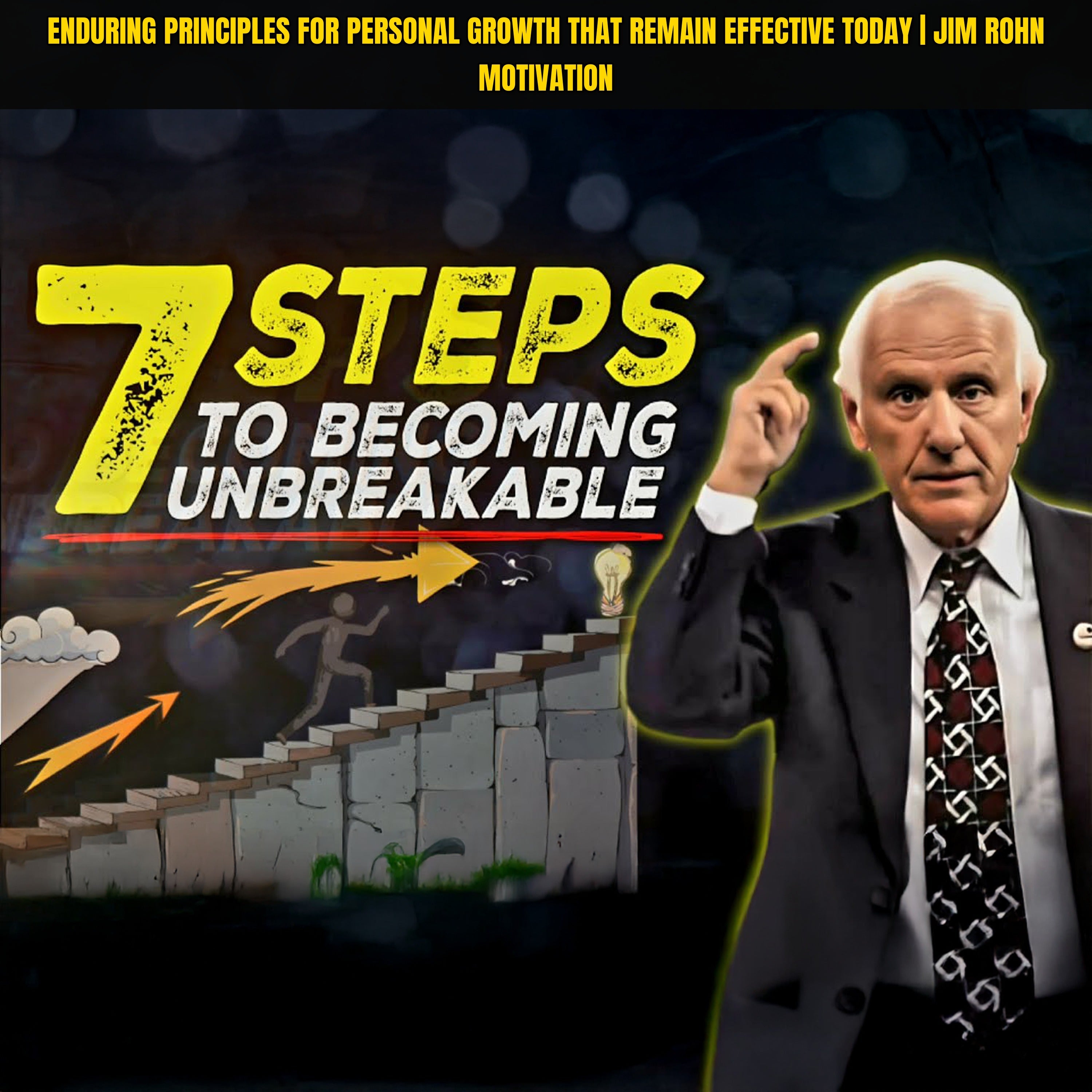
In this Jim Rohn Motivation speech, we explore 10 timeless principles for personal growth—truths that outlast hype, resist burnout, and build a life rooted in purpose. From personal responsibility to emotional resilience, Jim Rohn lays down the foundation for a growth journey that endures. Key Topics From This Motivational speech: Personal Responsibility: Owning your results, energy, and direction Discipline Over Motivation: Showing up when emotions fade The Compound Effect: Small consistent actions that stack into success Self-Awareness and Emotional Resilience: Building clarity and strength Service, Alignment, and Humility: Growth that multiplies and sustains This Jim Rohn message strips away the trends and noise and brings us back to what truly works. Growth doesn’t come from gimmicks. It comes from grounded, principle-driven living. When you build on discipline, reflection, and service, your growth becomes sustainable—and your life starts aligning from the inside out. This Jim Rohn
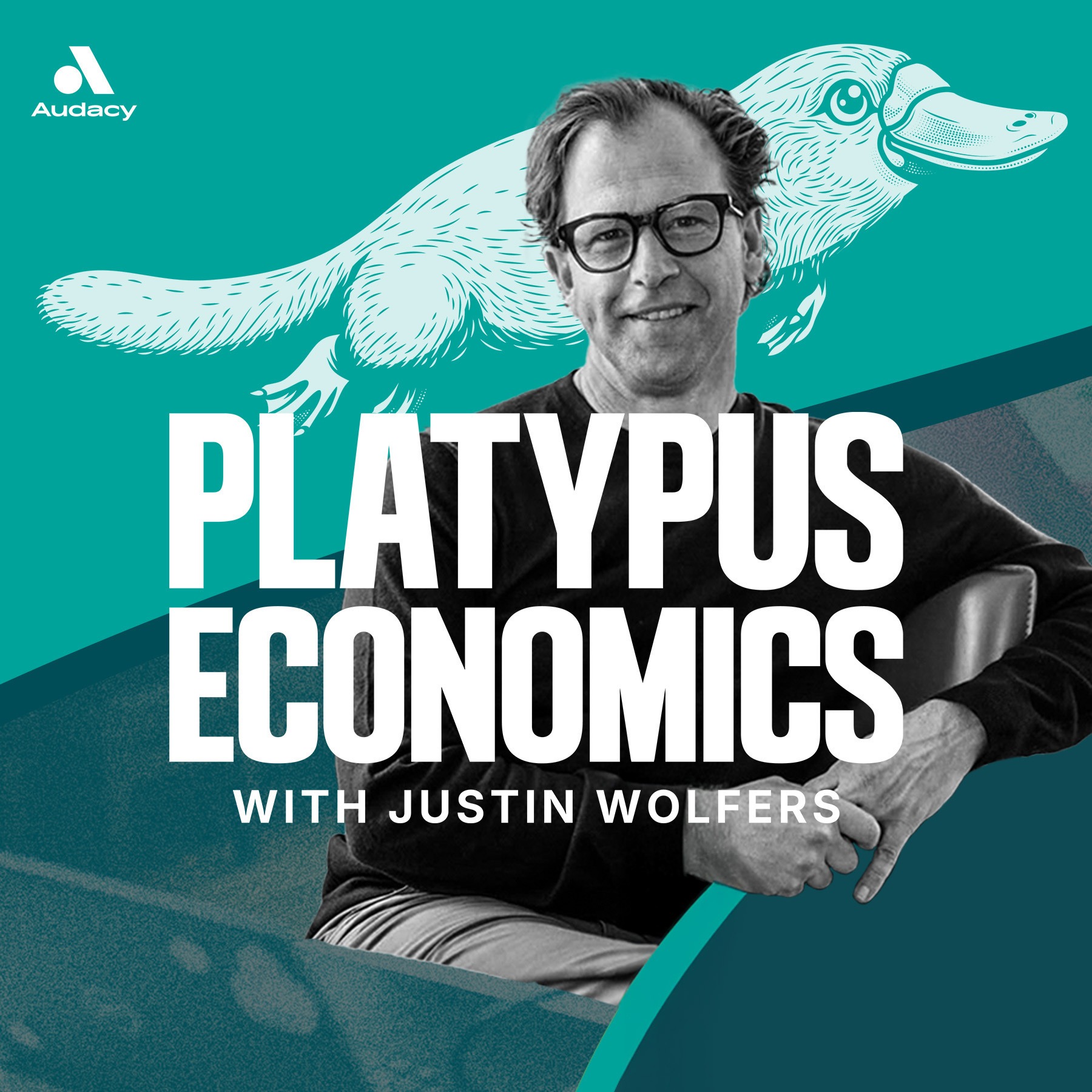
Are we in an AI stock bubble, or are investors betting on a genuinely bigger economy? Justin Wolfers examines AI stock valuations with Stacey Vanek Smith, separating what the technology could do for the economy from what investors might actually earn. A deliberately hypothetical valuation exercise shows why a trillion-dollar company isn't automatically absurd—but a breakthrough for society doesn't guarantee profits for shareholders. Competition can give you powerful tools at low prices while squeezing the companies selling them. The Thanksgiving turkey problem illustrates why a long run of good news can hide rare, severe risks. Justin connects that analogy to fat tails and the peso problem, then explains why spotting a bubble and successfully betting against it are different challenges. He also unpacks what the CAPE ratio can—and can't—tell you about whether stocks are overpriced. The stakes are your savings, not just Wall Street's scoreboard: Justin discusses an S&P 500 decline of 7.5
Tonight on America At Night with McGraw Milhaven, we explore the legacy of humanity's journey into interstellar space, the cultural phenomenon surrounding one of gaming's most anticipated releases, and the lessons behind a legendary broadcasting career. Ann Druyan, co-creator of Cosmos, Creative Director of the Voyager Interstellar Messaging Project, and widow of Carl Sagan, joins us for Part 2 of our Voyager 1 series. She reflects on the "soul" of Voyager, the Golden Record, and the message humanity sent into the cosmos. Professor Edward Castronova of Indiana University Bloomington examines the extraordinary anticipation surrounding Grand Theft Auto VI, its cultural influence, and the economic power of the gaming industry. Pat Piper, author and former producer for Larry King, discusses his book The Quiet Teacher, sharing its themes and the experiences that shaped his writing. Plus, Mathew Wolfe, our entertainment guru, returns with the latest box office results, movie news, and Hollyw
The Ninth Circuit considers how JPMorgan uses money left in its employees' retirement plan. These are unvested employer contributions: money departing workers had not yet earned the right to keep. They are not the employees' own salary contributions. The forfeited money stays inside the plan. Wright says JPMorgan used it to offset future employer contributions rather than reduce administrative fees charged to participants. His claim is that the company repeatedly saved itself money while employees continued paying fees. The district court dismissed his lawsuit before trial. It read the plan as not allowing forfeitures to cover participants' share of expenses, and rejected his claims under ERISA, the federal retirement-plan law. The argument will separate two decisions: who pays the plan's expenses, and how money already in the plan is allocated. Wright will argue that the plan's provisions work together and that the choices were subject to duties owed to participants. JPMorgan and the
In part 2 of this special edition episode, Tony – along with his friend Dr. Peter Diamandis, the Harvard Medical School trained M.D. and executive founder of Singularity University – explore the present and future of COVID-19. Uploaded 11-05-20 Tony and Peter speak with Mei Mei Hu and Lou Reese, Co-CEOs of United Biomedical, a company that is now offering an affordable and accurate diagnostic test for COVID-19 through its subsidiary, COVAXX Their antibody test is different from others, as it can detect not only if you currently have the virus, but also it signals if you’ve ever had the virus, which is crucial in determining the true rate of mortality associated with COVID-19 – and whether people are immune and therefore able to stop isolating, and go back to work. Lou and Mei Mei’s team at COVAXX is also working on a breakthrough alternative option to a traditional vaccine for coronavirus, which you’ll hear discussed in the last half of the episode. COVAXX: https://www.covaxx.com/ View
In this episode of Books to Battles, Dr. Brian McNeil discusses his new book, Frontiers of Need: American Humanitarianism and the Nigerian Civil War. Exploring the humanitarian crisis in Biafra, McNeil examines how domestic political pressures shaped American intervention during the Johnson and Nixon administrations. The conversation highlights the tensions between humanitarian ideals, national interests, and political realities, offering important lessons for understanding the challenges and unintended consequences of humanitarian intervention today.
A military can learn, adapt, and still lose the war. Dr. Wendy Whitman Cobb and Colonel Cory Hollon join Gregory Hospidor and Sanders Marble to discuss why in After America’s First Battles, 1861–2008. From amphibious operations to air campaigns in Europe and Vietnam, the conversation examines why forces can change how they fight while leaving their assumptions about victory intact. Commanders, service culture, and bureaucratic barriers shape which lessons move beyond the battlefield and which remain trapped at the tactical level. For strategists, the challenge is recognizing when better execution leaves the larger problem unsolved. If you have questions, comments, or episode recommendations, please email us at [email protected] The opinions expressed here are those of the hosts or the guests and do not necessarily represent the official position of the Department of the Air Force, the Depart of Defense or War, or the United States Government. Books Mentioned Charles E. Heller an
News organizations should disclose major financial relationships that could influence their coverage.
Share your view, then see how readers voted. No sign-in required. This poll is shared across stories.
Do you agree or disagree?
Common Quandary
A Common Quandary to discuss
Another conversation to explore, separate from this news story.
Your partner checks your location whenever you reply slowly. Is that caring or creepy?
A couple shares live phone locations for convenience and safety. One partner begins checking the map whenever a message goes unanswered, even though they have never agreed on when checking is appropriate.
Does granting access also grant permission to monitor?