Listen through the publisher, then discuss the episode here or arrange an in-person Roundtable. Your city determines where to meet.
Roundtables are designed for groups of four, with a shared subject and room for everyone to speak. Come for discussion, with no dating expectation.
This week I’m joined by two returning guests, Wendy Marinich and Lucy Hersey, who answered questions that have come in from listeners over the past year. Wendy is a West Australian painter who paints with a mid-century modern twist, drawing on nostalgia and experimenting with memory and colour. Lucy is a painter from Loch in regional Victoria who came to art from scientific research and now lives on a cattle farm, where she makes earth paintings by grinding local soil, rocks and clay into her own paint. I enjoyed their conversation about how to find your people when you haven’t come through art school, whether imposter syndrome ever really goes away, and what to look for in a mentor. We also get into the pressure to make your work make sense as a neat story, how much of the messy, unfinished side of your practice to share, and how they’re thinking about AI and protecting their work online. We finish with pricing mistakes, moments of considering stepping back from being an artist, guilt and rest, and whether it’s possible to be ambitious without constantly feeling dissatisfied. I loved hearing where Wendy and Lucy agreed, the different ways they approached each question, and how openly they shared the less polished parts of their practices. You can find Wendy Marinich here on Instagram (https://www.instagram.com/wendy.marinich/) and here on her website (https://www.wendymarinich.com/) You can find Lucy Hersey here on Instagram (https://www.instagram.com/lucehersey/) and here on her website (https://www.lucyhersey.com/) Previous episodes: Wendy Marinich: Building a Body of Work With Wendy Marinich (https://podcasts.apple.com/ky/podcast/building-a-body-of-work-with-wendy-marinich/id1738378716?i=1000766087821) Lucy Hersey: Art Without a Commercial Outcome with Lucy Hersey (https://podcasts.apple.com/ky/podcast/art-without-a-commercial-outcome-with-lucy-hersey/id1738378716?i=1000770529403) Hosted on Acast.
Episode information is provided by the publisher. Listening takes place on the publisher’s service.
You think you're hearing wisdom. You're hearing fear that spent a lifetime learning to sound like wisdom. Uploaded 11-05-26 When you were a kid afraid of the water, fear was honest about being fear. Somewhere along the way it got promoted — started speaking in complete sentences, making cases, passing for the smart move. This seminar breaks down the 4 disguises fear puts on so it can pass for common sense — and the practice that lets you catch each one in the act. CHAPTERS: 0:33 When You Were a Kid, Fear Was Honest 5:27 Disguise #1 — The Timing Argument 6:28 Disguise #2 — The Inadequacy Argument 7:40 Disguise #3 — The Consequence Argument 8:52 Disguise #4 — The Responsibility Argument 10:20 The Invisible Cost of Listening to Fear 14:39 The Slow Drift Into Spectator Life 16:27 How to Catch Fear in the Act (4 Tests) 21:54 The Practice of Deciding on Purpose 24:09 Name the Fear Before It Names the Decision THE 4 DISGUISES ▸ TIMING — "Not the right moment. Need a little more prep first." W
You're not a victim in your life, you're a co-creator with it. In this video, Sage Robbins shares the practice of Taking Full Responsibility. It's not about self-blame, it's about recognizing that our choices, our words, our actions, and even where we place our attention shape everything we feel and experience. Uploaded 12-07-26 Sage walks through a simple question she asks herself the moment she feels resistance or tension in a relationship: "Am I cultivating harmony right now, or am I adding to the discord?" And she shares what it actually sounds like to repair a moment in real time — "I'm sorry. Can we begin again?" If you've ever caught yourself waiting for someone else to change before you can feel okay, this one's for you. Watch more videos like this I Was Humiliated… And It Made Me Who I Am: https://youtu.be/-YDXWSJ-gu0 How to Find Compassion When Someone Wrongs You: https://youtu.be/uRi3xrVjjVA The #1 Secret to Helping ANY Child Self Regulate Their Emotions: https://youtu.be/Pw
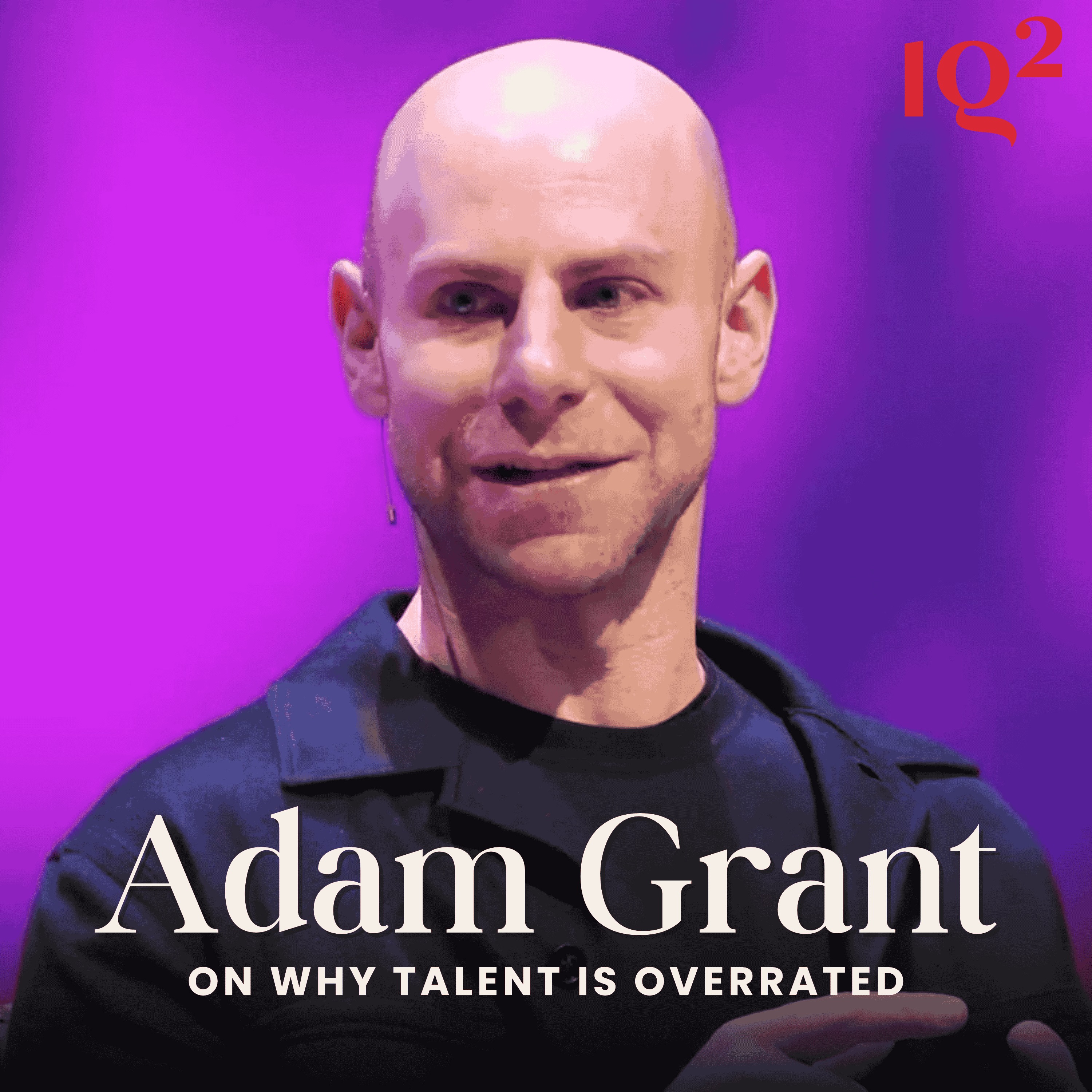
Adam Grant is one of the most sought after organisational psychologists in the world. He has provided expert advice to many of the world’s greatest business leaders, including Bill Gates and Sheryl Sandberg, equipping them with the mental tools to find motivation and meaning, rethink assumptions, and achieve greatness in their business and personal lives. In January 2024 Grant came to the Intelligence Squared stage for a rare, exclusive London event where he shared his revolutionary framework for how we can all exceed the expectations and aspirations we have set for ourselves. Drawing on his new book Hidden Potential he explained that despite living in a world that tends to admire people who start out with innate talent, there is clear scientific evidence that we can all bridge the biology gap and improve ourselves dramatically. In conversation with economist and FT columnist Tim Harford, Grant wove together groundbreaking evidence, surprising insights, and vivid story telling to take
Monday 23rd November 2026 Phil and NAB’s Taylor Nugent unpack Friday’s sharp, AI-driven sell-off on Wall Street—where the VIX spiked past 29 and the Nasdaq plunged 5.3% to log a sixth straight loss. Nvidia tumbled 14% following Reuters reports of an SEC accounting probe, while Anthropic fell 8.5% to close near 88.90, after surging past111 following its IPO debut. The risk-off wave sparked a rally in safe-haven bonds—pushing 10-year US Treasury yields down 10 basis points below 5%—and lifted the yen and Swiss franc, while weighing heavily on the Australian dollar. Curiously, precious metals bucked the safe-haven trend—with Comex gold sliding 4.6% and copper falling another 3%—as markets digested stronger UK retail sales, slightly softer Japanese inflation, and a holiday-shortened week ahead, with global PMIs today’s highlight. Hosted on Acast.
The sharp reply is ready before you finish reading the message. Some of it addresses the issue. Some of it only aims to hurt. Which response will you stand behind afterward? In this episode of The Level Up Podcast, Paul Alex breaks down how to communicate firmly under frustration while remaining accountable for your words. Paul connects lessons from police work with the responsibility to communicate clearly under pressure. Strong feelings can be acknowledged without turning the exchange into a personal attack. Before responding, identify the fact that needs attention and what you want the conversation to accomplish. Ask for the answer, correction, or boundary you need. Also check whether pressure from elsewhere is entering the exchange. Keeping the reply close to the actual situation gives your message a clearer purpose. In this episode, you’ll learn: • How to identify the result you need from a heated conversation. • Why firm communication does not require a personal attack. • What to
In this video, Disability Attorney Walter Hnot of the Disability Resolution Law Firm goes over working on the Marble Mountain Horse Farm. Leave us some stars here: America’s Most Viewed, Clicked On, Subscribed To Social Security Disability Attorney Like the content? Review us here: https://g.page/r/CcwyektC7nCPEAg/review . If the link does not work, Google: Disability Resolution, P.A. Need Medicare? I don’t do that…so call Chapter Medicare at 339 226 6287 or use askchapter.org/disability Great News!! Chapter is paying me to create this video. Welcome to the largest Social Security Disability Tutorial Video Library On Earth. PRIVATE ONE 60/30 MIN SESSION PHONE CALL https://www.dropbox.com/scl/fi/h48yr0wagaizrvbype2vu/250-hourly-Attorney-Hnot-Contract-V.9.pdf?rlkey=ax5vf89x0v4qk43w8oqj6ynof&dl=0 (https://www.dropbox.com/scl/fi/h48yr0wagaizrvbype2vu/250-hourly-Attorney-Hnot-Contract-V.9.pdf?dl=0&rlkey=ax5vf89x0v4qk43w8oqj6ynof) NEED MEDICARE? I don’t do it, but I trust these folks to help
This week I’m joined by Lilli Waters, a Thai-Australian fine art photographer living and working in Melbourne on Wurundjeri Country. Lilli’s photographs explore her history and identity, drawing on visual languages including Dutch still life painting. She builds symbolic worlds of women in elemental landscapes and underwater arrangements of flowers, fish and shells, with water recurring as a symbol of rebirth, transformation and renewal. We talk about how Lilli develops ideas and themes across her work and how she balances her fine art practice with commercial photography. We also get into the practicalities and difficulties of working in natural light on location, how introducing fabrics changed when and how she works, and the challenges and pressure that comes with working the way she does. I loved how openly Lilli spoke about the pressure and persistence behind her work and what keeps her coming back to the camera. You can find Lilli Watershttps://www.instagram.com/lilliwaters/here
This week I’m joined by two returning guests, Nick Smith and Laura Brandon, who answered questions that have come in from listeners over the past year. Nick is the founder and director of N. Smith Gallery in Sydney, representing artists across Australia and exhibiting internationally through museums, art fairs and major projects. Laura is a Sydney based art consultant and artist mentor with over 20 years’ experience across art archives and collections, public art education and arts writing. I enjoyed their conversation about the questions emerging artists should be asking themselves, how much social media matters for representation, and what to do when your work is being copied. There were also questions about prizes, how much work to show a gallery, when to raise your prices and what promotion to expect from your gallery. We finish with what makes an artist hard to work with, pay-to-enter competitions, and the etiquette of approaching a gallery or asking an arts professional for advic
Workers should share in the financial gains from technology that increases their productivity.
Share your view, then see how readers voted. No sign-in required. This poll is shared across stories.
Do you agree or disagree?
Common Quandary
A Common Quandary to discuss
Another conversation to explore, separate from this news story.
A donor's family wants to hear their loved one's heart beating in you. Do you meet them?
A transplant recipient receives a letter from the donor's family asking to meet. The recipient feels profound gratitude but also discomfort and wants their recovery to remain private and separate from another family's grief.
Can receiving an extraordinary gift create a personal obligation to strangers?