Autocratic Power Shift and Society Resilience — Part Two Serhii Plokhy 5
10 min
Listen through the publisher, then discuss the episode here or arrange an in-person Roundtable. Your city determines where to meet.
Roundtables are designed for groups of four, with a shared subject and room for everyone to speak. Come for discussion, with no dating expectation.
Autocratic Power Shift and Society Resilience — Part Two Serhii Plokhy revisits the late-night Kremlin meeting of February 2014 that showed Putin’s absolute personal authority in ordering the annexation of Crimea. Russia’s political system had moved from early post-Soviet democratic hopes to strict authoritarian rule, yet its imperial overreach failed, as aggression consolidated broad Ukrainian national solidarity. (5)
Episode information is provided by the publisher. Listening takes place on the publisher’s service.
Ambassador Chas Freeman was a former Assistant Secretary of Defense, earning the highest public service awards of the Department of Defense for his roles in designing a NATO-centred post-Cold War European security system and in reestablishing defence and military relations with China. He served as U.S. Ambassador to Saudi Arabia during operations Desert Shield and Desert Storm. Read Chas Freeman's Substack: https://substack.com/@chasfreeman662157Books by Prof. Glenn Diesen: https://www.amazon.com/stores/author/B09FPQ4MDLFollow Prof. Glenn Diesen: PayPal: https://www.paypal.com/paypalme/glenndiesenBuy me a Coffee: buymeacoffee.com/gdiesengGo Fund Me: https://gofund.me/09ea012fBuy Diesen merchandise: https://diesen-shop.fourthwall.com/en-nok00:00 Introduction and Context of Global Power Dynamics00:59 The Significance of the Xi-Putin-Trump Meeting02:30 Implications of Global Power Shifts04:09 Europe's Absence in Global Diplomacy06:32 The Role of the United Nations in Current Conflicts08:0
Master the skills that change lives — enroll in your free human behavior course today: https://nci.university/learn Uploaded 15-01-26 EXECUTIVE SUMMARY: Video: What It Feels Like to See Into People Purpose: Reframe how human behavior is actually driven and perceived Outcome: Permanent shift in how you experience people and conversations CORE IDEA: Human behavior is not driven by beliefs, opinions, or logic. Those are after-action reports. Behavior is driven by the nervous system’s constant assessment of: • safety • approval • power • avoidance of shame Decisions are made before conscious thought. Beliefs are constructed afterward to justify what already happened. WHY THIS MATTERS: Most people spend their lives interacting with: • beliefs • arguments • explanations • surface narratives As a result, they miss the layer where real decisions are made. This video focuses on that lower layer — the one that actually governs: • conflict • influence • attraction • resistance • leadership • trus
What if your computer could organize files, browse websites, manage spreadsheets, and complete everyday tasks without you ever touching your mouse or keyboard? Google Gemini is bringing AI-powered computer automation to Mac, but Apple is preparing its own response in a growing battle over the future of personal computing. In this episode of techdaily.ai, host David and AI expert Sophia explore the rise of autonomous AI agents and the competition between Google, Apple, OpenAI, Anthropic, and Meta. As artificial intelligence moves beyond traditional chatbots, tech companies are developing systems capable of interacting directly with desktop applications, managing workflows, and performing complex tasks on behalf of users. Google's Gemini computer-use capabilities represent a major shift in how people could interact with their computers. Instead of simply generating answers, AI agents can navigate applications, organize documents, and automate repetitive work. Meanwhile, Apple is reported
The legal profession is standing at its most pivotal crossroads in centuries. Artificial Intelligence is reshaping the practice, business, and liability profile of the global legal sector. But when the gavel comes down, who will ultimately be holding it, human hands or artificial code? AI’s impact on law is not a new conversation. Five years ago, the Law Society predicted that by 2030, everyone might have access to a 'free' legal assistant, akin to a Siri for law. That same projection warned of a potential de-skilling of the workforce and a complete overhaul of legal compensation models. So today are those predictions becoming operational realities? What are the pros and cons of letting Artificial Intelligence into our legal world and how do we capitalise on the benefits while safeguarding our legal institutions, the rule of law and society itself? Joining our host, Tom Parker, is Ross McNairn, Co-Founder and CEO of Wordsmith, Professor Richard Susskind CBE, Author and President of the
The International Court of Justice has found Myanmar responsible for genocide against the Rohingya, in one of the most significant legal judgements since the Genocide Convention was adopted after World War II. It is the first time that the court has found a state responsible for committing genocide. The ruling centres on the military's 2017 campaign in Rakhine State, which drove more than 740,000 Rohingya into neighbouring Bangladesh. ABC Asia editor Karishma Vyas joins Geraldine Doogue to explain how the case was won, why proving genocidal intent matters, and why lawyers and governments around the world will be studying the judgement closely. They also examine reports of secret talks between the Trump administration and Myanmar's military leadership, and what Washington's interest in rare earth minerals reveals about the shifting balance of power between the United States and China. Plus, Donald Trump, Xi Jinping and Vladimir Putin gather in Shenzhen for an extraordinary three-way sum
MeidasTouch host Ben Meiselas breaks down a suspected Ukrainian strike on a Russian warship in Libya’s Benghazi port and reports that a second ship was hit offshore. He also covers Russia’s deadly strike near Kyiv and explains how Jared Kushner’s push to put European security on the negotiating table echoes a Putin talking point. Visit https://meidasplus.com (https://meidasplus.com/) for more! Remember to subscribe to ALL the MeidasTouch Network Podcasts: https://meidasnews.com/podcast Support the MeidasTouch Network: https://patreon.com/meidastouch (https://patreon.com/meidastouchAdd) Add the MeidasTouch Podcast: https://podcasts.apple.com/us/podcast/the-meidastouch-podcast/id1510240831Buy MeidasTouch Merch: https://store.meidastouch.com (https://store.meidastouch.com/) Follow MeidasTouch on Twitter: https://twitter.com/meidastouchFollow MeidasTouch on Facebook: https://facebook.com/meidastouchFollow MeidasTouch on Instagram: https://instagram.com/meidastouchFollow MeidasTouch on TikT
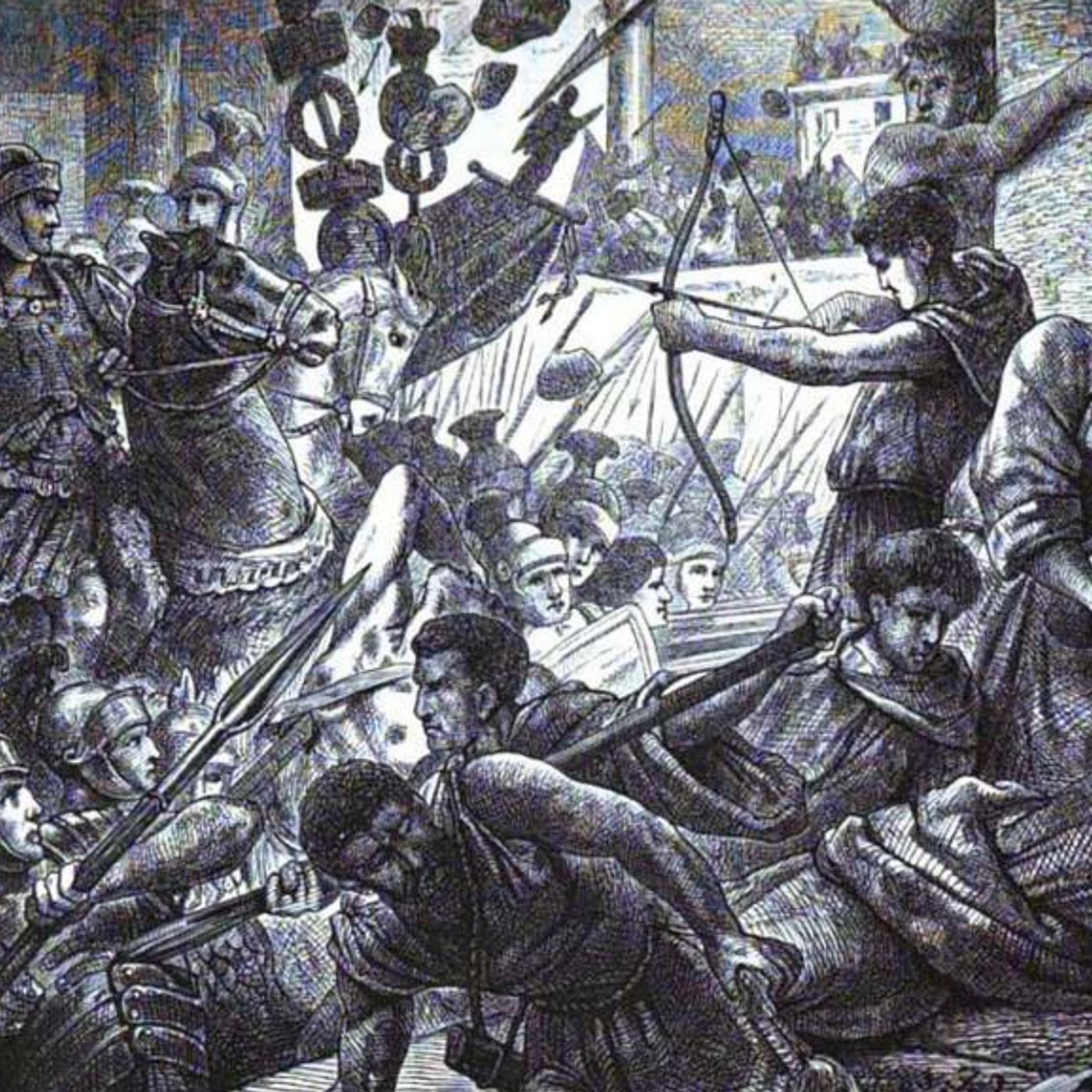
1802 ROME Western Colonial Legacy and Asian Reckoning Gaius and Germanicus address Western colonial exploitation across Asia, from British policy during the Bengal famineunder Winston Churchill and the looting of China during the Opium Wars to centuries of Dutch rule in Indonesia. Germanicus cites British camps in the Boer War, Kenya, and Malaya, and US garrisons in Beijing, Tianjin, and Shanghai before World War II, noting that political elites continually revive historical memory. Gaius observes that Xi Jinping’s pushback against US dominance draws broad support from Asians who remember colonial overreach, and Germanicus concludes that Europe now faces deep self-doubt and decline as the reckoning arrives. (3)
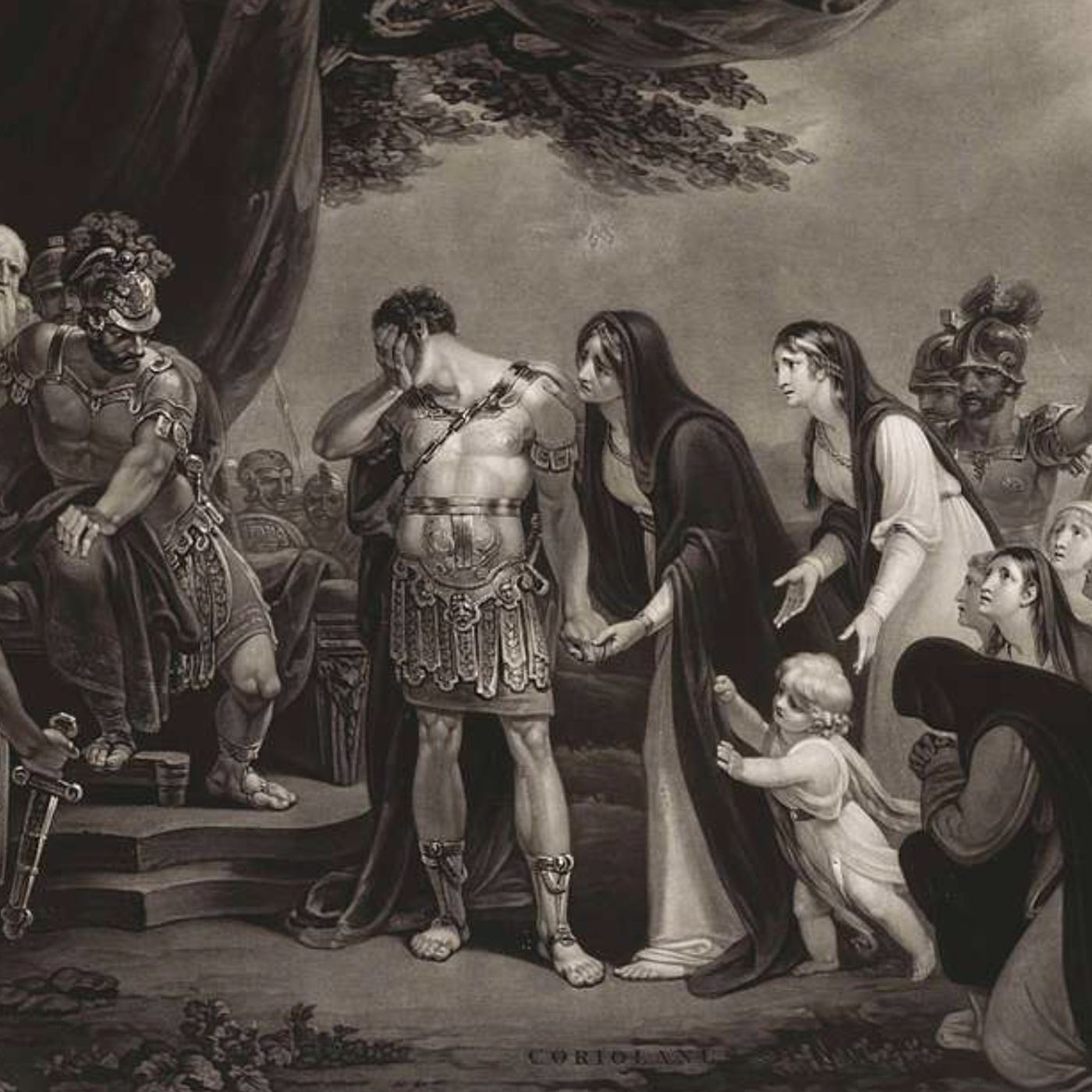
1880 SULLA SACKS ROME Presidential Succession Models and Middle East Gaius and Germanicus compare Roman succession models, from the Julio-Claudian bloodline and the adoptive emperors from Nerva to Marcus Aurelius to Diocletian’s tetrarchy, with modern America, weighing Vice President JD Vance as Emperor Trump’s “adopted son.” Germanicus reads Vance’s reticence on Iran strikes and the midterms as a deliberate projection of independence, contrasting him with Marco Rubio’s hemispheric ambitions in Latin America. On Iran, Germanicus warns that striking its energy infrastructure would invite devastating reprisals on Gulf facilities, and the two note escalating hysteria among European leaders over the Ukraine proxy war. (2)
Londinium Chronicles From Londinium in 92 AD, Gaius (John Batchelor) and Germanicus (Michael Vlahos) view the events of our time through Roman eyes. 1580 ROME Multipolar World Order and Imperial Decline Gaius and Germanicus survey a trilateral table seating Russia, China, and the United States, with Europe absent, recalling Henry Kissinger’s question about whom to call in Europe. Gaius notes that despite talk of peace, escalation continues, citing a drone relay operation he describes as NATO-guided that collapsed a span of the Kerch Bridge. Germanicus casts the shift to multipolarity as an “all against all” contest without a concert of powers, as US ties with the European Union, Saudi Arabia, and the Gulf States fracture and an overconfident empire slides downhill. They read Emperor Trump’s meeting with Xi Jinping and Vladimir Putin as a real estate developer working high-value clients. (1)
Major sporting rule changes should be tested before permanent adoption.
Share your view, then see how readers voted. No sign-in required. This poll is shared across stories.
Do you agree or disagree?
Common Quandary
A Common Quandary to discuss
Another conversation to explore, separate from this news story.
You have outgrown a lonely friend. Do you keep inviting them anyway?
An old friend keeps asking to join your newer social circle. They have done nothing wrong, but you no longer enjoy spending time together and suspect they have few other close relationships.
Can compassion require maintaining a friendship you no longer choose?