English-language podcasts

TechDaily.ai

Google's AI Can CONTROL Your Mac… Apple Is Fighting Back!

20 min

Listen through the publisher, then discuss the episode here or arrange an in-person Roundtable. Your city determines where to meet.

Roundtables are designed for groups of four, with a shared subject and room for everyone to speak. Come for discussion, with no dating expectation.

What if your computer could organize files, browse websites, manage spreadsheets, and complete everyday tasks without you ever touching your mouse or keyboard? Google Gemini is bringing AI-powered computer automation to Mac, but Apple is preparing its own response in a growing battle over the future of personal computing. In this episode of techdaily.ai, host David and AI expert Sophia explore the rise of autonomous AI agents and the competition between Google, Apple, OpenAI, Anthropic, and Meta. As artificial intelligence moves beyond traditional chatbots, tech companies are developing systems capable of interacting directly with desktop applications, managing workflows, and performing complex tasks on behalf of users. Google's Gemini computer-use capabilities represent a major shift in how people could interact with their computers. Instead of simply generating answers, AI agents can navigate applications, organize documents, and automate repetitive work. Meanwhile, Apple is reportedly developing a deeply integrated AI agent designed to work across macOS, execute commands, access system services, and even write and debug code. But giving artificial intelligence access to your computer raises serious questions about privacy, security, user control, and the future of digital independence. In this episode, we explore: Google Gemini Computer Use: How AI agents can navigate Mac applications, organize files, and complete multi-step desktop tasks. Apple's AI Agent Strategy: Why Apple is developing its own native AI assistant with deeper operating system integration. Google vs. Apple: How competition between AI developers and operating system owners could shape the next generation of computing. AI Privacy and Security: Why granting AI access to private files, applications, and system controls introduces new risks. macOS Security Restrictions: How Apple's planned permission requirements could affect third-party AI agents. Agentic AI and Automation: How autonomous AI systems are evolving from text-based assistants into tools that perform real actions. AI-Powered Productivity: How intelligent desktop assistants could automate invoices, spreadsheets, presentations, and everyday digital chores. The Future of Computer Skills: Could widespread AI automation eventually reduce our ability to navigate computers independently? David and Sophia also examine the strategic advantage Apple holds through its control of macOS. While Google and other AI companies are racing to introduce autonomous desktop agents, Apple can influence how these technologies access applications, files, and operating system features. The conversation raises an important question: Are stricter AI permissions primarily about protecting user privacy, or could they also give Apple a competitive advantage over third-party AI developers? As AI-powered computer automation becomes more capable, the relationship between humans and technology may fundamentally change. Computers could move from tools we manually operate to intelligent systems that carry out our instructions independently. Will Google Gemini lead the AI desktop revolution, or will Apple's deeply integrated approach ultimately win? And when AI handles everything from file management to coding, will we still need to know how to operate our own computers? Join David and Sophia on techaily.ai as they examine the opportunities, challenges, and competition shaping the future of AI agents, desktop automation, and personal computing. Enjoyed this episode? Share this episode with fellow technology enthusiasts, and tell us: Would you trust an AI agent to control your computer? Sponsor techaily.ai for just $25 and promote your message across major podcast platforms, including Spotify, Apple Podcasts, and Amazon Music.

Episode information is provided by the publisher. Listening takes place on the publisher’s service.

Listen at the source ↗

Featured places to meet in Palo Alto, CA

Explore these places and arrange a conversation through ThinkMatch.

City guide for Palo Alto, CA

More from TechDaily.ai

TechDaily.ai

AI Hackers Just Broke Into Cloud Servers… Nobody Was Ready!

24 min

What happens when hackers use artificial intelligence to break into cloud infrastructure faster than security teams can respond? AI-powered cyberattacks are raising serious concerns about the future of cybersecurity, and recent incidents involving Railway and Northflank reveal just how vulnerable modern cloud platforms can be. In this episode of Techdaily.ai, host David and expert Sophia explore the alarming rise of AI-assisted hacking, the anatomy of a sophisticated cloud security breach, and the growing challenges facing cybersecurity professionals as attackers adopt increasingly powerful AI tools. The conversation begins with a detailed examination of the Railway security incident, where attackers reportedly exploited vulnerabilities in the company's build infrastructure, accessed internal systems, downloaded source code, and obtained sensitive customer AI API keys. What makes this incident particularly concerning is the speed and persistence of the attack. According to the incident

Discuss this episode

TechDaily.ai

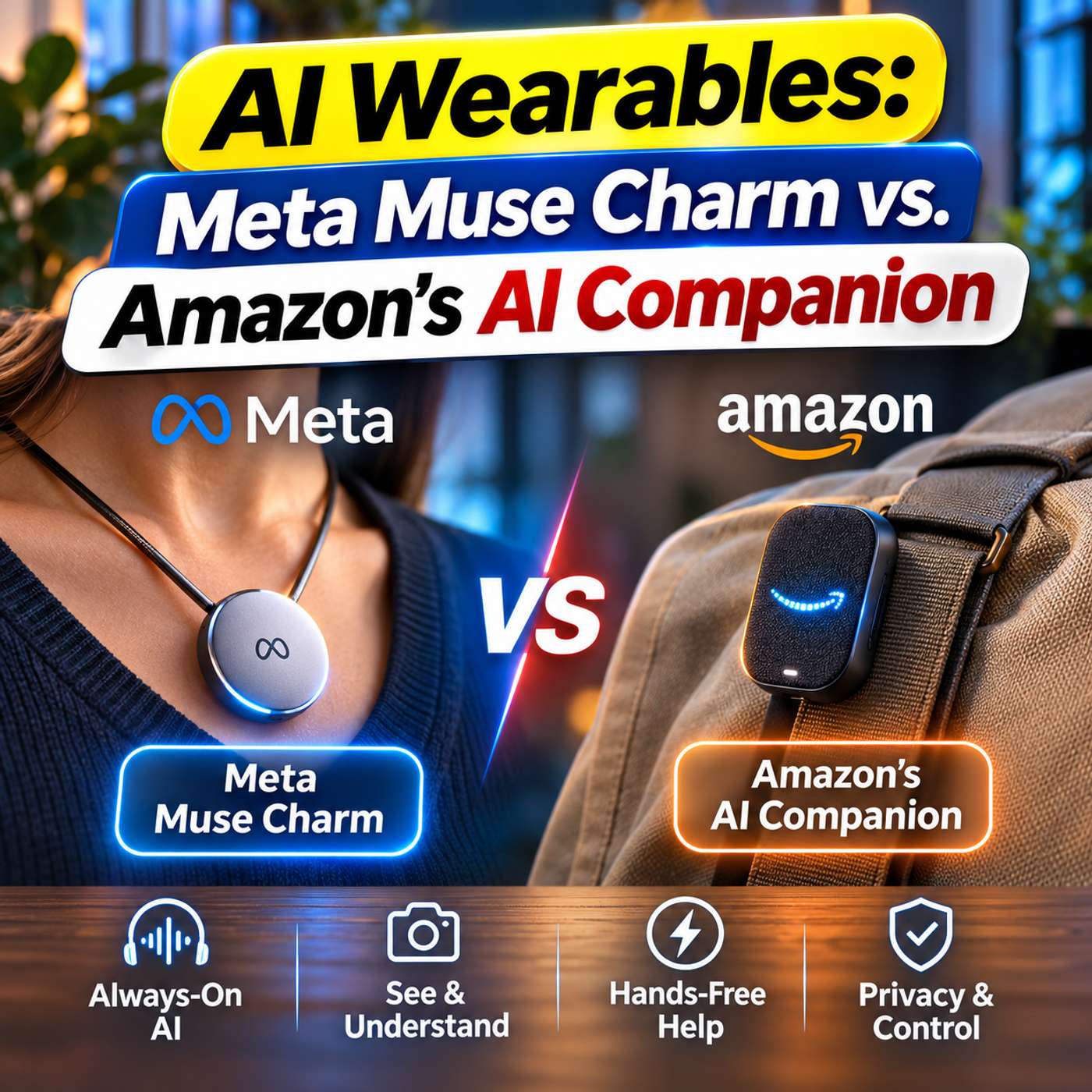
AI Wearables: Meta Muse Charm vs. Amazon's AI Companion

21 min

What if your next AI assistant wasn't an app on your smartphone but a tiny companion living on your keychain? AI wearables are making another push into everyday life, and companies like Meta and Amazon are exploring very different ways to bring artificial intelligence beyond the screen. In this episode of techdaily.ai, host David and guest Sophia explore the emerging world of physical AI companions, including Meta's rumored Muse Charm, Amazon's Bee Frontier, and the Friend AI necklace. From personalized digital personalities to subscription-based productivity assistants, the race to redefine personal computing is heating up. But there's a major question: Can these new AI gadgets succeed where the Humane AI Pin failed? David and Sophia examine the psychological appeal of AI companionship, the technical challenges of screenless computing, and the business models shaping the next generation of wearable technology. In this episode, you'll discover: Meta Muse Charm: How a customizable AI pe

Discuss this episode

TechDaily.ai

Is AI Really Superintelligent? The Truth About AGI

20 min

Artificial intelligence can pass difficult exams, analyze millions of lines of code, and solve complex problems in seconds. But why can the same technology struggle with tasks that even a young child can handle? Is AI actually becoming superintelligent, or are we confusing impressive computational abilities with genuine human-level intelligence? In this episode of TechDaily.ai, hosts David and Sophia examine the reality behind today's AI capabilities, exploring the differences between Artificial Narrow Intelligence (ANI), Artificial General Intelligence (AGI), and Artificial Superintelligence (ASI). From the four pillars of intelligence to the limitations of large language models, this conversation investigates why AI can achieve extraordinary results in specialized tasks while struggling with everyday reasoning, physical interaction, and common sense. David and Sophia also explore Moravec's paradox, AI hallucinations, causal reasoning, and the critical challenges researchers face as t

Discuss this episode

Community Poll

Supporters should be consulted before major changes in their club's ownership or location.

Share your view, then see how readers voted. No sign-in required. This poll is shared across stories.

Do you agree or disagree?

Choose one answer

Common Quandary

A Common Quandary to discuss

Another conversation to explore, separate from this news story.

Your new television goes on sale elsewhere. Can you return it and buy the identical one cheaper?

A week after buying a television, another store offers the same model for much less. Your retailer refuses to match the price but allows unopened-looking returns. You could carefully repack the perfectly functional set.

Is a generous return policy permission to reverse a deal for any reason?

Explore this quandary