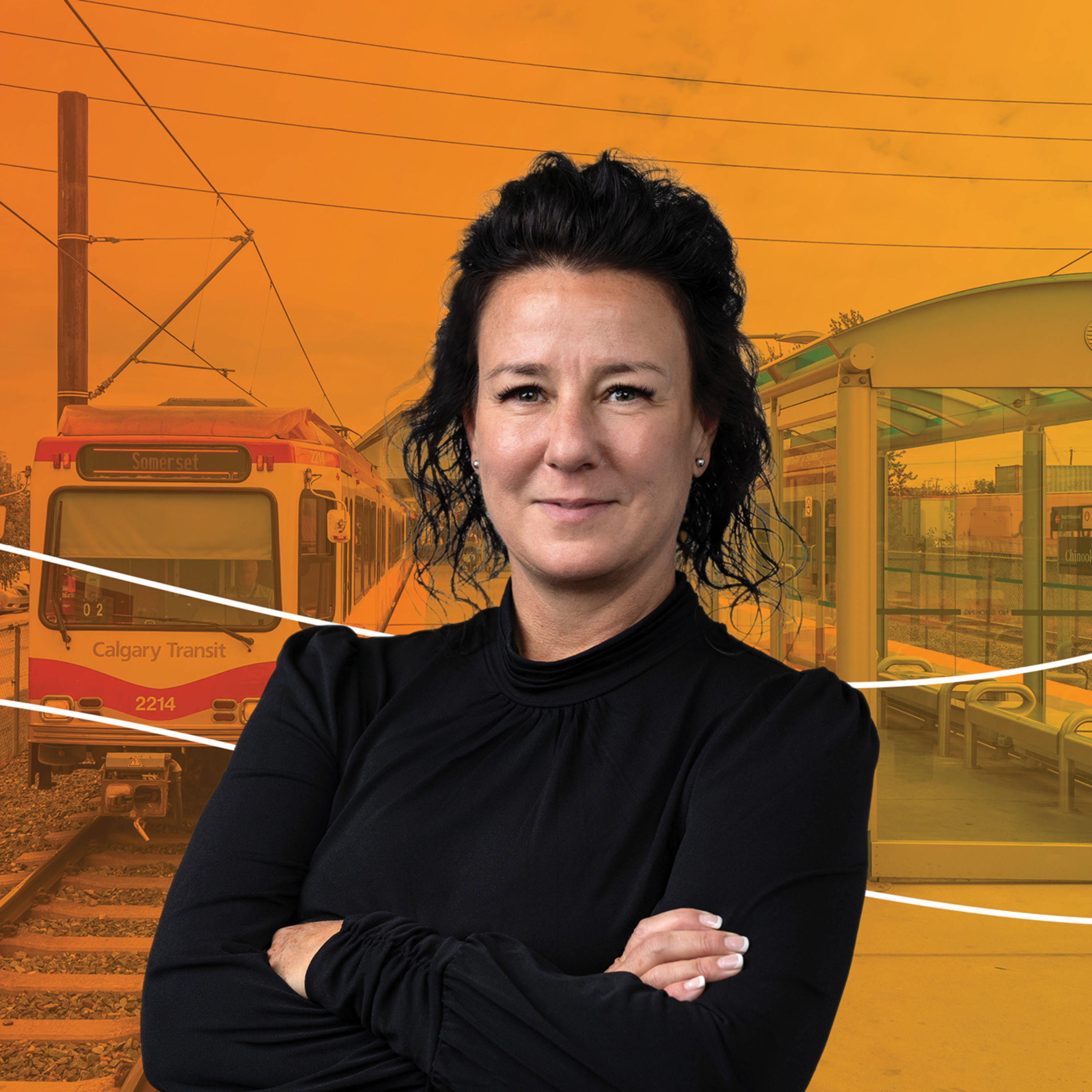
Beyond fares: transit peace officers support a safer riding experience for everyone
20 min
Listen through the publisher, then discuss the episode here or arrange an in-person Roundtable. Your city determines where to meet.
Roundtables are designed for groups of four, with a shared subject and room for everyone to speak. Come for discussion, with no dating expectation.
There’s more to a transit peace officer’s job than checking fares. In this episode, we look at how transit peace officers support riders, respond to safety concerns, and connect people with housing, mental health and addiction support. Hear how specialized training, more officers, and close partnerships with police, bylaw and social service agenciesare helping create a safer transit experience for everyone. Additional Resources: Transit Public Safety (https://www.calgary.ca/safety/transit-safety.html) Calgary Peace Officers (@calgarycommunitysafety) (https://www.instagram.com/calgarycommunitysafety/)
Episode information is provided by the publisher. Listening takes place on the publisher’s service.
In this episode, Diego Salama discusses his new book on the UN’s peacekeeping work in the Middle East (1967–1982), based on newly declassified archives. He explains why he focused on institutional processes rather than high-level diplomacy and how the UN’s approach accumulated over time. The episode highlights key findings such as interoperation collaboration, structured opportunism, and the central but overlooked role of Finnish general, Ensio Siilasvuo, whose field diplomacy helped create practical, on-the-ground solutions. Salama describes archival research, behind-the-scenes memos, and how UN staff and operations coordinated across borders. Listeners will learn how the UN’s living architecture evolved, what was gained and lost when key figures left, and why preserving institutional memory matters for future multilateral responses in the region. Diego Salama is Research Associate at the Institute for Security and Global Affairs, Leiden University and Managing Editor of Global Govern
IRINA FEIO. Lawyer and Social Safeguards Specialist, WARDIP Project From close shave with death to champion of road safety With a focus on education, innovation, and healthcare, we are committed to making a measurable difference in preventing avoidable deaths and building safer roads for future generations.
Training Wednesday is back, and Aaron, Trent, and Peaches spend the live answering Air Force Special Warfare candidate questions — but first, there is an update from the current SWAS class. According to the numbers discussed on the live, 78 candidates failed the initial IFT and 52 still failed the refire. The guys try to understand how that happens after months of development and preparation, discuss reports that some candidates struggled with the swim and high-volume masks, and once again return to the same message they keep giving candidates: you need to arrive ready. From there, the live turns into a full candidate-training clinic. The guys talk about periodizing strength and endurance work, building Zone 2 capacity, gradually increasing mileage, why running with a weighted vest is probably not solving the problem you think it is, preparing for A&S, training with the equipment you will actually use, and why the goal is not simply to pass a minimum standard. They also answer question
The Ninth Circuit hears Melton versus the County of Maricopa. Kayla Melton's husband was shot and killed by sheriff's deputies. She brought a civil-rights lawsuit alleging that the county failed to train its deputies to de-escalate a suicidal crisis, and that this failure deprived her family of their relationship with him. The appeal concerns the county's own training responsibilities, not an individual damages claim against each deputy. You will hear the term Monell. It means the county is not liable merely because it employs an officer who violates someone's rights. The injury must be connected to the county's own policy or custom. A failure to train can qualify, but it must amount to deliberate indifference, not just negligence, and must actually cause the constitutional harm. The family will rely on the narrow possibility of proving an obvious training need without a pattern of earlier incidents. Listen for the difference between evidence of inadequate training and disagreement abo
Shubham Vashist, founder of Calgary-based energy research firm Insight Stream (https://insightstreamco.base44.app/), joins Alberta Edge to examine Canada's race to capture a narrow window of opportunity in the global LNG market. With competitors rushing to lock in long-term contracts with Asian buyers, Canada has some distinct advantages—but can it build quickly and cheaply enough to capitalize on them? Why are some of the world's fastest-growing economies also among the most price-sensitive energy buyers? And what happens when a global LNG supply glut arrives? Vashist looks beyond the headlines about Canada's ambitious export plans to explain the commercial realities of selling energy to Asia, including the surprising connections between LNG, propane, condensate, and oilsands production. This podcast is generously supported by Don Archibald and Mac Van Wielingen. The Hub thanks them for their ongoing support. The Hub is Canada’s fastest-growing independent digital news outlet. https:/
Explore the fallout from the failed Biden-Elon deal and its implications. We delve into Frank Bisognano's surprising move to the Social Security Administration. Discover how his private sector experience could revolutionize SSA systems and improve public service. Stay informed on the latest political and economic developments! #BidenElonDeal #FrankBisognano #SocialSecurity #SSA #GovernmentTech #PoliticalAnalysis #EconomicNews #TechIndustry #PublicService #FinancialInnovation
Interviewers should challenge powerful guests even when doing so risks losing future access.
Share your view, then see how readers voted. No sign-in required. This poll is shared across stories.
Do you agree or disagree?
Common Quandary
A Common Quandary to discuss
Another conversation to explore, separate from this news story.
Your teenager locks you out of their phone. When is it okay to look?
Your usually outgoing sixteen-year-old has withdrawn and stopped seeing friends. They insist they are fine and refuse to talk. You know their phone passcode and could read their messages without being discovered.
How serious must a fear be before protection outranks privacy?